How to Use a Flea Comb on a Cat: 4 Vet-Reviewed Steps


Cats are wonderful pets and generally don't require much help from humans in the grooming and self-care department. However, our feline companions sometimes need a bit of assistance regarding things like brushing their teeth and ensuring that their coats remain healthy and free of pests like fleas.
There are four general ways to deal with the flea issue regarding cats: flea collars, topical products like Advantage, oral medications, and flea combs. Flea combs are ideal because they help you determine whether your cat has fleas at all and can efficiently remove any fleas and eggs that you do find.
Read on for more about the pros and cons of flea combing and a step-by-step guide for the process.

Pros & Cons of the Various Treatment Methods
Flea combing can be a safe and effective way to eliminate fleas. It has the added benefit of being non-toxic and chemical free, so you don't have to worry about exposing your cat to nasty chemicals. You can also use a flea comb to determine if your cat has fleas. Then, you can use a topical or oral product to fix the situation.
Topical Products
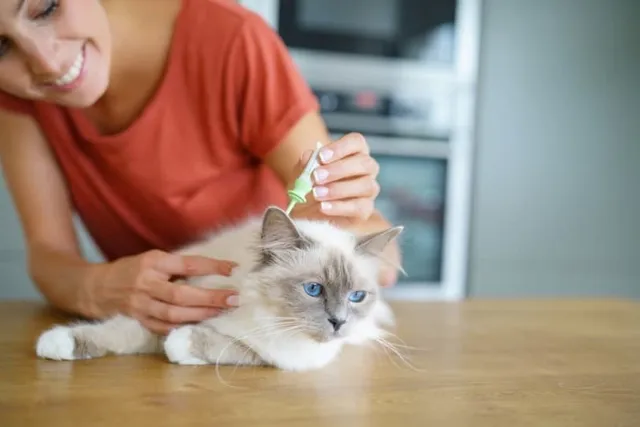
Topical options like Advantage, Frontline, and Vectra are highly effective, though they sometimes cause itching and skin irritation. They're usually applied between your cat's shoulders and neck to prevent them from licking the product away.
Most kill almost 99% of fleas within 20 minutes of application. They're also effective in getting rid of fleas in the cat’s environment. Problems like nausea, vomiting, and lethargy can be caused if your cat ingests the product or if too much is applied.

Flea Collars
Seresto is currently the most popular of these products and is frequently recommended by veterinarians for outdoor cats since it kills fleas and ticks. Its active ingredient is released over a period of months, and the collar is designed to break away if it gets caught on something, ensuring your kitty stays safe while exploring. The biggest issue with flea collars tends to be skin irritation.

Pills & Oral Medications
Oral medications like Capstar and Comfortis are most often used to address severe infestations. Castar eradicates all fleas on your cat's body within 30 minutes of ingestion. Conformis takes 24 hours but works prophylactically for 30 days after your cat takes it.
Oral medications can sometimes cause side effects, such as itching, skin irritation, difficulty breathing, trembling, or seizures, but these are generally rare.
Flea combing is an excellent option for kittens that are too young to tolerate oral medications or topical treatments.

The Drawbacks of Flea Combing
Flea combing often doesn't completely eliminate fleas and their eggs, and you'll most likely need to complete the process multiple times. It takes a lot of time and effort to gather your supplies, set up your space, and meticulously brush every inch of your kitty's fur. Some cats are unwilling to cooperate for the length of time required for a good combing.
In addition, because you're combing the fleas and eggs out of your pet's fur, it can be easy to move fleas from your cat to your floor if you comb your cat indoors. Ensuring no fleas or their eggs escape can be tedious. Flea combing also doesn't do anything to eliminate fleas that may have moved into your carpets, drapes, bedding, and furniture.
Before You Get Started
To comb your cat for fleas, you'll need to have the right supplies. You'll need a flea comb, a regular cat brush, a bucket of water, cat-safe soap, newspaper, a towel, a large plastic bag, and a good vacuum. The process can take a bit of time, and you'll need to be able to reach every part of your cat's body.
Try using a countertop or other area that’s exam table height to make the process easier. You'll also need to flip your kitty over to brush their tummy, so you'll probably need a comfortable non-fabric chair. Combing your cat in the bathtub or outdoors are options that can reduce the clean-up time and prevent fleas from getting loose in your home.
How to Use a Flea Comb on a Cat
1. Fill the Bucket
Fill your bucket with cat-safe soap and a good amount of hot water. There's no need to fill the bucket; leave plenty of room at the top to ensure the pesky fleas can't jump out once you get started.
You aren't going to use the water for bathing your cat, but rather to clean the comb as you remove dirt, debris, hair, fleas, flea eggs, and other matter. Your cat's fur should be dry during the process.
Consider putting down newspaper to protect your floor and to catch any fleas or eggs that fall. Avoid using towels at this stage since they can easily catch stray fleas and flea eggs, negating your work.

2. Brush Your Cat
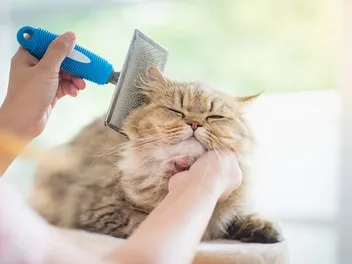
Give your pet a good brushing with a regular cat brush. Your goal is to remove any tangles and loosen dirt and debris. Flea combs have closely spaced teeth, and they're designed to collect fleas and their eggs. However, this also means the combs can be difficult to use if your cat has tangles or unruly fur.
A quick but thorough brushing will make it easier to get all the dirt with your flea comb and reduce the number of annoying tangles you encounter. It'll also make the experience more enjoyable for your cat, as they'll experience less pulling and tugging during the actual flea combing session.
3. Start at the Top
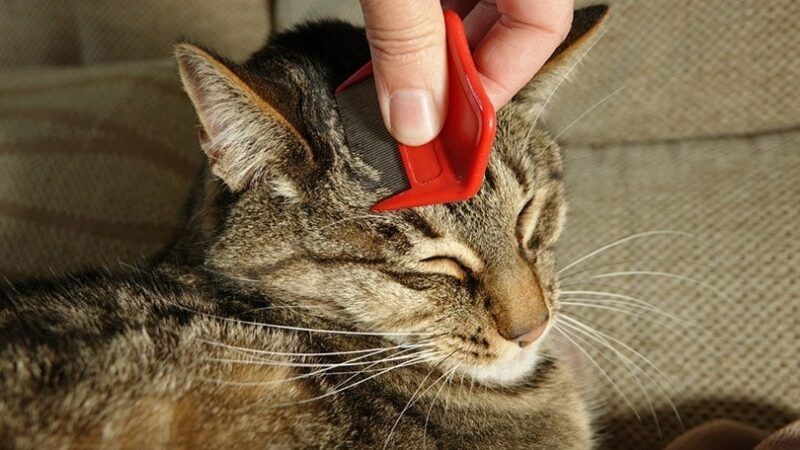
Once you're done with the regular brush, grab the flea comb and get to work. Start with your cat's head and work methodically toward their tail. Make sure to spend extra time around your buddy's neck, and don't forget to comb the area underneath their tail.
Flip your kitty over, give their tummy and underarms a good going over, and finally, spend a reasonable amount of time on your cat's paws, legs, and tail. Rince the comb off in soapy water whenever debris and dirt start collecting in its teeth.
You'll need a complete second pass for the process to work, as fleas will move around on your cat's body as you're combing. Pay extra attention to flea-prone areas like your cat's stomach, neck, and tail. Use the clean towel to give your cat a rub down. Ensure the towel isn’t close enough to the two of you during the combing to have collected any fleas!

4. Clean Everything Up
Allow the soapy water to sit for 10–15 minutes to drown the fleas and any other bugs you may have dislodged and collected during the combing. Roll up the newspaper, make sure not to let dirt, debris, or dead fleas escape, and throw your waste paper into the plastic bag. Dump the water outside, clean the bucket, and comb with disinfectant soap.
Make sure to vacuum the area if you comb your cat inside, and don’t forget to immediately remove the vacuum bag and dispose of it in the plastic bag. If you're using a bagless vacuum, empty the canister directly into the plastic bag, and then rinse the canister with hot water and soap. Take the trash bag outside immediately to prevent fleas that might have survived from escaping and re-infesting your home.
Final Thoughts
With fully grown kitties, combing is probably best used to determine if your cat has fleas so you can treat the situation with an effective topical or oral product. If you're primarily using flea combing as a diagnostic tool, you can skip the setup, and you don't have to worry about covering every part of your cat's body during the process.
Just run the comb over your cat's neck or chin a few times, and look at what you pick up. If you see fleas or eggs, you can treat the situation quickly with one of the specialized oral or topical flea eradication products.
You might be interested in: How Does Frontline Work on Cats?
Sources
Featured Image Credit: Simone Hogan, Shutterstock
Expert cat care, straight to your inbox
News, insights, and useful advice, delivered to you.

No spam — unsubscribe anytime.
By signing up, you agree to our Terms & Conditions and Privacy & Cookies Policy.
How useful was this post?
Click a star to rate. You can leave written feedback afterwards. (We read all feedback.)
Lorre Luther is a writer who is firmly convinced that cats are smarter than humans. She left her law career in the United States and moved to the Netherlands to follow her dream of becoming a writer. Lorre currently lives in Rotterdam, she enjoys traveling and greatly appreciates the beauty of nature. Lorre has a spot for animals and admires the intelligence of cats.