Warbles (Wolf Worm) in Cats: Vet Explained Causes, Signs & Care

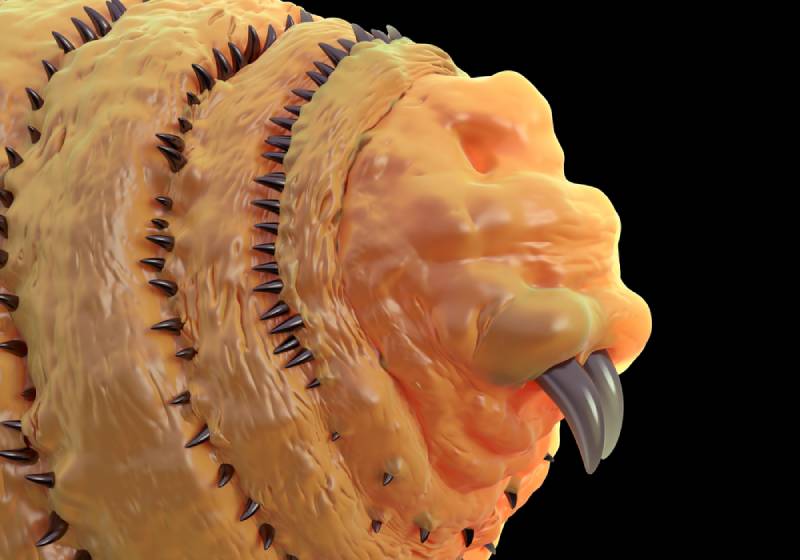
Warbles and “wolf worm” are colloquial terms that describe the same thing—the larval form of the Cuterebra fly. The adult fly itself is sometimes referred to as the North American rabbit or rodent fly. If a cat becomes infested with the Cuterebra larvae, which encyst or “hide” in different tissues, the cat is said to have Warbles. Warbles can cause cats discomfort and infection, but the disease tends to be more of a nuisance than anything else.
Cats are accidental hosts of the Cuterebra larva, meaning that once the larvae have matured, they depart the cat’s body. Read on to find out more about Warbles in cats, what it looks like, why it happens, and what can be done to treat it.

What is Warbles in Cats?
Warbles are larvae of the Cuterebra fly, which can infect cats. Here, it helps to have an understanding of the Cuterebra fly life cycle. The adult fly lays its eggs at the opening of a rabbit or rodent burrow (though sometimes inside the burrow). This might be referred to as a “nest” of eggs. These eggs hatch into larvae, which typically infect rodents or rabbits after entering via the nose or mouth. They then continue their development in the body, before exiting once they have matured to finish their development and become adult flies.
But what does this have to do with cats? Well, Cuterebra larvae are opportunistic. Although they might prefer (and typically infect) rabbits and rodents, they’ll settle for a cat if the chance presents itself. So, if a cat sticks its head in or near a rodent burrow while hunting, the larvae can infect the cat via the mouth, nose, or, more commonly, a wound. Then, the Cuterebra larvae continue their development in the cat, typically under the skin in the subcutaneous tissue, and the cat has contracted Warbles.

What Are the Signs of Warbles in Cats?
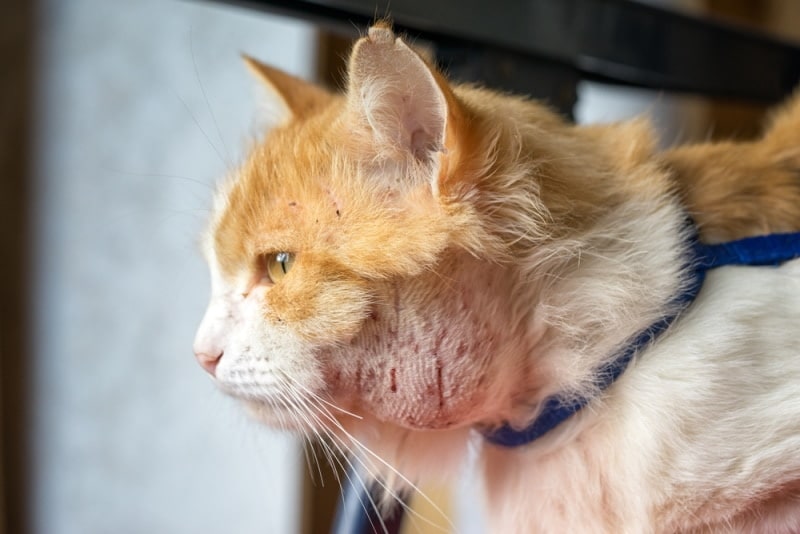
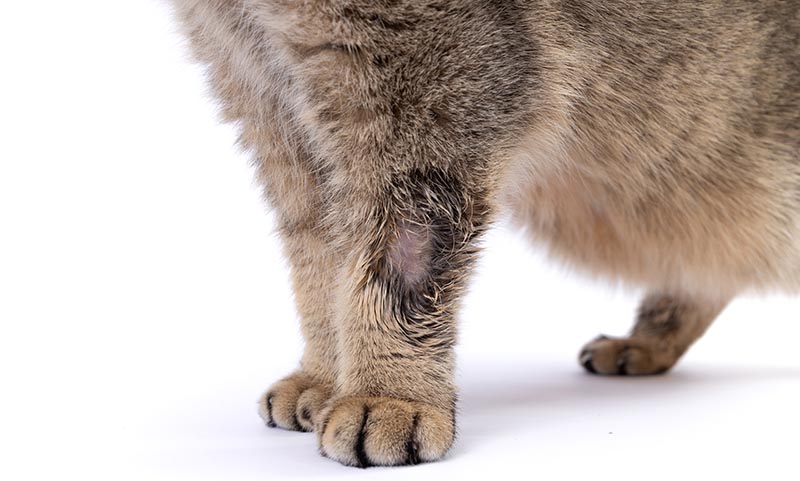
Cat owners typically notice a wound or swelling under the skin. This wound tends to be around the head or neck, as the cat has placed its head in the rodent burrow, making this part of the body more prone to infection. In addition to the wound or swelling, there is sometimes an “air hole” used by the larvae to breathe, and matted fur caused by the cat over-grooming this area. Often, the wound in which the larva is living becomes infected with bacteria too, forming an abscess. In this case, there will be pus coming from the site, and it will be painful to touch.
So far, we have only described the cutaneous (skin) form of warbles. Less commonly, the larvae migrate to infect the nervous system, eyes, or respiratory system. This can cause lethargy, vision problems, and coughing, depending on where the larva has reached.

What Are the Causes of Warbles in Cats?
Warble infection occurs when a cat is hunting rabbits or rodents, and comes into contact with a Cuterebra larva. These larvae are often found at the entrance to a rabbit or rodent burrow. The cat is considered an “accidental host” for the Cuterebra larvae, which often enter via a small wound in the skin. The larvae then encyst themselves here while they mature into adult flies, causing irritation and infection for the cat in the process.
If you are concerned about the health and well-being of your pet, seek veterinary advice for the best course of action.
How Do I Care for a Cat with Warbles?
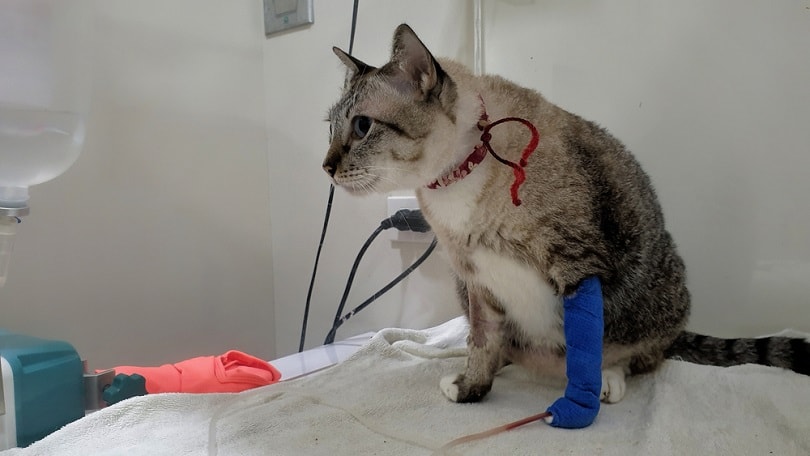
If you suspect that your cat has Warbles, it’s best to arrange a consultation with a veterinarian. If you try to squeeze the larva from beneath the skin, it can “break”, meaning pieces of the larva get left behind, and this can cause inflammation and infection. The best outcome occurs when the larva is removed in one piece. Vets can often do this by opening up the “air hole” and using forceps to retrieve the larva.
They will often then flush or clean the wound, which can form an abscess. Depending on your cat’s temperament, and the severity of the abscess, this may need to be done under sedation or anesthetic. Antibiotics and anti-inflammatories are often prescribed.
Frequently Asked Questions
How Is the Condition Diagnosed?
Most vets will diagnose Warbles by visual inspection. The Cuterebra larva, which looks like a maggot or small worm, can sometimes be seen under the skin. Additionally, your cat’s history, lifestyle, and skin lesion will aid in reaching a diagnosis. Occasionally, an inspection of the larva under the microscope, or by a registered parasitologist, is necessary.
What is the Prognosis for Cats with Warbles?
Thankfully, the prognosis for cats with Warbles is good. Most make a complete recovery, though it can take some time for the infection or abscess to heal. If cats develop a fever, severe abscess, or sepsis, the prognosis is poorer. The prognosis is also worse if the larva has migrated to infect the nerves, eyes, or respiratory system.

How Can Warbles Be Prevented?
The only way to prevent Warbles is to stop your cat from hunting rabbits and rodents. This may involve keeping your cat indoors, especially in summer and fall, when there are more flies and larvae around. If you can’t keep your cat indoors, or if they’re known to escape and hunt, the best thing you can do is regularly inspect them for signs of a wound, abscess, or larvae under the skin.
Conclusion
The thought of a larva that looks like a worm living in your cat’s skin might seem gross, and it is! It’s also uncomfortable for your cat, requiring manual removal and a course of antibiotics to ensure healing. If your cat is at risk of developing Warbles, it might be a good idea to keep them from hunting. If your cat has Warbles, or if you are concerned about a skin lesion that resembles Warbles, always arrange a consultation with your veterinarian.
Sources
Featured Image Credit: Nadya Bessonov, Shutterstock

Expert cat care, straight to your inbox
Vet-reviewed advice, behavior tips, and the best of Catster. Free, and you can unsubscribe anytime.
By signing up, you agree to our Terms & Conditions and Privacy & Cookies Policy.
Dr. Joe Mallat DVM (Veterinarian)
Joe is a veterinarian from Sydney, Australia. When he's not at his office, he enjoys cooking, exercising, and exploring the wilderness in Australia. He has worked for 2 years at a mixed-species practice on the mid-north coast of New South Wales, treating animals of all sizes. His areas of particular interest include internal medicine, wound management and oncology. Joe's love for the profession comes not only from helping cats, but also from helping their parents and working with wonderful teams of people.
Joe completed his Bachelor of Veterinary Biology and Doctor of Veterinary Medicine at the University of Sydney in 2020.
Join the conversation
Ask a question, share your story, or send private feedback.