How Do Cats Hunt & Kill Mice? Vet-Verified Hunting Techniques


In this article
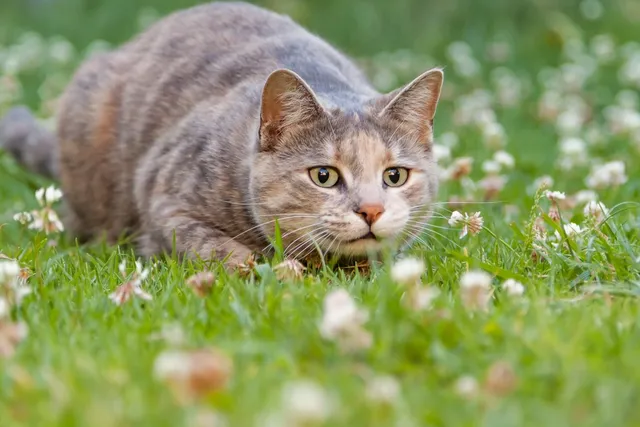
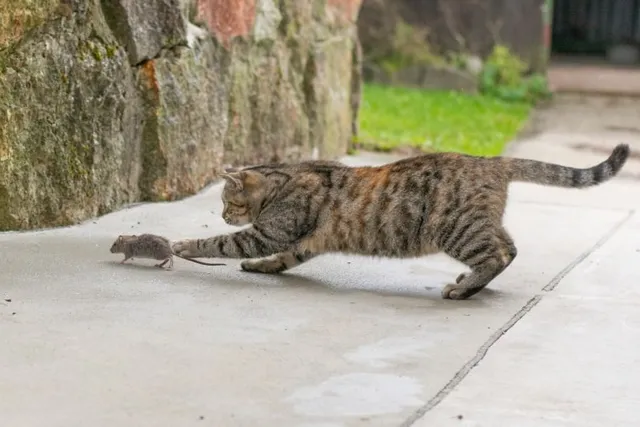
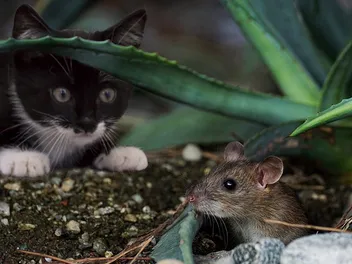
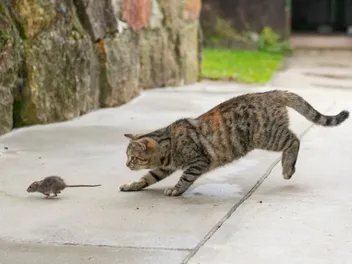
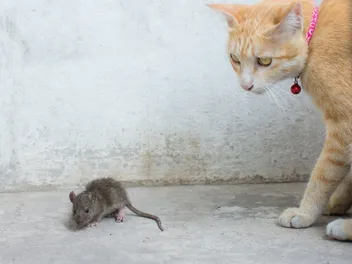
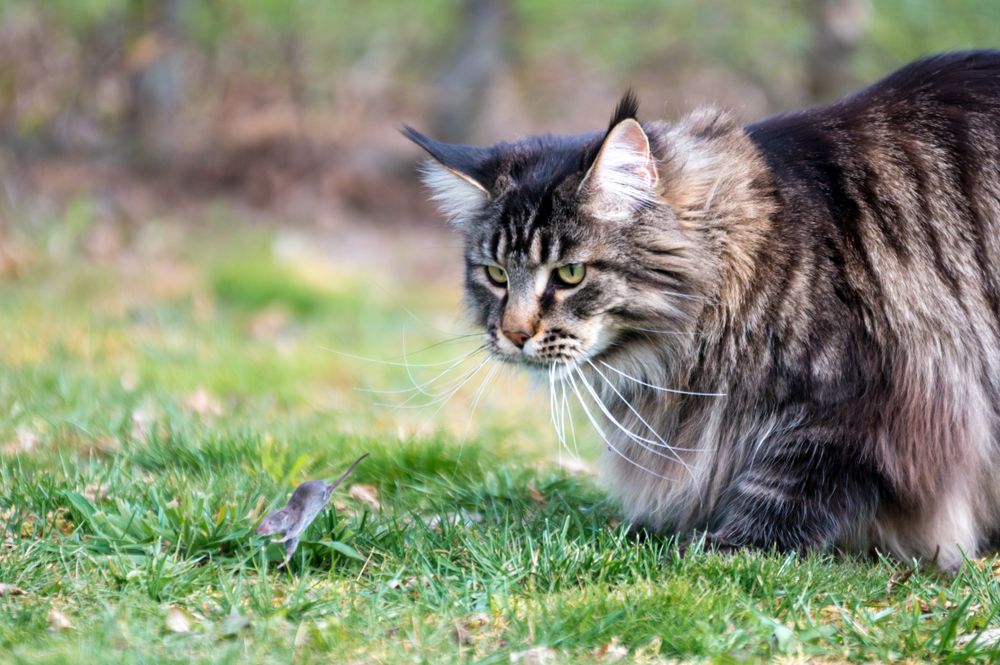
Cats are natural predators, and their most famous prey in popular culture are mice. But how do cats hunt and kill mice, should you let them do it, and can they help prevent mice from living in your home? Cats prey on mice by using their instinctive hunting methods; these often include tactics like stalking, ambushing, pouncing, or patiently waiting for a mouse to make their appearance known.
While cats are usually considered capable mouse hunters, the truth behind how they do it and their effectiveness is more than a little surprising!

How Do Cats Hunt and Kill Mice?
Cats usually hunt and kill mice using one or a combination of a few methods. The first method can be termed as an ambush method. With this method, your cat actively stalks their prey until they can get close enough to strike. The cat slowly works their way toward the prey until they can strike. Once they’re close enough, they launch a quick attack and attempt to subdue their prey. It involves quite a bit of stalking, maintaining a low profile, and is similar to how cats chase around their favorite toys during a play session.
However, cats are often opportunistic and have learning abilities too. They may sometimes wait patiently for their prey to make an appearance. For instance, feral cats may wait in hiding near a water source and opportunistically pounce when their prey (in this case, a mouse) approaches for a drink.
Cats are also known to sit on high perches to survey their surroundings continuously, and they may also use this method (in combination with others) to hunt prey that happens to pass by without noticing their presence.
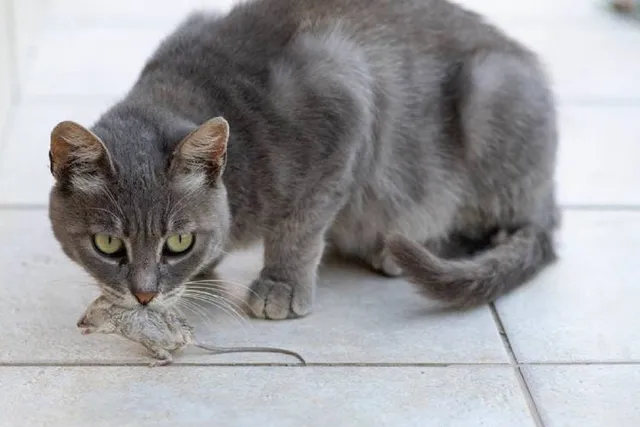
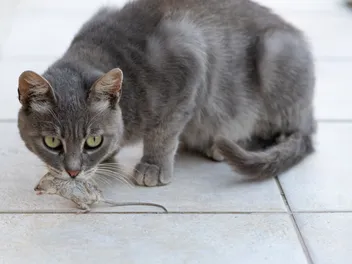
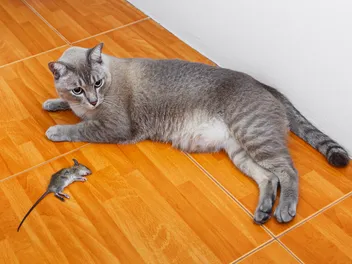
Typically, cats will use multiple methods at different times depending on the prey and location. No matter what method your cat is using, they’ll usually “play” with their prey for a bit before going in for the kill. This offers cats avenues of enrichment and is a somewhat rare observation in wild cats. However, while it might look like they’re playing with their prey, that’s not just what they’re doing.
It is thought that by playing with prey, cats might be attempting to wear down and tiring out the prey before they go in for the kill. By wearing them out, it’s less likely for them to be able to strike back and hurt the cat. However, this is merely a theory, as competition is fierce in the wild, and most wild animals aren’t afforded such time.

Do Cats Hunt When They’re Hungry?
Cats are opportunistic hunters, so just because they’re hunting doesn’t mean they’re hungry. If there’s something for them to go after, they’re likely to do it. While a cat is more likely to hunt if they are hungry, they also enjoy the activity and might do it even if they’re not worried about food.
Why Do Cats Bring You Their Prey?
There are two competing theories on why cats bring you their prey. The first theory is that they’re bringing you a gift, and since they’re bringing it to you specifically, they see you as a part of their family. It’s a heartwarming notion, even if it’s a bit gross.
The second theory is that they’re bringing their food back to their core territory, and for your cat, that’s your house. You happen to live there too, though, so it just seems like they’re bringing it to you.

Is It Safe to Let Cats Hunt and Kill Mice?
While they are phenomenal hunters, it’s probably not a good idea to give your cat free rein to hunt and kill mice. There are a few potential health concerns you have to worry about if your cat is hunting mice.
First, you must worry about diseases. Mice carry tons of diseases and all it takes is a single bite or scratch for the mouse to spread it to your cat. Other diseases are carried by the mouse internally and are passed to your cat when they eat their prey.
Next, mice may also carry parasites. It’s a short jump and a skip away from the mouse to your cat. Not only may you have to deal with fleas and ticks on your cat if this happens, but they’re also bringing it into your home, so they’ll try to make their way to you as well.
Finally, you never know what kind of condition the mouse your cat just killed is in. The biggest concern is if the mouse ate poison or something else recently. These things won’t kill the mice right away, and if your cat eats a portion of the mouse, it can make them extremely ill in which case you should speak to a veterinarian as soon as possible.
Our advice is to play it safe and try to keep your cat from hunting mice if possible.
Can You Rely on Cats to Keep Mice Out of Your Home?
While a cat might be able to keep a single mouse or two away from your home, they’re not going to stop an entire infestation. However, if the mice can find a better place to make their home without any cats around, a cat may help prevent an infestation from occurring in the first place.
But if there’s enough food or other factors that make your home a great place for mice to live, a few cats won’t keep them away.
Finally, if you already have an infestation in your home, cats alone won’t be able to take care of it. Cats are great hunters, but they can’t keep up with the rapid reproduction of mice and all the hiding places that they simply can’t reach.

Final Thoughts
It’s perfectly normal for you to find your cat hunting mice when they get the chance. Cats are natural predators and mice are ideal prey.
Just don’t rely on them to control a potential mouse infestation, and do your best to keep your cat from hunting and killing mice. While your cat should win the battle, they might end up with an injury or disease along the way!
Featured Image Credit: greg.visuals, Shutterstock
Expert cat care, straight to your inbox
News, insights, and useful advice, delivered to you.

No spam — unsubscribe anytime.
By signing up, you agree to our Terms & Conditions and Privacy & Cookies Policy.
How useful was this post?
Click a star to rate. You can leave written feedback afterwards. (We read all feedback.)
Adam is a seasoned freelance writer and passionate animal lover who has dedicated years to rescuing countless animals. With a decade of experience as a freelance writer and an even longer history of animal rescue, he has honed his skills in both fields. Adam is also a proud father of three and thrives on challenges and new adventures.