Do Cats Really Play With Their Prey Before Killing Them? Vet-Approved Behavior Explanation


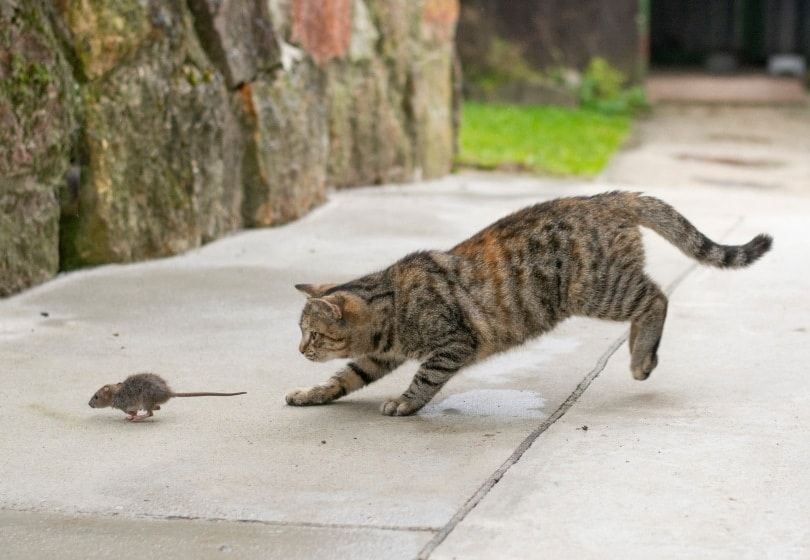
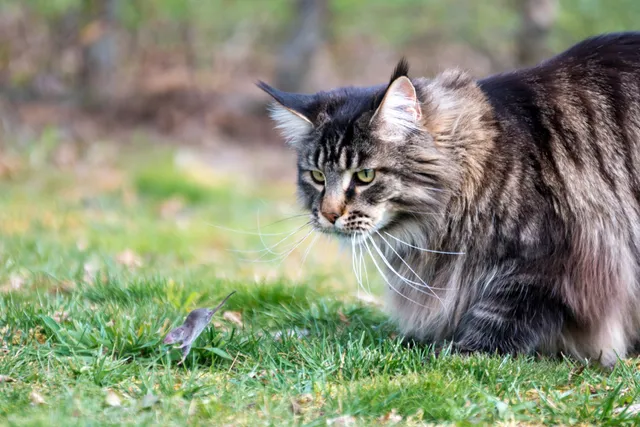
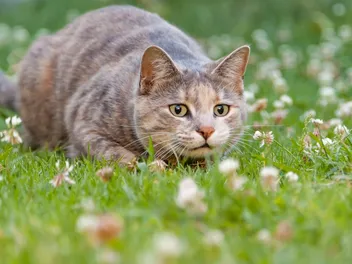
We easily forget that our cute, fluffy cats are natural-born killers. Perfectly evolved to chase, stalk, and hunt small animals to devour them, even our domestic cats can often bring home their prey.
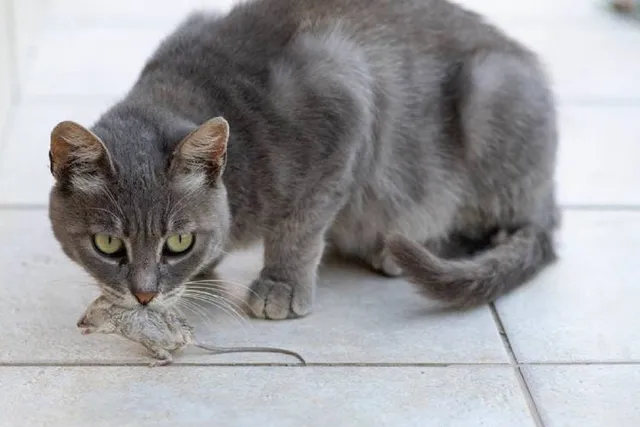
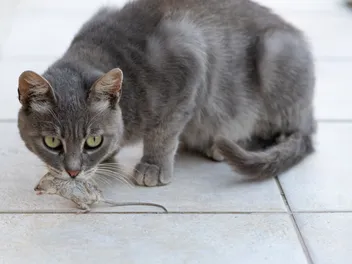
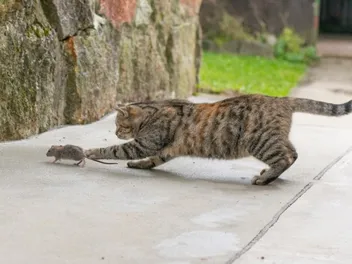
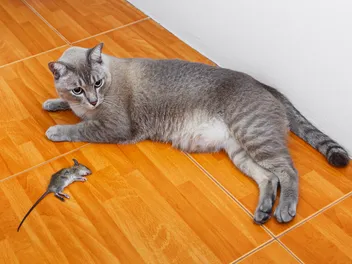
Cats are often thought to be malicious as they often play with their prey before ending their life. While this certainly appears to us as a cruel act, the behavior is not born out of evil intent but is likely done as a form of enrichment and entertainment. It is more common in pet cats and is very rarely seen in wild cats.
Let’s delve into the feline psyche to discover the intent behind this strange act of torture!

The Stamina Theory
Felines are not the only animals driven by instinct; their prey is also. When prey is cornered or chased, they can enact a fight-or-flight response. If they choose to fight, a bite, scratch, or kick can cause some harm to the predatory cat.
One theory suggests that the act of “playing” with their prey is a tactic to tire them out. Prey that is taunted for some time will lose energy and become disorientated. When the cat decides to deliver the final blow, the risk of a counter-attack is lowered if the prey is weak.
However, this theory is considered flawed for several reasons. First, wild cats don’t have the time to play with their prey, and in fact, they rarely play with their prey to the point where they exhaust them. Time wasted with bringing down their prey increases the risk of another animal stealing the cat’s kill from them.
In addition, playtime itself requires energy, and a cat that spends time playing with their play will inevitably be using some energy to do so. Therefore, it wouldn’t make logical sense for a cat to waste time playing with their prey. Though it is true that prey have defense mechanisms, many predators (including cats) have ways to work around these obstacles and bring their prey down without getting injured.
The fact that excessive play with prey is better documented in pet cats further reinforces the flaws with this theory, as pet cats are often well fed and don’t mind playing with their prey, as they don’t hunt out of hunger.

The Size & Hunger Theory
A study on predatory behaviors of domesticated cats has made some pretty cool discoveries. This study found that cats are more likely to make a kill if they are driven by hunger, and prey are more likely to avoid capture if they are larger or more difficult. If a cat’s hunger level and prey’s size were known, the probability of success could be estimated too.
However, when these factors were not well known, cats spent more time playing with their prey. This meant that the cats were either not really hungry (so they enjoyed the entertainment) or were “sizing up” their prey with play to ascertain their ability to complete the hunt.
Cats Just Wanna Have Fun!
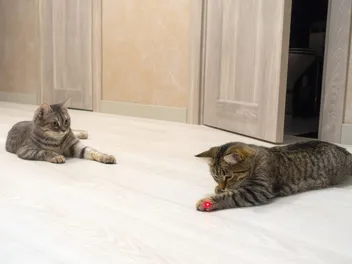
It’s often thought that cats play with their prey because it’s fun. Of course, this simply makes the cat seem heartless and evil! Even though there is a solid behavioral reason why they play before the killing, it is likely quite fun for them. It also makes sense because, as mentioned previously, cats that weren’t hungry were more likely to play with their prey.
We humans often anthropomorphize animals or assign them human emotions. But cats experience “fun” differently from us. Your domestic cat’s idea of fun is having their senses stimulated and getting opportunities to use their natural hunting behaviors.

Despite seeming fearsome and powerful, most cat species actually have a low success rate for each of their hunting attempts. Because of this, they tend to be opportunistic hunters, going after prey whenever they see the chance instead of when they are hungry.
If they simply hunted when they were hungry, it may take some time to satisfy that hunger. So, if they hunt when they see an opportunity, they can ensure they will have food whenever hunger strikes.
Our domestic cats at home are extremely well-fed and never have to worry about where their next meal comes from. Despite this, their hunting instincts will still be triggered when they see a mouse run by.
When they catch it, they realize they’re not even hungry, so instead of killing it, they can get the maximum amount of fun and stimulation by keeping it alive for a while longer.
Natural Born Killers?
If you’ve watched as many documentaries as we have, you’ll know that many wild cat species teach their young how to hunt and kill. Our domestic cats will teach their young to manipulate humans until kibble rains from the sky!
For some of our cats, killing prey seems to be an instinct that they work out independently. But not all cats may be so in tune with their hunting skills. Your cat may learn how to hunt from playing and pouncing on their littermates, but they may not have learned how to kill.
Some cats may play with their prey because they simply want to spend more time practicing their hunting skills.

A Teaching Moment/Gift
When your cat bursts through the cat flap with a mouse tucked into its jaws, still alive, it can cause you to panic a bit! Even worse is when they drop the live mouse inside and let it run around.
While they seem to be playing with their prey, they may be trying to teach you. We’ve all heard the theory that cats view humans as very large, hairless, and useless cats, right?
When they bring us live prey, they may be trying to show us how to catch and kill prey for ourselves. They are trying to give you an easy kill, thinking you are too useless to know how to catch your own food!
This can also explain why your cat meows loudly when they catch prey. They are trying to get your attention to come and interact with them and the prey for a “teaching moment.”
Finally, another theory postulates that cats bring home prey as “gifts” - certainly not what we would put on our wishlist, no matter how well intentioned it might seem to our cats.
Final Thoughts
Ultimately, cats are enigmatic creatures, and we will likely never truly understand them. A lot of research and speculation has dissected their behaviors to learn why they do what they do.
We can draw some pretty sound conclusions from this, and it’s likely your cats playing with their prey isn’t an act of cruelty but rather a basic instinct they can’t control.
Featured Image Credit: Stefan_Sutka, Shutterstock
Expert cat care, straight to your inbox
News, insights, and useful advice, delivered to you.

No spam — unsubscribe anytime.
By signing up, you agree to our Terms & Conditions and Privacy & Cookies Policy.
How useful was this post?
Click a star to rate. You can leave written feedback afterwards. (We read all feedback.)
With an early start in the veterinary industry and as a conservation educator at Disney’s Animal Kingdom in Florida, Sophie has since been a successful Zookeeper and Conservationist, specializing in native New Zealand species. When she’s not bird watching in native forests or crawling through the underbrush at midnight searching for rare frog species, she can be found with her farmer husband on their sheep and beef station, far from civilization. Alongside them, they have 2 cats, 9 chickens, and 11 dogs (most notably, her sidekick, a black Labrador aptly named Jellybean). Sophie enjoys her writing career as it provides opportunities to help and support pet owners of all kinds to give animals the best welfare possible. The only downside is the long list of strange searches in her internet history!