Get

In Your Inbox

Catster is reader-supported. When you buy via links on our site, we may earn an affiliate commission at no cost to you. Learn more.

My Cat Ate a Mouse: Vet-Approved Dangers & Prevention


Share

My Cat Ate a Mouse

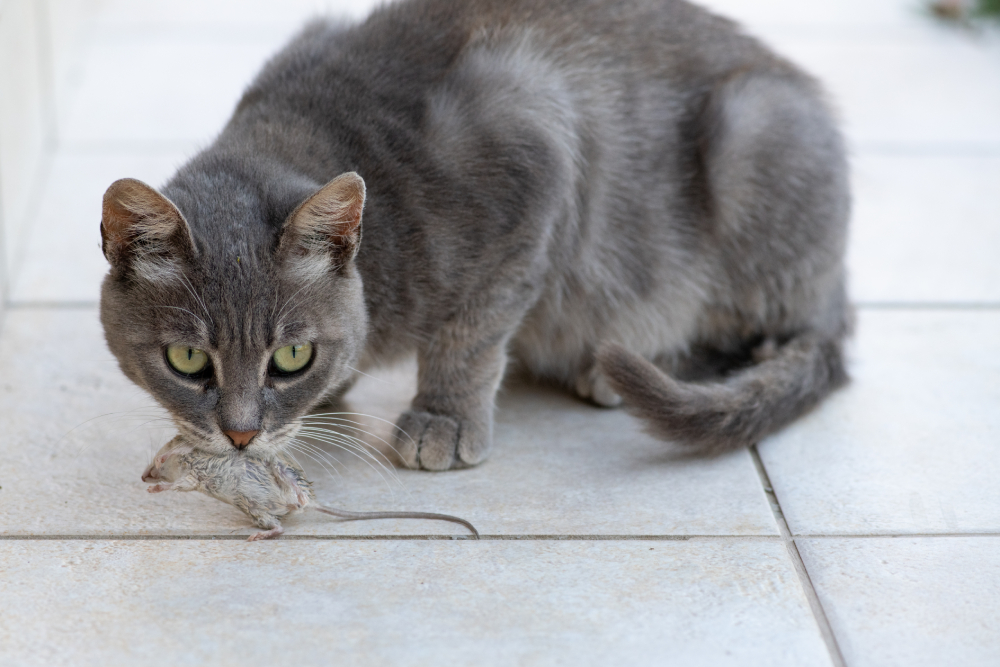
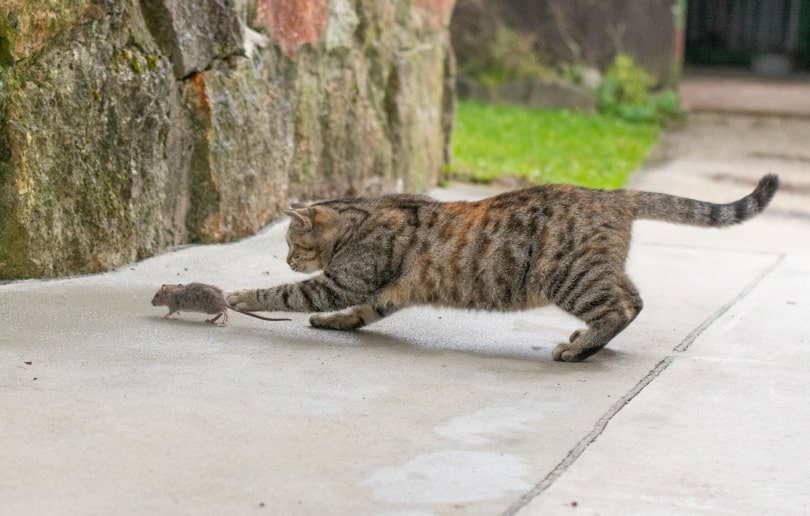
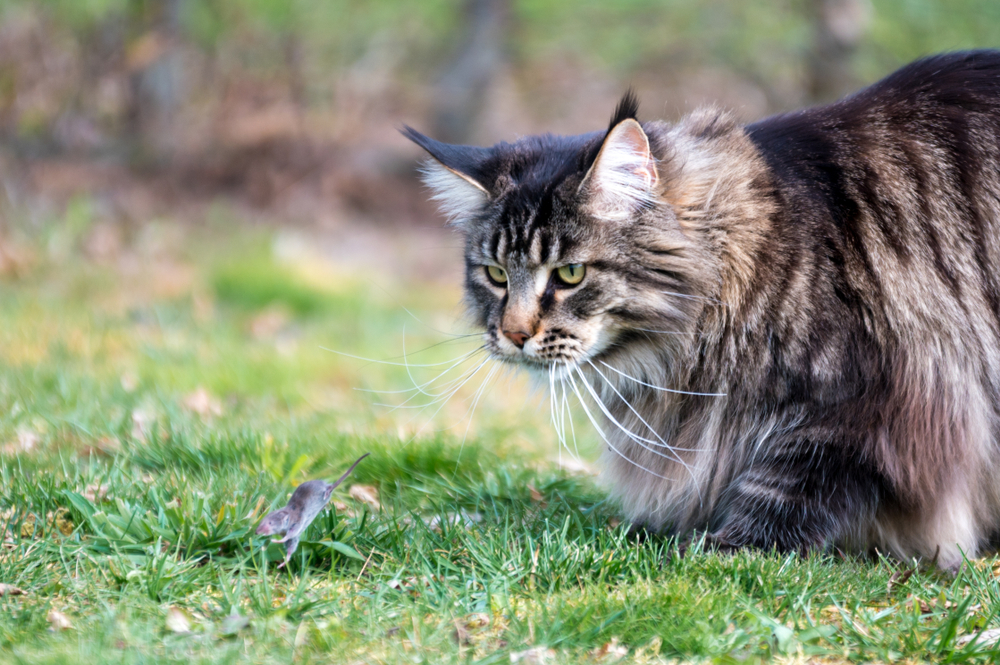
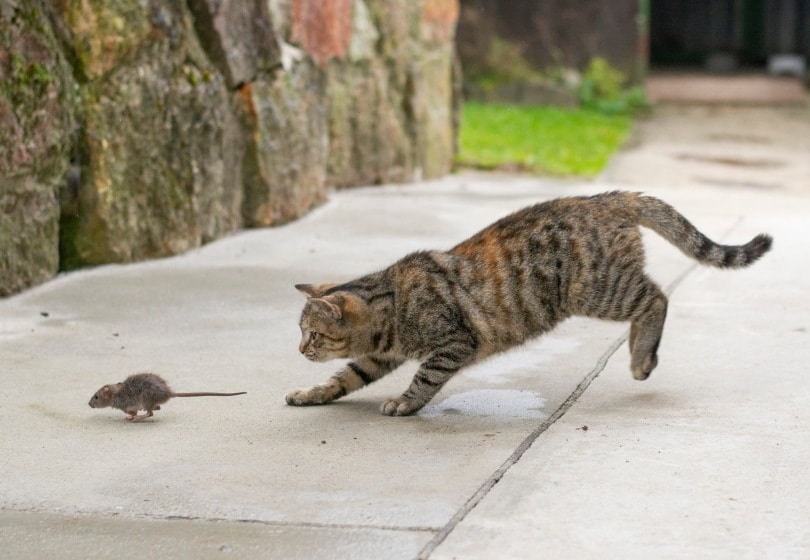
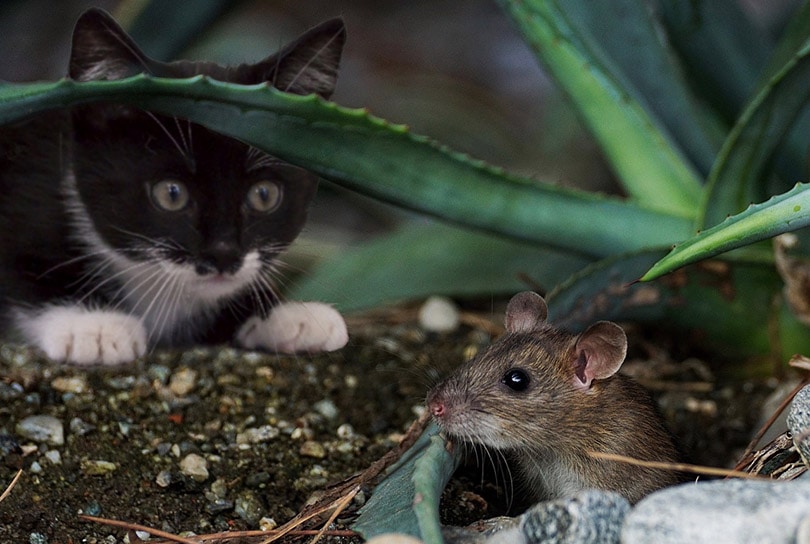
Cats are born hunters, and it’s natural for them to pursue and catch prey such as mice. If your cat just consumed a mouse, you may be wondering if you need to be concerned. What if your buddy ate a mouse that was poisoned? Cats can eat mice, and they often do when given access to the outdoors.

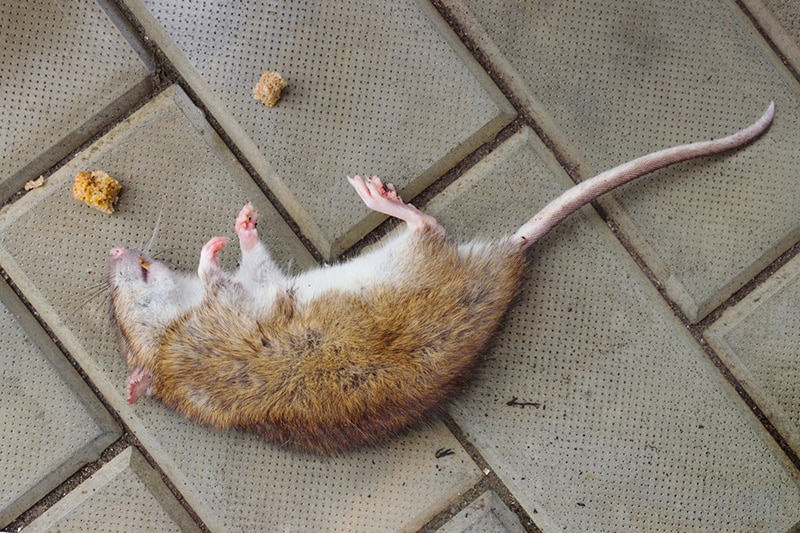
If your cat has eaten one mouse that you suspect may have been poisoned, there’s likely little to worry about; cats must consume several poisoned rodents to become sick from rodenticide exposure. This type of poisoning is called secondary or relay poisoning and is more common in cats that subsist on a diet of rodents, namely outdoor cats with access to several mice in areas where rodent-killing chemicals are commonly used.

divider cats oct 2024

What Are the Diseases Carried by Mice?

long-tailed mouse close up
Image By: Ralphs_Fotos, Pixabay

Like all mammals, mice often carry parasites. When a cat consumes a mouse, they can become infected with these parasites.

Below are the most common parasites that cats can pick up from eating mice:
  • Toxoplasma gondii – This is a microscopic parasite that is shed in the feces of infected cats. It can pose a health threat to humans, especially to pregnant women and their unborn babies and those with weakened immune systems. It is recommended that pregnant women and those with weakened immune systems do not handle cat feces, e.g., cleaning out litter trays.
  • RoundwormsToxascaris leonina and Toxocara cati are the most common species of roundworm found in cats.  They can be contracted by cats when eating rodents that have been infected. Again these parasites can infect humans, and although rare, can be harmful, especially to young children.
  • Tapeworm – Cats usually become infected with tapeworms by ingesting infected fleas while grooming or by eating infected rodents. Fleas and rodents become infected by eating tapeworm eggs in the environment. If tapeworm segments are ingested by humans (through accidental ingestion of cat feces), they can cause infection, but good hygiene prevents this.

Mice can also carry bacterial infections that can pass onto cats that predate them.

These include:
  •  Yersinia pestis is the bacteria responsible for the plague. It is transmitted primarily through the fleas of rats and other rodents. Cats are usually exposed to the bacteria by oral contact with the tissue of an infected rodent, e.g., eating a mouse or from the bite of an infected flea.
  • Francisella tularensis is a bacteria that is found most commonly in rabbits and rodents in the USA. It survives within the host organism by creating tumor-like masses within the liver. Infection with this bacteria is uncommon in cats, but they can become infected if they eat an infected rabbit or rodent. The disease caused is known as Tularemia. The signs of Tularemia include a high fever, jaundice (yellowing of the skin and whites of the eyes), and stomach pain. This infection is zoonotic, meaning it can be passed from cats to humans, and it is a reportable disease in the USA.

Yersinia pestis and Francisella tularensis infections can be serious and require immediate evaluation and treatment. Cats that regularly play outdoors often benefit from regular deworming, as it can be difficult to tell if a cat has a parasitic infection based on physical signs alone.

divider cats oct 2024

Why Do Indoor Cats Kill and Eat Mice?

It’s instinctual. Mice and other small mammals are part of a cat’s natural diet, and they have never had a good reason to get rid of their natural tendency to chase small creatures. The cat’s mouse-catching prowess is largely what brought people and cats together in the first place!

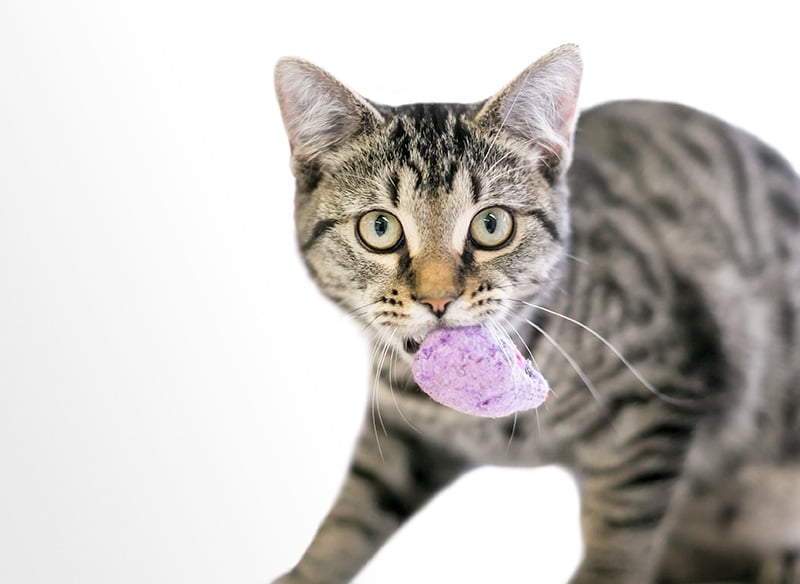
british shorthair cat playing with mouse toy
Image By: Garmasheva Natalia, Shutterstock

divider cats oct 2024

How Can I Discourage My Cat From Giving Me Dead Mice as Gifts?

It’s common for cats with access to the outdoors to bring home dead rodents for humans to find. No one is quite sure why cats engage in this sort of behavior, but there are a number of theories.

  • Cats that are fed a well-balanced diet are less likely to kill and eat their prey. They are more likely to play with it and may kill it in the process, but this might be left as a “gift” for you.
  • A cat’s opportunistic nature means that if a second opportunity to catch prey arises soon after a successful kill, they will engage, even if they aren’t hungry. If they aren’t hungry, they are likely to leave the prey for you to find rather than eat it.

So, how can we use that information to reduce the number of dead mice on your doorstep?

Limit Outdoor Access

Cats with regular outdoor access have more chances to catch prey, such as birds and mice. Keeping pets indoors at dawn and dusk when prey species are most active can go a long way toward minimizing the number of birds and small mammals they kill, bring home, or consume.

Catios provide cats with a safe, enclosed area where they can enjoy the sights and sounds of the local birds and squirrels while at the same time limiting their ability to prey on them. However, some cats find being unable to carry out their natural hunting behaviors stressful, so it is important to ensure your cat isn’t showing any signs of stress, e.g., inappropriate toileting, cystitis, or over-grooming. Speak to your vet if you are concerned your cat is suffering from any stress-related problems.

birman cat walking outdoors
Image Credit: Jeannette1980, Pixabay

Provide Lots of Toys

Giving your cat several toys to play with and engaging in short but frequent play sessions with toys that closely resemble natural prey animals may provide an alternative outlet for your cat’s natural predatory drive. You can play with wand toys to stimulate their hunting instincts, and they can enjoy the thrill of the chase without tormenting small rodents.

Importance of Diet

Provide a high-quality, well-balanced diet to reduce the hunger drive to hunt. Cats enjoy variety in their diets, so add in new foods now and then if possible. Feeding small meals throughout the day and night mimics the cat’s natural feeding pattern. Timed feeders can be helpful with this.

divider cats oct 2024

Conclusion

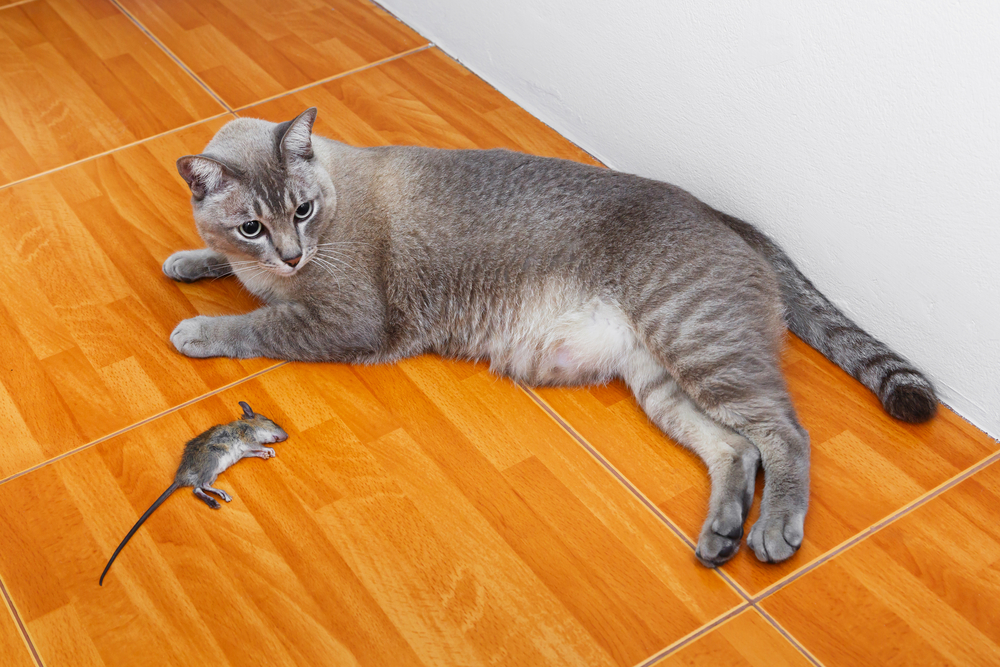
While watching your cat devour a mouse may not be pleasant, there’s probably no reason to panic. Rodents are part of a cat’s natural diet, so it makes sense for them to pursue and eat them. If your cat has eaten a rodent that you suspect died from poison ingestion, there are unlikely to be any complications, but you can always call your vet to have a discussion with them about the number of mice eaten and the type of poison they might have had for peace of mind.

Secondary rodenticide poisoning is extremely rare in cats that seldom eat mice and is more likely seen in cats that hunt for all their food, i.e., feral or farm cats. While mice are part of the natural feline diet, they are also a significant source of parasites and, less commonly, bacteria that can cause health complications. If your cat is a frequent mouse eater, it is very important that they are wormed monthly with a robust and effective anti-parasite medication. Make sure you speak to your veterinarian to ensure your cat is covered appropriately.


Featured Image Credit: Viacheslav Lopatin, Shutterstock

Want content like this delivered to you?

Sign Up For Our Newsletter

News, insights, expert advice, and everything cat

* By submitting, you agree to our Terms & Conditions and Privacy & Cookies Policy.


How useful was this post?

Click on a star to rate (you can leave written feedback after clicking submit)

Help us improve Catster for pet parents!

Your feedback really matters.

What did you like about this post? Also how can we improve it?

Join the conversation

Leave a Reply

You’re very welcome to leave a comment or question. Please know that all comments must meet our community guidelines, and your email address will NOT be published. Let’s have a positive and constructive conversation.


Catster's Digital Magazine is Back!

Vet-approved health & behavior advice

Real cat stories & community features

Chatting About Big Cat Tourism, Lion Hunting, and Learning From Our Mistakes | Chatty Cattys, Episode 26

In this episode of Catster’s Chatty Cattys podcast, Nicole and Dr. Karyn dive into the dark side of big cat tourism and the...

Why Cats Sit by the Door (But Don’t Go Through It)

Door-sitting is one of those quirky little habits that almost every cat owner experiences at some point. You know how it goes: a...

Six Legs Are Better Than Three – How A Tripod Dog and Kitten Found Friendship Through Recovery

Sometimes the most meaningful friendships begin in the most unexpected places. At a Maryland veterinary hospital operated by Last Chance Animal Rescue, two...

The Original Space Invaders – Why Zero Respect for Personal Boundaries Is a Good Thing

Cats have a reputation for being independent, and in many ways they are. But anyone who has tried to work at a laptop...

More related

Does Amtrak Allow Cats? Train Pet Policy & Safety Tips

Are you a proud cat owner who can’t bear the thought of leaving your furry friend behind when you travel? If so, you’re...

Cat Holidays: Monthly, Weekly & Daily

If you are a cat lover looking for fun ways to honor some of the most amazing creatures on earth, you are in...

6 Best Online Vet Services in 2026 – Reviews & Top Picks

Veterinary care has come a long way over the years. The pandemic propelled telemedicine for people and pets. It allowed everyone to have...

Why Are Cats Anesthetized for Teeth Cleaning? (Vet Answer)

Dental care for your cat is as important as dental care for yourself. Cats can get tartar, gingivitis, broken teeth, tooth root abscesses,...

Keep reading

Cat Does Not Purr: 4 Vet-Reviewed Reasons

It is not fully understood why cats purr or how they do it, but you can generally expect your beloved feline family member to purr when they are feeling content. Purring is typical of cats when they are being petted...

Tabby green eyed cat being pet

How Often Should You Wash a Cat’s Food & Water Bowls? Vet-Approved Advice

Keeping your cat’s food and water bowls as clean as possible is important. Cleaning them regularly can reduce the risk of dangerous bacterial contamination, which can lead to health issues for your pet. But how often should you be washing...

Washing animal food bowls under the tap in the kitchen sink.

10 Best Budget Cat Foods of 2026 – Reviews & Top Picks

Feeding time for your cats can sometimes be tedious; they’re just about the pickiest eaters around, so it’s difficult to find food they’ll willingly eat that’s good for them and that doesn’t require you to take out a second mortgage....

orange cat eating on an orange bowl

Wellness Cat Food Review of 2026: Recalls, Pros & Cons

Wellness Cat Food Review Summary Started in 1997 by a team of animal wellness experts, including nutritionists, veterinarians, and food scientists, Wellness Pet Food is the largest holistic pet food sold in independent retailers today. Whenever possible, the company strives...

Wellness Core Cat Food Review

Can Cats Eat Caviar? Vet-Verified Benefits & Precautions

Have you ever wanted to give your cat an expensive treat, like caviar (raw fish eggs)? Before you open up the caviar jar, you want to make sure that it is safe. Cats can eat caviar, but it is not...

Can Cats Eat Caviar

How to Train a Cat to Stay Indoors: 7 Vet-Approved Tips

Of the over 160 million cats in the United States, roughly 30—80 million are unowned and roaming free1. Many cats with owners also live outdoors, at least part of the time. Outdoor cats pose a risk to wildlife and are...

cute cat rearing up licking finger of the woman kneeling on the floor

Feline Leukemia Day 2026: What It Is & How To Participate (Vet Verified)

There are many wonderful pet holidays every year, such as Walk Your Pet Day and Cuddly Kitten Day. These holidays can be fun and help us bond with our pets. However, few of these holidays are as important as Feline...

vet checking up a cat

Why Does My Cat Keep Going to Their Litterbox (But Nothing Happens)? Vet Approved Advice

Over 37% of households in the United States have invited a cat into their homes; that is over 45 million households! About 63% keep their pets indoors exclusively. That’s a good thing, too, since it gives owners a heads-up if...

orange cat beside litter box

Love Cats? So Do We! Join the Catster Community

Stay informed with expert pet care insights delivered straight to your inbox! Discover professional guidance on animal behavior, feeding tips, trusted product picks, and much more.


Sign up for the Catster Email Newsletter

Stay informed with expert pet care insights delivered straight to your inbox! Discover professional guidance on animal behavior, feeding tips, trusted product picks, and much more.