Ask Dr. Paola – Help! My Cat Has Runny Poops! (February 9, 2026)

Welcome to our "Ask Dr. Paola" series, where every Monday we bring expert advice straight from Dr. Paola Cuevas (MVZ) to help our readers better understand their cat's health and well-being.
Whether you're a new pet parent or a seasoned cat lover, Dr. Paola is here to provide answers to your most pressing questions. From nutrition tips and preventive care to troubleshooting common behavioral issues, Dr. Paola is ready to offer insights that will keep your kitty happy, healthy, and feline fine. Stay tuned for expert guidance on a range of topics that matter most to you and your cat, so you can make informed decisions and provide the best possible care for your furry companion.
Have a question? Send it in here!

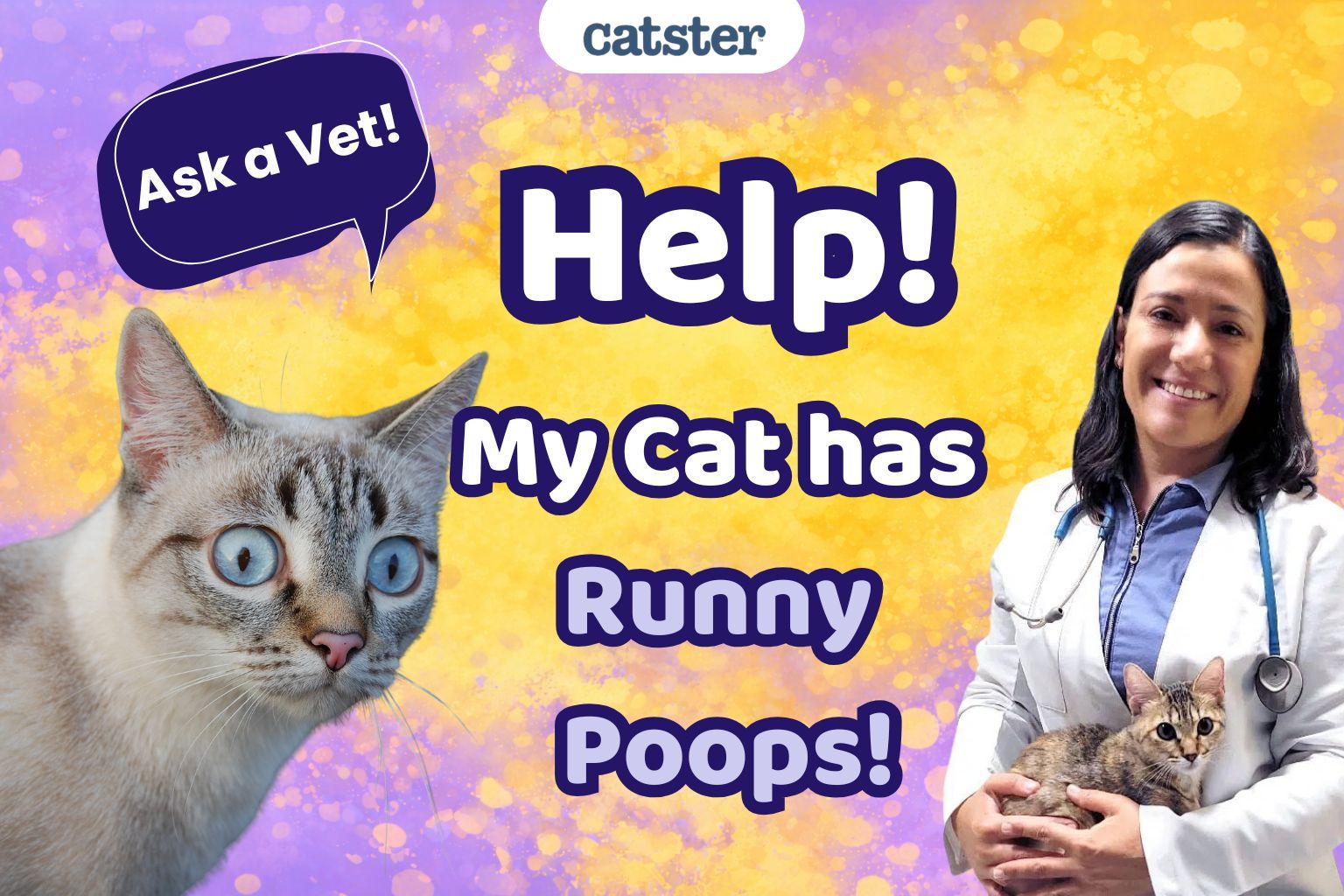
Help! My Cat Always Has Runny Poops!
"Snickers is a 7-year-old Maine Coon/Ragdoll mix. Ever since we adopted her 4 years ago, we've been unable to find food that doesn't cause soft, loose poops. We've had poop tests confirming she is worm/parasite/bacteria free. We've had her on a gluten/grain-free diet of moist/dry food. We've tried so many different brands but she continues to have loose (not diarrhea) stools. We've given her probiotics and prebiotics in her food. We've tried homeopathic remedies for food sensitivities. We had a saliva test to measure microbiomes and found out she needs probiotics but she still has runny poops. We're confused and discouraged. Can you help?"- Elizabeth
Dear Elizabeth,
I can hear how exhausting and discouraging this has been, especially when you have clearly been thoughtful and persistent in trying to help Snickers feel better. When a cat has chronic soft stools without true diarrhea and repeated fecal tests are normal, the most common explanation is not infection but how the intestines are responding to food. In many cats, this pattern fits with food-responsive enteropathy or a mild inflammatory bowel process, where digestion and absorption are slightly inefficient rather than severely diseased. Grain-free or gluten-free diets are not necessarily gentler for cats, and some are actually higher in fat or certain proteins that can worsen stool consistency even when everything else appears normal.
Many grain-free diets rely heavily on legumes such as peas, lentils, chickpeas, or pea protein to replace grains. Cats are obligate carnivores, and these plant-based proteins are not well utilized by their digestive system, which can lead to increased fermentation in the colon and chronically soft stools even when there is no true disease present. In that situation, the stool may never become watery, but it also never firms up properly. Beyond legumes, certain animal proteins can also be problematic depending on the individual cat’s immune response. Chicken, fish, and beef are the most commonly used proteins in commercial cat foods, and repeated exposure over time can lead to food-responsive enteropathy in some cats. This does not mean the protein is low quality or harmful in general, but rather that Snickers’ immune system may be reacting to something it sees as familiar and irritating. That is why hydrolyzed diets, where proteins are broken down into pieces too small to trigger an immune response, or truly novel proteins that the cat has never eaten before, are often more successful than simply switching brands or staying grain-free.
One important point to clarify is the saliva-based microbiome testing. At this time, there is no solid scientific evidence that saliva testing accurately reflects the intestinal microbiome in cats or reliably guides treatment decisions. That can make things feel even more frustrating, because it suggests an answer without leading to improvement. Probiotics can be helpful in some cats, but not all products are equal, and adding them without first stabilizing the diet often does not resolve the underlying issue. Homeopathic remedies, while appealing, have not been shown in controlled veterinary studies to correct chronic gastrointestinal signs, which likely explains why they have not made a meaningful difference for Snickers.
What is most likely to help at this stage is a very structured dietary approach rather than continuing to rotate foods. A strict trial with a veterinary prescription hydrolyzed diet or a truly novel protein diet, fed exclusively for several weeks, is often the most effective next step, even if many over-the-counter diets have already been tried. These diets are designed to reduce immune stimulation in the gut, not just limit ingredients. If stool quality does not improve with that approach, further evaluation for inflammatory bowel disease may be appropriate. Try to think of Snickers’ intestines as overly sensitive rather than damaged; they react to certain inputs even when tests look reassuring. With a systematic plan and patience, many cats with this long history do achieve firmer stools and a better quality of life.
Kind regards,
- Dr. Paola

Help! I Think My Cat is Depressed!
"My older cat died and my other cat Bootsie who was extremely fond of him is depressed. I have tried play, putting together a new scratching post for her, and holding her, but nothing seems to be working, possibly because she senses i am missing him as well. Do you have any suggestions? I would really appreciate any you would have!" - Joey
Dear Joey,
I am very sorry for your loss, and what you are seeing in Bootsie is a genuine and well-recognized response to losing a bonded companion. Some cats do form strong social attachments, and when one cat disappears from their daily life, the remaining cat can show signs such as withdrawal, reduced interest in play, changes in sleep patterns, or eating less. This is not simply because she senses your sadness, although cats are sensitive to changes in routine and household mood. It is more about the sudden absence of a familiar presence, shared interactions, and predictable daily rhythms that helped her feel secure.
During this period, it is common for cats to seem uninterested in toys or new enrichment, because their stress level is higher and novelty can feel like too much rather than comforting. What tends to help most is consistency and calm. Keeping feeding times, lighting, and daily routines steady gives her nervous system something reliable to settle around. Offering companionship without pressure, sitting quietly nearby, and letting her choose contact is often more soothing than holding her or encouraging activity before she is ready. Familiar scents can also be reassuring, so keeping items that still smell like her companion, if available, may help soften the transition.
If this low mood continues for several weeks, or if you notice concerning changes such as reduced appetite or weight loss, a veterinary visit is important. Stress-related behavioral changes can sometimes overlap with medical issues in cats, especially as they age. With time, patience, and a predictable environment, most cats gradually adapt to the loss, even though the process can be slow and uneven. You are already doing many of the right things by being attentive and compassionate during a difficult adjustment for both of you. My sincere condolences, and I wish you strength and peace during this difficult time.
Best wishes,
- Dr. Paola

Help! Is My Cat Too Old for Spaying?
"My 2 year old cat Bunny has not been spayed, is she too old and what are the risks?" - Linda
Hi Linda,
Bunny is absolutely not too old to be spayed, and at two years of age, the procedure is still very commonly and safely performed. From a medical standpoint, spaying removes the ovaries and uterus, which eliminates heat cycles and prevents pregnancy, but more importantly, it significantly reduces health risks over her lifetime. Unspayed female cats have a high risk of developing uterine infections called pyometra, which can be life-threatening, and they also face a much higher chance of mammary cancer, especially if they go through repeated heat cycles. You can think of spaying as preventive maintenance; it removes organs that are prone to serious disease later on.
As with any surgery, there are risks related to anesthesia and the procedure itself, but in a healthy young adult cat, those risks are considered low when proper preoperative evaluation and modern anesthetic protocols are used. Females do tend to have a slightly more involved surgery than males because it is an abdominal procedure, but recovery is typically smooth, with most cats returning to normal behavior within a few days. At two years old, Bunny is still young, resilient, and an excellent candidate from a healing and anesthesia standpoint.
Beyond medical benefits, spaying also improves quality of life by preventing repeated heat cycles, which can be stressful for cats and frustrating for pet parents due to vocalization, restlessness, and escape behaviors. If you have any concerns about anesthesia or recovery, your veterinarian can discuss pre-surgical screening and pain management options to tailor the procedure to Bunny’s individual needs. Overall, spaying at her age remains a proactive decision that protects both her health and her long-term wellbeing. Best wishes,
- Dr. Paola
This article is a part of our weekly Ask Dr. Paola series
Expert cat care, straight to your inbox
News, insights, and useful advice, delivered to you.

No spam — unsubscribe anytime.
By signing up, you agree to our Terms & Conditions and Privacy & Cookies Policy.
How useful was this post?
Click a star to rate. You can leave written feedback afterwards. (We read all feedback.)
Dr. Paola Cuevas MVZ (Veterinarian)
Dr. Paola Cuevas is the Senior In-House Veterinarian at Pangolia, the parent company of Catster. She has over 18 years of experience as a veterinarian and animal behaviorist. Paola's focus is on preventive medicine and animal welfare. Paola has a large range of skills in from diagnostic imaging to nutrition and clinical pathology. Paola enjoys sharing her extensive knowledge of animal training with our Catster readers and is always happy to answer reader questions as our in-house veterinarian.