My Cat Is Panting After Playing, Should I Worry? 4 Vet Approved Reasons & FAQ


In this article
Ask anyone in your closest circle whether they’ve ever seen a cat panting. The most probable answer would be a “no.” That’s because cats, unlike dogs, aren’t known for panting. In which case, why is your cat panting after playing?
When your feline companion starts panting after a few minutes of play, it should be an immediate cause for alarm. If your cat pants after extensive play and the episode doesn’t resolve in about a minute, it definitely warrants veterinary attention.

Do Cats Pant?
Generally speaking, it isn’t normal for cats to pant. While it is possible to see a cat panting after playing or exercising for a very long period of time, they should not do so in the same way as a dog. Cats have other more effective mechanisms for thermoregulation (such as grooming themselves). If panting does not improve within approximately one minute, veterinary assistance should be sought, as it may be a sign of heatstroke or a potentially life-threatening heart or lung disease.
Cats that are overweight or obese are more likely to pant when placed on an exercise program that’s too intensive for them (much like how an untrained individual would react to a long run when compared to a trained athletic runner).
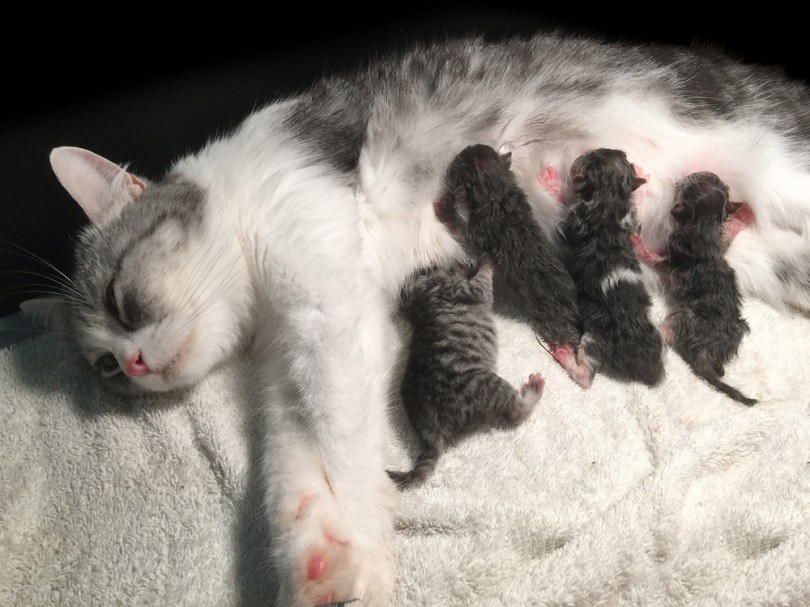
Kittens are more likely to pant after a period of high-intensity exercise in the form of play. However, as mentioned above, this should quickly resolve about a minute after play. You should be particularly concerned if you notice one kitten panting while playing with their littermates (who do not seem to pant after playing).

What Does Cat Panting Look Like?
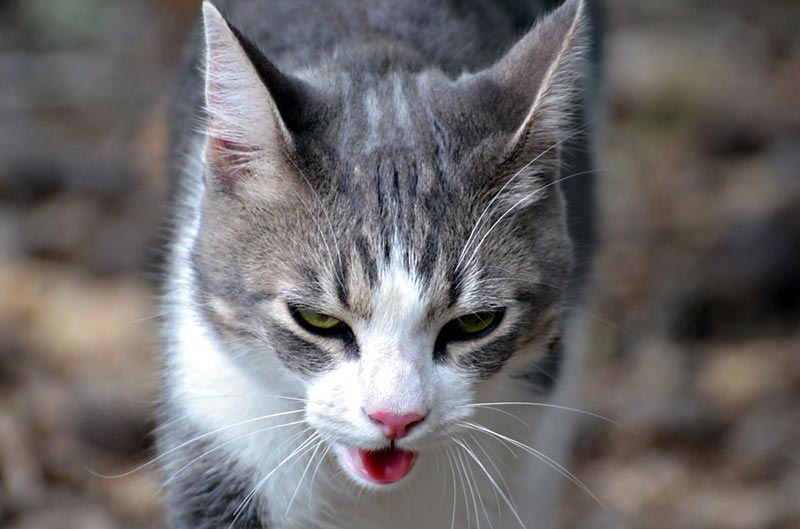
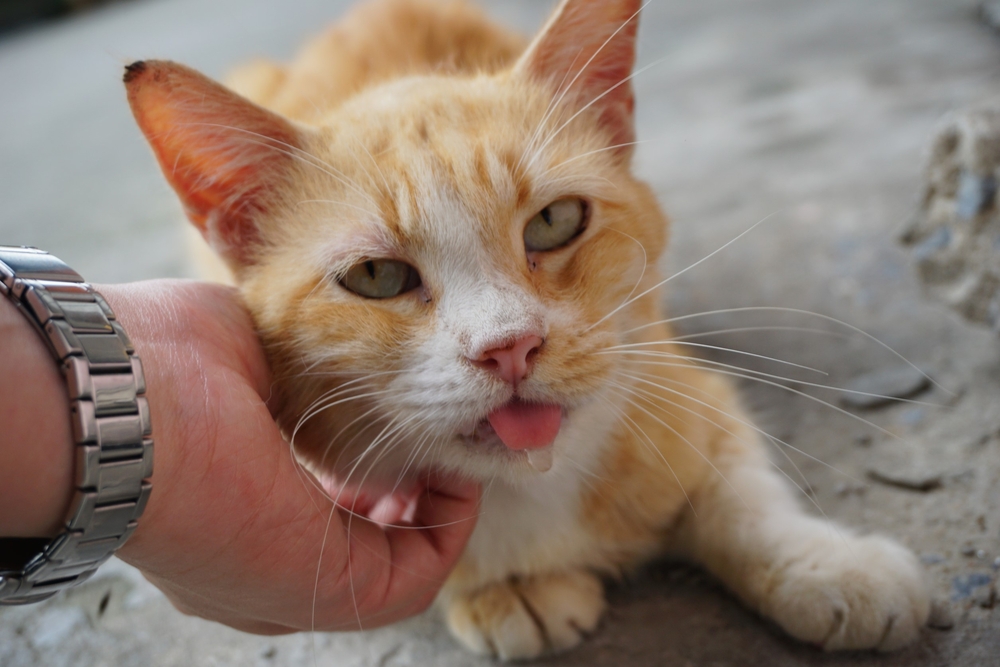
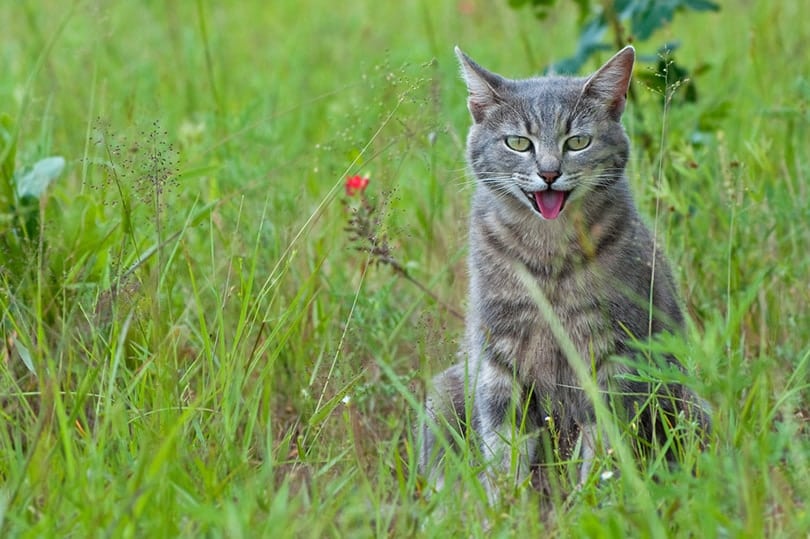
When cats pant, they open their little mouth and stick their tongues slightly out. Most cats that pant do so while laying down, but they may also pant while sitting. It’s rare for a cat to pant while standing, though they may do so briefly just before they collapse (in cases of a heat stroke). Cat panting is often accompanied by a very intense movement of the chest.
Your cat might also sit on all fours, with their belly on the floor and their limbs held close to their body, and appear to be breathing from their tummy as they inhale and exhale.
If you are concerned about the health and well-being of your pet, seek veterinary advice for the best course of action.

The 4 Reasons Why Your Cat is Panting After Playing
Reasons why your cat might be panting after playing include the following:
1. Your Cat Is Feeling Hot
Playtime is considered exercise for most cats, and sometimes, after long periods of playtime, your cat may temporarily pant. However, this should resolve very quickly (in under a minute), and in most cases, your cat would stop playing before they would actually overheat to the point of having to pant.
2. Your Cat Has a Respiratory Ailment
Cats have a very sensitive respiratory system, and many of the most common ailments of cats are associated with their respiratory system. Your cat may pant if they have a play session while infected with a respiratory ailment. However, it is important to note that most cats that do have a respiratory infection will not play, though cats with other ailments that compromise their respiratory system may pant. For example, cats with an abnormal growth (such as a polyp) may feel otherwise well and choose to play and pant from overexertion.
Sometimes your feline friend may be panting because of asthma. In fact, about 1 to 5% of cats across the globe suffer from the condition. It’s normal for asthmatic cats to pant heavily when they have an asthma attack. An asthmatic cat, like an asthmatic person, wouldn’t be able to tolerate excessive play comfortably and may pant after playing. If you suspect that your cat has asthma (or any other respiratory condition), you should have them looked over by your veterinarian.

3. Your Cat Has a Heart Condition
Many issues involving the cat’s heart will likely result in poor exercise tolerance and panting episodes after playtime. Cats are prone to many different types of cardiac problems. Some of these are congenital (a birth condition), while others are conditions that develop over time. Therefore, regardless of your cat’s age, a heart condition might be the reason they pant so much after playtime. All heart problems in cats require veterinary care.
Cats are also vulnerable to parasites involving the heart and lungs. Heartworms are parasites that can affect a cat’s breathing. Though rare in cats, they are able to cause signs of respiratory distress (including panting) in infected individuals. Though called heartworm, these parasites usually reside in the pulmonary artery (which carries blood from the heart to the lungs).
There is no treatment for heartworm in cats as of yet, so your cat will likely be prescribed supportive therapy and have their exercise limited. However, heartworm is preventable in cats. Speak to your veterinarian for a heartworm preventive for your cat.
4. Your Cat Has Anemia
Anemia is a condition caused by a lack of enough red blood cells in the body. Anemic cats don’t get enough oxygen because of their low red blood cell count. As such, they have to take deep breaths to keep up with the oxygen demand. An anemic cat may pant after they play, and they may also play less than an otherwise normal cat.

When Should I Be Worried About My Cat’s Panting?
Panting in cats is generally not normal and is definitely a cause of worry if it lasts longer than a minute.
Be sure to call the vet when you notice that:
Any of the above signs indicate that your cat is severely ill. Act quickly before the condition gets out of hand.
Final Thoughts
Though cats may, on occasion, pant after a prolonged period of playtime, it should quickly resolve. Prolonged panting is not considered normal in cats. If you notice your cat panting frequently or for prolonged periods, you should immediately seek veterinary attention for your cat.
See also:
Sources
Featured Image Credit: Sari ONeal, Shutterstock

Expert cat care, straight to your inbox
Vet-reviewed advice, behavior tips, and the best of Catster. Free, and you can unsubscribe anytime.
By signing up, you agree to our Terms & Conditions and Privacy & Cookies Policy.
Christian started writing for a local newspaper as a teenager, and he's been involved in the publishing industry for most of his adult life. Combining his love of writing with a passion for animals, he is currently the Director of Editorial at Pangolia and the Editor-in-Chief at Catster.
Christian lives in the Philippines with his wife, son, and four rescue cats: Trixie, Chloe, Sparky, and Chopper.
Join the conversation
Ask a question, share your story, or send private feedback.