Get

In Your Inbox

Catster is reader-supported. When you buy via links on our site, we may earn an affiliate commission at no cost to you. Learn more.

How Do Cats Feel Pain? Vet-Approved Facts & Signs


Share

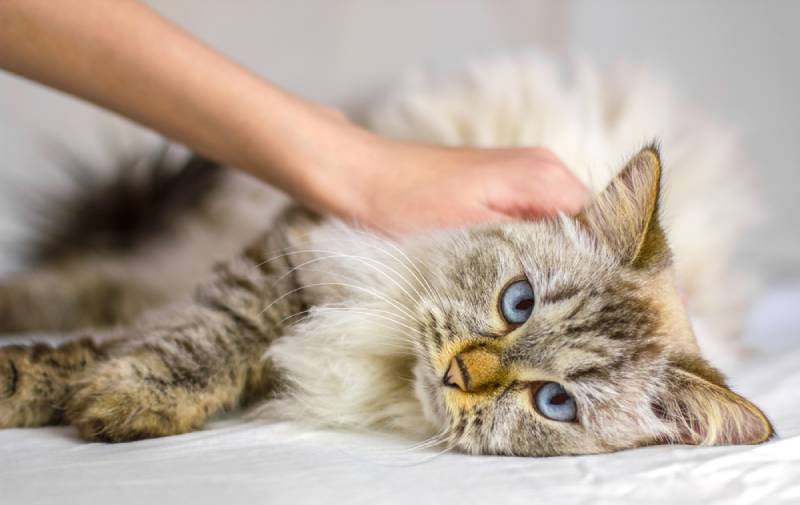
cat lying on bed

Cats have a similar nervous system as humans and other mammals.1 They can feel pain whether due to injuries, illnesses, or any other internal ailment. However, cats often try to not show signs of their pain. Instead, they tend to try to hide their pain, only showing signs of it when it’s not possible to do otherwise. So, you may wonder how you’re supposed to know when your cat is in pain for one reason or another. Here is the information that you need to determine when your cat is in pain and what to do about it.

divider 3 paws

How Do Cats Feel Pain?

The fundamental way that cats feel pain is the same for humans and an overwhelming majority of other animals. Cats have a nervous system that comprises the brain, spinal cord, and all the nerves in the body.

The way that a cat feels pain is by the nerves picking up stimuli and relaying them back to the spinal cord and brain, enabling them to recognize that something is painful. This serves a vital function for survival. For example, if a cat stepped on a sharp object, they would know that it was sharp by their nervous system telling them so, and they would move their paw away to avoid injury.

Many inherent responses of the nervous system are also known as reflexes. These do not necessarily need interpretations by the cat’s brain, but rather happen without any forethought. These are crucial because veterinarians often check these reflexes in cats during neurological examinations to ascertain the possibility of certain ailments.

Note that most discussions of cats feeling pain refer to the physiological pain associated with injuries, diseases, or other ailments. Whether cats feel emotional pain is a subject area that is still being investigated. While cats can read human body language and formulate emotional responses accordingly, their ability to experience states of emotional distress (such as the “heartbreak” that humans experience after a failed endeavor or relationship) is still not completely understood.

Small cat hides behind the filing cabinet
Image by: bombermoon, Shutterstock

Why Cats Try to Hide Their Pain

Cats are not alone in trying to mask injuries and hide their pain. Many animals instinctively do this, and in fact, it is considered the norm for many species. Cats are territorial, and appearing as healthy as possible is one way to minimize competition, seem fit for reproduction, and have would-be predators think twice before they attempt to take on the cat. This falls in line with the popular phrase of “survival of the fittest,” as many animals attempt to look fit even if they’re not.

Therefore, wild cats do all that they can to hide their pain. Domesticated cats still have the same instincts to hide their pain, which is why they do it even when living in a comfortable home. So, sometimes, you may not notice that your cat has an injury or illness that is causing pain until the problem becomes so serious that they cannot hide it.

However, it is worth noting that owners who are observant of their cat’s usual antics and behaviors are relatively adept at figuring out when something is wrong with their pet. So, while cats do try to mask their illnesses, you can train yourself to look for signs that something might be off with your pet.

divider 1 paws

Signs That Your Cat Might Be in Pain

There are many possible signs to look for that your cat might be in pain, but you could easily miss these if you are not looking for them. For example, you may think that your cat not letting you pet them in a certain spot is just weird behavior. However, the reason could be that the area is painful. You might attribute a loss of interest in playing or activity to old age, but pain could really be the culprit.

Signs Your Cat Might Be in Pain
  • They are slower to lie down or get up than usual.
  • They make noises or cry when being petted or picked up.
  • They are walking with a slight limp or strange posture.
  • They have stopped grooming themselves as much as they used to.
  • They have lost interest in jumping up on their favorite furniture.
  • They have become uncharacteristically aggressive.
  • They are hiding more than usual and avoiding interactions.
  • They are overly grooming themselves, especially in a particular spot.
  • They are exhibiting changes in their eating habits or refusing to eat their normal food.
  • They are showing signs of litter box misuse or overuse or having accidents outside their litter box.
  • They are vocalizing loudly when doing activities that are normally not associated with vocalizing, such as yowling while trying to use the litter box.
  • They seem lethargic and uninterested in their environment.
  • They have crusty eyes.
  • They have discharge coming from their nostrils, ears, genital regions, or anus.
  • They have an abnormal, unexplained, and undiagnosed growth appearing anywhere on their body.
  • They aggressively hiss or lash out if you try to touch them in a particular spot (for example, their jaw).
orange cat lying under a sofa
Image by: esp2k, Shutterstock

Please note that this list isn’t comprehensive. In general, if you suspect that your cat isn’t behaving normally, it’s safe to assume that the change might be associated with pain, so they should be seen by a vet.

What to Do If Your Cat Shows Signs of Pain

If you find that your cat is showing signs of pain in any way, it is important to contact a veterinarian as soon as possible to discuss the situation. They should be able to provide you with guidance or ask you to take your pet in for a checkup, depending on the signs of pain that you have observed. Please note that cats that are in pain may not act like themselves and should be approached carefully yet confidently.

Consider putting them in a kennel with a cozy blanket until you have spoken to a vet and determined what steps to take. This will keep your cat safe and contained where they cannot get further hurt or aggravate an illness. Do not give any medications or supplements to your cat without consent from a vet first.

If you need to speak with a vet but can't get to one, head over to PangoVet. It's an online service where you can talk to a vet online and get the advice you need for your pet — all at an affordable price!

PangoVet_Mention-in-Content for PangoVet2 save money

divider 2 cats

Final Thoughts

Cats can feel pain, and they feel it much like we do. However, they also try to hide signs of pain whenever they can. Getting to know your cat on an individual level can help you pick up clues as to when something is wrong. If any signs of pain are spotted, you can work with a vet to address the pain and its cause.


Featured Image Credit: Milada Vigerova, Pixabay

Want content like this delivered to you?

Sign Up For Our Newsletter

News, insights, expert advice, and everything cat

* By submitting, you agree to our Terms & Conditions and Privacy & Cookies Policy.


How useful was this post?

Click on a star to rate (you can leave written feedback after clicking submit)

Help us improve Catster for pet parents!

Your feedback really matters.

What did you like about this post? Also how can we improve it?

Join the conversation

Leave a Reply

You’re very welcome to leave a comment or question. Please know that all comments must meet our community guidelines, and your email address will NOT be published. Let’s have a positive and constructive conversation.


Talk With A Vet Online

Peace of mind,
anywhere, anytime

Affordable vet advice

Why Chicken Bones Are More Dangerous for Cats Than Most Parents Realize

Chicken bones seem harmless enough, but for cats, they can cause serious damage quickly. Whether your cat swiped a piece off the counter...

Fantastic Pet Pantries and Where to Find Them

Let’s face it: times are really tough right now, and those of us in the 99% are struggling with the cost of just...

Ask Dr. Paola – Help! My Cat Refuses to Drink Water! (April 13, 2026)

Welcome to our “Ask Dr. Paola” series, where every Monday we bring expert advice straight from Dr. Paola Cuevas (MVZ) to help our...

Why Healthy Cats Still Vomit Sometimes (And How to Respond)

A cat that just vomited needs a specific kind of care, and the feeding decisions you make in the next few hours actually...

More related

Do Cats Like When You Sing to Them? Fun Facts

Even the shyest among us can feel confident belting out our favorite tunes in the comfort of home, and it’s even better when...

Turkish Vankedisi: Info, Pictures, Care & Traits

The Turkish Vankedisi is a medium to large-sized cat known for their luxurious white coat. They also have affectionate and friendly personalities, and...

Are Siberian Cats Hypoallergenic? Breed Facts & Allergy Tips

The Siberian cat, also known as the Siberian Forest Cat, is Russia’s national cat. This ancient breed has a dense, medium, or large...

Can Cats Have Nightmares or Bad Dreams? Vet-Reviewed Info

You’ve likely been relaxing on the couch or maybe using your laptop on the sofa with your cat lying beside you, sleeping comfortably....

Keep reading

Manx Cat Health Problems: 8 Vet-Reviewed Issues

It’s an easy task to fall in love with the Manx cat—their bouncy personalities, communication skills, easygoing temperament, and enjoyment of pets and children make them wonderful additions to most homes. Let’s not forget that tail—or lack of tail—that makes...

Catster_Health Problems of Manx

Vets Reveal the Scary Truth About Cats and Chicken Bones

Giving your cat a chicken bone, or having them steal one off your plate, is a common and very easy mistake to make. Chicken smells irresistible to cats, and to them, bones are just part of the feast. But here’s...

leftover chicken bones

Why Do Cats Lick Themselves After You Pet Them? Deciphering Cat Behavior (Vet-Reviewed)

Cats engage in many behaviors that can leave us scratching our heads and wondering what’s going on. If you’ve found that your cat is doing something you can’t explain, it doesn’t necessarily mean that anything is wrong, though it could...

cat licking itself close up

How Many Fleas Is Considered an Infestation on a Cat? Vet-Approved Signs & FAQ

Fleas are a common problem for cats and not only cause various degrees of itchiness and discomfort but can also transmit diseases and pose a risk to anyone in the household. Even one flea on your cat is a big...

Cat wearing collar scratching and itching

8 Best Matabi Silvervine Chew Sticks in 2026 – Reviews & Top Picks

Mental and physical stimulation are critically important when it comes to keeping cats happy and healthy, and silvervine products like matabi sticks can get your cat moving and provide them with a bit of euphoric fun. Silvervine provides cats with...

maine-coon-cat-having-treat-stick-snack

How to Care for a Tortoiseshell Cat: 9 Vet-Approved Tips

You’ve decided to adopt a Tortoiseshell cat and give them a forever home. Now, you’re wondering how to care for your new little friend. There are quite a few breeds that have Tortoiseshell coats, including Ragdolls and Persians. In this...

fluffy cat domestic longhair tortoiseshell cat

Can Cats Eat Cashews? Vet Approved Facts & FAQ

Cashews are small and delicious and can be the perfect snack. Humans love them, and they seem like a great treat for cats since they often seem interested in them. So, is it safe to let your cat try cashews?...

Can Cats Eat Cashews

Are Jute Rope Scratching Posts Safe for Cats? (Common Materials Explained)

Being a cat owner means stocking up on all kinds of scratching posts, especially if you don’t want your furniture clawed up! Whether you’re a new cat owner or just looking for a new scratching post, you might be wondering...

Catster_Are Jute Rope Scratching Posts Safe for Cats

Love Cats? So Do We! Join the Catster Community

Stay informed with expert pet care insights delivered straight to your inbox! Discover professional guidance on animal behavior, feeding tips, trusted product picks, and much more.


Sign up for the Catster Email Newsletter

Stay informed with expert pet care insights delivered straight to your inbox! Discover professional guidance on animal behavior, feeding tips, trusted product picks, and much more.