Get

In Your Inbox

Catster is reader-supported. When you buy via links on our site, we may earn an affiliate commission at no cost to you. Learn more.

Your Cat’s Post-Spay/Neuter Guide: What Vets Need You to Know
Share

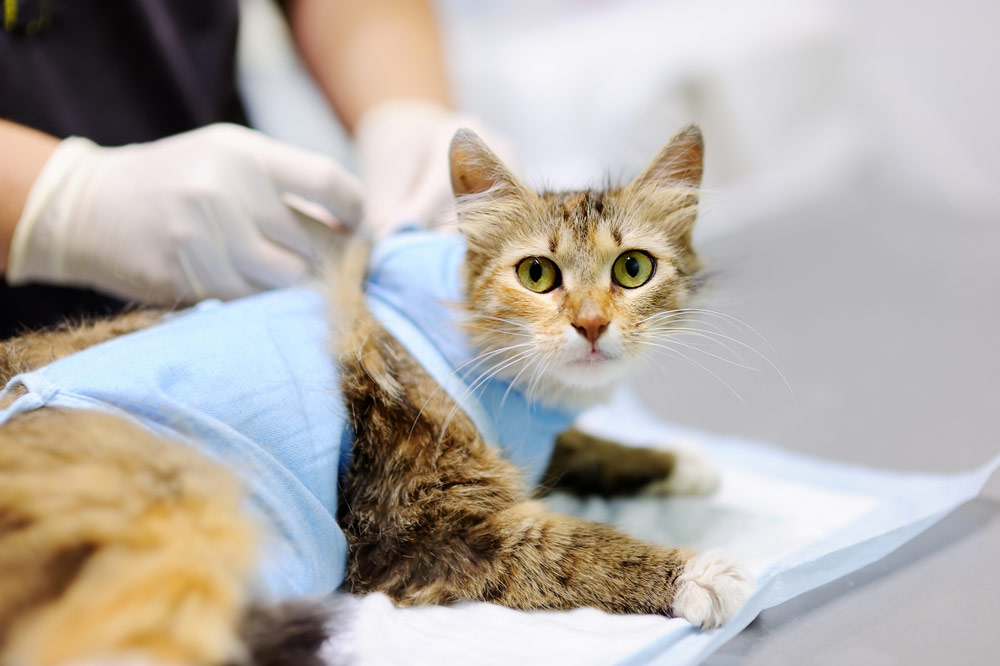
little cat with Elizabethan collar after spay surgery

You’re feeling sure about getting your cat spayed or neutered, but the operation is over and they’re at home — so now what?

Post-surgery recovery is where many pet parents begin to feel unsure. How long should your kitty be confined? What signs of trouble should you watch for? And how can you make sure the healing process goes smoothly?

Don’t worry, we’ve got your back. We thought we’d share some tips that our vets recommend so you can help your cat recover safely and comfortably after surgery.

divider cat paws 2 oct 2024

The 7 Top Tips to Help Recovery After Spay/Neuter Surgery

1. The First 24 Hours Are Crucial

After surgery, your cat will be groggy from anesthesia for 24–48 hours. During this time, they need peace and quiet in a confined, cozy space (like a crate or small room) with a soft bed and easy access to a litter box.

2. Confinement Isn’t Mean – It’s Medicine

Your cat doesn’t know they just had surgery. That’s why they must be kept confined—to avoid tearing the incision or introducing bacteria. Confinement keeps them clean, calm, and healing properly.

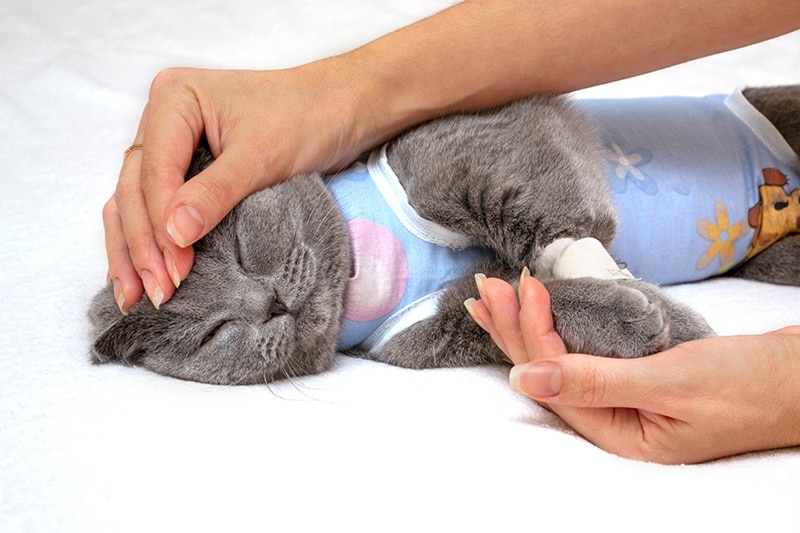
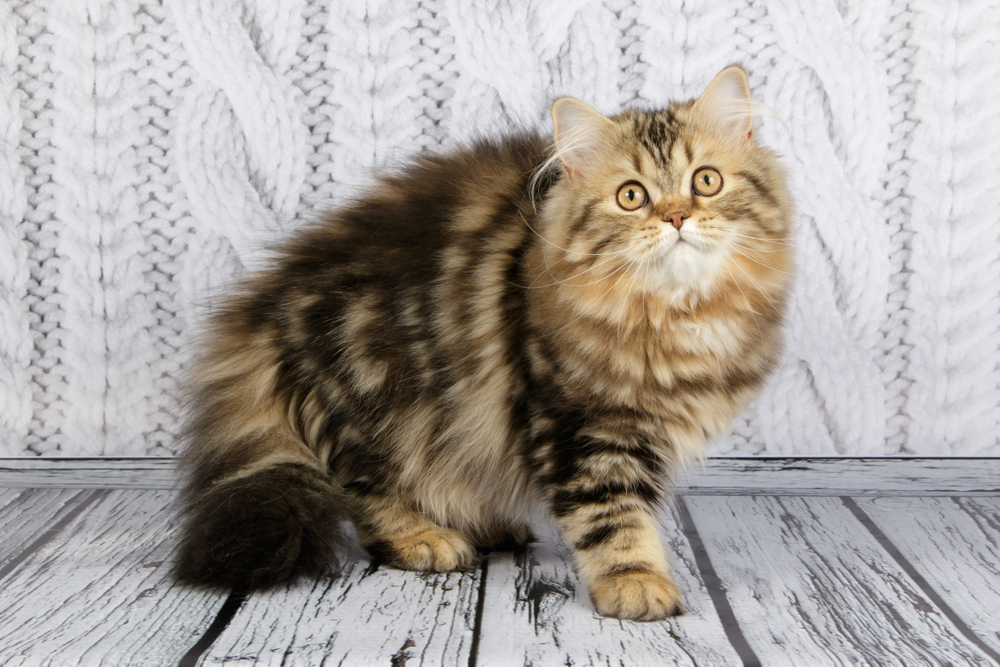
Cat on recovery after surgery
Image Credit: Anna Mente, Shutterstock

3. Limit Activity for 7–10 Days

No zoomies, jumps, or wrestling matches. For a full week or more, keep activity to a minimum — we know this is easier said than done! But it’s critical. Running or jumping can reopen the incision and lead to infection, so now’s the time for enforced cat naps.

4. Skip the Bath and Stay Indoors

Water and dirt are enemies of a healing incision. Keep your cat dry, clean, and inside for the entire recovery window. Avoid bathing, outdoor play, or anything that could get the wound wet or dirty.

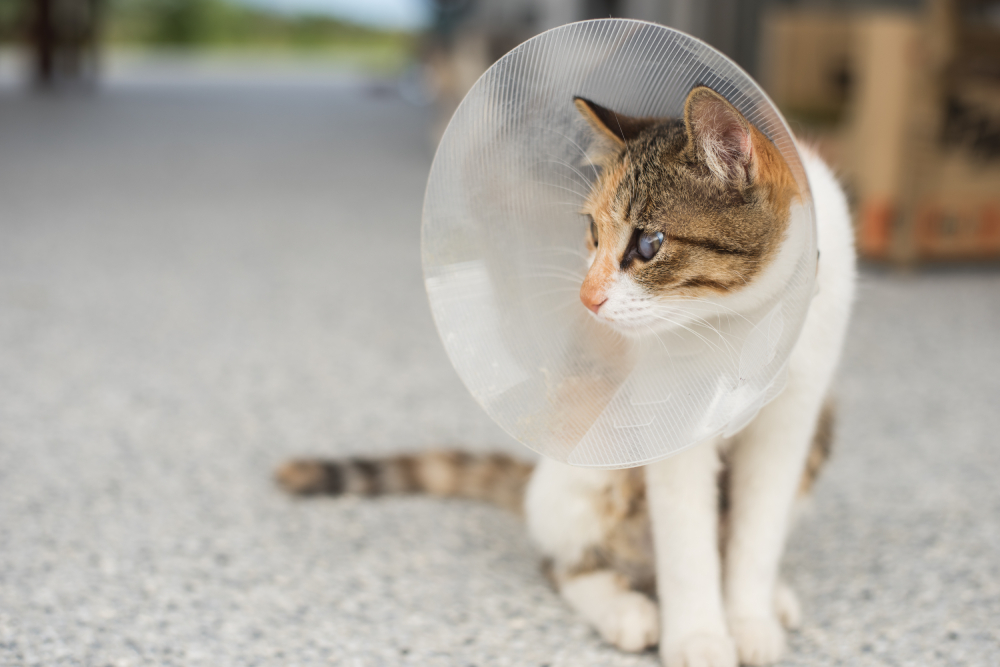
cat wearing plastic cone collar
Image credit: Roman G Potapov, Shutterstock

5. Check the Incision Twice Daily

A little redness is normal, but watch for swelling, pus, bleeding, or foul smells. We recommend that you inspect the area twice a day and contact your vet if anything looks off. It’s better to be safe than sorry, so definitely call if you have any questions or concerns whatsoever.

6. Know the Signs of Trouble

If your cat shows signs like drooling, hiding, shaking, not eating, or excessive lethargy, they may be in pain or developing an infection. Don’t wait—call your vet immediately.

7. Why It’s All Worth It

Beyond recovery, spaying or neutering offers long-term health and behavior benefits such as reduced cancer risk, fewer heat cycles or roaming tendencies, and a calmer, happier cat overall.

Man owner sleeping with a cat on a bed
Image Credit: NancyP5, Shutterstock


divider cat paws 2 oct 2024

Wrap-Up

Your cat’s comfort and safety are in your hands during recovery from surgery, but don’t stress. With a few simple precautions and some extra TLC, most cats bounce back quickly and without complications.

Keep it calm, watch for any red flags, and always reach out to your vet with questions. You’ve already done the hardest part; now it’s just about healing.


Did You Know? 

  • Our brand-new posts are rounded up and included in our weekly emails. Don’t miss out on the latest – sign up for our newsletter below!


Want content like this delivered to you?

Sign Up For Our Newsletter

News, insights, expert advice, and everything cat

* By submitting, you agree to our Terms & Conditions and Privacy & Cookies Policy.



How useful was this post?

Click on a star to rate (you can leave written feedback after clicking submit)

Help us improve Catster for pet parents!

Your feedback really matters.

What did you like about this post? Also how can we improve it?

Join the conversation

Leave a Reply

You’re very welcome to leave a comment or question. Please know that all comments must meet our community guidelines, and your email address will NOT be published. Let’s have a positive and constructive conversation.


Talk With A Vet Online

Peace of mind,
anywhere, anytime

Affordable vet advice

Why Chicken Bones Are More Dangerous for Cats Than Most Parents Realize

Chicken bones seem harmless enough, but for cats, they can cause serious damage quickly. Whether your cat swiped a piece off the counter...

Fantastic Pet Pantries and Where to Find Them

Let’s face it: times are really tough right now, and those of us in the 99% are struggling with the cost of just...

Ask Dr. Paola – Help! My Cat Refuses to Drink Water! (April 13, 2026)

Welcome to our “Ask Dr. Paola” series, where every Monday we bring expert advice straight from Dr. Paola Cuevas (MVZ) to help our...

Why Healthy Cats Still Vomit Sometimes (And How to Respond)

A cat that just vomited needs a specific kind of care, and the feeding decisions you make in the next few hours actually...

More related

Do Cats Get Embarrassed in the Same Way Humans Do? Vet-Reviewed Feline Behaviour

Embarrassment is a very human emotion that we experience on a number of occasions, whether you walk out of a bathroom with toilet...

10 Best Cat Foods for Constipation In 2026 – Reviews & Top Picks

Does your kitty need help, “moving things along”? Have you noticed they haven’t passed feces for a few days or have small dry...

When the Wee! Isn’t So Fun: Feline Inappropriate Urination in My Patients

Hi, I’m Dr. Lauren! Read my introduction to learn more about me and my two adventurous cats, Pancake and Tiller. Putting aside Pancake...

Cheetoh Cat Breed: Info, Pictures, Temperament & More

Are you looking for a cat to adopt but want one that lets you take a walk on the wild side? Look no...

Keep reading

What Vaccines Does My Cat Need? Our Vet Explains the Vaccine Schedule From Kittens Up

Cat owners recognize that providing nutritious food, fresh, clean water, and a comfortable and safe environment is essential for happy and healthy pets. Making sure your kitten or cat is up to date on their vaccinations is also crucial. Vaccines...

cat-having-a-vaccine

How Do Cats Show Affection? 12 Vet-Reviewed Body Language Cues

If you have a cat at home, you may wonder if your buddy loves you. And if so, how can you tell? Since cats can’t speak, it’s reasonable to wonder how they show affection. Cats show their love in several...

young woman holding cute siberian cat with green eyes

Are Peonies Poisonous to Cats? Vet-Verified Risks & Safety Tips

Peonies have vibrant pink flowers and are popular plants, but pet owners have to consider more than just a plant’s beauty. Unfortunately, peonies are toxic to cats. If your cat has gotten into your peonies, then you need to get...

Catster_Are Peonies Poisonous to Cats

Can Cats Have Down Syndrome? Vet-Reviewed Science & Info

There are many diseases and conditions that can affect both cats and people: Cancer, influenza, and even the plague have all been found in both humans and their pets. With that in mind, it’s worth asking: Can cats have Down...

female veterinarian examining cat on the table

Virtual Vet Visits: What to Expect & FAQ (Vet Verified)

Virtual doctor visits or telemedicine is a product of the pandemic and the restrictions it imposed. Nevertheless, virtual vet visits have stuck around and serve a purpose and have many benefits for pet owners, particularly for cats. Dogs often ride...

female veterinarian doing virtual vet visits

Do Cats Get Annoyed? 10 Vet-Reviewed Signs & What to Avoid

Cats can get annoyed just like humans, although they usually express it differently than us. Even the most loving and content feline can experience annoyance. It is one of the many emotions cats can feel. A cat will show clear...

An annoyed cat or angry cat with a ball toy.

How to Care For a 6-Month-Old Kitten: Vet-Verified Complete Guide

Kittens are typically curious, playful, feisty, and even mischievous. They are no longer tiny, fragile newborns, but they aren’t fully grown and matured either. It’s vital to understand the specific types of care that your kitty requires when they’re 6...

Bengal kitten playing

Can Cats Drink Buttermilk? Vet-Approved Diet Facts & FAQ

Cats eagerly lapping up milk is a picture etched in most of our minds from old movies and children’s books. Milk used to be considered healthy for cats until we gained better knowledge and understanding of our beloved companions’ dietary...

Can Cats Drink Buttermilk

Love Cats? So Do We! Join the Catster Community

Stay informed with expert pet care insights delivered straight to your inbox! Discover professional guidance on animal behavior, feeding tips, trusted product picks, and much more.


Sign up for the Catster Email Newsletter

Stay informed with expert pet care insights delivered straight to your inbox! Discover professional guidance on animal behavior, feeding tips, trusted product picks, and much more.