Ask Dr. Paola – Help! My Cat Attacks Me! (February 2, 2026)

Welcome to our "Ask Dr. Paola" series, where every Monday we bring expert advice straight from Dr. Paola Cuevas (MVZ) to help our readers better understand their cat's health and well-being.
Whether you're a new pet parent or a seasoned cat lover, Dr. Paola is here to provide answers to your most pressing questions. From nutrition tips and preventive care to troubleshooting common behavioral issues, Dr. Paola is ready to offer insights that will keep your kitty happy, healthy, and feline fine. Stay tuned for expert guidance on a range of topics that matter most to you and your cat, so you can make informed decisions and provide the best possible care for your furry companion.
Have a question? Send it in here!

Help! Why Don't Vets Make House Calls?
"I am handicapped and cannot bring my babies, Darwin and Breebree, to the vet. Also, even if I could, I cannot stress my babies. Why don't more vets make house calls? "- Michael
Hello again, dear Michael.
Your concern is deeply valid, and many veterinarians truly understand the emotional weight behind it. For cats like Darwin and Breebree, travel and unfamiliar environments can feel overwhelming. Cats are biologically wired to hide discomfort and fear, and transport plus clinic smells, sounds, and handling can significantly elevate stress. Your instinct to protect them from that experience reflects attentive and compassionate guardianship.
House call veterinary care is slowly expanding, but it remains limited due to practical and medical constraints. Many essential diagnostic tools, imaging equipment, anesthesia safety systems, and support staff simply cannot be transported safely or efficiently, and veterinarians also face time, staffing, and liability challenges when practicing mobile medicine. That said, feline-focused house call practices do exist in some areas, and their approach aligns well with modern low-stress handling principles evolving from veterinary behavior research. When home visits are not available, telehealth veterinary services like ours at Pangovet can help discuss observed signs, assess urgency, and guide next steps without immediately escalating to a clinic visit.
Think of telehealth as a medical compass rather than a treatment plan. It does not replace hands-on care or allow for prescribing or adjusting medications, but it can help reduce unnecessary stress by clarifying priorities and supporting thoughtful decision-making. You are not alone in this challenge, and the profession is slowly adapting as more veterinarians advocate for accessible, cat-centered care that respects both physical limitations and emotional well-being.
Best wishes,
- Dr. Paola

Help! My Cat is a Bully!
"Our most recent addition to our cat family, Gucci, bullies our other cats sometimes and steals their food. What might we do to get her to cut down on this? It doesn't seem malicious, more like she doesn't quite know how to socialize. " - Patrick
Hi Patrick,
What you are describing with Gucci is actually very common when a new cat joins an established group, and your observation that it does not feel malicious is important. Many cats who bully or steal food are not being dominant in a human sense; they are often socially inexperienced or insecure, much like a child who interrupts games because they have not yet learned the rules. From a behavioral standpoint, resource guarding around food and space is a normal feline coping strategy, especially if Gucci came from an environment where she had to compete or never learned appropriate social boundaries during kittenhood.
The most effective approach is to manage the environment rather than trying to correct Gucci directly. Feeding your cats in separate, visually isolated areas helps remove competition and reduces rehearsal of this behavior, because every successful food theft reinforces it. Increasing predictability through scheduled meals, multiple feeding stations, and enrichment such as food puzzles can also lower tension by keeping Gucci mentally occupied and reinforcing the idea of resource abundance and availability rather than scarcity. In multi-cat households, providing more resources than cats, including bowls, resting areas, and vertical space, is a way to reduce social friction and stress-related behaviors.
Behavior change in cats is gradual, not unlike learning a new language through immersion rather than correction. If the bullying escalates or begins to involve chasing, blocking access to litter boxes, or changes in eating or elimination habits, our Pangovet service can help assess the situation and provide personalized tips for behavioral modification, guiding you through the next best steps. With thoughtful management and patience, many cats like Gucci do learn more appropriate social rhythms and settle into the household more peacefully over time.
I hope this helps you and your cats!
- Dr. Paola

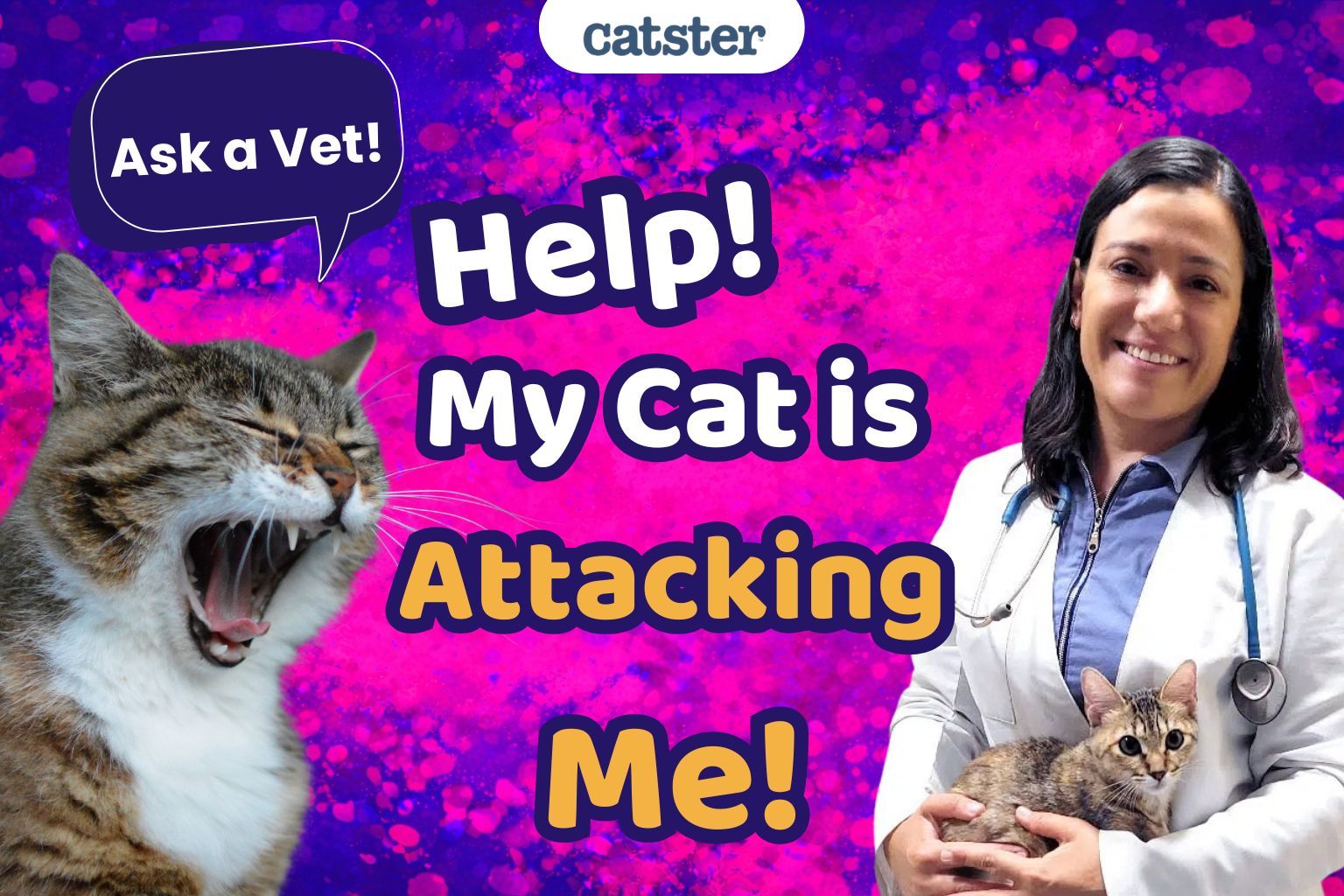
Help! My Cat is Attacking Me!
"Hey Dr. Paola,
My husband and I, and our cat Milo, share a home where Milo has every toy imaginable. In the beginning, he would cuddle up on my lap at night and I thought I finally had my lap cat. He is a little older than 1 year. Now, over the last 5 months, he has decided to attack me, biting every night that I sit down to watch TV. If I sit on the couch or loveseat, he gets me. I have tried not wearing perfume, playing with him extra. He does not bother my husband, and I am the one who cares for him, feeding, watering, and cleaning his litter box...I don't understand it. It is just me. I think he has sensed my fear of him because one time I had to go to the ER with severe cuts when he tore my arm up while I was sleeping. Nothing has changed in our home - no stress, no yelling.
When I come into my office to be on my computer, he will sometimes lie on the desk and watch me and not bother me, but it is when I sit on those pieces of furniture that he attacks me every night. It has gotten so that we have to put him up when we want to watch a movie. He does not bite my husband and doesnt bother me during the day while I am moving around or sitting in my office. My husband said he has scared me so badly, we should just get rid of him, but I don't want to...I want to find out what is in his head about ME, his main caregiver, and why he does this... Any help would be appreciated. "- Patricia
Hey Patricia,
I’m really glad you reached out, because what you’re describing is genuinely frightening and emotionally exhausting, and it is not a reflection of anything you’ve done wrong. Your reluctance to give up on Milo speaks volumes about your compassion and commitment to his well-being. In cats around Milo’s age, especially between one and two years, we commonly see a developmental shift from kitten social behavior to adult predatory play patterns. When those instincts become misdirected toward a person, particularly in predictable situations like sitting quietly on a couch, the behavior can feel personal even though it is not. To Milo, a still body, relaxed arms, or subtle movements can register like prey on a paused screen, while your husband’s posture, reactions, or energy may simply not trigger the same internal switch.
The fact that these episodes are both location-specific and time-specific is an important clue. Cats are excellent pattern learners, and if an early bite resulted in movement, vocalization, or retreat, even unintentionally, that sequence can become reinforced over time. Fear also alters our body language in ways cats read immediately, such as muscle tension or shallow breathing, which can unintentionally escalate the interaction. From a medical perspective, any cat showing sudden, intense aggression toward a specific household member warrants a thorough veterinary exam to rule out pain, neurologic changes, or sensory disturbances. Cats often mask discomfort remarkably well, and pain can dramatically lower impulse control, much like how even minor pain in people shortens patience and tolerance.
The encouraging part is that this pattern is very treatable, but it requires a structured, proactive approach rather than simply adding more toys. Predictable interactive play earlier in the evening that mimics hunting and ends with a meal, along with temporarily preventing access to the furniture where the behavior occurs, can help break the cycle and prevent rehearsal of the behavior. A veterinary exam is essential, as your veterinarian may determine that medical support is needed alongside behavior modification. Rehoming is not the answer here, and your instinct to advocate for Milo is absolutely the right one. With proper guidance, many cats like him return to being safe, affectionate companions, allowing your home to feel calm and secure again.
Good luck!
- Dr. Paola
This article is a part of our weekly Ask Dr. Paola series
Expert cat care, straight to your inbox
News, insights, and useful advice, delivered to you.

No spam — unsubscribe anytime.
By signing up, you agree to our Terms & Conditions and Privacy & Cookies Policy.
How useful was this post?
Click a star to rate. You can leave written feedback afterwards. (We read all feedback.)
Dr. Paola Cuevas MVZ (Veterinarian)
Dr. Paola Cuevas is the Senior In-House Veterinarian at Pangolia, the parent company of Catster. She has over 18 years of experience as a veterinarian and animal behaviorist. Paola's focus is on preventive medicine and animal welfare. Paola has a large range of skills in from diagnostic imaging to nutrition and clinical pathology. Paola enjoys sharing her extensive knowledge of animal training with our Catster readers and is always happy to answer reader questions as our in-house veterinarian.