Do Cats Feel Pain in the Same Way Humans Do? Our Vet Answers


As pet owners, we love to treat our dogs and cats as our “fur babies,” spoiling them worse than some of our own children. When they are sick or not feeling well, we seek veterinary attention, similar to seeking a pediatrician for kids.
But what about when your cat is in pain? Do cats feel pain the same way humans do? How can you tell if your cat is in pain? In this article, we'll discuss how cats perceive pain and what to look out for to tell if your cat is in pain.

What Is Pain?
Pain is classified as “Severe physical or mental discomfort or distress." 1 However, not all pain is alike. Acute or sudden pain in a cat will signal danger. This is essential to an animal's survival because it identifies an immediate threat, often initiating the flight or fight response. Acute pain will typically resolve once the initial injury or stressor has healed or has been removed. An example of this is a cat biting another cat. The contact of the bite will hurt, causing the victim to either immediately run away or counterattack.
There is also chronic pain from multiple causes (e.g., arthritis) that does not typically elicit the same type of flight or fight response. Chronic pain is difficult to diagnose and classify but generally is pain that has been present for at least 3 months. Chronic pain can be more difficult to identify than acute pain.

What About a Cats Nervous System in Response to Pain - Is It the Same as a Humans?
Without going into great depth on anatomy and physiology, the short answer is yes. Cats have a nervous system that is very similar to humans. Both species have a central and peripheral nervous system. The central nervous system includes the brain and spinal cord.
The peripheral nervous system includes the muscles and nerves throughout the rest of the body. So, while cats and humans are different species, the general makeup of their nervous systems is very similar. Yes, cats and humans have different numbers of nerves or nerves in different areas of their bodies. But their nerves act and react in almost the same way to one another.
Can cats feel pain differently in different areas of the body?
Yes, depending on the area of the body that has suffered an injury or a stressor, a cat may feel pain differently. Somatic pain is felt when the limbs and/or skin are injured. For example, a broken bone, burn, or laceration can cause somatic pain.
Visceral pain comes from an internal organ injury. We often see this in cats with bladder diseases, a foreign body within the intestinal tract, or inflammation of the pancreas (known as pancreatitis).
Neuropathic pain involves nerves and the spinal cord. In cats, it can be seen from an extruded disc along the spine, a tumor along the nerve, or a traumatic injury such as getting hit by a car.
A single injury can cause more than one type of pain at the same time; it is not all or nothing. Depending on the area of the body affected, the pain feels different. Think about when you get a paper cut compared to the aching, dull, sometimes constant pain of arthritis. It is widely accepted and assumed that most mammals feel pain similarly. Therefore, if we extrapolate how we feel during specific injuries, we can safely assume our beloved felines feel the same injury similarly.
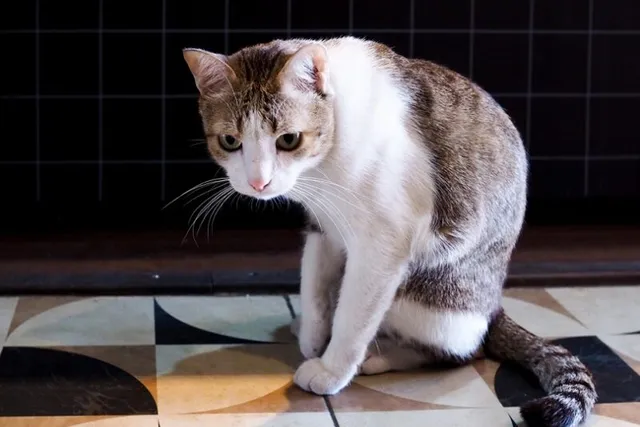
Cats can display various types of pain in different ways. For instance, limping on a leg (often referred to by owners as “favoring a limb”) is a cat’s way of showing that they hurt when putting weight on that leg. Therefore, they limp or take some of the weight off to reduce the pain.
Other times, cats may be very tense or resist an owner touching them in certain areas because they are painful. We commonly see this with arthritis along the spine and a cat resistant to being pet or brushed along the back when they may have enjoyed the activities in the past.
Still, cats can be masters of disguise. Keep an eye out for your cat to be more or less vocal than usual, sleeping in unusual areas, not wanting to use the litterbox or climb to their favorite perch, etc. Cat pain, especially when chronic, can be challenging to detect, so please contact your veterinarian if you notice anything unusual with your cat.
I Thought My Cat Could Tolerate Pain More Than Me?
While it’s true that cats seem unbothered by many things, it’s a myth that our modern-day domestic cats can tolerate pain better than humans. Usually, humans do not notice the subtle changes in cats’ behavior that may signify they are in pain.
Therefore, we assume the cats are okay. Remember that it’s widely accepted most mammals feel pain the same way. If you are in pain after you stub your toe, are suffering from a UTI, fall down the stairs, or have to have surgery, you'll experience pain, and a cat would feel a similar level of pain in the same circumstances.
But if I Treat the Pain, Won’t My Cat Start Running Around and Hurt Themselves?
As veterinarians, we often have owners decline pain medications for their pets because they believe treating pain is masking pain. In other words, an owner won’t be able to tell if their cat is in pain if they give it pain medications because the medication “masks” it.
Some owners believe that if they decrease the amount of pain in their pets, they will start to be more active and hurt themselves. Please do not allow your cat to continue to be in pain just to make them less active. Imagine yourself with a broken bone, infection, or laceration and the level of pain associated with those injuries. Give your cat the same compassion you would give yourself or your child, and treat the pain!

Don’t Treat the Pain With Human Medications
Although cats and humans do feel pain similarly to humans, they should not be treated the same. Most human pain medications are severely toxic, if not fatal, to cats. Please do not reach into your medicine cabinet and give your cat your pain medication. Contact your veterinarian so that your cat can have appropriate pain medications and receive safe treatment.
Sources
https://www.aaha.org/globalassets/02-guidelines/pain-management/painmanagement_cats_web.pdf
https://vethelpdirect.com/vetblog/2022/02/05/do-cats-and-dogs-feel-pain-the-same/
https://www.ndsr.co.uk/specialist-referral-service/pet-health-information/anaesthesia/pain-an-overview
https://www.oxfordreference.com/view/10.1093/oi/authority.20110803100301364
Featured Image Credit: lagunabluemolly, Pixabay
Expert cat care, straight to your inbox
News, insights, and useful advice, delivered to you.

No spam — unsubscribe anytime.
By signing up, you agree to our Terms & Conditions and Privacy & Cookies Policy.
How useful was this post?
Click a star to rate. You can leave written feedback afterwards. (We read all feedback.)
Dr. Kim Podlecki DVM (Veterinarian)
A graduate of The Ohio State University College of Veterinary Medicine, Dr. Podlecki has more than 12 years of experience working with small animals in the United States. Dr. Podlecki worked almost exclusively in emergency and specialty medicine for more than 10 years before transitioning to relief in both general practice and ER. Dr. Podlecki also owns her own consulting company (renewvetconsulting.com) with the focus of helping veterinary hospitals prioritize their staff to promote a healthier internal culture.