A Cat Owner’s Manual for Pain Part 1: Recognizing Pain

Hi, I'm Dr. Lauren! Read my introduction to learn more about me and my two adventurous cats, Pancake and Tiller.
St. Augustine wrote, “the greatest evil is physical pain.” While he was not a trained physician, truer words about pain are difficult to come by. Medically, pain is defined as an unpleasant sensory and emotional experience associated with real or perceived tissue damage. This definition is fairly well accepted across Europe, the UK, and the US by the various professional organizations that deal with the issue.
Pain in cats. It’s a bit of a more serious topic, but near and dear to my heart, so I’ve created two parts to give it proper attention. As a vet, one of the biggest disservices we do to patients is to fall short when it comes to pain management in cats.

Perception Of Pain
Thankfully, since I’ve started working in veterinary medicine, the perception of pain in cats has changed light years. From the perception that certain surgical procedures weren’t painful for young kittens (e.g. spays, castrates), to a more methodical approach to evaluating painful cats (which we’ll discuss in a bit) we have come to appreciate as a profession just how often felines actually do show pain.
And now with this appreciation, we can actively work to anticipate, and therefore prevent, pain from occurring. However, that also relies on a team approach, which includes not only the cat but their owner. And sometimes, feline patients are so good at hiding pain, one side needs to convince the other. This is the guide to doing just that. Recognizing feline pain, advocating for it, what to do at a vet appointment when you suspect it, and common misconceptions debunked.
So to start, how do we recognize pain in cats, in their most common and frequented environment: The home? If I can help you learn what a painful cat looks like in their home environment, that’s half the battle. Unfortunately, when we adopt cats, they don’t come with furry little owners manuals that tell us how to care for them. I mean, to be fair, it’s difficult enough to even tell a kitten’s sex at home (yes, I too, grew up with a Penelope that then became a Mr. Kitten after his first trip to the vet…)
So, how do we, as owners, recognize pain in our feline friends?

Common Types Of Pain In Cats
1. Arthritis, also known as degenerative joint disease
This is likely multifactorial, just as in humans, and may have a variety of origins. Commonly seen in older cats, or breeds with genetic dispositions, it can be very subtle to detect.
2. Dental/oral pain
Cavities, tooth abscesses, and oral cancer are just a few causes of feline oral pain. One of my own adopted cats many years ago, came to me as a grumpy, quiet, keep to himself sort of guy. Having adopted him as a senior cat, I thought that was his personality. However, when I did a dentistry on him, and found a fractured incisor that I removed, his personality completely changed. He became talkative, outgoing, was constantly around and engaged in the house—a completely different cat!
3. Gastrointestinal issues
These range from diarrhea, to inflammatory bowel disease,, in addition to pancreatitis, are commonly seen in owned cats. They can all potentially cause varying degrees of pain in feline patients.
4. Post-op
Spays, neuters and dental care can all cause acute pain for otherwise healthy cats, as can any surgery. Because we are often told cats will be “quiet” for a day or two after surgery, sometimes we mistake pain masquerading as surgical recovery or anesthetic wearing off.
Recognition Of Pain In Cats At Home
Professionals use validated approaches to score pain in feline patients, with one of the more common ones I’ve encountered being the Feline Grimace Scale. To be fair, this approach isn’t limited to professionals, so let’s see how you can apply it at home.
Below are some of the main points of the Feline Grimace Scale, summarized, along with additional comments. One expert panel found 25 or more signs that could potentially indicate a cat was in pain, but here we boil it down to those that are more commonly noticed at home.
And never forget that as an owner, you know your cat better than anyone! Your impressions, thoughts, concerns and observations are valid, as much if not more than what I see as a vet. Seriously, one of the things I most love in an appointment is when someone comes in with a spreadsheet of how much their cat drank daily for the last week, along with daily weights, and notes about their cat’s appetite along the way- especially if we are trying to establish a cause of illness or reactions to medications. So, never be afraid to advocate for your concerns.
And, I’ll tell you a pro-secret: many cats, once they arrive in the clinic, from the adrenaline of travel and being in a new place, perk up. Sometimes they perk up to the point of looking normal. So they stop limping, they investigate, they act normal. Or they hide their pain, not wanting to appear vulnerable in a novel place with barking dogs and strange humans. Don’t ever be afraid to voice your concerns about home behaviors, even if they don’t do it in the clinic!
How to Identify Pain in Cats At Home
Body position
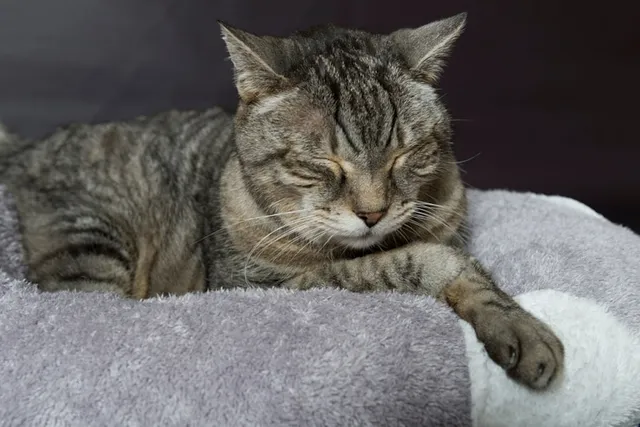
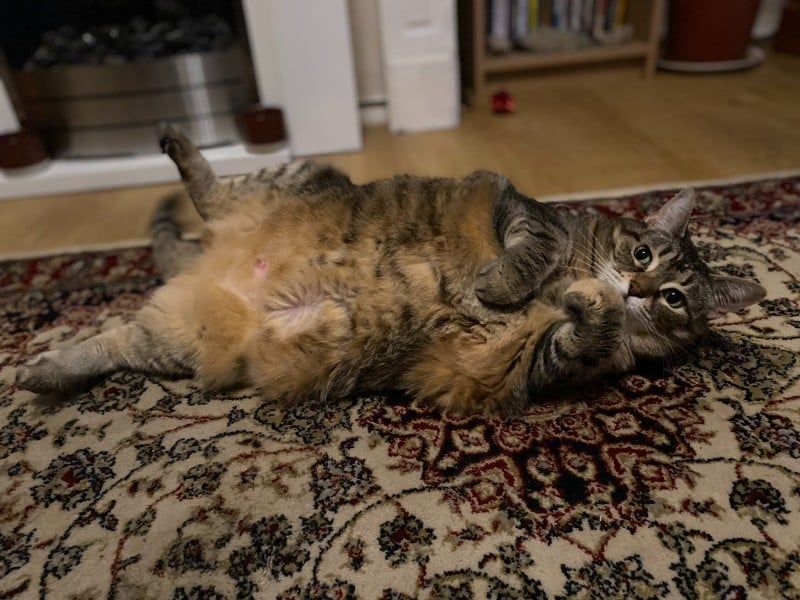
The sprawl or croissant are more normal cat sleeping positions, for many cats. When not sleeping, many cats will loaf, with limbs comfortably tucked under their body, and heads held high. If your cat is suddenly laying in body positions they don’t normally, this is often a sign something is different. The temperature may be hotter or colder than normal, your cat may be nauseous, or your cat may be in pain.

Eyes
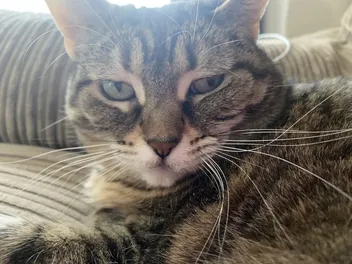
We all know about the slow blink in cats. But a consistently squinted eye can be a signal that your cat is in pain. So can slanted, or narrowed eyes.
Ears
Ears are normally held forward, when not listening to various sounds, or being otherwise stimulated. If a cat’s ears become pulled to the side, or back, these can be indications that something is amiss.
Whiskers
Whiskers are generally held forward and relaxed, though when exploring or playing, can vary their position.
Muzzle
Generally mimics the whiskers. When tension is present, this can indicate that pain or other issues may be present.
Head position
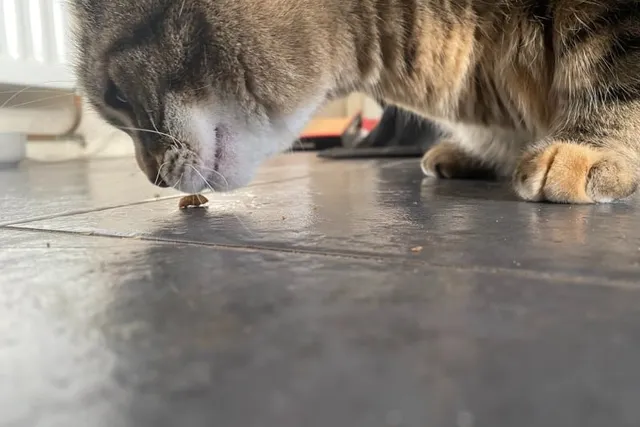
A head held high is healthy, but when it begins to drop lower, this can be an early indication that something is wrong.

Movement
A limping cat is a pained cat. I’ve worked with many cats in clinics, and if they limp, I consider it a sign of pain. Would you limp, if you had the choice? Cats, like people, experience musculoskeletal pain, such as arthritis. If they limp after getting up in the morning, or stop jumping… that’s a strong indication they may be painful. Similarly, a cat that suddenly or gradually stops jumping onto chairs, beds, or tables, is a cat that is potentially in pain. Getting old doesn’t mean a cat should stop doing these things, which are normal feline behaviors!
Response to touch
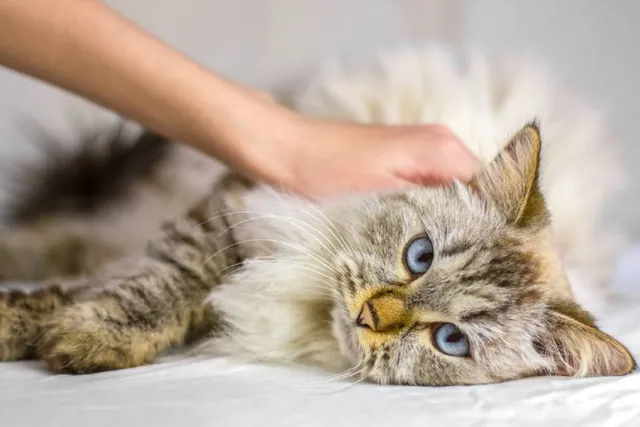
When touched, do they move, flinch? Do they not want you to touch a surgical site, by guarding it, or nuzzling you, instead, to prevent your hand from reaching the area? Do they meow in a way they normally don’t? Run off? Or do they hide so you can’t even get to them, when normally they are out and about in the house?
Changes in their patterns
Cats are creatures of a schedule. Pancake, for instance, is up at 4:00 AM to wait for the automatic feeder, then back in bed by 5:30, to rise again at 8:00 AM and move to the couch for the next 9 hours. She then wakes up just in time for the humans to return home from work, offer an evening feed, and then she’s back to sleep on the sofa, until bedtime. This schedule is literally set in stone. Tiller varies it a bit with some time spent in her cardboard box and looking out the window, but it’s similarly stable.

What’s Next?
So, now that we know how to start recognizing pain, next week we will take a look at some of the misconceptions about pain in cats (e.g. did you know purring doesn’t always mean a cat is happy? That it actually can be a key indicator your cat is sick, or in pain?) There are many misconceptions to explore, in addition to looking at various treatment options for painful cats, and tips for you. We will also look at what specific action steps you can take, if you think your cat may be in pain, to best help them get treatment.
This article is a part of Dr. Lauren, Pancake, and Tiller's series.
Expert cat care, straight to your inbox
News, insights, and useful advice, delivered to you.

No spam — unsubscribe anytime.
By signing up, you agree to our Terms & Conditions and Privacy & Cookies Policy.
How useful was this post?
Click a star to rate. You can leave written feedback afterwards. (We read all feedback.)
Dr. Lauren Demos DVM (Veterinarian)
As a veterinarian, Lauren is eager to share her experience in emergency medicine and cats, with our readers. She loves sharing helpful, real life tips for having cats as part of your life, and what to do in critical situations with your pets.
Lauren is a vet with over a ten years of experience in cats and dogs, along with infectious diseases. She enjoys teaching, and lectures for students, pet owners, and clinicians, on various topics.
Lauren received her degrees from Murdoch University, in Perth.