Can Cats Take Human Antibiotics? Vet-Reviewed Health Precautions & Risks


In this article
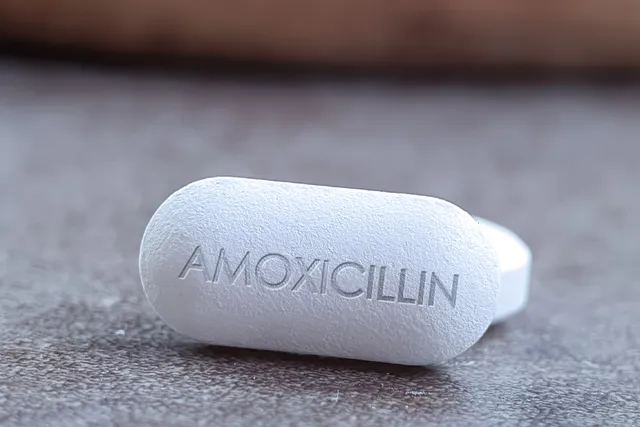
No one likes to see their beloved cat in pain suffering from a pesky infection. How convenient would it be to be able to offer your sick cat your leftover antibiotics after your last illness? If you have some leftover amoxicillin in your cupboard, could you give it to your cat if you suspect they have an infection? The answer is no, you should not give your cat leftover human antibiotics.
Some antibiotic medications for cats often have the same basic composition as those made for humans; however, the rest of the compounds could be different.
Though some antibiotics are used for both humans and cats, their concentration, formulation, and dosages are entirely different. Therefore, you shouldn’t give your cat your leftover antibiotics.

What Human Antibiotics Are Safe for Cats?
While some antibiotics prescribed to your cat by the vet might seem to be the same ones your doctor prescribed you in the past, you should be aware that antibiotics and other pharmaceuticals used in veterinary medicine are prepared with specific concentrations and components to make them safe for cats.
Some human antibiotics are not safe for your pets, likewise, there are veterinary-specific antibiotics that are not used in human medicine.

Can I Give Human Antibiotics to My Cat?
Though it is true that there are many medicines (including antibiotics) that overlap in both human and animal medicine practices, you should not give your cat human medicine (this includes antibiotics).
The main reason for this is that medicine intended for humans is usually formulated with concentrations that are very different from those intended for animals. For example, you and your cat might both be prescribed Amoxicillin at different points for different reasons. However, the Amoxicillin will be formulated differently to be safe and effective for each of you.
The principle of prescribing a drug requires knowledge of a few things:
- The purpose of the drug: In this case, an antibiotic is to help eliminate a bacterial infection
- The concentration of the drug: How much of the drug is in a pill, capsule, caplet, or a milliliter (for liquids)
- How much is needed: This is also known as the dose
- How long the treatment should last: This is determined on a case-by-case basis by a doctor (for humans) or a veterinarian (for animals)
Therefore, even though you might be noticing similar names for some cat antibiotics and human antibiotics, some of the factors listed above (in particular, the concentration of the drug) will most likely be very different. A tablet of an antibiotic intended for human use, for instance, might be up to 10 times more concentrated than the same antibiotic tablet intended for use in cats.
Offering the human tablet to your cat can result in an overdose, which can prove fatal in many cases.
When Should I Give My Cat Antibiotics?
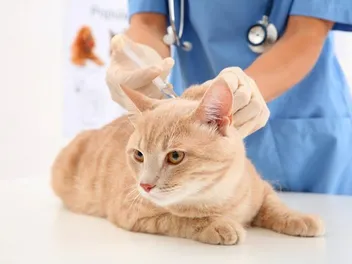
The only time you should give an antibiotic to your cat is following a veterinarian’s prescription. The veterinarian will let you know the exact treatment including dosage, frequency of administration, treatment duration, and other indications, like whether the medication should be given after meals or with water.
There are several key rules one must follow when providing medication to their animals. Disobeying these rules can have dire consequences so it’s best to acquaint yourself with them to ensure your kitty recovers from their illness fast and stays healthy. Here are some basic ground rules to know.
Follow the Timetable
One of the most essential rules for antibiotics for pets or humans is to follow the timetable. You need to give the medication at the designated time and duration your doctor has prescribed it. Do not stop giving the medication if the signs of the illness it’s treating have subsided.
Stopping before its prescribed end date can cause signs to come back and can even increase the chances of developing antibiotic resistance.
Never Self-Prescribe
Say you had a UTI last month, and your doctor prescribed you amoxicillin to treat it. Your signs went away so you stopped taking your antibiotic even though you had a few pills left. If your cat starts showing signs of a similar infection, it must be okay to offer them the same amoxicillin tablets your doctor prescribed you, right?
Wrong. Amoxicillin concentration and doses for cats will not be the same as the ones for humans, and it could prove to be fatal. Cats will metabolize medications differently than we do so you must consult your veterinarian for proper dosage.
Also, if you’re not a veterinarian, you should not be diagnosing your pet yourself. While they may be exhibiting signs that you believe are related to a bladder infection, it could be something entirely different.
You should also know that by terminating an antibiotic treatment schedule before its prescribed time, you might not eradicate all the bacteria. The survival bacteria can quickly multiply and recolonize, causing the infection to return. Chances are the bacteria will now be resistant to the antibiotic used in the original prescription, so you will have to start all over again, maybe taking a different medication, increasing treatment costs, prolonging your cat’s suffering, and reducing the treatment options. Every antibiotic treatment should be completed according to the days prescribed by the vet.
If you see an adverse reaction to a medication such as vomiting, diarrhea, or seizures, call the vet immediately. If you see no improvement after 48–72 hours of the treatment, you should let the vet know about this but do not take it upon yourself to stop the treatment. Self-prescription puts you and your pets at risk of creating superinfections.

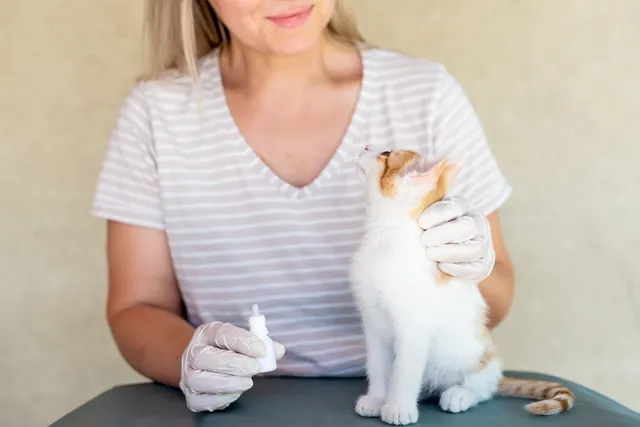
How Do I Give My Cat Liquid Antibiotics?
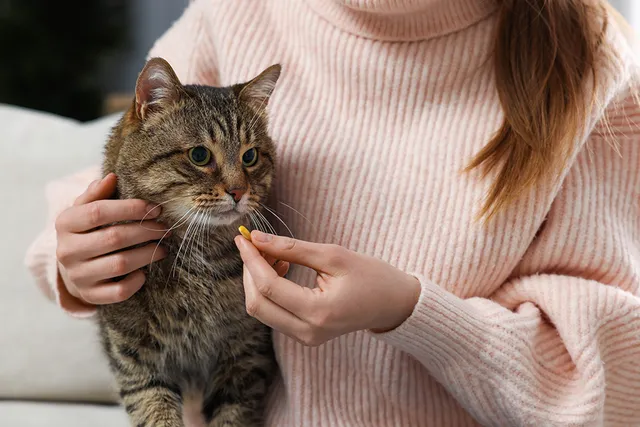
If you’ve ever had to give medications to a cat before, you know how difficult it can be. You’re going to need to get a little bit creative regardless of what type of medication you’re administering.
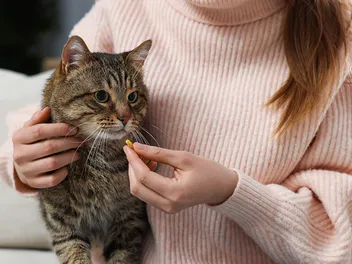
If your antibiotic is in liquid form, you can try to mix it in with some of your cats’ wet food. They must get the entirety of their dosage so they will need to eat all their food to ensure they’re getting all the medication they need. If you live in a multi-pet household, you should separate the sick cat during meal times so you can monitor how much they’re eating and ensure none of the other pets are getting into the medication.
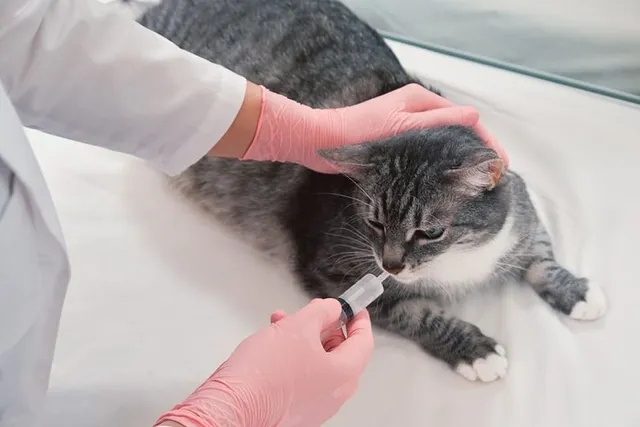
If your cat has dietary restrictions or won’t eat their wet food, you will need to administer it directly into their mouth. The easiest way to do this is to wrap your kitty in a blanket or towel and only allow the head to be exposed. This will protect you from scratches and make handling your cat a lot easier.
Some cats are more apt to take their medication if it’s a bit warmer. Try holding the syringe tightly in your hand to warm it. Do not put any medication in the microwave.

Gently use your non-dominant hand to clasp the back of your cat’s head; your pinky and thumb should end up slightly below your cat’s eyes on each side, and tilting their head up should cause their jaw to slightly unclench if you’ve placed your hand correctly. It’s advised to request having this demonstrated for you at your vet’s clinic.
Place the syringe tip in the mouth just behind one of their canine (fang) teeth. Angle the syringe slightly so that once you press the plunger, the medication will dispense onto the tongue. Do not aim for the back of the throat as this can cause your pet to aspirate the liquid into its lungs. Press the plunger slowly, giving your cat time to swallow the already-dispensed medicine before releasing more of the medicine into their mouth.
It is normal for your cat to want to spit out some of the medication. Try to circumvent this by gently lifting their head slightly upwards after you’ve medicated them to wait for them to swallow it. Do not attempt to squeeze your cat’s face or neck while you do so. Do not try to re-administer what was spit out unless you know without a doubt that your cat spat out its entire dose. Your vet knows that cats can be finicky and likely accounted for a small amount of loss when calculating the dose to prescribe.
If you have a cat that’s notoriously difficult to give medication to, talk to your vet about arranging a pet taxi service. These can bring your cat in on a daily basis for a short period of time to have professionals administer their medication. Some clinics and hospitals even offer home visit services that provide the convenience of a professional coming to you to give your cat their medication.
Offer a treat afterward to make the experience more positive.
What Should I Do If My Cat Has Accidentally Eaten Antibiotics Not Listed Above?
If your pet has gotten into your antibiotics, you need to see a vet as soon as possible. Antibiotics, even those prescribed specifically for your cat, can be toxic if ingested in large amounts.
The following signs may manifest in your cat if they’ve eaten too much of any type of medication:
If you are unable to talk to your vet immediately, your local emergency vet or Pet Poison Hotline should be your next phone call. The hotline is accessible 24/7 and can provide the next steps to follow.
Under no circumstances should you ever try to induce vomiting if you think your cat has gotten into your medication. The ASPCA Animal Control Center warns that inducing vomiting in your cats at home can be very dangerous.
Final Thoughts
Antibiotics are an effective treatment method for many infections both you and your cat may encounter. That said, you need to consult with your veterinarian before administering any antibiotic to your cat. They will provide you with the medication as well as dosing guidelines and instructions.
Never give your cat your human medication, even if it’s the same brand name. The concentrations will be different, and overdosing with antibiotics can have dire consequences.
Related Read:
Featured Image Credit: savitskaya iryna, Shutterstock
Expert cat care, straight to your inbox
News, insights, and useful advice, delivered to you.

No spam — unsubscribe anytime.
By signing up, you agree to our Terms & Conditions and Privacy & Cookies Policy.
How useful was this post?
Click a star to rate. You can leave written feedback afterwards. (We read all feedback.)
For Chantelle, writing and animals are the two driving forces in her life. Growing up on the Canadian prairies surrounded by pets, she now shares her home with five cats, two guinea pigs, and a bearded dragon. Chantelle, her husband, and their child pride themselves on being dedicated pet parent, even spending a fortune on wall-mounted cat shelves to provide their cats with an indoor jungle gym. When she's not snuggling with her cats or photographing their humorous moments, Chantelle is exploring the Rocky Mountains, rewatching her favorite Netflix series, and reading up on various random subjects.