Get

In Your Inbox

Catster is reader-supported. When you buy via links on our site, we may earn an affiliate commission at no cost to you. Learn more.

Can Cats Eat Toothpaste? Vet-Verified Risks & Precautions

Share

Can Cats Eat Toothpaste

Toothpaste is a standard personal care item found in most homes and some handbags and briefcases. If your beloved feline has found their way into your dental care products, you might be wondering if toothpaste can be harmful to cats. 

Most types of toothpaste, including those often marketed as natural, contain fluoride, which is potentially fatal to cats. It’s never safe to allow your cat to consume any amount of fluoride toothpaste. If your cat has done so, it’s time to contact your vet.

While you might not need to head straight to the vet if your cat takes a lick of non-fluoridated toothpaste, it’s best to prevent your feline friend from ingesting dental care products and never use human toothpaste to brush your cat’s teeth Let’s learn more about why cats shouldn’t eat toothpaste and if there’s any toothpaste that is safe for cats.

divider 2 cats

How Much Toothpaste Is Too Much?

The fatal dose of fluoride for a cat is 5-10 mg/kg, but your cat can begin showing distress after consuming as little as 1 mg/kg. Most toothpaste contains about 1.3mg/quarter teaspoon.

Signs of fluoride poisoning include vomiting, weakness, restlessness, and difficulty breathing. Problems typically show up in the first 2 hours after ingestion, and veterinarians consider fluoride poisoning an emergency warranting immediate medical treatment.

cat-vomiting
Image Credit: Tunatura, Shutterstock

What About Xylitol?

Some natural toothpastes that don’t contain fluoride contain xylitol, an artificial sweetener, to improve the taste. Although xylitol is toxic to dogs, it shouldn’t harm your cat in small amounts. However, that doesn’t mean you should let your cat eat it. It just means you don’t have to worry unless your cat eats a significant amount of toothpaste containing xylitol.

If your pet gives a fluoride-free product a lick and doesn’t show signs such as lethargy or vomiting, you probably don’t have to worry about visiting the emergency vet. However, make sure to review the ingredients of the product your cat ingested.

Get Free Cat Food Recall Alerts!

Have a cat? Stay on top of cat food recalls here


Why Do Cats Eat Toothpaste?

Most cats aren’t naturally drawn to the smell or taste of toothpaste, and mint is poisonous to cats, so most avoid the plant and items that smell like it. Some cats, however, don’t seem bothered by the fresh and minty scent and eat toothpaste out of curiosity. Others inadvertently get toothpaste on their fur, which they ingest as they attempt to clean up. Fortunately, most cats naturally avoid toothpaste.

cat brushing teeth
Image Credit: cynoclub, Shutterstock

Can Cats Consume Dog Toothpaste?

Cats can consume most kinds of veterinary toothpaste. Since there’s no difference between feline and canine toothpaste, it’s safe for your cat to consume. There’s no reason to panic if your cat swallows a small amount of your dog’s toothpaste,

What Toothpaste Is Safe for Cats?

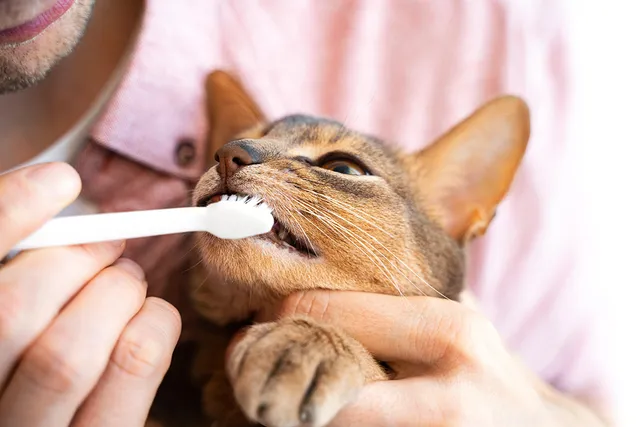
Cat toothpaste! Yes, it exists. The safest way to care for your favorite feline’s dental health is to use toothpaste explicitly designed for cats. These specialty products come in cat-friendly flavors like chicken, beef, malt, and fish. They don’t contain toxic ingredients such as fluoride or too much sodium.

There are also spray products and drops you can add to your cat’s food if they refuse to cooperate when getting their teeth brushed. While veterinary toothpastes are safe for your cat, they are not intended to be used as treats or eaten in large quantities. There are tons of crunchy treats developed with feline nutritional needs in mind that can keep your cat’s teeth in top shape while also providing a tasty snack.

calico cat having treats
Image Credit: Andriy Blokhin, Shutterstock

divider 2 cats

Final Thoughts

Human toothpaste is not suitable for cats, regardless of whether they accidentally ingest it or you’re using it to brush your cat’s teeth. Most toothpastes contain fluoride, which is toxic to cats. Toothpastes that are designed for dogs and cats are the only type of toothpaste that won’t hurt your cat, and although your cat still shouldn’t eat cat-safe toothpaste, it’s okay if they ingest some.

See Also:


Featured Image: Leah-Anne Thompson, Shutterstock

Want content like this delivered to you?

Sign Up For Our Newsletter

News, insights, expert advice, and everything cat

* By submitting, you agree to our Terms & Conditions and Privacy & Cookies Policy.


How useful was this post?

Click on a star to rate (you can leave written feedback after clicking submit)

Help us improve Catster for pet parents!

Your feedback really matters.

What did you like about this post? Also how can we improve it?

Join the conversation

Leave a Reply

You’re very welcome to leave a comment or question. Please know that all comments must meet our community guidelines, and your email address will NOT be published. Let’s have a positive and constructive conversation.


Catster's Digital Magazine is Back!

Vet-approved health & behavior advice

Real cat stories & community features

When a Cat Becomes a Water Fountain – Why Cats Vomit After Drinking

Seeing a cat drink water and then promptly bring it back up can be confusing. Sometimes the explanation is fairly simple, particularly if...

Chatting About Sleeping Positions, Loafing & Cats in Tubes | Chatty Cattys, Episode 33

In this episode of Catster’s Chatty Cattys podcast, Dr. Karyn and Nicole dive deep into the fascinating world of feline sleep behaviors. From...

The Bite Stuff: The Truth Behind a Cat’s Sudden Nip

A cat bite that seems to come out of nowhere is one of the more confusing things a cat owner deals with. Everything...

Your Cat’s Purr Proves They’re One of a Kind

There are few sounds more comforting to a cat parent than the familiar rumble of a purring cat. You probably know your own...

More related

My Cat Ate Onion! Our Vet Explains What to Do

You might have wondered if cats can eat onions or if they would want to, and although cats are less inclined to scavenge...

8 Most Popular Cat Breeds in India (With Info & Pictures)

Traditionally, cat ownership wasn’t that popular in India. Plenty of street cats hung out in the alleys, but they typically fended for themselves,...

11 Devon Rex Colors (Common & Unique Varieties)

The inquisitive and friendly Devon Rex is a cat with an unlimited supply of love and loyalty to share with the right people....

Cornish Rex Lifespan: How Long Do They Live? Vet-Reviewed Facts

In 1950s England, a random genetic mutation produced a kitten with an unusual curly coat. From this single kitten, the Cornish Rex breed...

Keep reading

9 Best Cat Beds for Anxiety in 2026 – Reviews & Top Picks

Cats can be particular about their bedding, but for cats with anxiety, choosing the right bed can ensure your cat has a sense of safety and security. Cozy, anxiety-reducing beds can be a fantastic tool in helping improve your cat’s...

Ragamuffin cat hiding

Is Chamomile Poisonous to Cats? Vet Approved Facts & FAQ

Many cats love to explore the great outdoors—stalking mice, or hiding among the flowers and shrubs of your garden, nibbling away at any plant that entices them. A popular plant your cat may come across on their garden adventures is...

Catster_Is Chamomile Poisonous to Cats

Can You Be Allergic to Some Cats & Not Others? Vet-Reviewed Facts & FAQ

Cat allergies can be a real bummer, especially if you’re a cat lover hoping to introduce a cat to your home. There are things you can do on your side to minimize the effects of your allergies, like taking medications...

woman with cat allergy

British Shorthair Cat Health Problems: 7 Vet-Reviewed Health Issues

Getting a new cat is always an exciting time! Part of the fun of adopting a pet is figuring out which breed will be the best fit for you and your family—that means doing some research. You’ll need to learn...

Catster_Health Problems of British Shorthair

How Do Cats Communicate With Each Other? Vet-Verified Facts & Info

Most mammals, including cats, are able to communicate, although non-verbally. Cats have developed forms of inter-cat communication over the millennia; some are vocal, some are physical, and others are chemical. Cats do it well in whatever form of communication they...

two cats touching noses

Is Schefflera Toxic to Cats? Vet-Verified Facts & Safety Guide

Schefflera are popular subtropical plants that are commonly grown indoors. These pretty houseplants feature oval leaves that appear to drop from a central stem. Some people think the leaf configuration resembles an umbrella. Hence this beautiful houseplant’s most common other...

Catster_Is Schefflera Toxic to Cats

Is Declawing Cats Illegal in Australia? Vet-Verified Facts, Reasons & Alternatives

Declawing cats is heavily regulated in Australia, meaning that it is banned as a standard procedure and only permitted if it’s essential for the cat’s health.¹ Routine declawing is also illegal in several other countries, though it is still legal...

cat claws when kneading

Are Himalayan Salt Lamps Safe for Cats? Vet Reviewed Facts

Himalayan salt lamps have become increasingly popular over the last few years. Their pink light creates a serene atmosphere and is excellent for “mood” lighting. Other benefits are advertised as well, including cleaner air, mood improvement, and better sleep. Himalayan...

Catster_Are Himalayan Salt Safe for Cats

Love Cats? So Do We! Join the Catster Community

Stay informed with expert pet care insights delivered straight to your inbox! Discover professional guidance on animal behavior, feeding tips, trusted product picks, and much more.


Sign up for the Catster Email Newsletter

Stay informed with expert pet care insights delivered straight to your inbox! Discover professional guidance on animal behavior, feeding tips, trusted product picks, and much more.