Do Cats Like Air Conditioning? What You Should Know & Vet-Approved Safety Guidance


In this article
Many cats will enjoy moderate air conditioning if it’s used on a hot day, as it helps them stay cool. In a natural setting, many cats will be inactive during the hottest parts of the day. They will usually find somewhere cool to rest until things cool down, at which point, they’ll go hunting.
When domesticated, felines don’t need to hunt. However, they may remain inactive if they get too hot. They’re simply trying to retain their energy. Plus, no one likes doing things if it’s too hot.
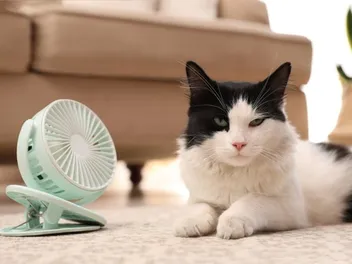
Air conditioning can help keep them comfortable, so they may feel like doing things. If your cat seems to be sleeping on the cool floor and not doing much during the day, then you may need to turn up the air conditioner slightly.
Of course, if it is cold, your cats probably won’t want the air conditioner on. Just like people, they enjoy it best when their environment is at a suitable temperature. Sometimes, an air conditioner is required for that.

Do Cats Need Air Conditioning?

Sometimes they do, depending on the temperature. If it gets sweltering in the summer, it is easy for cats to overheat if they are not provided with a place to get out of the sun with a breeze of fresh air. This doesn’t necessarily mean that your cat needs air conditioning. However, any enclosed areas that you provide are likely to get hot and unusable in the sun if they are not insulated or cooled down properly.
In moderate temperatures, you can use insulation to provide a cooler temperature in some cases. However, you may need to utilize an air conditioner on scorching days.
Whether your cat needs air conditioning depends on your climate. If your cat has regular access to an indoor area that is cool and shaded, they likely won’t need a separate area outside that is also air-conditioned. Your cat simply needs somewhere to cool off to prevent overheating. Otherwise, heat exhaustion and heat stroke are possible.

Do Cats Like Warm or Cold Rooms?

People prefer different temperatures and cats also have their preferences. They may prefer it to be at different temperatures at different times. If they have just come in from a warm area, they may want to lie in a cooler area to cool down. It mainly depends on the situation and the particular cat’s desires.
Generally, cats are most comfortable between 77 to 86 degrees Fahrenheit. However, they can handle temperatures on both ends of this spectrum. Cats with health conditions may be unable to handle certain temperatures, though. If your cat has an underlying health condition, be sure to ask your vet if you should keep the temperature on the warmer or cooler side. The same goes for newborn and young kittens that cannot regulate their body temperature for the first 4-5 weeks of age, as they will require ambient temperatures and possibly extra heat sources.

What Temperature Can a Cat Tolerate?

Cats are often good at withstanding fairly variable temperature ranges. When the average daily temperature is under 45 degrees Fahrenheit, it is generally recommended that the cat has access to somewhere warm. While your cat can still wander around at this point for short periods, they typically need a warmer area to rest and warm up. The lower it gets from this point, the less your cat can tolerate.
When daytime temperatures get under 45 degrees Fahrenheit, then nighttime temperatures will be even lower. Therefore, you should allow your cat in at night. Otherwise, they may be unable to tolerate the lower temperature for extremely long periods, particularly if they have an underlying health issue, are underweight, are young, have a short coat or are a hairless breed, or if they are wet.
Cats typically have a body temperature ranging from 100 to 102.5 degrees Fahrenheit. A body temperature over 105 degrees Fahrenheit, however, is typically considered dangerous and can lead to organ damage and fatal consequences.
Cats can tolerate outside temperature up to 100 degrees Fahrenheit, but anything over that becomes uncomfortable if they are not provided with a cool, shady area and fresh water, as they can’t dissipate heat quite as well. Of course, strenuous exercise in high temperatures can also cause serious problems even if the temperature isn’t technically above 100 degrees Fahrenheit.
It’s important to familiarize yourself with the signs of heat stroke in cats, as this is a fatal condition if not immediately treated. Some of the signs involve panting and respiratory difficulties, drooling, a very red tongue and gums or sometimes pallor. They might also experience vomiting, diarrhea, lethargy, fast heart rate, loss of balance, and staggering. All of these signs require the most urgent veterinary attention. Otherwise, they will lead to collapse, organ failure, seizures, and eventually death.
Cats never pant unless they are struggling to breathe, and this is almost always a sign of severe respiratory compromise, such as heat stroke and heart failure. The only rare exception is strenuous bursts of exercise or severe stress, when panting stops very quickly, usually in a matter of seconds. However, any panting in cats should always be checked out by a vet urgently. Restless behavior and continuous meowing also indicate that your cat is distressed and too hot. Irritability can show that your cat isn’t having a good time, which may sometimes indicate that your feline is becoming overheated.
If your cat becomes too hot, you need to get them to a vet immediately and cool them down quickly using a wet towel, air conditioning, and offering them a drink (but without forcing it, especially if they are not conscious or able to swallow). Do not use ice cold water to cool them down, as it may lead to hypothermia that, in turn, causes shivering and further body temperature increase. Do not wrap the cat in a wet towel, as it will eventually trap heat.
If the cat’s temperature continues to rise, they may experience irreversible and fatal health consequences. Overheating and heat stroke, in particular, requires veterinary attention, as the cat may be unable to normalize their body temperature without serious health care. Furthermore, if the cat’s temperature drops too suddenly, they can experience hypothermia. Therefore, it is best to leave the cooling up to the vet.

Are Cats Scared of Air Conditioners?

Some cats may be scared of the noise that air conditioners make. It depends primarily on whether they were around loud noises growing up. If your cat has been raised around your loud air conditioner, it probably won’t bother them that much. However, if they were adopted as an adult, it makes sense that the noisiness of the air conditioner may bother them.
If a cat suddenly is exposed to a loud air conditioner, they may be scared of the area until they become used to the noise. For some cats, this never happens. You can use positive reinforcement to help get the cat used to the noise, though. Other times, the cat will get used to the noise independently and won’t require any special training.
Cats are rarely scared of air conditioning vents in the house, as these don’t tend to be that noisy. Many will even lay on the vents to cool off.
Even if your cat is scared, you can provide the appropriate positive reinforcement training and reassurance to help them. There are many options for helping cats manage stress, including pheromones and special treats.

Can Cats Survive Without AC?

It depends on the temperature, humidity, ventilation, and the individual cat. Some cats tolerate heat better than others, and this will also greatly depend on their age and underlying health. Cats with a heart or a respiratory condition and those that are very young or old will be more prone to harmful effects of heat.
Access to a shady area inside the home and a cool surface to lie on, alongside fresh water, is crucial. If the home is insulated and protected from the heat and direct sunlight, it’s unlikely to get unbearably hot. This is often not the case in other buildings and areas, such as barns or conservatories, which often trap the heat and may lead to life-threatening heat stroke if the cat is trapped there.
In case of a heat stroke, emergency veterinary care is a must. If the cat is overheated, you can potentially cool them down using an air-conditioned room or car and wet cloths and towels. Be sure not to cool them down too fast, though, as this can cause hypothermia.
Heat in an enclosed space is hazardous, as there won’t be enough airflow for the cat to cool themselves properly, which can cause them to overheat at a lower temperature. Cars are particularly dangerous, and it goes without saying that cats (or any other animal) should absolutely never be left alone in a car during warmer months of the year. The car should have adequate ventilation and an ambient temperature, and any car journeys during this time should be kept to a minimum.
Furthermore, brachycephalic cat breeds will overheat faster due to their body and face conformation, making it harder for them to breathe adequately in the first place. They can get too hot at a lower temperature or with minimal exercise.
Generally, most cats only need AC if the area gets hotter than 100 degrees Fahrenheit, or if there isn’t sufficient ventilation, depending also on the humidity. In milder weather, they may not need it at all. Tropical areas will require AC, though. Remember to consider humidity to determine if your feline is capable of withstanding hotter temperatures.
Always watch your cat when the temperature begins to climb. Some cats may overheat at a temperature lower than 100 degrees Fahrenheit if they are more active, in an enclosed area, or simply more susceptible to heat. If your cat shows signs of being too hot, like panting, drooling, vomiting, or being distressed and weak, then they will need the AC in the car to cool down while getting to your vet urgently.

Final Thoughts
AC is typically recommended for cats in situations where humans will also appreciate the AC. However, cats have higher body temperatures than people, so they can generally withstand warmer temperatures if there is sufficient shade and air flow. If the temperature bothers you, though, it is probably bothering your cat too. They may not require AC, but they will likely appreciate it if the temperature stays about 80 degrees Fahrenheit or under.
AC is required if the temperature begins pushing into the upper 90s, depending on the humidity. If the temperature hits 100 degrees Fahrenheit, then the cat will need somewhere to cool down. Anytime that it is hot outside, you should keep an eye on your cat for signs of overheating. Some cats may overheat at lower temperatures if they are more susceptible to heat or have an underlying health issue. You should always judge whether your cat needs a cooling area based on their behavior, not necessarily the temperature outside.
See also:
Featured Image Credit: Kristi Blokhin, Shutterstock
Expert cat care, straight to your inbox
News, insights, and useful advice, delivered to you.

No spam — unsubscribe anytime.
By signing up, you agree to our Terms & Conditions and Privacy & Cookies Policy.
How useful was this post?
Click a star to rate. You can leave written feedback afterwards. (We read all feedback.)
Christian started writing for a local newspaper as a teenager, and he's been involved in the publishing industry for most of his adult life. Combining his love of writing with a passion for animals, he is currently the Director of Editorial at Pangolia and the Editor-in-Chief at Catster.
Christian lives in the Philippines with his wife, son, and four rescue cats: Trixie, Chloe, Sparky, and Chopper.