Get

In Your Inbox

Catster is reader-supported. When you buy via links on our site, we may earn an affiliate commission at no cost to you. Learn more.

What Temperature Do Cats Like? Vet-Verified Climate Tips & FAQ

Share

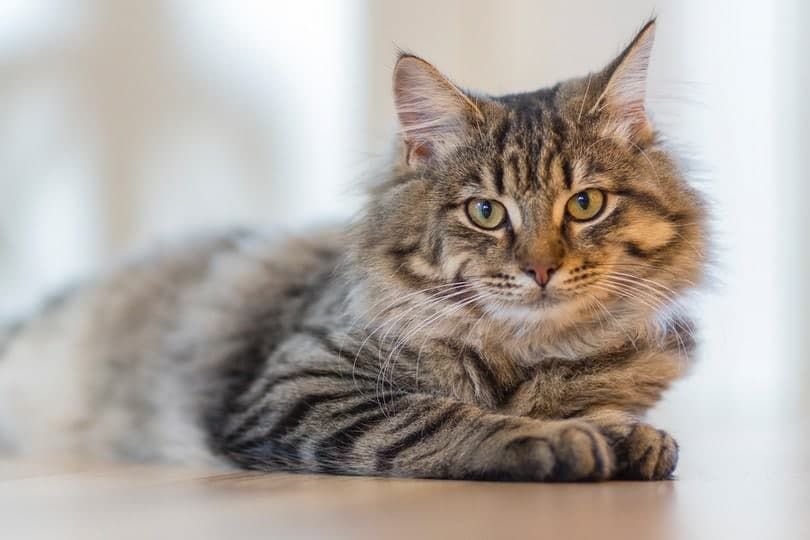
a tabby cat lying on the floor

We all know that cats like to be warm and cozy, whether they’re curled up in a donut bed or splayed out in front of a fireplace. It’s not uncommon to spot your cat spread out in a sunbeam, even during the hotter parts of the summer. But what is the right temperature for your cat? Knowing the ideal temperature for your cat will help you keep your cat at a temperature that’s safe and comfy for your kitty. The optimum ambient temperature for most cats is 77–86°F (25–30°C). However, most healthy adult cats can tolerate temperatures below this range within reasonable limits.

divider cats oct 2024

What Temperature Do Cats Like?

Cats have a higher baseline body temperature than humans, typically running between 100–102.3°F (38–39.1°C). The ideal temperature for your home to be kept at to keep your cat comfortable would be between 77–86°F (25–30°C).

In addition, most healthy adult cats can easily adjust to living in a home that stays as cool as 59–68°F (15–20°C). On the warm side, cats can tolerate temperatures up to 100°F (38°C). However, cats tolerate slightly colder temperatures better than slightly warmer ones.

Though these temperatures are applicable to most cats, please be mindful that there are exceptions to these guidelines:

Some Exceptions To Be Aware Of:
  • Cats that are underweight or unwell likely cannot tolerate lower or higher temperatures, as well as healthy cats.
  • Young kittens or senior cats may struggle to keep warm as temperatures drop.
  • Cats with osteoarthritis usually don’t appreciate colder temperatures.
  • Pre-weaned kittens (under two months of age) cannot tolerate low temperatures. They also cannot tolerate being overly warm. They have strict temperature requirements depending on their age.
  • Cats with a single or no coat have poor cold tolerance compared to double- or triple-coat breeds.
  • Cats with a large area of their fur shaved may be unable to keep warm, as fur plays a major role in thermoregulation.
  • Cats have poor temperature tolerance when wet, such as right after a bath.
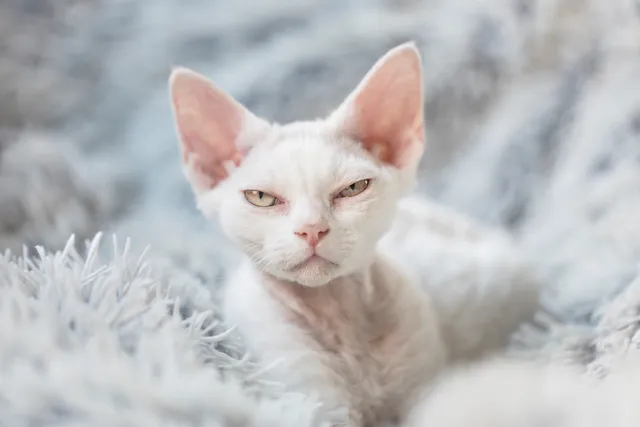
  • It is a misconception that cats with sparse or no hair, such as the Sphynx, should spend extra time in the sun to keep warm. These cats can easily sunburn when exposed to the sun for long periods.
blue-eyed-white-fluffy-himalayan-cat-in-hepper-nest-bed
Blue enjoying her Hepper nest bed. | Image Credit: Hepper

How to Provide Comfortable Spaces for Your Cat

If you keep your home on the cooler side, it’s important to provide warm spaces for your cat to spend time. This is especially important if you observe the following signs that your cat might be cold.

Signs Your Cat Might Be Cold
  • Your cat is shivering.
  • Your cat is sitting on all fours, with their feet held close to their body, their tail wrapped near them, and their fur slightly raised.
  • Your cat’s extremities feel slightly cool to the touch.
  • Your cat is seeking sources of warmth, like a blanket, bed, lap, etc.

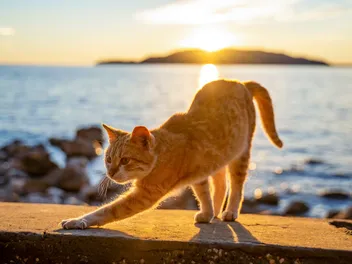
Keeping a couple of blinds in your home open will allow warm sunbeams to come in, providing your kitty with a nice space to stretch out. You should also provide cozy beds, blankets, and even heated pet beds to ensure your cat has warm options in safe areas.

Conversely, if your home is too warm for your cat, they may show signs of discomfort, too.

Signs Your Cat Might Be Warm
  • Your cat is looking for shady places to hide.
  • Your cat is lethargic or spends their time hiding in a shady area, excessively grooming themselves.
  • Your cat is lying flat on a cool surface (such as floor tiles).

In this scenario, your cat should have cooler areas to spend time in case they get too warm. Tile and wooden floors often stay cool enough to help your cat cool off on a warm day. Cooling mats and raised beds are good options for keeping your kitty cool. Turning on the air conditioner or a fan is also recommended to help keep your cat comfortable.

How Do I Know if My Cat Is Too Warm?

Like people, cats sweat. However, they sweat through their paws and not their entire body, so sweating is often not enough to cool cats down. If your cat is sweaty, they may leave damp pawprints around the home, so keep an eye out for this if your house seems particularly warm. If your cat is panting or showing other extreme signs of heat stress, reach out to a veterinarian.

If you need to speak with a vet but can't get to one, head over to PangoVet. It's an online service where you can talk to a vet online and get the advice you need for your pet — all at an affordable price!

PangoVet_Mention-in-Content for PangoVet2 save money

divider single cat paw oct 2024

Conclusion

Cats have a flexible ambient temperature range that’s very easy to establish in most homes. It’s important to provide a warm home or warm spaces for your cat to spend time. They should also have the option to leave warm areas for cooler spots if they get too hot. Keeping an eye out for signs of heat stress and heat stroke if the temperatures in your home reach excessive temperatures is important for keeping your cat healthy and safe. If you’re unsure if your cat’s body temperature is maintaining an appropriate level,  you should have your cat seen by a veterinarian to ensure everything is okay.


Featured Image Credit: Inge Wallumrød, Pexels

Want content like this delivered to you?

Sign Up For Our Newsletter

News, insights, expert advice, and everything cat

* By submitting, you agree to our Terms & Conditions and Privacy & Cookies Policy.


How useful was this post?

Click on a star to rate (you can leave written feedback after clicking submit)

Help us improve Catster for pet parents!

Your feedback really matters.

What did you like about this post? Also how can we improve it?

Join the conversation

Leave a Reply

You’re very welcome to leave a comment or question. Please know that all comments must meet our community guidelines, and your email address will NOT be published. Let’s have a positive and constructive conversation.


Talk With A Vet Online

Peace of mind,
anywhere, anytime

Affordable vet advice

One in 100 Cats Gets Diabetes – Here’s How to Catch It Early

One in every 100 cats develops diabetes.1 That’s not a rare, unlucky condition reserved for cats with obvious health problems. It’s common enough...

Dramatic Rescue Turns Into Dramatic Reunion

What started as a routine call for the RSPCA became a heroic, five-hour rescue featuring one trapped and traumatized cat, an emotional family...

Ask Dr. Paola – Help! How Do I Know if it’s Ear Mites! (May 4, 2026)

Welcome to our “Ask Dr. Paola” series, where every Monday we bring expert advice straight from Dr. Paola Cuevas (MVZ) to help our...

Hope for the Tiniest Fighters: Baby Kitten Rescue | Heroes of the Pet World

In a world where the smallest and most vulnerable animals are often the easiest to overlook, Caroline and Baby Kitten Rescue’s work is...

More related

125+ Space Names for Cats: Out of This World Ideas for Your Interstellar Cat

Naming your cat can be overwhelming, especially if you want to select a name that is unique and fits their personality. One way...

Cat Lice vs Fleas: Vet-Reviewed Key Differences

Sooner or later, every pet owner will find tiny bugs crawling on their pet’s skin. But are they fleas or cat lice? It...

How to Cut Your Cat’s Claws: Dr. Karyn’s Tips (with Video)

Hi, I’m Dr. Karyn! Read my introduction to learn more about me and meet my five hilarious cats: Clutch, Cyril, Alex, Zelda, and...

Pyrantel Pamoate for Cats: Our Vet Explains Dosage, Uses & Side Effects

Pyrantel pamoate, or simply pyrantel, is an antiparasitic substance for treating certain types of intestinal worms in cats. This substance does not kill...

Keep reading

Can Cats Eat Pineapple Leaves? Vet Reviewed Dangers & Advice

Pineapple lovers know the leaves and skin of their favorite fruit have no place in their diet, but cats are rarely as discerning. Many cats enjoy chewing greenery for one reason or another, often not taking the time to check...

Can Cats Eat Pineapple Leaves

Can Cats Eat Sherbet? Vet-Reviewed Facts & FAQ

Have you ever wondered, as you were enjoying a cold bowl of sherbet on a hot day, whether or not it would be OK to share a bit of your yummy dessert with your favorite feline companion? Most cat lovers...

Can Cats Eat Sherbet

Is It Ok to Put Ice Cubes in a Cat’s Water Bowl? Vet-Reviewed Pros & Cons

Most cat owners know that keeping a cat hydrated can sometimes be a challenge. Hydration is important for cats, and it’s even more important in the hot summer months. However, getting a cat to drink water is not always easy,...

Woman putting ice cubes into pack

My Cat Doesn’t Chew His Food: Vet-Reviewed Concerns & FAQ

While it’s important for humans to thoroughly chew our food before swallowing, for many other mammals—cats included—this is not usually the case. Humans eat a wide variety of different foods, from tough plants, seeds, and nuts that need to be...

cat after eating food from a plate

Cat Hormones: How They Affect Male & Female Felines (Vet-Approved)

Like humans, cats’ hormones are constantly released by their endocrine system. They regulate a cat’s behavior, moods, and bodily functions. Cat hormones have an essential role in maintaining a cat’s health, including their metabolism, reproductive cycle, development, growth, and behaviors....

two cats looking at each other

15 Common Household Hazards for Cats & Vet-Approved Safety Tips

Cats can be incredibly curious, and many seem to have the remarkable ability to find new ways to get in trouble. Pets thrive when they’re free to investigate and explore with enthusiasm, but you must ensure they play in safe...

an orange tabby cat looking up

Why Do Cats Trill & What Does It Mean? Vet-Verified Feline Vocalization Facts

Cats make quite a few different noises, and one of the cutest that we’ve ever heard is trilling. This is a blend between a meow and a purr, and each cat can make their own distinctive version of this sound....

cat meowing

GMO in Cat Food: Vet-Reviewed Health & Nutrition Facts

GMOs or genetically modified organisms is a buzz phrase often used when describing human foods, but it has segued into the pet industry. We want the best for ourselves and, consequently, for our pets. However, GMOs often get a bad...

Hungry cat sitting in front of a emty food dish and looking up

Love Cats? So Do We! Join the Catster Community

Stay informed with expert pet care insights delivered straight to your inbox! Discover professional guidance on animal behavior, feeding tips, trusted product picks, and much more.


Sign up for the Catster Email Newsletter

Stay informed with expert pet care insights delivered straight to your inbox! Discover professional guidance on animal behavior, feeding tips, trusted product picks, and much more.