Get

In Your Inbox

Catster is reader-supported. When you buy via links on our site, we may earn an affiliate commission at no cost to you. Learn more.

How to Treat a Burned Cat Paw Pad: 6 Vet-Approved Tips

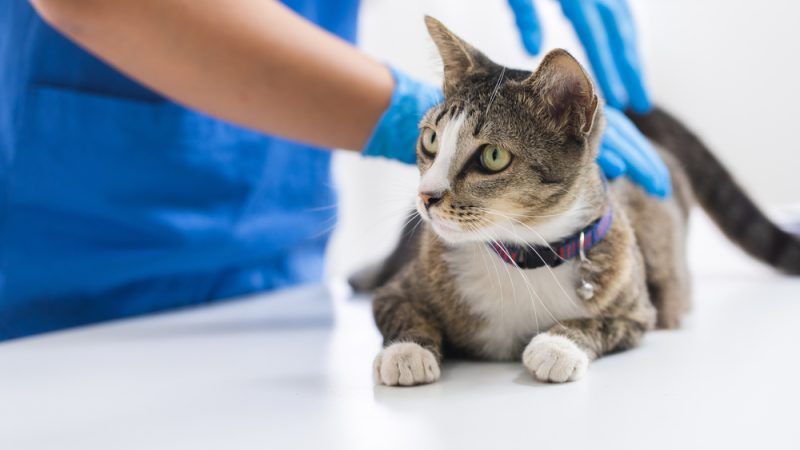
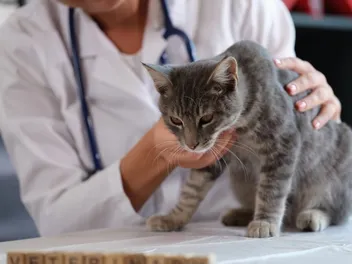
vet checking up tabby cat

Given how curious, fearless, and agile they are, cats have a way of getting into things that they shouldn’t. Add the fact that cats love warmth but cannot distinguish dangerous hot surfaces from safe ones, and you have a recipe for disaster in the form of a burned paw pad.

While you can’t completely prevent the situation, knowing how to treat a burned cat paw pad can at least help ease your kitty’s pain, prevent complications, and speed up the healing process.

Review these tips on what or what not to do when your beloved pet has burned their paw.


divider 3 paws

If your cat has burned their pads or paws, get in touch with your vet straight away. The info in this article has been reviewed by a veterinarian but is not a replacement for a veterinary clinical exam and appropriate treatment. We aim to provide helpful tips, but the majority of these cases require prompt veterinary attention.

How to Treat a Burned Cat Paw Pad

1. Know the Signs of a Burned Paw Pad

Like many animals, cats are very good at hiding their pain.

But there are some signs that your cat is in pain from a burned paw pad, including:
  • Limping or holding up the affected paw
  • Crying or meowing in pain
  • Licking or chewing at the paw
  • Avoiding putting weight on the paw
  • Swelling or redness in the paw
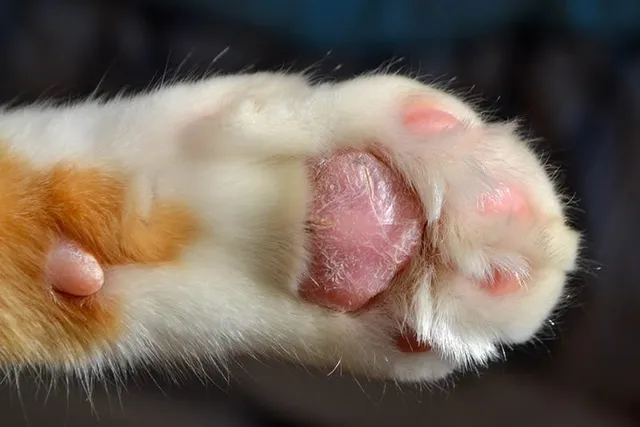
  • Blisters or open wounds
  • Charred fur or blackened skin
  • Lethargy and hiding
  • Reduced appetite

Also, look for subtle changes in behavior, since it can take a day or two for burn damage to become visible. For instance, a normally rambunctious cat that starts hiding or becomes withdrawn may be in pain. Got a cat that loves to swat while playing? A burned paw pad may make them less likely to engage in this type of activity.

Get in touch with a veterinarian for guidance and advice on the best course of action.

If you need to speak with a vet but can't get to one, head over to PangoVet. It's an online service where you can talk to a vet online and get the advice you need for your pet — all at an affordable price!

PangoVet_Mention-in-Content for PangoVet2 save money

2. Identify the Type of Burn

There are three common types of burns your cat can get:
  • Thermal: These burns come from contact with a hot object, such as a stovetop, radiator, or hot pavement.
  • Chemical: Chemical burns come from contact with chemical fumes or certain substances, including acidic substances like bleach, drain, house cleaning products, gasoline, or battery acid. This is extremely dangerous, as it not only damages the skin but can also poison your cat if they ingest it by licking.
  • Electrical: Electrical burns are caused by exposure to electrical currents, such as chewing on an electrical cord.

The type of burn will dictate what you need to do next. All burns need immediate medical attention, but certain types require specific first aid. The vet will also need to know the type of burn in order to provide appropriate treatment.


3. Assess the Severity of the Burn

Just like with humans, burns in cats are classified according to their severity:
  • First-degree or superficial burns: These affect only the outer layer of skin and are similar to mild sunburn in humans. The skin will be red and painful, but it will be intact. Blisters usually don’t develop since the burn doesn’t go deep enough to cause them.
  • Second-degree or superficial partial thickness burns: These burns damage the outer layer of skin and some of the tissue layers underneath. The skin will be red and painful, and there may be blisters.
  • Third-degree or deep partial thickness burns: These are the most serious type of burn, affecting all layers of skin. The skin may be blackened and charred, and there may be blisters, open wounds, and severe pain. Your cat may also go into shock.

Fourth-degree or full-thickness burns are also possible, but they are so severe that they cause damage to the tissues underneath the skin, such as tendons, muscles, and bones. These burns are rare in cats, but when they do happen, they’re life-threatening, and you need to take them to the vet ASAP.

a red domestic cat bites its owner's hand
Image Credit: Irzhanova Asel, Shutterstock

4. Apply Appropriate First Aid

First-degree burns in cats may be initially treated at home, but any burn that blisters or breaks the skin should be seen by a vet.

That said, there are some things you can do to help your cat in the meantime:
  • Cool the Burned Area: Only do this for first-degree burns or second-degree burns that aren’t blistered. Hold the paw under cool (not cold) running water for 3–5 minutes. If your cat won’t tolerate this, soak a clean cloth in cool water, and gently squeeze it above the burn. Don’t use ice, as this can further damage the tissue.
  • Dry the Area and Keep It Clean: Once the area is cooled, dry it off very gently if possible, and keep it clean. This may be difficult, as most cats don’t take kindly to having their paws handled, especially when they hurt, but it’s important to prevent infection. If your cat is extremely agitated, you may want to quarantine them in a clean, quiet, and safe area. This will help minimize their contact with dirty surfaces without you having to hold them down.

5. Take Your Cat to the Vet

Despite the paw’s small surface area, burns are painful for your cat. Severe and deep tissue burns can sometimes cause a cat to go into shock, dehydrate, or suffer organ damage.

Depending on the type of burn, there can also be other issues, such as chemical burns to the eyes or respiratory irritation from smoke inhalation. For these reasons, it’s always best to take your cat to the vet straight after a burn injury, regardless of the cause or severity.

The vet will give your cat strong pain medication and may prescribe antibiotics if there’s any risk of infection. They may also need to give your cat IV fluids to prevent dehydration. Some burns require regular bandaging and wound cleaning. More serious burns may require surgery to remove dead tissue or skin grafts to cover open wounds.

Some cats may also need oxygen therapy if they suffer from smoke inhalation and may need their eyes flushed out.

cat's paw being bandaged by vet
Image Credit: VGstockstudio, Shutterstock

6. Observe Your Cat for Complications

Burnt paw pads can cause several complications in cats, even with proper treatment. The most common one is an infection, which can cause your cat a lot of pain and may lead to tissue necrosis and sepsis if it’s not treated quickly. Look out for signs of infection, such as excessive licking, redness, swelling, malodor, or discharge from the burn site.

Cats can also develop scars or contractures as the burn heals. Scars are permanent and may cause your cat discomfort, while contractures happen when the skin around the burn heals in a way that pulls the tissue underneath tight. This can make it difficult for your cat to move their paw or use their claws and may require surgical correction if it’s severe.

Finally, some cats may develop behavioral problems after a burn injury. They may become more aggressive or withdrawn and may start to exhibit signs of anxiety or stress. If you notice any changes in your cat’s behavior, talk to a vet about possible ways to help them cope.

divider 1 paws

What NOT to Do If Your Cat Has Burned Paw Pads

Burns affect cats differently than humans. Usual interventions for a burned hand or skin in people, for instance, can be quite dangerous and even lethal to cats.

Avoid these interventions for a cat with burned paw pads:
  • Don’t use ice. Ice can cause frostbite and further damage the tissue.
  • Don’t put any ointments, lotions, or other products on the burn unless the vet tells you to. Some human products can further irritate the skin or may be toxic to cats, as they will lick them off.
  • Don’t try to remove any dead skin yourself. This is a job for a professional and can only be done under sedation or anesthesia when the cat is pain-free. Attempting to do it yourself can cause even more damage.
  • Don’t give your cat any pain medication unless it’s prescribed by a vet. Cats metabolize drugs differently than humans, and some medications that are safe for us can be toxic or even fatal to them. A vet will prescribe appropriate and safe painkillers for your cat.
  • Never put your cat in a tub of water. This could cause them to panic and make their injuries worse.
  • Never try to force your cat to eat or drink. If they’re in pain, they may not have an appetite, and forcing them to eat or drink can make them vomit, which can further dehydrate them.

divider 3 paws

Conclusion

While seeing your beloved cat in pain is incredibly distressful, try your best not to panic. Most cats recover well from mild to moderate burns with proper treatment. Even the most severe burns will heal properly with timely veterinary intervention.

As a pet owner, however, you need to be ready for anything. Be sure to keep the number of your local emergency vet clinic handy, and familiarize yourself with the signs of burn injuries in cats so you can act quickly if your cat is ever hurt.

With a little preparation, you can rest assured knowing that you are ready to help your cat in case of an emergency.

Related Reads:


Featured Image Credit: mojo cp, Shutterstock

Want content like this delivered to you?

Sign Up For Our Newsletter

News, insights, expert advice, and everything cat

* By submitting, you agree to our Terms & Conditions and Privacy & Cookies Policy.

How useful was this post?

Click on a star to rate (you can leave written feedback after clicking submit)

Help us improve Catster for pet parents!

Your feedback really matters.

What did you like about this post? Also how can we improve it?

Join the conversation

Leave a Reply

You’re very welcome to leave a comment or question. Please know that all comments must meet our community guidelines, and your email address will NOT be published. Let’s have a positive and constructive conversation.

Talk With A Vet Online

Peace of mind,
anywhere, anytime

Affordable vet advice

Do Cats Like the Taste of Sweet Things? Vet-Approved Facts & Safety Tips

If you own a dog, you probably already know that chocolate is toxic for them. But what about cats? We don’t see them...

9 Best Cat Foods for Diarrhea in 2025: Reviews & Top Picks

When your cat has diarrhea, it affects the entire household. There can be additional messes to clean up and unpleasant odors to contend...

Hexbug Cat Toy Review 2025: Pros, Cons & FAQ

Review Summary Let’s face it: cats are challenging to shop for. They like a toy one second, tossing it aside the next like...

Squamous Cell Carcinoma in Cats: Causes, Signs & Treatments (Vet Answer)

Squamous cell carcinoma is a type of locally aggressive (malignant) cancer that grows and spreads rapidly in the neighboring tissues, including at the...

More related

Is There a 911 for Pets? Vet-Approved Emergency Facts

When we are in trouble, emergency services are only a phone call away. But things happen to people’s pets daily that require veterinary...

250+ Mystical & Magical Cat Names for Supernatural Felines

Throughout history, cats have been associated with the mystical and supernatural. In a world where the line between the ordinary and the extraordinary...

11 DIY Cat Window Perches You Can Build Today (With Pictures)

Cats love to laze in the warm sun, and for indoor cats, it can sometimes be difficult for them to find a suitable...

Savannah Cat Health Problems: 8 Vet-Reviewed Issues

The Savannah Cat is a large cat breed that’s known for its intelligence, playfulness, and athleticism. The Savannah Cat hybrid is the result...

Keep reading

Best Waters for Cats: 6 Vet-Reviewed Types & FAQ

Although cats aren’t known to lap up a bowl of water like dogs, they need to remain hydrated, and it is also crucial for their water to be clean and fresh. There are a few sources of water and different...

cat drinks water

Why Do Cats Like Sitting on Laps? 5 Vet-Verified Reasons

Cats generally love to curl up and sit on laps, and it’s a favorite feline activity. If you have a lap cat at home, you may wonder why your buddy loves sitting on your lap so much. Cats sit on...

Domestic cat lying on owner's lap

Can Cats Eat Cantaloupe? Vet-Approved Nutrition Facts & Advice

In the wild, cats eat an all-meat diet. But some of our house cats seem to enjoy trying a variety of foods, even ones that would never naturally be found in their food regimen. One food that cats commonly seem...

Can Cats Eat Cantaloupe

How to Introduce a Cat to a New Litter Box (7 Vet-Approved Tips)

There are several possible reasons you might need to switch up your cat’s litter box. Perhaps they have outgrown their present one, are having difficulties getting in and out, or need something more open or enclosed. Simple enough, right? Not...

sphynx cat using purple cat litter box

Do Kittens Sleep a Lot? Vet-Reviewed Facts & FAQ

There’s nothing quite like the angelic and innocent sight of a sleeping kitten. Kittens of all breeds spend their days learning, growing, playing, eating, and snoozing, and they’ll spend the rest of their lives doing these same activities even as...

kittens sleeping

Heartworm in Cats (Vet Reviewed Signs & Care FAQs)

Heartworms in cats are similar to those in dogs. However, they are difficult, if not impossible, to treat, and the best way to keep your cat healthy is to work with your vet to prevent them. Because heartworms can harm...

Sick cat in animal hospital

10 Best Dry Cat Foods in 2025 – Reviews & Top Picks

Deciding on the best dry cat food for your feline friend can be a bit of a challenge, especially given how many options are available. From flavor to nutritional content, every little detail matters in ensuring that your cat gets...

siamese kitten eating from a stainless bowl

Can Cats Eat Paprika? Vet-Reviewed Facts & FAQ

Paprika is a commonly used spice that is made from dried peppers. The peppers used in paprika can be sweet or spicy peppers (generally from Capsicum annuum varietals), so there may be some variability in the flavor of your paprika....

Catster_Can Cats Eat Paprika_v1_Dec 4 2024