Why Are My Cat’s Paws Peeling? Vet Answers

In this article
It can be easy to overlook your cat’s paws, especially if he or she doesn’t like you touching that area. However, cats' paws act as their hands and feet, so they serve several important functions. Running, jumping, climbing, feeling, grasping toys—all of these activities depend on the paws being healthy! Additionally, the paws are a fairly commonplace for cats to experience pain or discomfort, as they use them so much in day-to-day life.
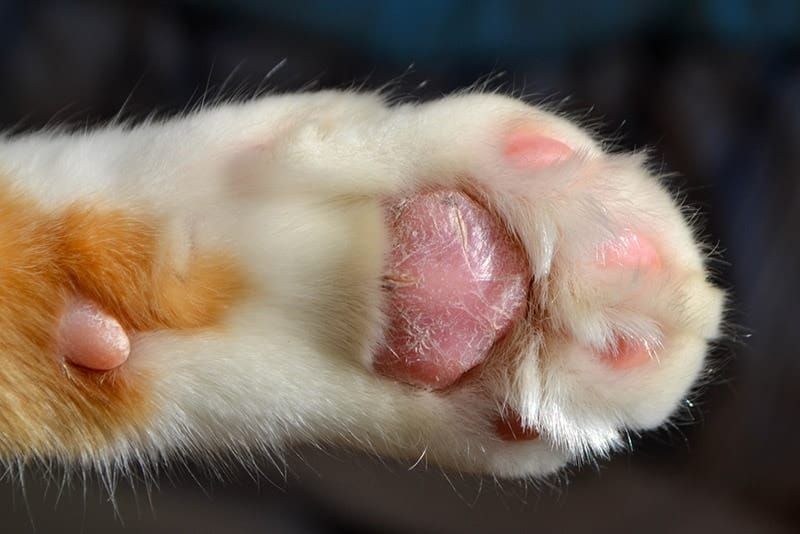
Cats can experience peeling of the paws for multiple reasons. If you’ve had a look at your cat’s paws and noticed them peeling, it could be something worth getting checked by an expert. This article explores how to examine your cat’s paws, the signs that they are peeling, and some of the common causes of peeling paws.

How to Look at Your Cat’s Paws
It’s worth checking your cat’s paws once a week, or if you notice your cat showing any signs of discomfort, such as limping or licking at the paws excessively. The first thing to ensure is that you are checking the paws in an environment where your cat is calm and comfortable. A stressed cat will become more stressed when their paws are handled, especially if this isn’t something they’re accustomed to.
The second thing to note is that cats with pain in their paws may not let you look properly—sometimes it is just too painful, and touching the region will make the pain worse! This is certainly not your fault, but it is a good sign that you should contact a vet.
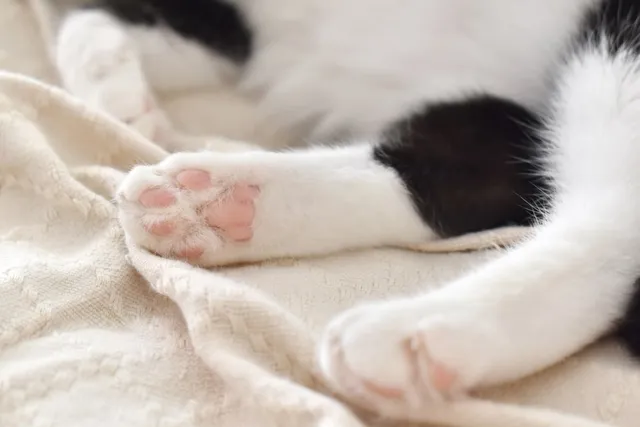
To inspect your cat’s paws, try to have him or her lying down, though standing may work just fine. With one hand, hold your cat’s leg a few inches above the paw (the “wrist” or “ankle” region) to stabilize the leg. With your other hand, have a look at the fur and nails over the paw, and part some fur to check the skin too. It’s important to flip the foot upwards to examine underneath—this is where the paw pads are. Then, repeat for the other three paws. If your cat becomes stressed after looking at the first paw (which often happens), it may be worth giving them a break and checking the other paws throughout the day.

Signs That the Paw is Peeling
This might seem fairly self-explanatory, as most people have seen peeling skin at some point. But it can be a bit less obvious in cats. Signs that the paw might be peeling or unhealthy include:
- Flaky skin
- Flaky or brittle nails
- Peeling skin on the pads
- Inflamed, angry-looking skin
- Oozing from the skin
Remember to always check:
- The skin under the fur
- All nails, including the “dew claw” up high on the front feet
- The paw pads on the bottom of the foot—these are the soft, raised parts of the foot used for cushioning when walking (as well as other things)
If your cat shows signs of the symptoms above or you suspect they might be suffering from underlying health issues, you should contact your vet.
What Does It Mean if the Pad is Peeling?
Noticing a peeling paw pad is not necessarily a reason to be worried. Below are six common causes of a peeling pad:
Injury
Vets may refer to this as “trauma” or “soft tissue injury”. What it means is that your cat had an accident—they may have landed on something, caught their paw in something, or been scratched by another cat. When the skin barrier is injured, it can peel as it tries to heal. Infection from a wound can also cause some skin to appear loose or peeling. Cats with an injury will often be sore, and even if they’re not limping they will vocalize when the area is touched. However, cats are masters of hiding their pain, so this isn’t always the case.

Burn
This is more common in cats that spend time outdoors, and it might be caused by running over a hot metal roof or hot tarmac road. It will usually be the paw pads on the bottom of the paw that is burnt (as these are in contact with the hot surface) and it may appear as red, peeling skin or circular “blistered” skin. Usually, all of the feet will be burnt to some degree. Often these burns will get better with time, but it is worth keeping a close eye on them and bathing them with cool water.
Allergy
When we think of allergies in people, we often think of hay fever. However, allergies in cats are much more likely to result in itchy skin than hay fever signs. There are a few types of allergies in cats, but all of them can cause itchiness, and the paws are a fairly commonly affected spot. Allergies can be environmental (grass and pollen), food-related, or triggered by fleas (flea allergy dermatitis).
But how does an allergy cause peeling of the paws? The body’s allergic response to grass, food, or fleas causes inflammation. This means the skin is hot and itchy, and not perfectly healthy. As a result, cats will often lick or groom the paws more frequently, which makes the whole thing worse, including the peeling.

Infection
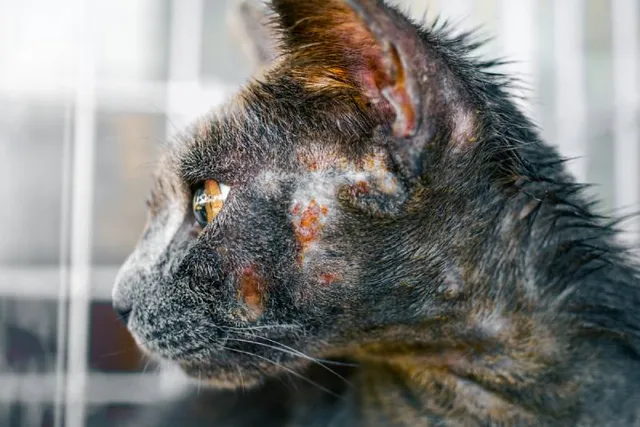
The most common infection causing peeling skin on the paws is ringworm, though some mites can cause peeling skin too. Contrary to its name, ringworm is not a worm, but a type of fungus. Ringworm is more common in young cats and causes patches of the coat to lose their fur and become flaky. If you’re worried that your cat may have ringworm, it’s best to arrange a consultation with your veterinarian. Your vet will be able to distinguish ringworm from other causes of peeling and advise you on the best treatment course.
Auto-immune disease
The main auto-immune disease that causes peeling of the pads in cats is pemphigus foliaceus. Thankfully, this and similar diseases are very rare in cats. Typically, it is not just the paws involved, but other parts of the body too—eyelids, lips, and nostrils, for example. Although it may look like peeling skin early on, it quite quickly becomes very abnormal, crusty skin. These auto-immune diseases require diagnosis by a veterinarian.
Behavior-related
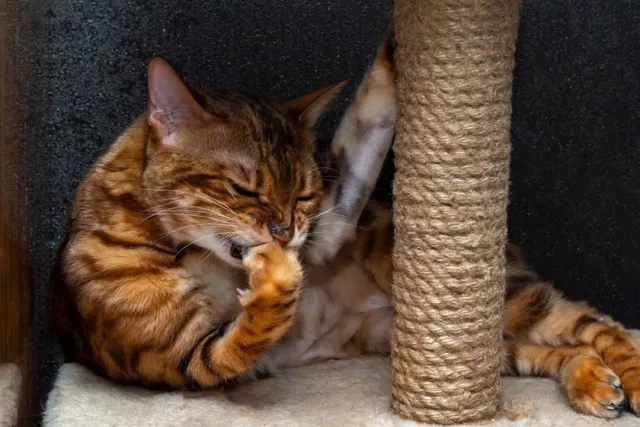
Some cats will over-groom the paw region if they are stressed or anxious. Constant licking can lead to loss of hair and dry, peeling skin. If there are other signs that your cat is anxious, such as vocalizing, erratic behavior, or a tendency to hide, it’s worth chatting to a vet or animal behavior expert to reduce stress levels. Providing your cat with toys, social time, safe spaces in the home, and a regular feeding routine are all good starting points.
Conclusion
Cats can experience peeling of the paws for a number of reasons, which means it is always a good idea to regularly check the paw area. Outdoor cats may be more prone to developing burns, injuries, or infections of the paw. Some conditions causing peeling of the paw can be managed at home, and others are best managed with the help of a veterinarian, so never hesitate to contact a vet clinic if you are concerned or unsure.
Featured Image Credit: JabaWeba, Shutterstock
Expert cat care, straight to your inbox
News, insights, and useful advice, delivered to you.

No spam — unsubscribe anytime.
By signing up, you agree to our Terms & Conditions and Privacy & Cookies Policy.
How useful was this post?
Click a star to rate. You can leave written feedback afterwards. (We read all feedback.)
Dr. Joe Mallat DVM (Veterinarian)
Joe is a veterinarian from Sydney, Australia. When he's not at his office, he enjoys cooking, exercising, and exploring the wilderness in Australia. He has worked for 2 years at a mixed-species practice on the mid-north coast of New South Wales, treating animals of all sizes. His areas of particular interest include internal medicine, wound management and oncology. Joe's love for the profession comes not only from helping cats, but also from helping their parents and working with wonderful teams of people.
Joe completed his Bachelor of Veterinary Biology and Doctor of Veterinary Medicine at the University of Sydney in 2020.