Get

In Your Inbox

Catster is reader-supported. When you buy via links on our site, we may earn an affiliate commission at no cost to you. Learn more.

5 Vet-Reviewed Reasons Why Your Cat Uses You As A Scratching Post & How To Stop It


Share

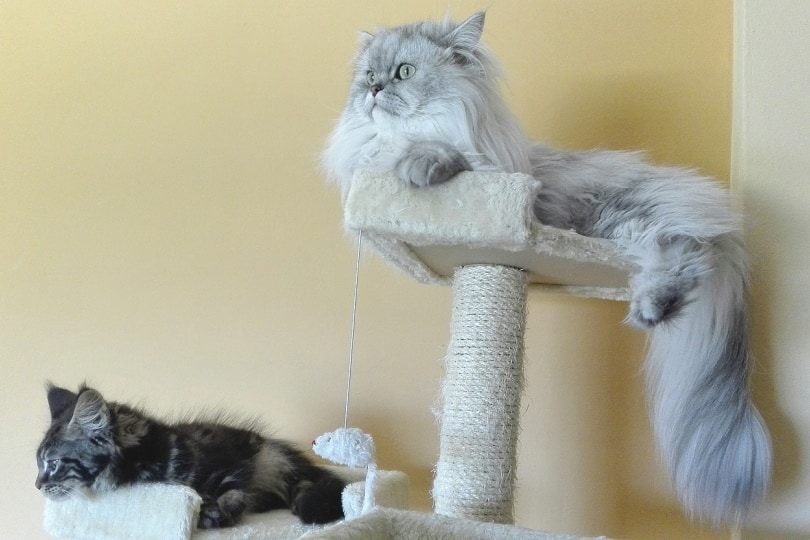
Two cats in a cat tree with scratching post

Your cat’s claws are used for survival as hunting weapons and tree-scaling devices in the wild. As domesticated pets, their claws are kept in tip-top shape with regular scratching, which also serves as a way to do a full body stretch. Of course, to save our furniture, we have designated cat scratchers that they quickly take to. So, it can be jarring when they stretch their paws up to our legs, only to drag their claws down our calves, or sit on our knees to claw at our lap.

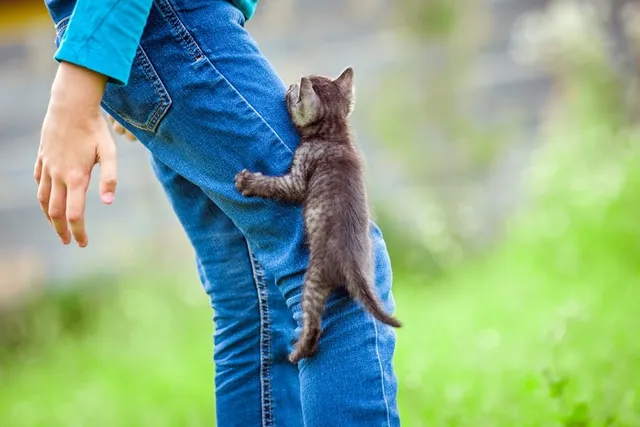
Why would cats use our legs as a scratching post? There are plenty of reasons for the contact between your cat’s claws and your legs, and none are sinister!

divider 3 paws

The 5 Possible Reasons Why Your Cat Uses You As a Scratching Post

1. They Want Attention

As quadrupeds (four-legged animals), cats are tactile with their front paws. They use them to investigate strange objects, reach for items, and play with them. If their meows aren’t enough to attract their owner’s attention, they may use their front paws to get attention.

Reaching up and placing their paws on your legs could signify they want you to talk to them, pet them, or play with them. Either way, they’re just looking for love and attention. Unfortunately, they don’t always have much control over their claws. This is true if they use your leg to stretch out on, as the stretching can cause the nails to pop out involuntarily.

ginger-cat-on-a-shoulder-of-its-owner
Image Credit: Africa Studio, Shutterstock
How to Stop It
  • Keep your cat’s claws trimmed
  • Give them lots of undivided attention, especially when you first return home
  • Respond to their meows
  • Provide plenty of exercise through playing, as well as mental stimulation through environmental enrichment
  • Redirect their scratching with toys
  • Place them next to a scratch post

2. They’re Hungry

Your cat may be not looking for social attention but asking you for something in particular. For example, when your cat wants you to open a door for them to go through, they often stretch up and scratch at the door to communicate this, while meowing and following you around intently.

If you are near their feeding area or their bowl and they scratch at your leg, they may be asking for you to feed them.

How to Stop It
  • Use an automatic feeder. Your cat may stop associating their food with you, so they won’t look to beg you for it as much.
  • Feed small and frequent meals. This method will keep your cat moderately satisfied to prevent a time (like right before dinner) when they are extra hungry.
  • Only feed your cat in their bowl. If you start feeding your cat at your dinner table or from the hand, they will begin to learn food is available from you anytime and do their best to beg for it.
  • Get them checked out by the vet. Some medical issues can cause excessive hunger, causing cats to beg for food even if it is out of character.

3. To Get Comfy

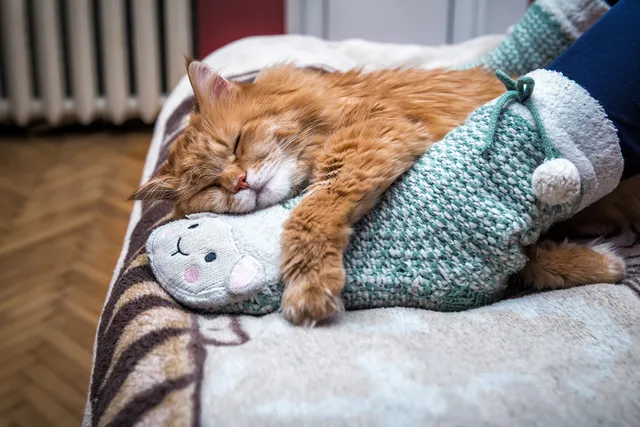
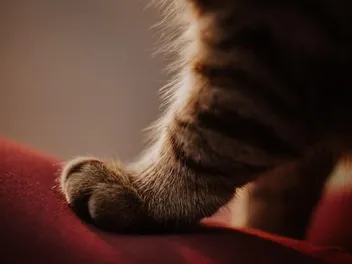
A behavior you may be familiar with in dogs is also typical in cats: using their paws to prepare a spot to sleep in. Pawing and kneading at surfaces can be a way for cats to soften a surface before they lay down. If your cat likes to sit on your lap, your legs may get battered by their claws as they prepare to snuggle in!

This behavior comes from wild denning behaviors where cats prepare a spot to rest in for protection from the elements. This may also be a form of nesting for pregnant or nursing cats, as they look for a safe and warm space to keep their kittens.

cat sleeping with owner
Image By: masik0553, Shutterstock
How to Stop It
  • Keep a blanket near your lounge area to place on your lap before your cat sits down. This creates a barrier between your legs and their claws so they can get cozy without causing you pain.
  • Provide plenty of beds and blankets around the home for your cat to find comfort and warmth.
  • Keep your cat’s claws trimmed.

4. They Love You!

Besides using their claws and paws to get comfortable, kneading their feet on your lap can signify your cat adores you. What better way to say “I love you” than by digging their claws into your lap?

Kneading behavior stems back to when your cat was a kitten. During nursing, kittens use it to stimulate the mammary glands for milk production. Of course, your cat knows that no milk will come from your legs, but it is a retained behavior.

Your cat may be trying to tell you that they know you are their “human mom,” and they love you very much. You’ll know it is the reason behind the clawing if they are also snuggling up to you, purring, or even drooling pleasure.

How to Stop It
  • Put your hands over their paws gently to stop them from kneading until they settle into rest.
  • Keep a blanket nearby as a barrier between your lap and their claws.
  • Redirect their scratching with toys
  • Keep your cat’s claws trimmed.

Hepper Cat Nail Clipper Kit
  • Complete Set - These cat nail clippers include both a large and small pair, meaning it works well as...
  • Razor Sharp Stainless Steel - The most comfortable cat nail clippers for indoor cats provide a fast...
  • Safety First - With a safety nail guard and locking spring, you can make sure every grooming cut is...

Trimming your cat's nails at home can be hard, but having a professional do it can be expensive. With the help of great tools like Hepper's Cat Nail Clipper Set, you can easily and quickly trim your cat's nails at home. This set includes two pairs of stainless steel clippers with safety guards and locking mechanisms, plus a built-in nail file and a convenient pouch.

At Catster, we’ve admired Hepper for many years and decided to take a controlling ownership interest so that we could benefit from the outstanding designs of this cool cat company!


5. To Mark Their Territory

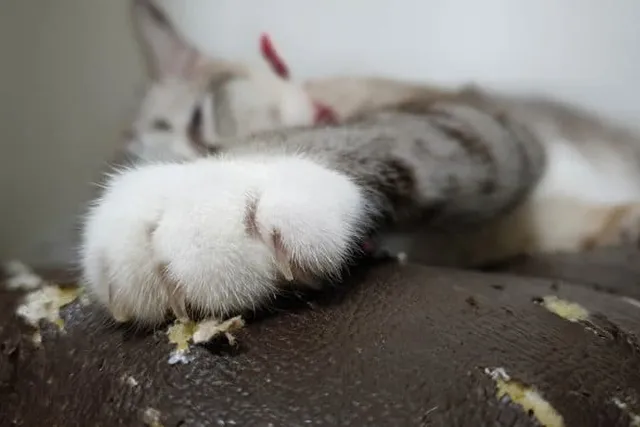
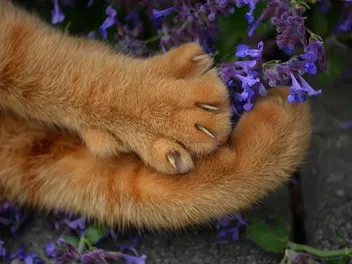
Part of a cat’s scratching comes from instincts. They use the scent glands located on their paws (interdigital glands) to mark their territory. Scratching can leave behind visual and chemical messages to other cats in the area.

Your cat may mark their territory on your legs to leave their scent behind. This familiar scent can provide comfort and security to your cat.

How to Stop It
  • Redirect their behavior away from you, using a toy.
  • Don’t punish them for scratching. You could damage your relationship and create fear, as well as unknowingly reinforce the behavior as even negative attention is attention in your cat’s eyes
  • Place them next to a cat scratcher and use catnip to entice them to use it
  • Consult a veterinarian if anything mentioned above wouldn’t work

If you have a question about your cat's health or behavior, why not Ask a Vet for Free with Catster. Our veterinary team answers reader questions and provides trusted advice to help you better understand your cat.

askavet on catster

divider 3 paws

Final Thoughts

If your cat treats your leg like a scratching post, they aren’t trying to cause you harm. You will know if they are genuinely being aggressive if the scratching is coupled with biting and hissing.

Your leg may be subject to your cat’s claws for various other feline means of communication. However, you can use our guide to help you decipher what your cat is trying to tell you!


Featured Image Credit: RomeoEbaloo, Pixabay

Want content like this delivered to you?

Sign Up For Our Newsletter

News, insights, expert advice, and everything cat

* By submitting, you agree to our Terms & Conditions and Privacy & Cookies Policy.


How useful was this post?

Click on a star to rate (you can leave written feedback after clicking submit)

Help us improve Catster for pet parents!

Your feedback really matters.

What did you like about this post? Also how can we improve it?

Join the conversation

2 Responses

  1. My cat is constantly scratching and sometimes even biting at my legs and ankles. Unfortunately, she seems fascinated by the large "bare" patch on my left leg that runs from just above the top of the ankle to over the top of the knee. This is a skin graft that had to be done after a car accident 5 years ago and any cuts or scratches to it take a long time to heal.
    Is there any way that I can get her to leave my left leg alone?
    If I try to just push her away from it she thinks I am playing and rolls herself around the foot and ankle which also have surgical scarring although not as severe as the graft itself.

    1. Hello from Catster's customer service Elizabeth A Brueggen. We appreciate you reading our content.

      It seems like you are looking for professional advice on this matter. Dr. Paola would be delighted to assist you, so please submit your question through this link: https://www.catster.com/ask-dr-paola/.

Leave a Reply

You’re very welcome to leave a comment or question. Please know that all comments must meet our community guidelines, and your email address will NOT be published. Let’s have a positive and constructive conversation.


Catster's Digital Magazine is Back!

Vet-approved health & behavior advice

Real cat stories & community features

Ask Dr. Paola – My Cat Loves Eating Grass, But It Makes Her Vomit! (June 29, 2026)

Welcome to our “Ask Dr. Paola” series, where every Monday we bring expert advice straight from Dr. Paola Cuevas (MVZ) to help our...

Learning to Speak Cat with Anthony Smith

Many cat lovers know me through Learn to Speak Cat and Cattitude – Doggonit, cartoons that explore the often mysterious, occasionally mischievous, and...

Weird Cat Behaviors That Actually Make Perfect Sense

We have been sharing our lives with cats for thousands of years, yet we still find ourselves genuinely stumped by what they get...

The Dream of Talking to Cats Just Got Closer to Becoming a Reality

If you’ve ever wished your cat could simply tell you what they wanted, you’re not alone. From the meow that wakes you before...

More related

Bobcat vs House Cat: The Differences Explained (With Pictures)

Cats are cats, whether big or small, wild or domesticated, right? Not exactly. Wild feline species, such as the bobcat have some significant...

What Can Kill a Cat? 16 At-Home Items Vets Tell Us To Watch Out For

Being a cat parent is a responsibility that should be taken seriously. Your cat needs water, food, frequent litter changes, grooming, playtime, and...

Why Is My Cat’s Jaw Swollen After Dental Work? Common Causes & Recovery Tips (Vet-Verified)

Given that dental disease and its subsequent problems are very common in cats, a staggering 50 to 90% of cats over 4 years...

Do Devon Rex Cats Shed a Lot? Vet-Verified Tips to Reduce Cat Hair & FAQ

The Devon Rex cat, with its pixie-like appearance and charming personality, is an increasingly popular breed of feline. While these cats are known...

Keep reading

Why Do Cats Hate Water? 5 Vet-Verified Possible Reasons

If you’ve ever tried to give your feline friend a bath, you might already know that your cat is not a fan of water. Most domestic cats don’t appreciate getting wet at all. It’s true that some breeds of domestic...

Persian cat bathing

5 Best Vegan Cat Foods (2026) – Reviews & Top Picks

Vegan diets can be a controversial topic, especially when applying them to our pets. While there are many vegan diets that are inappropriate for cats, there are also those that provide for their nutritional needs. If you want to learn...

cat eating from feeding bowl

Why Does My Cat Scratch Around Their Food Bowl? 4 Likely Reasons

If you’ve ever had a cat, you know that they can be very particular about their food. They may sniff it, walk away, and come back to it multiple times before they finally decide to take a bite. And, as...

birman cat eating

Can Cats Eat Soup? Vet-Reviewed Facts & FAQ

Soup is a great meal to have for lunch or dinner. It is filling and comforting to eat on chilly days, and there are so many ways to prepare it. It really can be the perfect meal. However, you may...

Can Cats Eat soup

Do Cats Hold Grudges? Vet-Reviewed Feline Behavior & FAQ

Few things are more upsetting to a cat owner than when their pet acts as if they were angry with them after they unintentionally hurt their pet, like stepping on their tail. While hiding under the bed after getting their...

portrait of an emotional angry cat

How Does a Cat Purr? The Evolution & Meaning Behind a Purr (Vet Reviewed)

Cats are known for their adorable vocalizations, and their purring is usually a sign of contentment and happiness. But have you ever wondered how your cat makes that calming vibration? Cats purr by vibrating their laryngeal muscles through several mechanisms....

cat purring

Why Do Cats Stare? Feline Behavior Explained (Vet-Reviewed Info)

If you’ve ever watched your cat mesmerized for minutes or longer by a seemingly random object, you’re not alone. Since time immemorial, humans have been fascinated by cat staring. But why do they stare in the first place? The answer...

Tortoiseshell cat starring at a window

15 Vet-Verified Reasons Your Cat Sleeps Under the Bed: With Tips to Manage Anxiety

Do you ever wonder why your cat likes to sleep under the bed? There are actually several reasons why cats like to do this. In this blog post, we will discuss the 15 most common reasons why cats like to...

Cat Sleeping

Love Cats? So Do We! Join the Catster Community

Stay informed with expert pet care insights delivered straight to your inbox! Discover professional guidance on animal behavior, feeding tips, trusted product picks, and much more.


Sign up for the Catster Email Newsletter

Stay informed with expert pet care insights delivered straight to your inbox! Discover professional guidance on animal behavior, feeding tips, trusted product picks, and much more.