Get

In Your Inbox

Catster is reader-supported. When you buy via links on our site, we may earn an affiliate commission at no cost to you. Learn more.

5 Expert Ways to Handle Aggressive Cats: Vet Approved Tips & Tricks

Share

Aggressive Singapura Cat

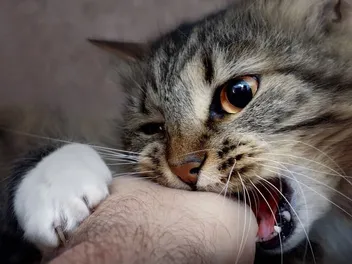
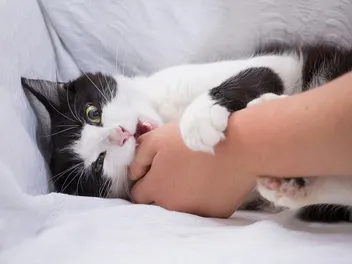
Cats are usually sweet and gentle, especially as they outgrow their rambunctious kitten phase. But what happens when you have an aggressive cat? Hissing, clawing, and biting isn’t fun for anyone, especially if it creates conflict with family members or other household pets.

Aggression issues can come from many sources, including an abuse history or health problems. Unfortunately, many aggressive cats end up in a shelter or on the street, but it doesn’t have to be that way. Here are five expert ways to handle aggressive cats and restore harmony in your household.

divider cat paws oct 2024

The 5 Expert Tips to Handle Aggressive Cats:

1. Get a Vet Checkup

Closeup veterinarian is making a check up of a adult maine coon cat with stethoscope in vet clinic
Image by: Ermolaev Alexander, Shutterstock
Difficulty Moderate
Cost Potentially high
Time commitment Potentially high

The first step in addressing any aggression issue in your cat, or any other pet, is a vet checkup. Aggression can be caused by medical issues, such as pain or anxiety, and may be treatable. The vet can rule out any possible medical causes and address any that show up. In addition, the vet may be able to prescribe medication, even in the short term, lifestyle changes, or other interventions to help you address your cat’s aggression.

Pros
  • Gets to the root cause and appropriate treatment
  • Addresses your cat’s health
Cons
  • Potentially expensive

If you need to speak with a vet but can't get to one, head over to PangoVet. It's an online service where you can talk to a vet online and get the advice you need for your pet — all at an affordable price!

PangoVet_Mention-in-Content for PangoVet2 save money

2. Teach Children Boundaries

little girl talking to cat
Image by: Africa Studio, Shutterstock
Difficulty: Moderate
Cost: Zero
Time commitment: Moderate

Children and pets don’t always mix, especially with cats that aren’t tolerant. Young children can be too boisterous for a cat, and even the most well-meaning child can accidentally hurt cats by pulling on their tails or ears, pinching fur, or handling them roughly, leading to a scratch or bite. It’s important to teach your children how to behave appropriately around your cat (and other pets), not only for their own safety but for the safety and comfort of your cat. Furthermore, children should always be supervised around pets, and it’s best to keep them in different areas when that’s not possible.

Pros
  • Safety for both cats and children
  • Keeps your cat comfortable
  • Zero cost
Cons
  • Time commitment

3. Offer a Safe Space

two bicolor Seal Ragdoll Cats on cat tree
Image by: Nils Jacobi, Shutterstock
Difficulty: Easy
Cost: Low
Time commitment: Low

If a cat is becoming aggressive, they may need their own space to mellow out and get away from whatever is causing stress. You can’t control every stress trigger your cat encounters, but you can provide a safe space for them to escape. Cats are largely solitary creatures, and though they can coexist peacefully in multi-pet households, they may still need some alone time. You can provide a room, a high shelf with a condo, or a cat tree with different hiding spots—whatever provides privacy and solitude for your cat. You can even try adding calming pheromone diffusers in their safe space, such as Feliway, to help curb their stress.

Pros
  • Addresses environmental stress
  • Ongoing solution
Cons
  • May be difficult in small homes and apartments

4. Don’t Punish

cat rubbing against owner
Image by: Irina Kozorog, Shutterstock
Difficulty: Moderate
Cost: Zero
Time commitment: Potentially high

Behavioral modification can be difficult with cats. They respond to rewards-based training and modification, not punishments. Resist the urge to yell, scold, swat, hit, or spray your cat with a water bottle in response to aggressive behaviors. Cats don’t respond to negativity; doing so may only serve to increase aggression and put your cat on the defensive. Instead, use rewards to reinforce the behaviors you want instead of aggression, such as lying with you, allowing you to pet them, or purring or rubbing against you.

Pros
<

  • Builds positive behaviors
Cons
  • Takes time and consistency

5. Consult a Behaviorist

cat examined by Vets
Image by: Kzenon, Shutterstock
Difficulty: Moderate
Cost: Moderate
Time commitment: Moderate

If the previous interventions haven’t improved your cat’s aggression, they’re not necessarily bound for the shelter. Consult with a professional veterinary behaviorist to get to the root cause of your cat’s aggression. These professionals are trained in animal behavior and may recommend a combination of behavioral modification, environmental modification, and short-term medication to treat aggression and reinforce non-aggressive behavior.

Pros
  • Corrects behavior positively
  • Promotes lifelong habits
Cons
  • Potentially expensive and time-consuming

divider cat paws oct 2024

Types of Cat Aggression

One of the challenges with cat aggression is that it can come from a variety of sources, all of which need to be treated differently.

  • Play aggression: This occurs from improper socialization at a young age.
  • Fear aggression: This occurs when the cat is scared by a sound, animal, or unfamiliar person or situation and associates it with an unpleasant experience.
  • Pain-induced aggression: This happens when a cat is avoiding being touched or moved in a way that would worsen pain and is commonly seen when there’s an underlying medical issue.
  • Status-induced aggression: Cats will try to use aggression to establish dominance, particularly with other household pets or humans.
  • Territorial aggression: Cats are territorial and may show aggression to defend their territory from other household pets or humans.
  • Inter-cat aggression: Males, and occasionally females, will show aggression toward same-sex cats as they approach sexual maturity. Spaying or neutering can address this problem.
  • Redirected aggression: Cats may become aggressive if they encounter a stimulus and can’t react directly. Instead, they redirect aggression toward a nearby human or pet.
  • Petting-induced aggression: Some cats will become aggressive while being petted for unknown reasons. This may also occur while grooming.

divider cat paws oct 2024

Conclusion

Cat aggression can be challenging and may put other pets or people in the household at risk, but not all hope is lost. Aggression can come from many possible sources and can be corrected, especially once the underlying cause is identified. Try these tips to correct your cat’s aggression, or consult a veterinary behaviorist to teach your cat appropriate behaviors.


Featured Image Credit: Seregraff, Shutterstock

Want content like this delivered to you?

Sign Up For Our Newsletter

News, insights, expert advice, and everything cat

* By submitting, you agree to our Terms & Conditions and Privacy & Cookies Policy.


How useful was this post?

Click on a star to rate (you can leave written feedback after clicking submit)

Help us improve Catster for pet parents!

Your feedback really matters.

What did you like about this post? Also how can we improve it?

Join the conversation

Leave a Reply

You’re very welcome to leave a comment or question. Please know that all comments must meet our community guidelines, and your email address will NOT be published. Let’s have a positive and constructive conversation.


Talk With A Vet Online

Peace of mind,
anywhere, anytime

Affordable vet advice

The Cat Biting Mistakes Most Owners Make (And What Works Instead)

Cat bites sent more than 400,000 people to emergency rooms in the US each year.1 Not scratches. Bites. And the reason they’re so...

Do Cats Cause Schizophrenia? Scientists Find a Link – Here’s What It Means

Being a fierce advocate (and occasional recipient of) mental health support and awareness, the term ‘crazy’ is not one I like to fling...

One in 100 Cats Gets Diabetes – Here’s How to Catch It Early

One in every 100 cats develops diabetes.1 That’s not a rare, unlucky condition reserved for cats with obvious health problems. It’s common enough...

Dramatic Rescue Turns Into Dramatic Reunion

What started as a routine call for the RSPCA became a heroic, five-hour rescue featuring one trapped and traumatized cat, an emotional family...

More related

Polycystic Kidney Disease in Cats: Our Vet Explains the Signs, Causes & Treatment

Most cat owners are familiar with the term chronic renal disease, as it is a widely common disease process that impacts a large...

Should I Leave a Light on For My Cat? Vet-Approved Care Facts

Cat owners want to do everything they can to ensure their cats are comfortable, safe, and happy. Knowing that cats get up and...

What Colors Do Cats Like? Vet-Reviewed Facts & Preferences Revealed

Ever wondered what colors cats like the most? The answer isn’t so simple. The way that cats view and perceive the world is...

Can Cats Eat Cranberries? Vet-Reviewed Facts & FAQ

Cats are known for loving their meat. But did you know that your feline companion may benefit from consuming some fruits and veggies...

Keep reading

Do Cats Like Blankets? Vet-Reviewed Feline Behavior Explanation & Safety Tips

Cats are interesting creatures that tend to march to their own beat. It can be tough to get a cat to do something you want them to and to stop doing things that you don’t like. So, if a cat...

kitten playing under a blanket

Cat Vomit Color Chart: Vet-Verified Meaning of Different Colors

Cats occasionally throw up. It’s simply a fact of life. Usually, you’d clean it up and move on with your day, but you should check what color your cat’s vomit is. The color can indicate if they have a health...

man petting a sick siberian cat

How to Tell if Your Cat Has a Tick – 8 Signs to Look For

Ticks are nasty little parasites that feed on blood. They’re in the same category as fleas and mosquitoes and can cause health problems for your cat if left on the body. So, you definitely want to remove a tick as...

cat with tick

Does My Cat Need a Cat Bed? Vet-Reviewed Facts & FAQ

If you’re a cat owner, you know how important it is to provide the best possible care for your pet. One way to make sure your cat is comfortable and feels safe and happy is to provide them with an...

tabby cat on bed

Are Dahlias Poisonous to Cats? Vet-Reviewed Houseplants Examined

Dahlias are perennials that bring a splash of color to late-summer gardens. The flower blooms from mid-July until the first frost in most parts of the U.S. Smaller varieties grow well in pots, and many gardeners bring the cut flowers...

Catster_Are Dahlias Poisonous to Cats

How to Brush a Cat That Doesn’t Want to Be Brushed: Vet-Reviewed Step-by-Step Guide

A lot of cat owners don’t think about brushing their cats (after all, cats are pretty excellent at grooming themselves), but it’s a good idea to do this. Not only does it help kitty stay tangle- and mat-free, but it...

cat brushing a home

How to Tell the Difference Between a Cat Hairball & Cough: Vet-Reviewed Facts

Seasoned cat owners could hear a cat retching up a hairball from a mile away, but the sound might sound like a cough to an inexperienced owner. However, these two things are different, and it’s essential to tell the difference...

cat cough

Signs a Cat is Dying: 11 Vet-Verified Changes to Look For

It’s the moment that no cat owner wants to contemplate, but as our feline friends get older or maybe develop an illness, their deteriorating health can begin to show signs your cat is dying. As difficult as this time can...

tired or sick cat

Love Cats? So Do We! Join the Catster Community

Stay informed with expert pet care insights delivered straight to your inbox! Discover professional guidance on animal behavior, feeding tips, trusted product picks, and much more.


Sign up for the Catster Email Newsletter

Stay informed with expert pet care insights delivered straight to your inbox! Discover professional guidance on animal behavior, feeding tips, trusted product picks, and much more.