Can Cats Be Trained Like Dogs? Vet-Approved Tips & Tricks


In this article
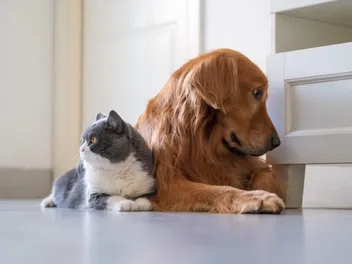
Cats are independent creatures that like to do things on their own terms. However, they are also highly intelligent and can learn to do many things that we want to teach them. But can cats be trained like dogs can? Not exactly. Dogs are typically not as independent or stubborn as cats are, which makes them easier to train.
Dogs also tend to be able to learn many more tricks and actions through training than cats. That said, cats can learn myriad actions with a bit of patience and commitment on your part. Here are a few things that you should know before you start training your cat to do anything.

Why Are Cats Harder to Train Than Dogs?
There are a few different reasons that cats can be tougher to train than dogs. First, they do not recognize a hierarchy in their packs. They do not see their human companions as leaders, so they do not seem to respond as well to directives.
Second, cats are sometimes harder to read than dogs. While it is easy to tell when a dog is being attentive or when their excitement is building, cats do not usually show signs of these things. No matter how well you know them, a cat may never clue you into how they are feeling or what they are thinking. Therefore, it can be hard to interact with them during training and figure out what is and isn’t working.
Another thing to keep in mind is that cats do not have the same attention spans as dogs. They tend to pay attention in short spurts, which can be frustrating when you are in the middle of a training session. Unfortunately, there is not much that we can do to make a cat pay attention to us if they don’t want to, and a treat will only go so far. No animal should ever be punished, but it is well-known that felines in particular do not respond well to punishment.

What Can Cats Learn Through Training?
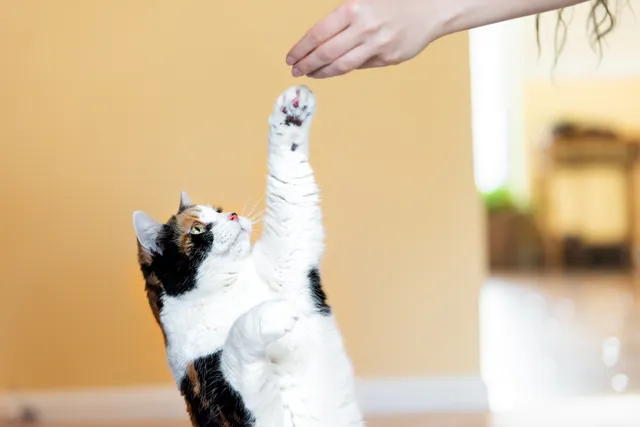
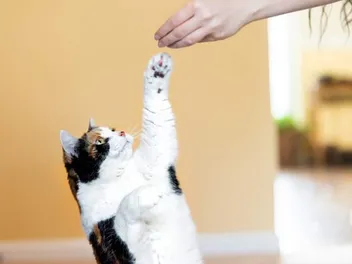
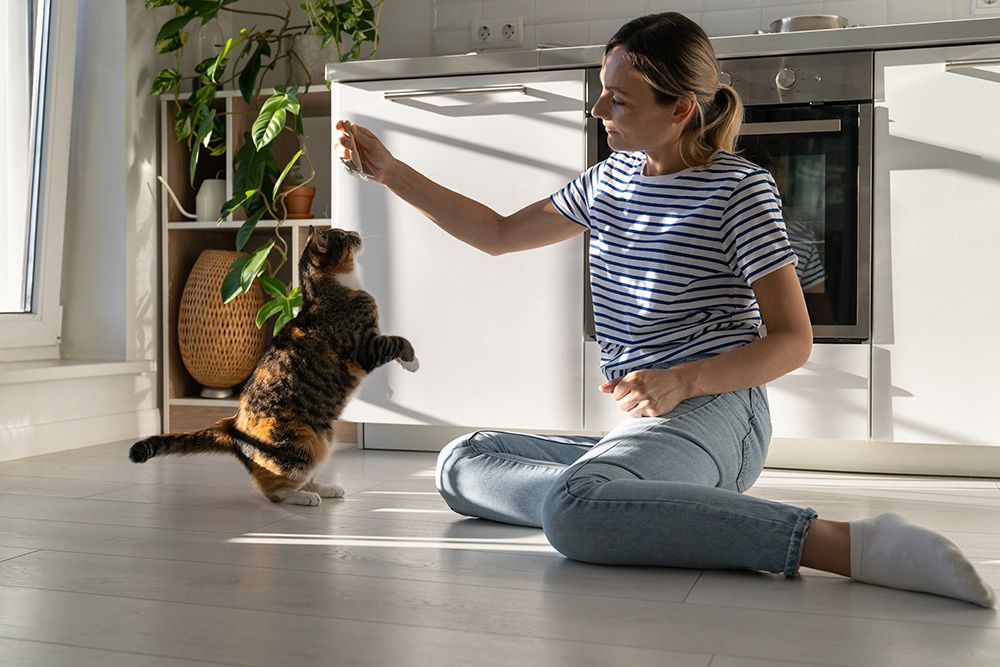
Even though cats are not as easy to train as dogs are, it is possible to train them to do multiple different things. For example, cats can learn how to sit on command—with plenty of practice. Cats can also learn how to give you a high-five or shake your hand with their paw. Here are a few other things that you may be able to teach your cat to do:
Some cats are better at training than others, depending on things such as their breed, age, temperament, and intelligence. A cat may not be interested in learning anything more than to come when they are called, while another cat will be happy to learn many things, like how to seek out toys and put them back in a toy basket.

Tips and Tricks for a Successful Training Experience
Cat training is a great deal of hard work, but the process is usually worth the effort. However, it is always a good idea to consult with a professional trainer before starting any training sessions with your cat to gain expert guidance and advice. It is also best to start training during kittenhood, when they are still learning about how the world around them works. Here are a few other tips and tricks that you can use to make training successful and rewarding for both you and your cat.
Have Patience
It is important to have patience when working with a cat to teach them new skills. While it might take only one training session to get a dog to understand what they are supposed to do, it can take three or more training sessions for a cat. So, expect it to take longer for your cat to learn a new trick or skill than you think that it will. Even if you think that you have low expectations, your cat might not want to meet any expectations right away. Take your time, and give your cat a bit slack, and eventually, they will come around to the training.

Start With Activities That Cats Naturally Like to Do
Make training easier on you and your cat by starting with an activity that they already have a natural inclination to do. For example, if your cat seems to like reaching out for objects and items with their paws, they are a good candidate for learning how to high-five or shake. If your kitty enjoys chasing after toys, they may be great at learning how to play fetch. Once you have accomplished basic training, you can move on to other activities that your kitty may not be naturally inclined to do.
Use Treats
Rewarding your kitty cat with a treat when they accomplish a training goal is an effective way to positively reinforce the behavior so they will want to keep completing the trick or action that you train them to do. Every time your cat follows directions and does something that you want them to do during training, give them a special treat. Continue the process every time you train your cat. Whatever treats you use during training should be reserved just for that time. Use variability in treat numbers or sizes to mark when they did something extra well. This will make training time special for your cat and give them more incentive to follow directions throughout the session. Remember that your cat should get a maximum of 10% of their diet in treats, so choose low-calorie treats, and use them wisely. Alternatively, you can use parts of their food portions as reinforcements offered between their favorite treats.

A Final Recap
Cats can be trained to do many things, even stuff that dogs get trained to do. However, it takes more patience and overall work to train a cat than it does a dog. If you are committed to the process, though, you can have your cat walking on a leash, coming when they are called, staying in place when asked to, and even fetching toys in the living room.
Featured Image Credit: DimaBerlin, Shutterstock
Expert cat care, straight to your inbox
News, insights, and useful advice, delivered to you.

No spam — unsubscribe anytime.
By signing up, you agree to our Terms & Conditions and Privacy & Cookies Policy.
How useful was this post?
Click a star to rate. You can leave written feedback afterwards. (We read all feedback.)
Rachel Giordano is a Pensacola, Florida-based musician and writer. She lives with her partner and their two dogs, Sophie, a Boston Terrier, and Aero, a Border Collie/Sheltie mix. Rachel holds a Bachelor of Arts degree in communication and loves writing about all types of cat breeds. When she’s not writing about cats, she loves to write suspense/thriller novels. A musician by night and writer by day, she enjoys sharing her knowledge of the needs and requirements of our furry friends.