Why Does My Cat Sleep Between My Legs? 5 Reasons for This Behavior


In this article
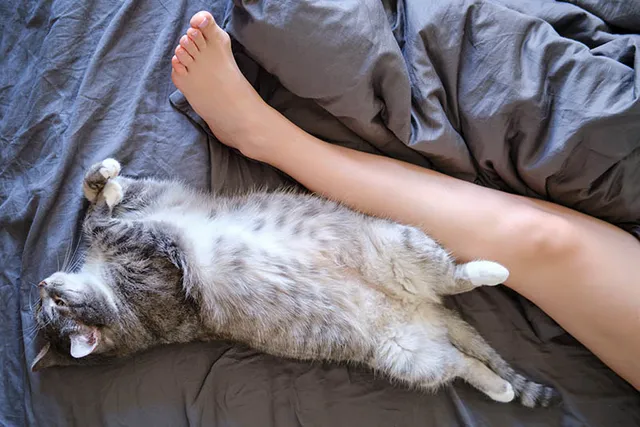
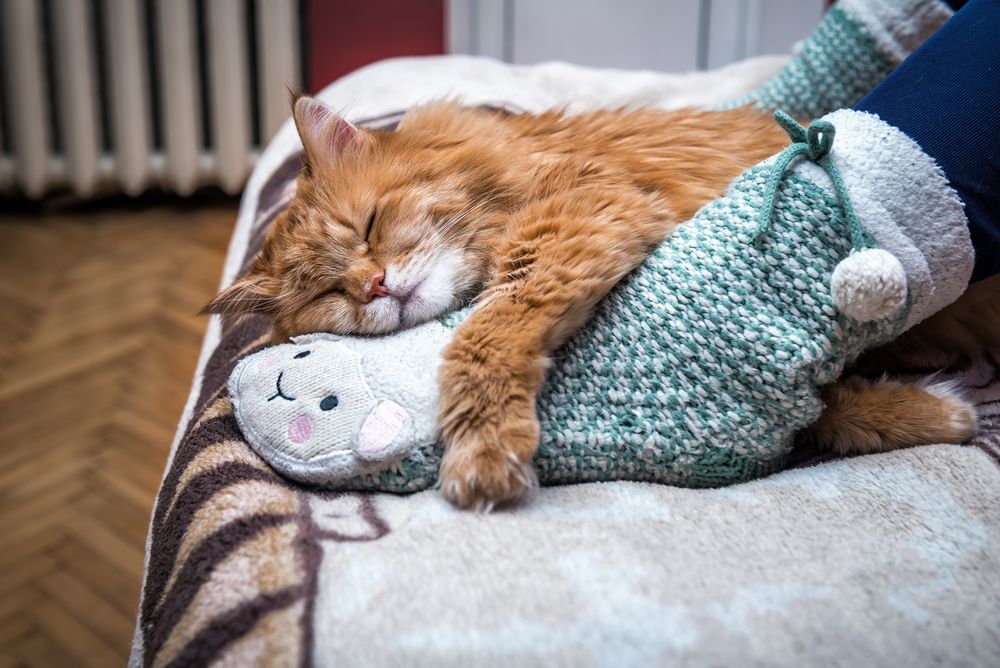
We’re never going to understand our cats and their quirky behavior! If your cat loves to snuggle up for a nap between your legs, you might be shaking your head as to why, especially since you can’t easily change position! For your cat, this behavior has logical reasons.
If sleeping between your legs is your cat’s preferred napping position, we'll help you determine the reason and show you how to encourage them to sleep elsewhere if needed.

Top 5 Reasons Cats Sleep Between Your Legs
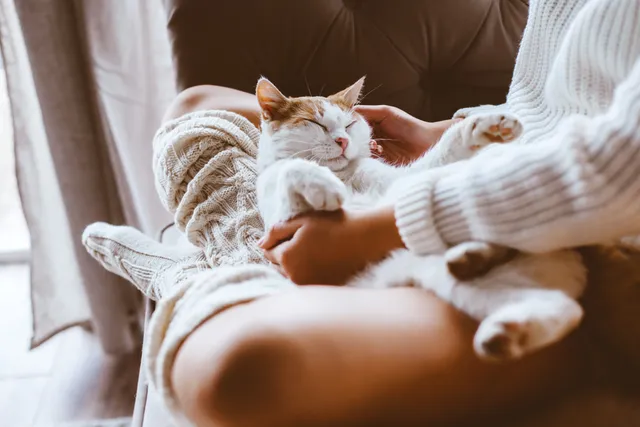
1. You Help Keep Them Warm and Cozy
The first consideration for many cats when choosing their sleeping location is warmth. Cats love to feel warm, and they often go out of their way to find someplace as warm as possible. During the day, that might be a spot of sunshine or above the radiator.
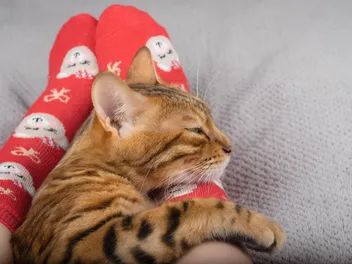
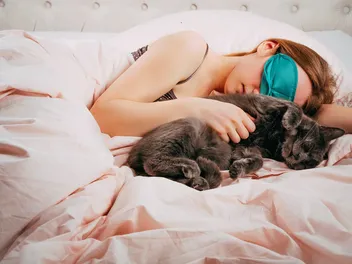
But at night, when the temperature decreases, and the sun has set, what will be the warmest place in the house? You are! Sleeping between your legs gives your cat the perfect location since your legs can keep them warm on both sides.
Cats will choose a place to sleep that looks uncomfortable to us, but if it’s warm, they’ll make themselves fit into whatever spot they’ve chosen.
2. They’re Marking You as Their Territory
If you have multiple cats at home, you might find that some like to sleep in between your legs, and others don’t. Cats are territorial, and one of your cats may claim this spot as their zone, and your other cats will know that they should stay away unless they want to fight over the sleeping spot.
You might even find that one of your cats settles down for a nap between your legs, only to be pushed out of place by one of your other cats when they decide that it’s actually where they want to sleep. Cats leave pheromones around your house and on you!
They scent-mark their favorite spots to let other cats know that a “spot” belongs to them. So, if you notice your cat rubbing their cheeks or face on your legs before they settle down, they’re marking you.

3. You Make Them Feel Secure
Cats might be predators, but they’re also prey for larger animals in the wild. Even though your domestic kitties don’t need to worry about getting pounced on while they sleep, it’s still ingrained in them to find a safe place.
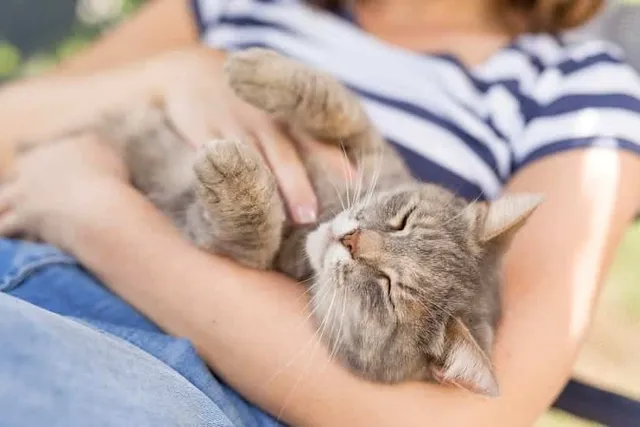
All animals are vulnerable when they sleep, but there’s safety in numbers. Kittens sleep piled into an adorable bundle, staying near their mother for safety and security. So, when your adult cat chooses to sleep curled up between your legs, you provide them a safe haven to sleep soundly, knowing that you’re looking out for them.
Is there anything better than a happy cat? We don’t think so—that’s where the Hepper Nest Bed comes in.

- COMFY KITTY - Your cat or kitten will have an amazingly deep sleep in this self warming, nesting cat bed. The warm, fluffy cat bed lining provides calming stress relief for cats of all ages.
- PRETTY HOME - This round cat bed has a modern and unique design that’s perfect for a sleek indoor look. We don’t think of it as cat furniture but think of the Cat Nest as a “cat home”.
- SPACE SAVER - Reclaim your desk, window sill, or couch from kitten encroachment. This calming nest cat bed has an elevated, space-saving hideout so comfortable your kitty can't resist!
This product was designed with both your and your kitty's happiness in mind. While the comfortable bowl shape and wide lip to rest their heads on are ideal for sleepy kitties, you’ll appreciate the removable and machine-washable fleece liner for easy cleaning. It doesn’t get any better than this! Click here to try it out.
At Catster, we’ve admired Hepper for many years and decided to take a controlling ownership interest so that we could benefit from the outstanding designs of this cool cat company!
4. They’re Bonding With You
If you have multiple cats, you might notice that they love to sleep curled up together. This helps them bond with each other, as well as keep each other warm. You might see your cats using each other’s bodies as pillows and snuggling in for a nap.
If you have only one cat, they may attempt the same bonding behavior. Even if you have multiple cats, some of them might not get along well enough with each other to be able to share a sleeping spot, so they’ll probably try it with you!

5. They Want a Deep Sleep
Our cats can take a quick catnap just about anywhere, from the arm of your couch to the top of the bookshelf. This is how cats refresh themselves most of the time. But if they need a really deep sleep, they’ll seek out somewhere safe so they can truly relax. Where is safer to drift off into a deep sleep than the security of sleeping between their owner’s legs?
Might Also Interest You: Why Do Cats Stick Their Tongue Out? 10 Reasons for This Behavior

What to Do if You Don’t Want Your Cat Sleeping Between Your Legs
If you’re happy for your cat to sleep between your legs as often as they want to, then great! But for some owners, it might mean you’re finding it harder to get to sleep, suffering from cramps in your legs, waking up when you need to roll over, and finding that you can’t drop off back to sleep.
In that case, finding a way to persuade your cat to find a new sleeping spot is the answer. Consider getting them a new cat bed with a heating pad so that they can feel warm and cozy. Or place a t-shirt with your scent on their bed to help them feel comforted without actually sleeping on you!
If you’re still happy with your cat sleeping on your bed but don’t want them sleeping between your legs, try using clicker training to reward them for sleeping next to you instead. They’ll soon realize that being next to you is almost as good, and they get treats!
When to Worry About Your Cat Sleeping Between Your Legs
99% of the time, your cat sleeping between your legs is absolutely fine, and you don’t need to worry about it all unless it’s difficult for you to sleep, too. For the other 1% of the time, your cat might be sleeping more than usual because they’re sick. Cats are skilled at hiding pain, so they may be stressed or uncomfortable and seek a warm resting spot.
If you notice odd behavior, like not eating or drinking as much, excessive vocalization, or anything else that sets alarm bells ringing, the best thing to do is seek out advice from your vet. They can give your cat an exam to check that they don’t have any medical conditions or injuries that need treatment.
Conclusion
Plenty of cats have their favorite sleeping spot, and figuring out why can help you understand your feline friend much better. One of these places is between your legs, among other strange favorites. This behavior is usually fine and nothing to worry about; your cat really values your body heat and the security you provide or simply wants a snuggle!
Related Reads:
Why Do Cats Put Their Butt in Your Face? Reasons for This Behavior
Why Does My Cat Drink Out of My Water Glass? 8 Common Reasons
Why Do Cats Rub Against Your Legs? 3 Vet-Verified Reasons for This Behavior
Featured Image Credit: Vova Shevchuk, Shutterstock
Expert cat care, straight to your inbox
News, insights, and useful advice, delivered to you.

No spam — unsubscribe anytime.
By signing up, you agree to our Terms & Conditions and Privacy & Cookies Policy.
How useful was this post?
Click a star to rate. You can leave written feedback afterwards. (We read all feedback.)
Christian started writing for a local newspaper as a teenager, and he's been involved in the publishing industry for most of his adult life. Combining his love of writing with a passion for animals, he is currently the Director of Editorial at Pangolia and the Editor-in-Chief at Catster.
Christian lives in the Philippines with his wife, son, and four rescue cats: Trixie, Chloe, Sparky, and Chopper.