Why Does My Kitten Climb Me Like a Tree? 6 Vet-Reviewed Reasons & How to Stop it


In this article
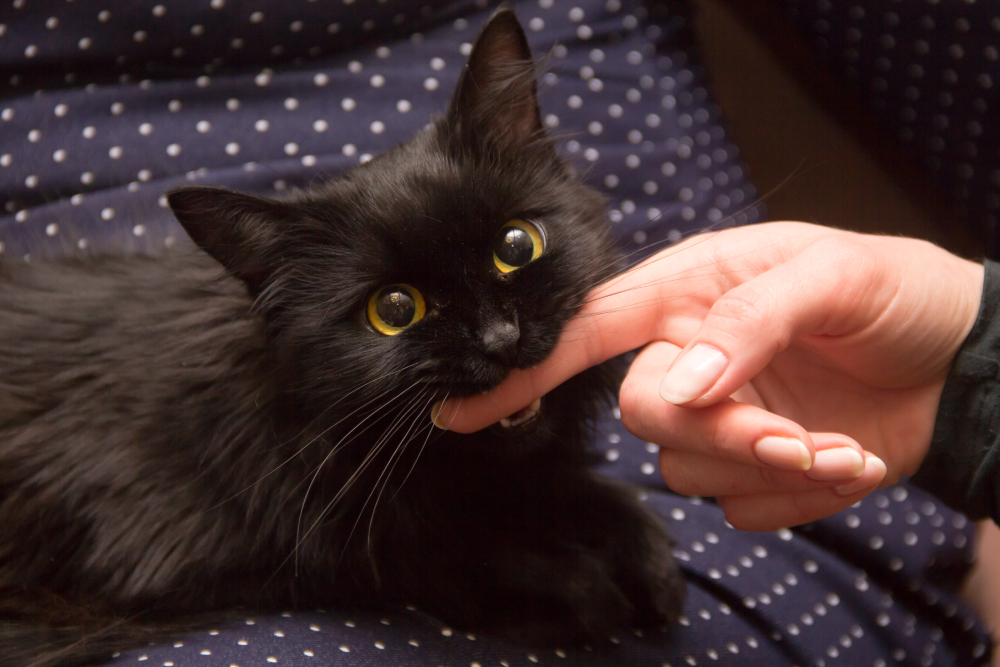
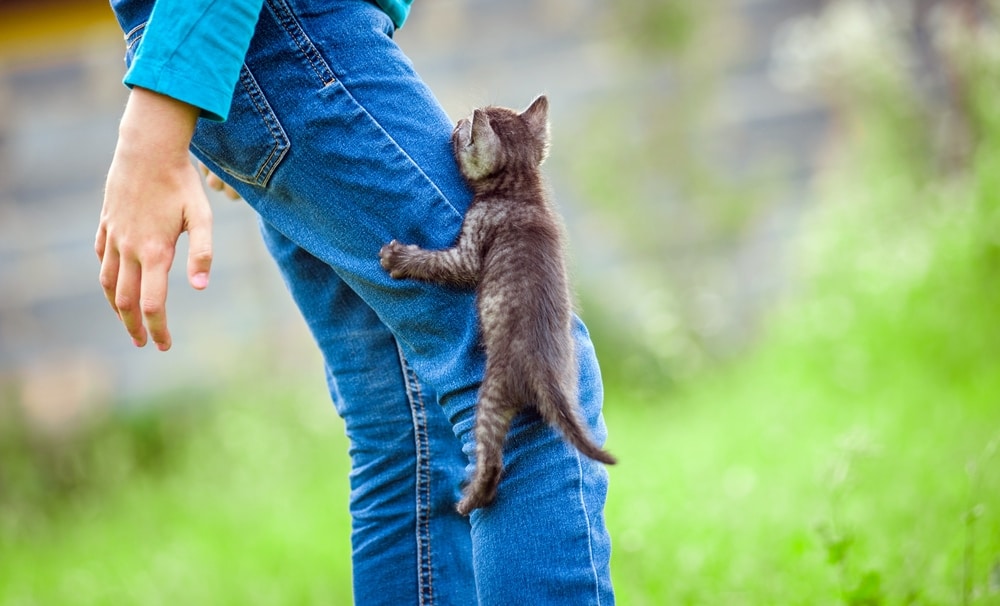
Your little rascal has already won their way into your heart, but maybe you don't want to sacrifice your new pants or sensitive skin to their shredding claws. Kittens sometimes climb their humans like they would climb a tree for various reasons. This behavior can be limited to the kitten stage, but it's not always something your cat will outgrow.
Figuring out why your kitten is acting like this can help you solve the problem, allowing your cat and your thighs to finally live at peace with each other. Here are six possible reasons why your cat scales your legs, and what you can do about it.

The 6 Possible Reasons Your Kitten Might Think Your Leg Is Their New Tree
1. Lifestage
Although any cat at any age might climb on you, kittens are the most common culprits. These young creatures don't yet understand the idea of human pain, and what's acceptable and what's not, and if they’re very closely bonded with their owners, often due to being weaned early or hand reared, they may try to get as close to them as they can, no matter the method. You can try to train your kitten to stay off your legs by redirecting them to something they can play with, such as a scratching post or a cat tree. Just remember to be gentle. Cats have sensitive souls and may become skittish if you're too harsh with them. Avoid raising your voice, as even negative attention is a kind of attention and may encourage your kitten to continue doing so, just to get a response from you.

2. Craving Attention
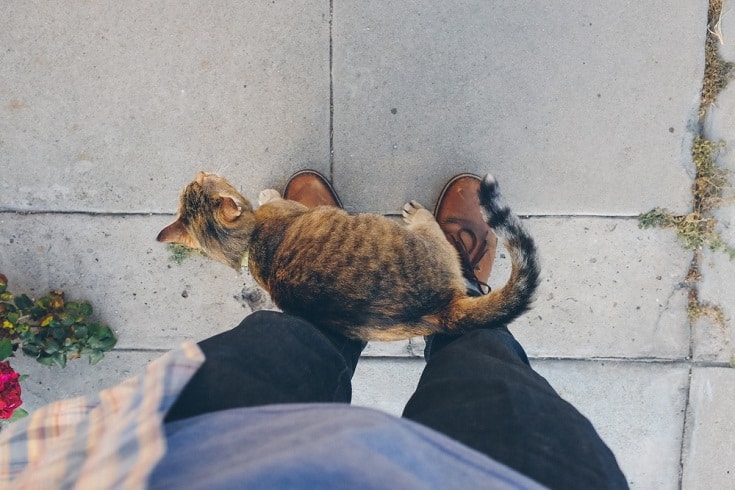
Your kitten may be jealous of how you spend your time. If you haven't played with them much that day, or if you're obviously distracted from their charming presence, they might take the opportunity to assail your leg to grab your attention. And it works. Make sure you take time each day to bond with your kitten instead of waiting for them to become desperate. Your legs will thank you later.
3. Boredom
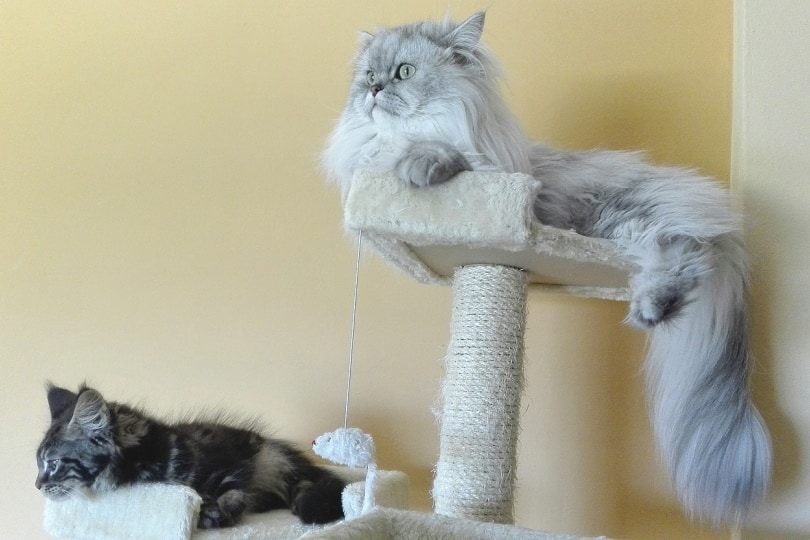
Kittens and cats, in general, like to climb. In the wild, cats climb trees to chase their prey. Cat trees are a popular choice indoors because it gives them a positive outlet for their natural tendencies. Consider buying your kitten a cat tree or find a creative way for them to engage with their hunting skills through catnip toys, perches, or other stimulating objects.

4. Maintaining Their Claws
Even indoor-only cats need to scratch and maintain their claws. If they don't see a scratching post that they like, they might turn to your legs to help them groom.
5. Playing
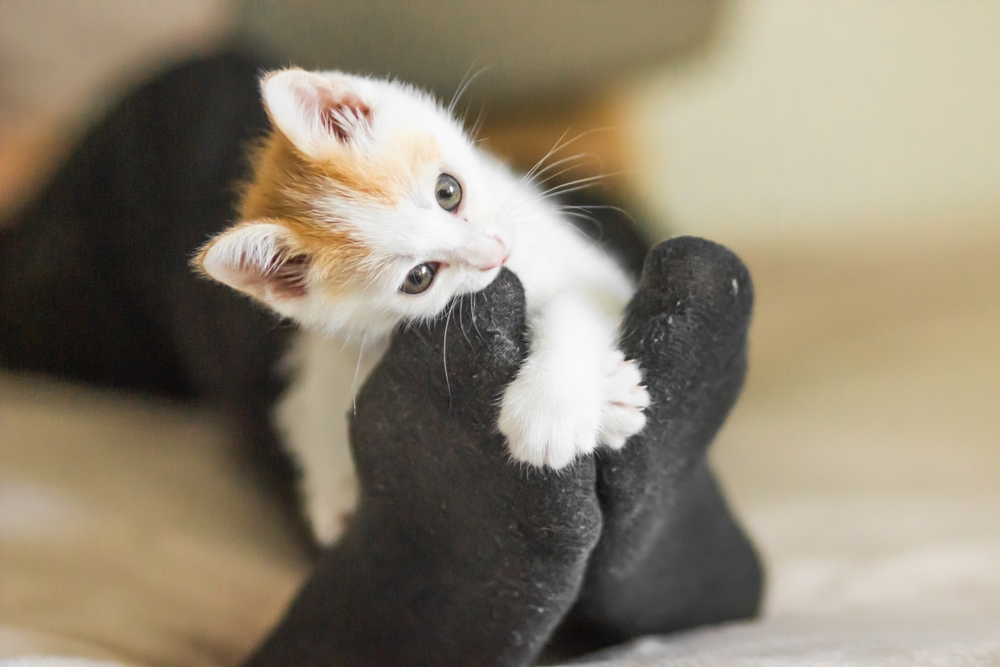
Some kittens love to play with their toys, while others prefer for you to be their playmate. In this case, jumping up on you and climbing is a way for them to exhibit their natural behaviors and learn hunting skills. Redirect this behavior to a cat tree or a scratch post, and use toys to distract them from climbing up your legs.

6. Seeking Warmth
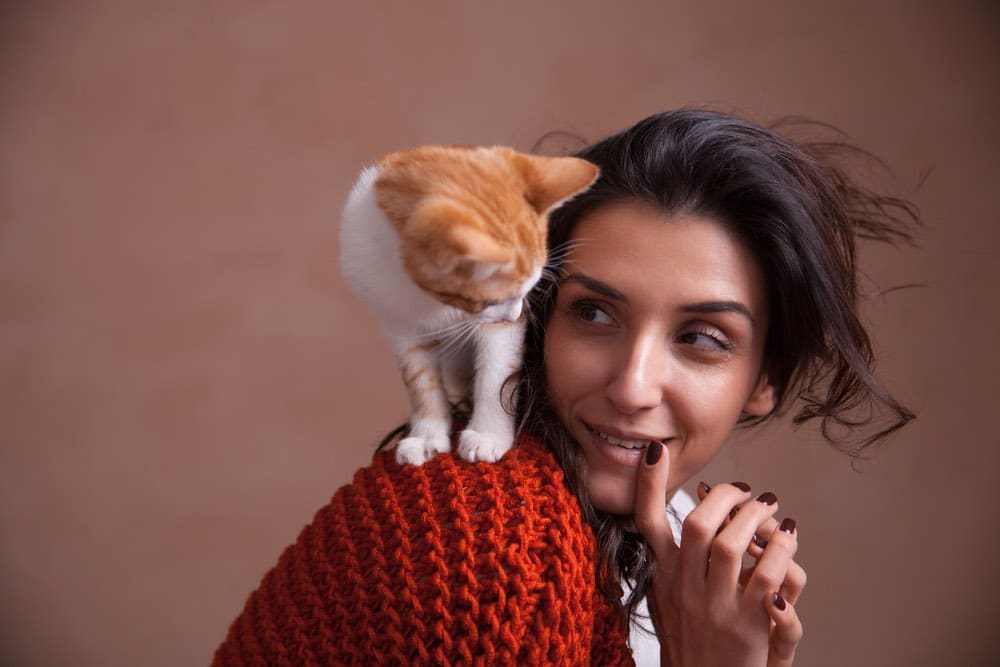
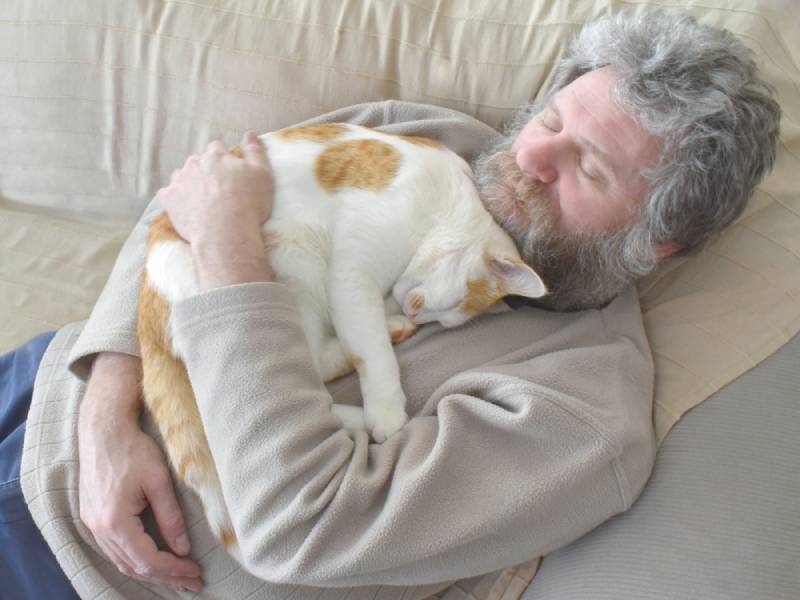
Climbing up on you and getting as close as they can, often trying to snooze on your shoulder or lap, is also a way for your kitten to stay warm and cozy, using your body heat to warm up.

How to Stop Your Kitten from Climbing on You in 4 Steps
Targeting the problem at the source can speed up the process of changing your cat's behavior. Here are a few things you can do to help curtail their climbing obsession, depending on the cause:
1. Spend Time with Your Cat
If your kitten feels neglected or bored, they might turn to unusual and sometimes unpleasant means to gain your attention again. Set aside time to play and cuddle your cat each day to make sure they use up all of their energy and feel your love. Ignore their attempts to climb up your leg and do not give them attention if they do.

2. Find a Cat Tree
Redirect your kitten’s climbing to a cat tree. There are so many adorable types of cat trees! Some are carpeted, others are covered in natural sisal to encourage scratching. You can find a tree that fits your cat's inclinations. For example, if they like to sleep in secluded places, you'll probably want to buy them a cat tree with a hideaway bunk. If they like to rest aloft, there are cat trees with a “crow's nest” at the top that will allow them to perch.
Unfortunately, commercial cat trees can be costly, and cats are finicky, so there's no guarantee that they’ll like them. However, you can always buy one used or make your own if you don't want to take the risk.
3. Buy a Cat Scratcher
Besides a cat tree, you can also redirect your kitten’s climbing on a cat scratcher. These come in all shapes, sizes, and types with varying prices. The cardboard ones are the cheapest and are readily available in most pet stores. Not all cats like scratching posts, while other cats go crazy for them. Since cats can be picky, you might want to sprinkle a little bit of catnip or some other treat that they enjoy onto their cat scratcher to encourage them to engage with their new toy.
You can also encourage them to use it by placing them beside the scratcher and rewarding them with treats and praise

- Premium Materials - Hepper's cardboard scratcher is made with dense, B-flute cardboard, and a metal core. Encased in a 1/2" plywood frame with gloss coating. Stable and beautiful, use after use
- High, Low and Lower - A single cat scratch pad won't keep your cat engaged. 3 unique positions keeps them coming back, and back, and back again. Finally, something to get them away from the couch!
- Activates Muscles - The Hi Lo isn't just a cat nail file to stop the chief cat couch scratcher. The deep cat scratcher wave encourages maximum musculoskeletal activation for a healthier workout
We're quite fond of cardboard as a material in cat scratchers, which is why we love the Hepper Hi-Lo Cat Scratcher. Encased within a well-constructed, modern birch plywood frame, this scratcher is designed with both cats and their owners in mind. It offers three versatile configurations to keep your feline friend active and entertained while enticing them to fulfill their natural scratching instincts (and away from scratching things they shouldn't). For more details, click here!
At Catster, we’ve admired Hepper for many years, and decided to take a controlling ownership interest, so that we could benefit from the outstanding designs of this cool cat company!
4. Do Not Reinforce the Behavior
If you've done everything you know how to do, keep caring for your cat and be patient. Oftentimes leg climbing is a kitten behavior that they’ll soon outgrow, but make sure you do not reinforce it by giving them attention. Something your kitten does at a young age may seem cute at first, and your praise and petting will teach them that this behavior is desirable and get them your attention, while it may become uncomfortable as they get older. Except they will not understand how something they’ve done before that was rewarded has now become something you no longer approve of. Setting rules from day one is important unless you don’t mind your kitten climbing up on you.

Conclusion
Your kitten might be scratching you due to a lack of stimulation, whether it's intentional time with you or the need for an outlet for scratching and climbing. Remember to be patient and kind as you work with your kitten. Don't yell at them or make them feel afraid. The goal is a lifetime of trust, affection, and security for your kitten. And don't worry—in time, you should be able to wear shorts again.
Sources
Featured Image Credit: Roman Pshychyk, Shutterstock

Expert cat care, straight to your inbox
Vet-reviewed advice, behavior tips, and the best of Catster. Free, and you can unsubscribe anytime.
By signing up, you agree to our Terms & Conditions and Privacy & Cookies Policy.
Brooke Norris is a freelance writer who lives with three cats and a dog. She has a B.S. in Media Studies from the University of North Georgia. Booke loves storytelling and spending time with her pets at their house in New Orleans, Louisiana. In her free time, she enjoys gardening, cooking, and brewing coffee.
Join the conversation
Ask a question, share your story, or send private feedback.