Do Male Cats Spray? Vet-Reviewed Facts & FAQ


In this article
Owning a cat will bring their owner so much joy, but unfortunately, it’s not all sweet purrs and cuddles. Some behaviors go hand in hand with owning a cat and are not as pleasant as the positive ones. Spraying is, unfortunately, one of them, and if you are going to be a new cat parent to a male cat, you may be wondering if spraying is one of their traits.
The bad news is, yes, male cats do spray. Male and female cats both spray, but it is more common among male cats, and the pungent odor in the urine is characteristically stronger in male cats that are still intact. In this article, we’ll discuss why male cats spray and how you can prevent it from happening.

How to Get Rid of Cat Spray Smell
If you have owned a cat that sprayed before, you know how dominating the smell is. You will need to clean it up as soon as possible as it worsens with time, and if it dries, it may be harder to find.
Use paper towels to wipe up the moisture, and follow up with an enzymatic cleaner or a mixture of one part vinegar and one part baking soda. These cleaning methods will neutralize and eliminate the smell by breaking down the organic compounds in the cat's urine. Avoid products with an ammonia base because ammonia is a component of cat urine, so it may attract your cat to mark the same area again.
If the spray is on a carpeted area, allow the cleaner to soak for at least 30 minutes before blotting it dry. Place a sheet of aluminum foil or cover it with an obstacle to prevent your cat from returning to the spot while you wait for it to dry.
Our Favorite Enzyme Cleaner
The Hepper Advanced Bio-Enzyme Pet Stain & Odor Eliminator Spray is our favorite enzyme cleaner out there. It permanently removes even the very worst kitty stains and smells, leaving your home fresh and clean! Click here to learn more about this amazing product and get yourself a bottle.

- ADVANCED ENZYMATIC CLEANER - Penetrates the most stubborn smells and stains at the deepest molecular levels to dissolve any pet mess you encounter and lift it away at the source.
- FOR ANY MESS, ON ANY SURFACE - This pet odor eliminator cleans your carpets, floors, furniture, fabrics, and more. Whether it's urine, feces, vomit, or drool, you can erase all foul spots and smells!
- FRESH, NATURAL ODOR - Our unique formulation doesn't rely on dangerous or unpleasant chemical fragrances to get the job done. We eradicate smells and stains, not just cover them up.
At Catster, we’ve admired Hepper for many years, and decided to take a controlling ownership interest so that we could benefit from the outstanding products of this cool cat company!

What Is Urine Spraying?
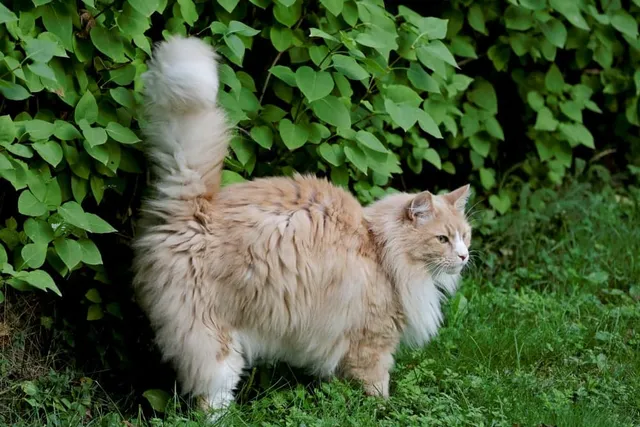
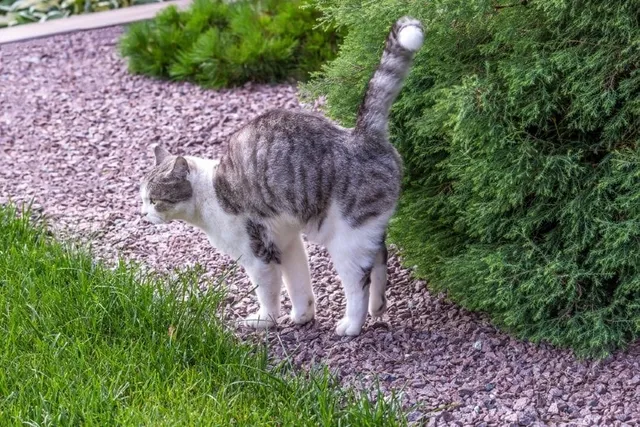
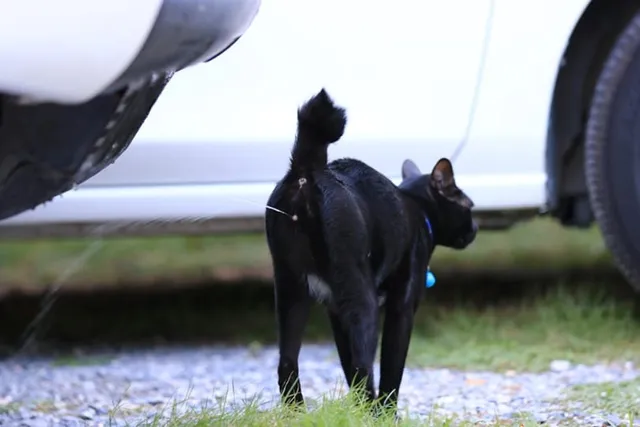
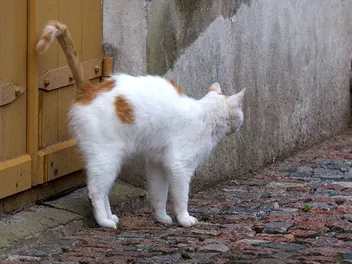
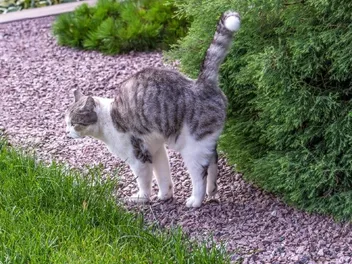
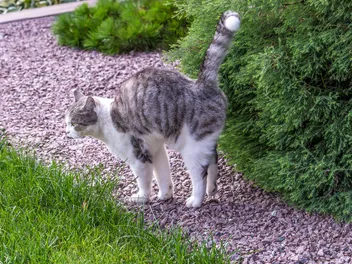
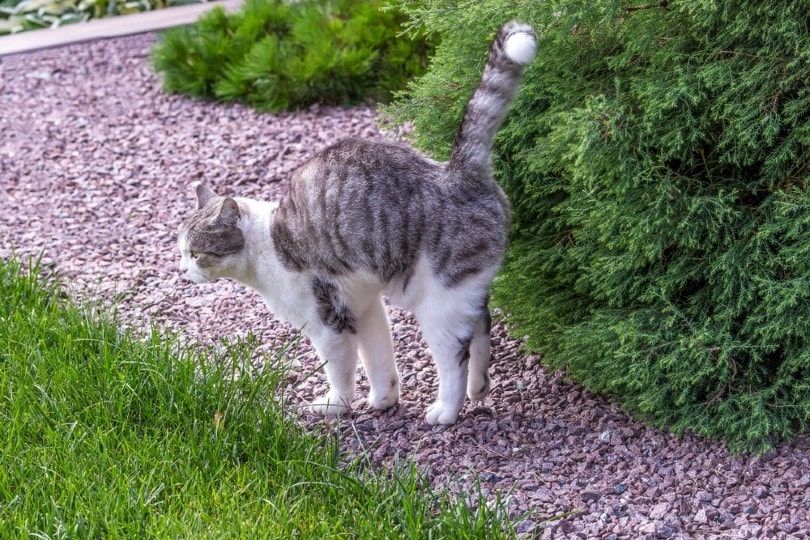
Spraying is different from urinating. A male cat sprays for various reasons, and it is the action of spraying vertically up against something as opposed to horizontally on a surface. A cat will usually spray against something like a table, plant, or chair. Spraying can be recognized by a standing cat that lifts their tail, shakes, and reverses back toward the item that they are spraying on.
The amount of urine is less than a regular bathroom break, but the worst part is that the small amount of urine has a strong, dominating, and pungent odor.
Spraying is more likely when a male cat reaches sexual maturity at about 6 months.

Why Do Male Cats Spray?
There are various reasons male cats might spray, and whatever the reason, it is typically related to a territorial behavior or an environmental stressor.
1. Territorial Spraying
When a male cat sprays for territorial reasons, they are literally marking their territory, making it known to other cats that the area has been claimed. They may mark their territory when they discover another stray cat around, as they see them as a threat, or they may even spray if a new cat comes into the family.
2. Stress Spraying
Environmental stressors that may encourage a male cat to spray may include new people in the home, a new home, new pets, changes being made to the house, boredom, and a dirty litter box. Essentially, anything that may upset your cat's routine and their environment may cause stress and may cause them to spray, which can make it difficult for you to know precisely what it could be.

3. Sexual Spraying
Male cats that are not neutered are more likely to spray and will spray to attract female cats in the area. It is normal behavior for outdoor cats, but it can create some frustrating issues for indoor cats.
4. Medical Issues
Your cat may also spray due to underlying medical issues, such as cystitis, feline lower urinary tract disease, or any other ailment that may cause inflammation of the urinary system. In these cases, the pain and discomfort force the cats to adopt a spraying posture when urinating.
Endocrine disorders like hyperthyroidism or even adrenal disorders that often manifest with behavioral changes can also result in cats spraying.

How Can I Stop My Cat from Spraying?
If your male cat tends to spray, you first need to eliminate any possibility of a medical concern by consulting with your veterinarian. Your vet will likely recommend testing to determine any issues affecting the urinary and endocrine systems.
If an underlying medical issue is the problem, your veterinarian will recommend appropriate treatment, which should help reduce or stop the spraying. The next option if your cat is still intact, is to have him neutered to help reduce the spraying. After which, you will need to manage your cat's stress and environment.

Handling Stress-Related Spraying
Stress can trigger male cats to spray, so you will need to determine the source of stressors in the environment and try to eliminate them. Try to note if there have been any changes in your cat's environment or routine. If it is due to a move or an addition to the family, the spraying should eventually stop as your cat settles, but if your cat appears continuously stressed or anxious, you can talk to your vet about appropriate medications.
Addressing Issues With Other Pets
If the spraying is due to conflict between other cats in your home, ensure each cat has their own resources available so they feel like their needs are being met. They should have their own litter boxes, feeding bowls, and sleeping areas. If introducing a new cat to your home, you must give your resident cat a chance to adjust. Introduce them slowly and gradually, and give them time to get familiar with each other.
Never punish your cat for spraying, as it will likely cause more stress for your cat and can end up causing more harm than good without reducing the behavior. If your cat is spraying to ward off other neighborhood cats, here are some tips you can try to keep them away and out of your cat's sight.
- Use enzymatic cleaners on the areas where the other cats have sprayed.
- Consider installing motion detector sprinklers to prevent cats from entering the yard.
- Plant some plants that cats find offensive, such as rosemary.
Once you have taken the necessary measures to reduce your cat spraying, consider keeping a log by noting the area and the number of times your cat sprays. This can help you keep a record so you know if your methods are effective.

Conclusion
Unfortunately, male cats spray, and it will probably be something you need to manage when owning a male cat. Cats spray for various reasons, but it’s more likely with a cat that is still intact. There are ways you can prevent your cat from spraying, as long as you know the cause. However, your cat will be less likely to spray if the environment is stress-free and their needs are being met. Neutering your cat is often a solution to this and other behavioral problems. However, your cat will be less likely to spray if they do not get the chance to develop this habit and if the environment is stress-free and their needs are being met.
Sources
Featured Image Credit: Helen Liam, Shutterstock
Expert cat care, straight to your inbox
News, insights, and useful advice, delivered to you.

No spam — unsubscribe anytime.
By signing up, you agree to our Terms & Conditions and Privacy & Cookies Policy.
How useful was this post?
Click a star to rate. You can leave written feedback afterwards. (We read all feedback.)
Christian started writing for a local newspaper as a teenager, and he's been involved in the publishing industry for most of his adult life. Combining his love of writing with a passion for animals, he is currently the Director of Editorial at Pangolia and the Editor-in-Chief at Catster.
Christian lives in the Philippines with his wife, son, and four rescue cats: Trixie, Chloe, Sparky, and Chopper.