How to Stop My Cat From Peeing on My Bed: 8 Vet-Verified Tips & Tricks


In this article
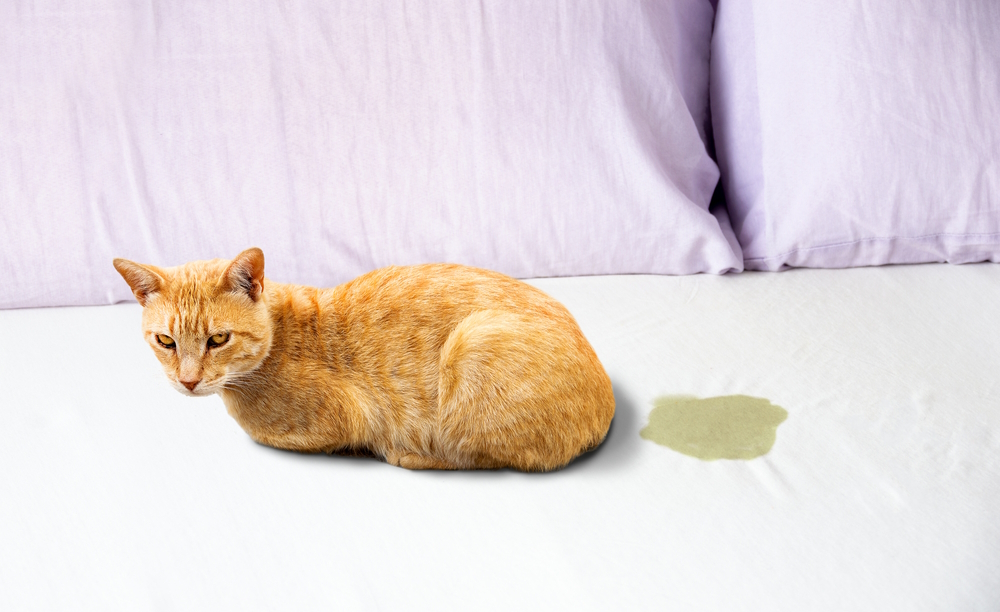
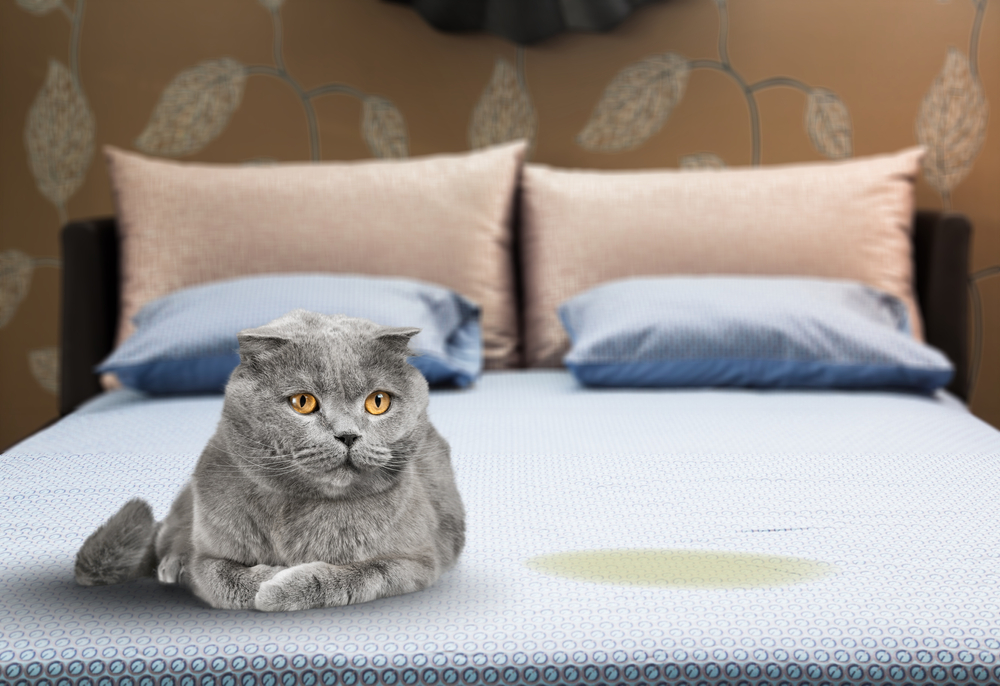
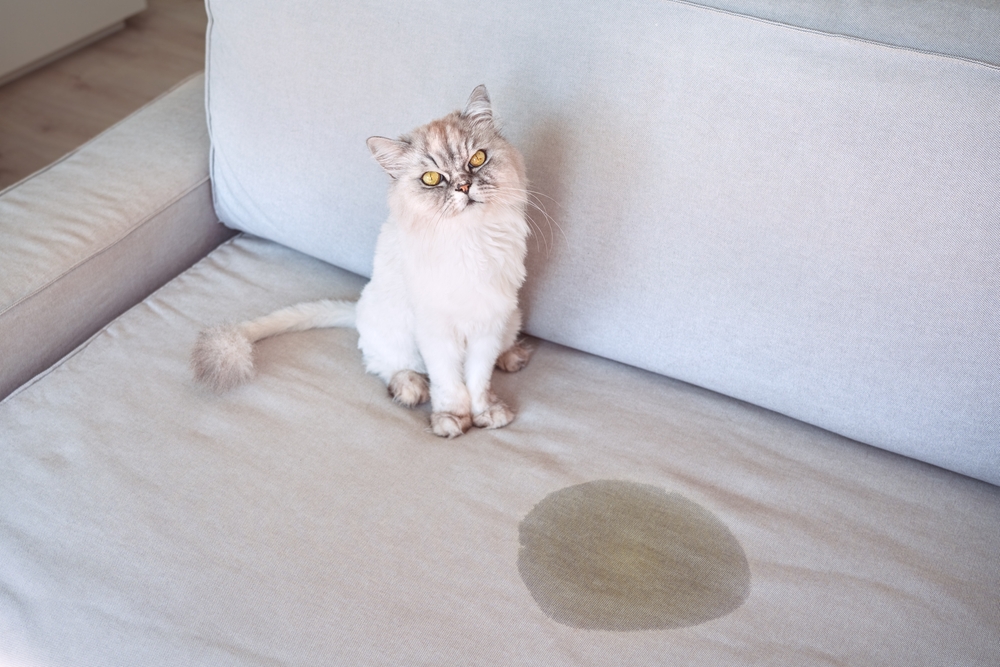
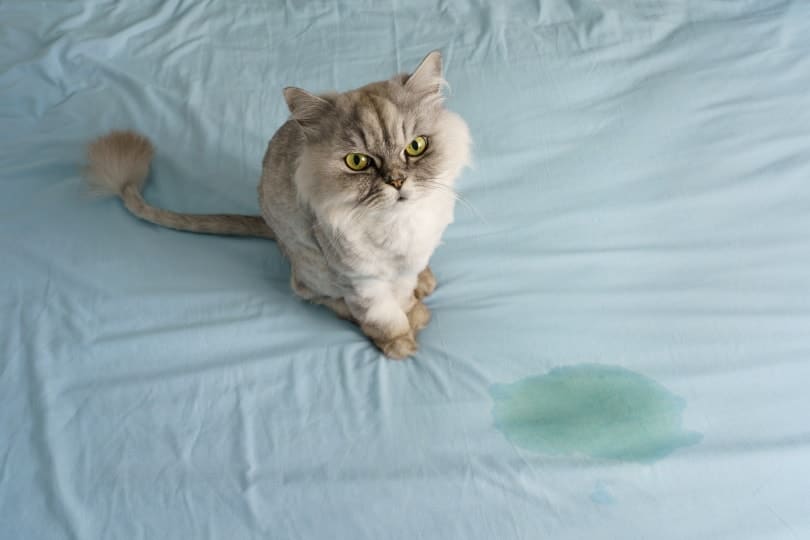
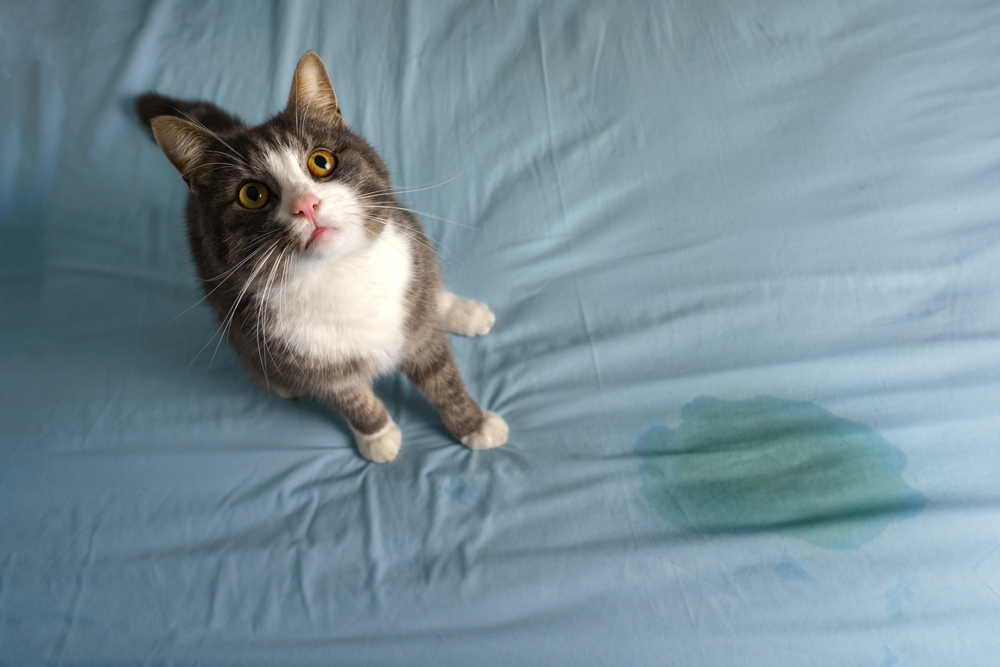
Picture this scene: you're home after a long day at work and finally ready to slip into bed and head off to dreamland. You throw the covers back, only to find a large wet spot; your cat has peed on your bed! Felines are usually pretty good about using their litter boxes, but sometimes cats can engage in inappropriate elimination, and it can absolutely put a strain on your relationship with kitty, especially if it’s reoccurring.
So, how do you stop your cat from peeing on your bed? Well, the first thing to do is to determine why they’re peeing on your bed in the first place. While they could be doing so because of a behavioral problem, they could also be dealing with a medical issue, so figuring out the reason will help eliminate the behavior. Here’s a look at why cats pee on beds and how you can stop yours from doing so.

The 8 Tips and Tricks to Stop Your Cat From Peeing on Your Bed
Stopping your cat from peeing on your bed can take some time and patience. Once you have worked out the underlying cause of the behavior, typically, changes to several aspects of your cat’s care and home environment are needed. Here are some tips and tricks to help you out!
1. Use an Enzymatic Cleaner
Chances are you’re throwing your bed linens straight into the wash when your cat pees on your bed. Don’t do that, though! Before you launder anything, spray where your cat peed with an enzymatic cleaner. These kinds of cleaners remove any lingering urine odor, so your pet doesn’t smell the urine later and thinks it’s a great place to pee again. It’s an extra step in the process, but it’ll help in the long run.
Our Favorite Enzyme Cleaner
The Hepper Advanced Bio-Enzyme Pet Stain & Odor Eliminator Spray is our favorite enzyme cleaner out there. It permanently removes even the very worst kitty stains and smells, leaving your home fresh and clean! Click here to learn more about this amazing product and get yourself a bottle.

At Catster, we’ve admired Hepper for many years and decided to take a controlling ownership interest so that we could benefit from the outstanding products of this cool cat company!
2. Veterinary Check-Up
When dealing with any form of inappropriate elimination, it’s important to rule out any underlying medical conditions. Book a consult with your vet, who will examine your cat and may recommend other tests such as bloodwork, urine tests, or imaging. If your cat is diagnosed with a medical condition, then following your vet’s prescribed treatment plan is essential to stop your cat from peeing on your bed.
3. Stress-Proof Your Home
Okay, you probably can’t completely stress-proof your home, but if you know what’s causing your kitty to be anxious, you may be able to remove the stressor. Of course, this won’t work with something like a new baby in the house or a move to a new home; in those cases, it’s a matter of giving your pet time to get used to the changes that have occurred and giving them a safe place they can retreat to if needed. Hopefully once they are used to them, they should return to normal behaviors. If you can remove a stressor, though, the behavior should clear up more quickly.

4. Fix the Litter Box
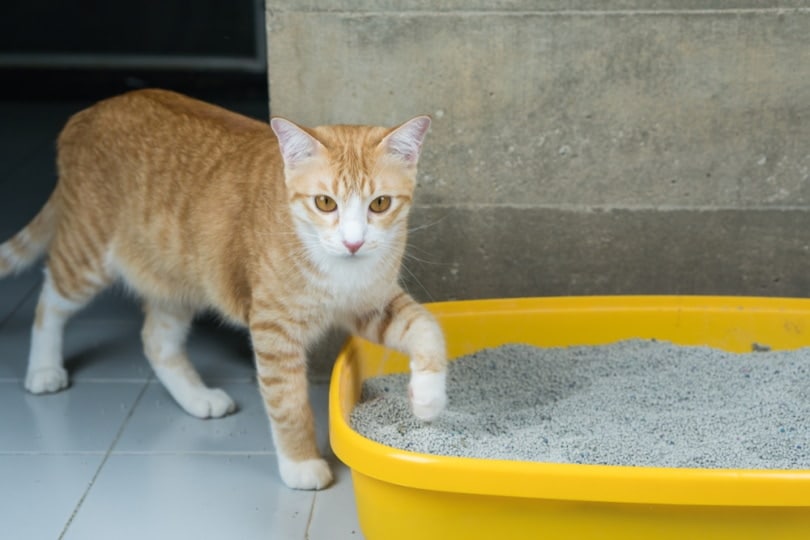
Do you think your kitty has problems with the litter box's location, the kind of litter being used, or how it’s being cleaned? Then, it is your job to identify and fix the issue. There will be some guesswork here, as you’ll likely need to try a few different types of litter to discover which your cat likes best or move the litter box around until you find the perfect place for it. One thing to remember when moving a litter box is that it can’t be too close to your pet’s food and water and shouldn’t be noisy.
If you have multiple cats in your home, you should have one litter box per cat, plus one extra, scattered around your house. Also, if cats with joint issues have difficulty getting in and out of the litter box, get a lower litter box. When cleaning the litter box, ensure you scoop it daily and replace it fully once a week.
5. Synthetic Pheromones
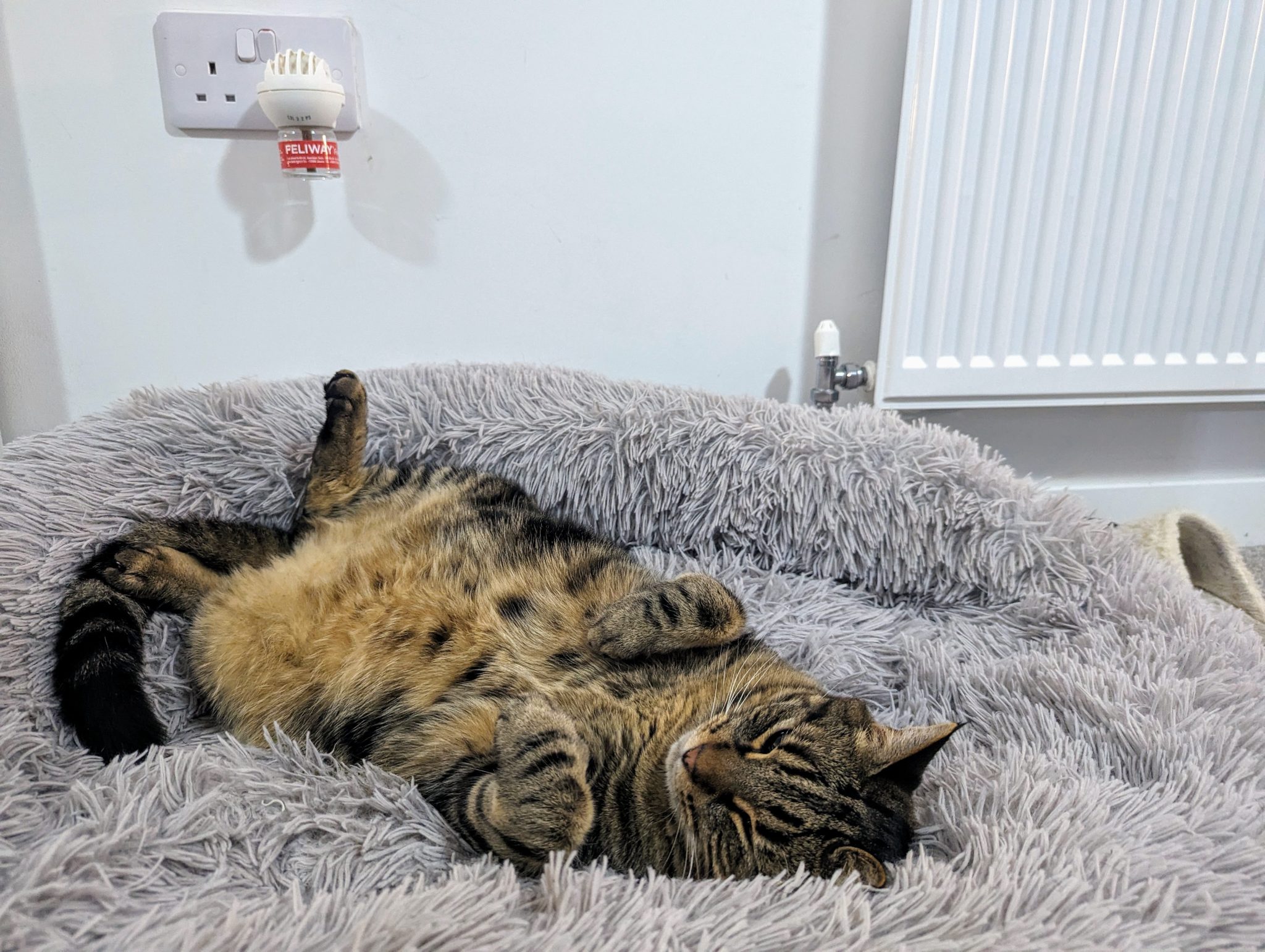
Synthetic pheromones, like Feliway, are available as diffusers and sprays and mimic the natural pheromones that cat’s produce when they feel safe and secure. After making sure your cat’s toileting areas are up to scratch you can add a Feliway diffuser to the room your cat spends most time in to help them feel calm and reassured.
6. Interact With Your Cat More Often
Make time each day to play with your cat! Playtime helps cats de-stress and feel less anxious. Plus, it’s a fantastic way to bond with your pet, which will also make them happier and more relaxed.
7. Spray Your Bed With a Scent Kitty Hates
If nothing else seems to be working, you could try deterrents to try and discourage the behavior for example by spraying your comforter with a scent your cat hates to make it less appealing to them. Commercial sprays are available and cats tend to dislike citrus scents. Of course, you’ll need to find a scent you can live with if you take this route! Although using scents that your cat finds unpleasant may help in the short term, if you haven’t addressed the root cause of the inappropriate elimination it’s likely you’ll find the behavior recurs, even if it’s in a different location.
8. Close the Door to Your Bedroom
Finally, the simplest way to keep your cat from peeing on your bed is to restrict access and close the bedroom door! While addressing other factors, shut your bedroom door, and don’t let your cat sleep on the bed. They may end up going back to the litter box if you do this or decide to pee on the couch or floor next, but at least your bed will be safe.

Why Do Cats Pee on Beds
Felines pee on beds (and in other inappropriate places) for a few reasons. Here’s a closer look at what those are.
Old Age
Cats who are older can often suffer from joint issues that make it more difficult for them to get up and down or in and out of things. For some cats, getting up on the bed (especially if there’s a ramp or kitty stairs) could be simpler than getting in and out of the litter box. Older felines may also suffer cognitive decline as they age, which could cause them not to remember where the litter box is, resulting in them locating the next best flat surface, which could be your bed.
Anxiety
Cats can suffer from anxiety, just like people can, but they have different ways of dealing with it. One of those ways could very well be peeing on the bed. How does that help? When your cat urinates, they leave behind pheromones that they find comforting, which makes the bed a safer place for them. Why would a cat be anxious? A cat can suffer anxiety for any number of reasons, including a move to a new home, a new person or pet in the house, fireworks, loud noises, construction, etc.

Health Issues
There are a plethora of health conditions or illnesses that could cause a cat to pee on your bed. Some of these include feline idiopathic cystitis, urinary tract infections, diabetes, kidney disease, bladder stones, and incontinence.
Problems with the Litter Box
Cats spend a fair amount of time in the litter box, so they’re picky about the kind of litter used in the box and where it is placed. If your cat’s litter box isn’t up to their standards, they will find somewhere else to use the bathroom. This will also happen if you aren’t cleaning out the litter box as often or as well as is needed.
Don't forget to check out our favorite cleaning spray:

- ADVANCED ENZYMATIC CLEANER - Penetrates the most stubborn smells and stains at the deepest molecular levels to dissolve any pet mess you encounter and lift it away at the source.
- FOR ANY MESS, ON ANY SURFACE - This pet odor eliminator cleans your carpets, floors, furniture, fabrics, and more. Whether it's urine, feces, vomit, or drool, you can erase all foul spots and smells!
- FRESH, NATURAL ODOR - Our unique formulation doesn't rely on dangerous or unpleasant chemical fragrances to get the job done. We eradicate smells and stains, not just cover them up.
At Catster, we’ve admired Hepper for many years and decided to take a controlling ownership interest so that we could benefit from the outstanding products of this cool cat company!
Final Thoughts
Felines will pee on your bed for a variety of reasons, many of them medical. However, if you can determine the cause of your kitty no longer using the litter box, you should be able to remedy the issue. Start by ruling out health concerns with a trip to your vet and addressing any litter box issues. Solving this problem can take time and patience, but you should avoid any form of punishment that will only make the situation worse and your cat more stressed. If the problem persists, it can also be helpful to seek the help of a veterinary behaviorist.
Featured Image Credit: Creative Cat Studio, Shutterstock

Expert cat care, straight to your inbox
Vet-reviewed advice, behavior tips, and the best of Catster. Free, and you can unsubscribe anytime.
By signing up, you agree to our Terms & Conditions and Privacy & Cookies Policy.
Misty Layne lives out in the woods in small-town Alabama with her two Siamese cats —Serafina and Jasper. She also has an array of stray cats, raccoons, and opossums who like to call her front porch home. When she’s not writing about animals, you’ll find her writing poetry, stories, and film reviews (cats, by far, her favorite writing topic, though!). In her free time, Misty enjoys chilling with her cats, playing piano, watching indie and foreign films, photographing abandoned places, and catching up on her never-ending TBR list.
Join the conversation
Ask a question, share your story, or send private feedback.