Get

In Your Inbox

Catster is reader-supported. When you buy via links on our site, we may earn an affiliate commission at no cost to you. Learn more.

Is it True That Cats Hate Aluminum Foil? 3 Vet-Reviewed Possible Reasons Why

Share

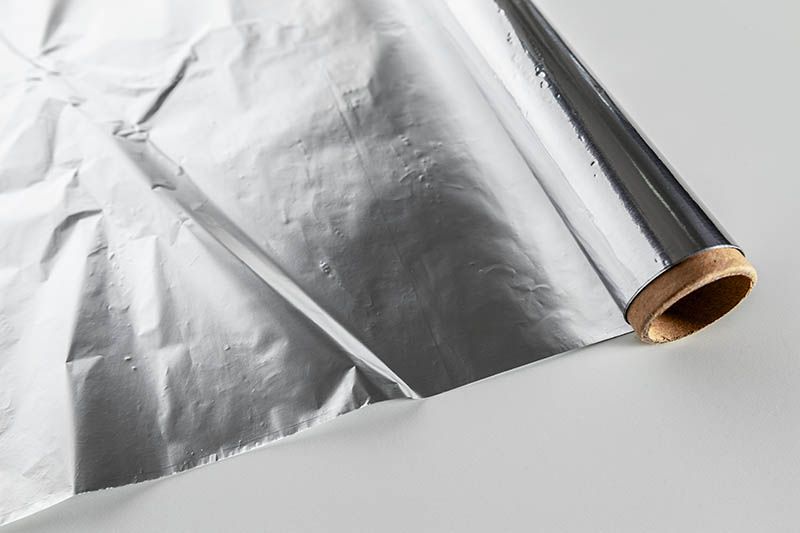
a roll of aluminum foil on countertop

As cat owners are well aware, cats are very opinionated animals. They have strong feelings about several aspects of their environment, and many feel the same way about aluminum foil. Most cats are not fans of aluminum foil, and some despise it. But why? What is so horrible about aluminum foil that makes cats hate it?

Have you ever used aluminum foil and noticed your cat had a massive fit over it? Keep reading if you’ve ever wondered why the foil caused your cat to freak out. Below we’ll tell you all the reasons your cat dislikes aluminum foil.

divider cats oct 2024

The 3 Main Reasons Cats Hate Aluminum Foil

1. The Sound

You may find the crinkling sound of aluminum foil annoying, but it’s more irritating to your cat. Aluminum foil makes a very high-pitched noise, which is so high-pitched that it’s classified as ultrasonic. An ultrasonic noise is over 20,000 HZ, and human ears cannot detect the frequency.

On the other hand, cats can hear ultrasonic sounds, so aluminum foil makes an entirely different sound for them than it does for us. Cats evolved to listen to those noises because some rodents, like mice, communicate with each other in ultrasonic sounds.

Because of the cat’s ability to hear a much wider range of frequencies than we can, the aluminum foil creates a noise that irritates them. The noise makes them very uncomfortable, but it is not the only reason most cats hate aluminum foil.

angry cat
Image By: Fang_Y_M, Pixabay

2. The Texture

The texture of aluminum foil aggravates cats as well. When the foil is smoothed out, it confuses them; it has rough edges yet a smooth surface, and wherever your cat touches it, a different part of it moves. Combine that with the horrifying sound, and your cat has plenty of reasons not to be fond of aluminum foil.

aluminum foil
Image Credit: Rupert Kittinger-Sereinig, Pixabay

3. The Reflective Surface

The reflective, shiny surface of aluminum foil is not appealing to cats. It catches and reflects light, creating flashes or glints that may confuse or intimidate them. Some owners have even used aluminum foil on their furniture and countertops to keep their cats away.

Some claim that cats dislike aluminum foil because they see the reflectiveness and think it’s water. This is highly unlikely since a cat’s sense of smell can discern the difference between water and aluminum foil, but that doesn’t stop cats from being put off anyway.

divider cats oct 2024

Closing Thoughts

Cats are not fond of aluminum foil for many reasons. The cat’s incredible hearing may make them more sensitive to the high-pitched noise the aluminum foil makes. Couple that horrible noise with the reflective surface and odd texture of the foil, and it can also intimidate your cat.

Nothing in your cat’s environment is like aluminum foil, and most are happy to avoid it. If your cat leaps on your counter, you can place foil on the surface to keep them on the floor during mealtimes. It is important to know that while this is true for most cats, there is always some exception to the rule; the odd cat who does not mind the aluminum foil at all.


Featured Image Credit: FabrikaSimf, Shutterstock

Want content like this delivered to you?

Sign Up For Our Newsletter

News, insights, expert advice, and everything cat

* By submitting, you agree to our Terms & Conditions and Privacy & Cookies Policy.


How useful was this post?

Click on a star to rate (you can leave written feedback after clicking submit)

Help us improve Catster for pet parents!

Your feedback really matters.

What did you like about this post? Also how can we improve it?

Join the conversation

Leave a Reply

You’re very welcome to leave a comment or question. Please know that all comments must meet our community guidelines, and your email address will NOT be published. Let’s have a positive and constructive conversation.


Catster's Digital Magazine is Back!

Vet-approved health & behavior advice

Real cat stories & community features

Weird Cat Behaviors That Actually Make Perfect Sense

We have been sharing our lives with cats for thousands of years, yet we still find ourselves genuinely stumped by what they get...

The Dream of Talking to Cats Just Got Closer to Becoming a Reality

If you’ve ever wished your cat could simply tell you what they wanted, you’re not alone. From the meow that wakes you before...

Kizzy: The Feline Princess With a Purpose

We were first introduced to Miss Kizzy after she won a licky-treat challenge hosted by Professor Fluffovich, our resident feline research specialist. While...

Chatting With Sally About Mission Meow & Helping Cat Rescue Organizations Collaborate | Chatty Cattys, Episode 24

In this episode of Catster’s podcast, Chatty Cattys, Nicole and Dr. Karyn sit down with Sally Williams, the founder of Mission Meow, for...

More related

Pet Therapy for Autism: What It Is & How It Works (Vet-Verified)

Animal-assisted therapy (AAT), sometimes called pet therapy, involves trained animals working alongside qualified professionals as part of a structured therapy plan. This approach...

Why Every Cat Parent Needs Petlibro In Their Home

Have you noticed a change on the shelves of your favorite pet store? Devices like automatic cat feeders and fountains are gradually becoming...

How to Care for a Disabled Cat With Special Needs: 11 Tips to Prepare Your Home

Disclaimer: This article has been reviewed by a qualified veterinarian using information available at the time of review. The knowledge of feline medicine...

6 DIY Homemade Cat Urine Stain & Odor Removers You Can Make Today

Of course, accidents happen, so you can’t fault your kitty for the occasional mess. But you will want to make sure that you...

Keep reading

Cat Pheromone Sprays: Differences, Comparisons & Top Picks in 2026

Cats receive information and respond to other cats and species through natural pheromones that they release. Pheromones can have a big impact on your cat’s emotions and behaviors and are a powerful tool that can help anxious or stressed cats....

spraying on cat

15 Common Household Hazards for Cats & Vet-Approved Safety Tips

Cats can be incredibly curious, and many seem to have the remarkable ability to find new ways to get in trouble. Pets thrive when they’re free to investigate and explore with enthusiasm, but you must ensure they play in safe...

an orange tabby cat looking up

Why Is My Cat Peeing in Weird Places? 9 Vet-Reviewed Reasons

A cat urinating in inappropriate places is a dilemma for pet owners. One of the reasons some opt for a kitty as a pet is because they use the litter tray. You can keep them inside without the need to...

cat-peeing-on-door-rug

Why Don’t Cats Listen? 6 Vet-Verified Possible Reasons

​​ One of the many perks of dog ownership is the feeling of being listened to. “Sit,” “heel,” and “stay” commands bring satisfaction every time that they’re obeyed, but pups show understanding even when we’re venting. They’ll rally through an...

Closeup portrait of old calico cat lying down by kitchen on tiled floor in home

Why Do Cats Like Sitting on Laps? 5 Vet-Verified Reasons

Cats generally love to curl up and sit on laps, and it’s a favorite feline activity. If you have a lap cat at home, you may wonder why your buddy loves sitting on your lap so much. Cats sit on...

Domestic cat lying on owner's lap

Does Vinegar Stop Cats From Pooping Where They Shouldn’t? Vet-Verified Tips & Reasons for This Behavior

Having to deal with a cat that has a bad habit of pooping somewhere they shouldn’t can be frustrating. Fortunately, vinegar could help. Cats generally dislike the smell of vinegar, which means it can act as a natural deterrent and...

a jar of vinegar

My Cat Will Only Drink from the Faucet: 5 Reasons Why

Long-time cat owners know that getting their cats to drink enough water can sometimes be a struggle. Because cats always seem to choose the strangest way to complete ordinary tasks, you’ll also find some that will drink but only from...

cat drinking from faucet

My Cat Doesn’t Chew His Food: Vet-Reviewed Concerns & FAQ

While it’s important for humans to thoroughly chew our food before swallowing, for many other mammals—cats included—this is not usually the case. Humans eat a wide variety of different foods, from tough plants, seeds, and nuts that need to be...

cat after eating food from a plate

Love Cats? So Do We! Join the Catster Community

Stay informed with expert pet care insights delivered straight to your inbox! Discover professional guidance on animal behavior, feeding tips, trusted product picks, and much more.


Sign up for the Catster Email Newsletter

Stay informed with expert pet care insights delivered straight to your inbox! Discover professional guidance on animal behavior, feeding tips, trusted product picks, and much more.