Why Do Cats Spray? Our Vet Explains the Common Reasons & Solutions

In this article
Cats mark their territory to communicate their presence to other animals. If you find urine in places other than the litter box, you’ll need to first make sure your cat does not have problems with their urinary tract.
Felines are territorial animals that need to feel safe in the environment in which they live. By spraying, cats are marking their territory to announce to other cats and even people that that area is theirs. Cats also spray when they are stressed, feel threatened, or are searching for a mate. In this article, you will learn why cats spray and how you can stop this behavior.

The Importance of Effective Cleaning
If you don’t thoroughly clean areas where your cat might have sprayed or had an accident, they may urinate in the same spot again due to lingering smells. An enzyme-based cleaner can eliminate these odors, helping to prevent your cat from thinking it’s an appropriate place to mark or relieve themselves.
Our Favorite Enzyme Cleaner
The Hepper Advanced Bio-Enzyme Pet Stain & Odor Eliminator Spray is our favorite enzyme cleaner out there. It permanently removes even the very worst kitty stains and smells, leaving your home fresh and clean! Click here to learn more about this amazing product and get yourself a bottle.

- ADVANCED ENZYMATIC CLEANER - Penetrates the most stubborn smells and stains at the deepest molecular levels to dissolve any pet mess you encounter and lift it away at the source.
- FOR ANY MESS, ON ANY SURFACE - This pet odor eliminator cleans your carpets, floors, furniture, fabrics, and more. Whether it's urine, feces, vomit, or drool, you can erase all foul spots and smells!
- FRESH, NATURAL ODOR - Our unique formulation doesn't rely on dangerous or unpleasant chemical fragrances to get the job done. We eradicate smells and stains, not just cover them up.
At Catster, we’ve admired Hepper for many years, and decided to take a controlling ownership interest so that we could benefit from the outstanding products of this cool cat company!

Is Cat Spraying the Same as Peeing?
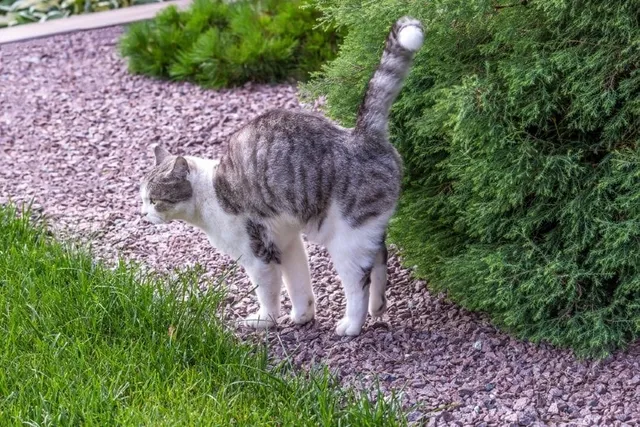
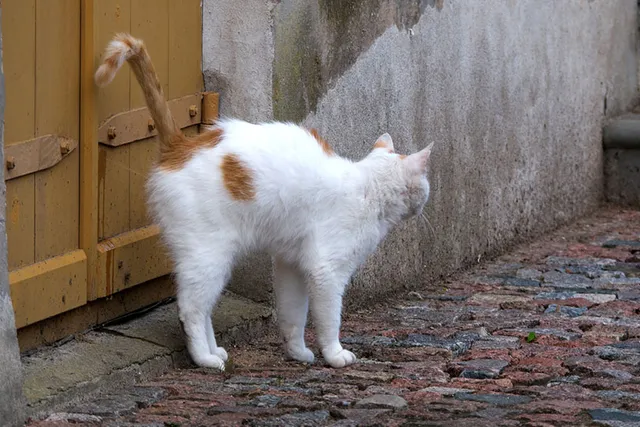
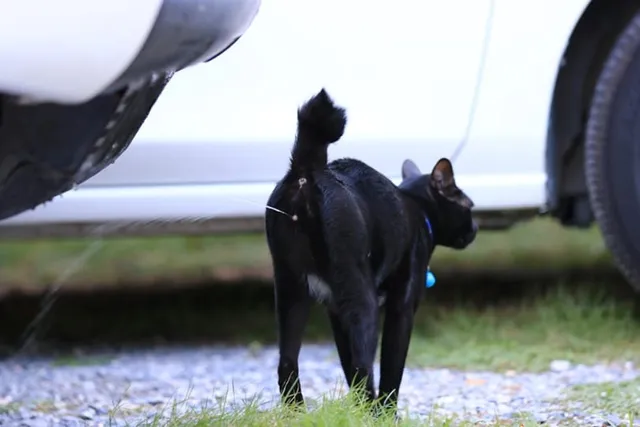
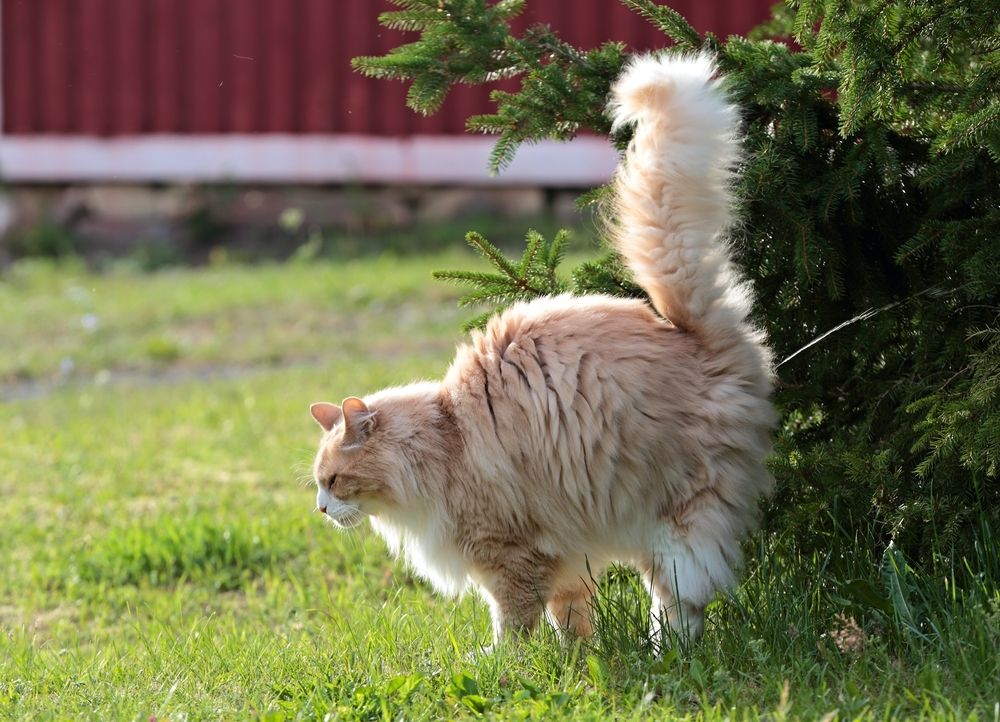
When cats urinate, they flex their limbs and squat, and when they spray, they do it while standing, with an erect tail and often treading with their back legs. Urination takes place on a horizontal surface, whereas spraying happens on vertical surfaces. When your cat sprays, their tail quivers or shakes, and they only spray for a few seconds.

Why Do Cats Spray?
Cats spray for many reasons. In some cases, an underlying urinary or health issue can be mistaken for spraying, and in other cases, it can be due to stress, changes in the environment, new cats in the house or the neighborhood, competition around resources in a multi-cat household, or other behavioral reasons. Let’s learn a bit more about the potential causes.
1. Health Problems
Both females and males may mark their territory by spraying. Urinating outside the litter box can be misinterpreted as a sign of territory marking or could be an indicator of a medical problem. Marking territory is normal behavior and is not accompanied by changes in their general health state.
Urinating outside the litter box mainly occurs due to urinary tract conditions and is not associated with spraying. However, as it can be easily mistaken for spraying, we felt that it’s important to discuss this common health issue, particularly in male cats, that may become a life-threatening problem.
Urinating outside the litter box can also result if your cat has mobility problems and can no longer enter the litter box due to pain and stiffness. Here are the clinical signs of urinary tract disorders, so you can distinguish them from spraying (urine marking):
- Vocalization when urinating
- Frequent urination in small amounts
- Going in and out of the litter box
- Abdominal pain and distension
- Urinating near the litter box or in other places in the house
- Straining to urinate and passing very little or no urine at all
- Blood in urine
- Stiff walking
- Pain when walking
- Vomiting
If your cat is exhibiting any of the above signs, particularly straining to urinate or not passing any urine at all, then they need to be urgently seen by a vet. A consultation performed at the veterinary clinic can eliminate the possibility of a medical problem or provide adequate treatment if there is a urinary issue in your cat.

2. Litter Box Issues
When the litter box is dirty, the substrate used is not to your cat's liking, there aren’t sufficient litter boxes for all the cats in the household, or the location of the litter box does not favor urination, all of this will cause stress in your cat. While most cats will end up urinating in inappropriate places outside of the litter box as a stress response, some may actually spray.
Here's what you can do to prevent this behavior:
3. Stress
Some cats do not appreciate changes in their lifestyle and do not adapt as easily as most dogs do. So, if you've moved to a new house, there has been loud construction work, a new family member has arrived, you've brought in a new pet, or there have been a few big changes in your cat's environment, they may mark their territory in unauthorized places. Something similar may happen if your cat is frustrated due to a lack of environmental enrichment, physical exercise, or mental stimulation.
Through this behavior, your cat is telling you that they are stressed, frustrated, or scared. In such cases, to calm your cat, there are diffusers that use cat pheromones, calming collars, and special food. You can also contact your veterinarian for the best advice.
4. Mating Behavior
While in heat, a female cat may mark her territory by spraying urine on various surfaces in the house (if she’s an indoor cat) or the outside walls and anywhere else around in her environment (if she’s an outdoor cat). Pheromones are present in the urine and thus will attract males that will smell that the cat is in heat. Males spray with urine to communicate to females that they are available and to tell other males where their territory is. Intact males will spray more frequently than females.
If you have neutered or spayed your cat later in life, after they have already learned this behavior of spraying, they may continue to mark their territory for a certain period (until hormonal regulation). While most cats will stop this unwanted behavior after neutering and spaying, 10% of males and 5% of females will still spray for the rest of their lives (albeit at a lower frequency).
What Should I Do if My Cat Sprays?
First, make sure you are not mistaking inappropriate urination outside of the litter box with spraying, which may indicate a serious urinary tract issue. When you have established this or have had your cat checked by the vet, consider whether all your cat's basic needs are being met. Your pet should have their own litter box (at least one litter box per cat) that is regularly cleaned with pet-friendly solutions, easily accessible, and placed in a safe, private area.
Ensure that each cat in the household has their own resources, such as food and water bowls, toys, beds, scratching posts, and perches, so there is no competition that may cause stress. Provide them with adequate environmental enrichment, physical exercise, and mind games, such as interactive toys and food puzzles, to combat boredom and frustration.
If you have several cats in your home, make sure each one has their own separate space and litter box. Consider pheromone diffusers, and in the case of known stressors, utilize them well in advance of a stressful event. Consult with your veterinarian on other ways to deal with feline stress.
The places that have been contaminated with urine must be cleaned with special enzyme solutions. Otherwise, your cat will continue spraying there. To ensure that your cat will not urinate in certain areas, you can use repellent solutions to make your cat avoid those places or litter attractants to make your cat want to use the litter box. In addition, your cat must have a special place to relax, preferably where they can rest unbothered, observe their environment, and retreat if they feel stressed or in danger.
Do not punish your cat for spraying in unauthorized places. Punishments will destroy the relationship between you and your pet, and you risk becoming a stress factor yourself. As a result of this type of discipline, your cat may start to spray and urinate more often on various objects whenever you are away from home.
Also, if your kitten has started to spray, it means it is time to take them to the vet to be neutered or spayed (usually starting at the age of 6 months). Neutering can stop this behavior in about 85% of males.
At What Age Do Cats Spray?
Cats start spraying when they reach sexual maturity, which happens around 6 months of age. Neutering cats reduces or stops this unwanted behavior in the vast majority of cases. However, the reduction or stopping of spraying does not occur immediately after sterilization but only when the hormones are regulated, which can happen in a few weeks or months.

Conclusion
Cats spray primarily to mark their territory, though they’ll also do it when they are stressed, frustrated, or feeling threatened. Some health issues, particularly ones affecting the urinary tract or a cat’s mobility, may cause the cat to urinate outside of the litter box, which may be mistaken for urine spraying. These conditions warrant immediate veterinary care.
Do not punish your cat for spraying, as it will just stress them out, and they’ll be more likely to do it. If you would like to stop this behavior, the best thing to do is consult your veterinarian, have your kitten or cat spayed or neutered, enrich their environment, ensure there are plenty of resources, and manage and anticipate their stress. Neutering and spaying will also protect against certain health issues and calm their behavior overall.
Featured Image Credit: Elisa Putti, Shutterstock
Expert cat care, straight to your inbox
News, insights, and useful advice, delivered to you.

No spam — unsubscribe anytime.
By signing up, you agree to our Terms & Conditions and Privacy & Cookies Policy.
How useful was this post?
Click a star to rate. You can leave written feedback afterwards. (We read all feedback.)
Dr. Iulia Mihai, DVM MSc (Veterinarian)
Dr. Mihai is a vet with over 13 years of experience in laboratory, pet pathology, and cancer. She studied at the University of Agronomical Sciences and Veterinary Medicine of Bucharest, Romania (EAEVE member), where she worked in the laboratory of the faculty clinic after graduation. She has a master’s degree in equine and pet pathology and studied epithelial cancer for her Ph.D. Iulia has a passion for internal medicine and parasitology and started volunteering at the faculty’s clinic in her third year of college. She has worked in a couple of veterinary clinics over the years as an internal medicine specialist. She enjoys writing and teaching people about cat disease prevention, nutrition, behavior, and treatment.