Do Cats Like Baby Talk? What Science Says (Vet-Verified)

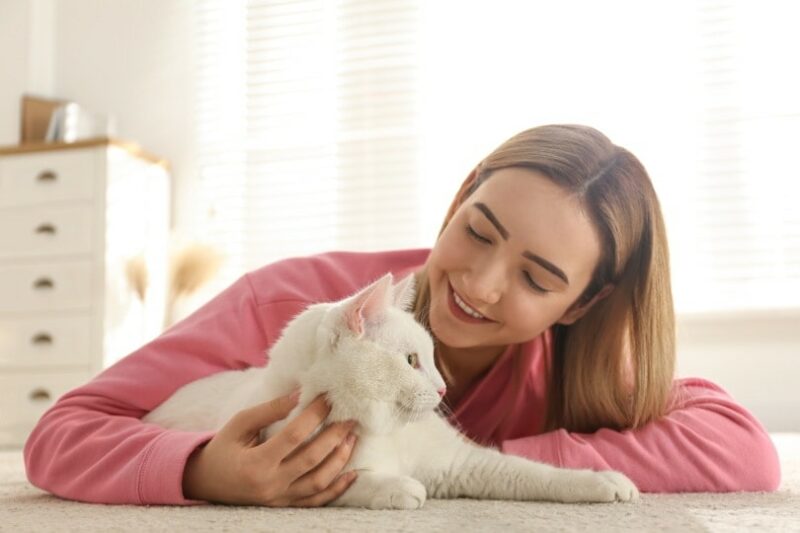
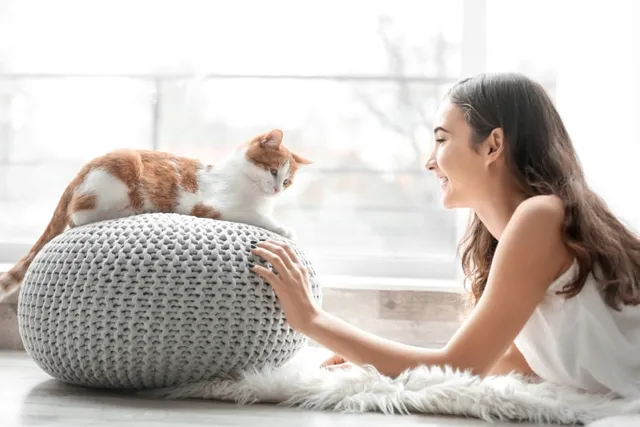
Although it’s impossible to say whether cats like baby talk, they are more prone to react to their owner when they are doing baby talk rather than normal talk. One of the reasons for this is that baby talk is typically spoken at higher frequencies, which cats are better at picking up.
So, talking in baby talk to your cat isn’t just cute. It is actually one of the best ways to communicate with your cat and get its attention. Keep reading to learn more.

What the Science Says
Whether your cat likes baby talk is an impossible question to answer. After all, we cannot interview cats to understand their subjective experience with baby talk. We can measure cats’ reactions to baby talk versus normal talk.
Surprisingly, studies from around the globe have suggested that cats are more likely to respond to their owners when talking in baby talk. Most of the time, these responses are positive, whether it results in the cat walking to the owner or meowing back.
The exact reason for this isn’t fully understood, but experts believe it’s due to a combination of factors, including the strong social bond between cats and their caregivers, learned associations, and the attention-grabbing prosody of higher-pitched speech. While cats do hear high frequencies exceptionally well, pitch alone doesn’t explain the response—the emotional and social context appears to matter even more.

What’s In a Name?
One of the most obvious places to see cats’ affinity for higher pitch is in names. Most people have found that cats are more likely to respond to their name or nickname if it ends with the “ee” sound. Kitty, Baby, and Timothy are just a few examples.
These names end with the “ee” sound. In English, this sound forces higher-pitched inflection than other names. “Gordon,” for example, will get less of a reaction from your cat than “Gordie.” The “ee” sound at the end of “Gordie” forces your cat’s attention because of its higher-pitched sound at the end.
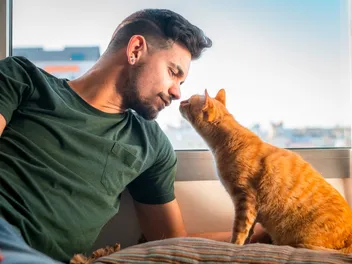
Additionally, as we enunciate a word or name ending in an “ee” sound, our cheeks rise and our eyes narrow, which is international cat language for “Hey, I’m calm and trustworthy.” Our eyes are also prone to crinkling when we engage in squeaky baby talk, further solidifying the link between this and a positive response from our cat.
If your cat does not have an "ee" name, that does not mean you have to change their name. Instead, just settle on a nickname you can use to get your cat’s attention. That way, the cat will still respond to their name, but you have a stronger name to use if the cat is not listening.

Why Do People Use Baby Talk To Their Cats?
It is unclear exactly why humans are more prone to talking like a baby to their pet. However, most experts suggest that this unconscious decision says as much about us as it does our listener, whether a baby or a cat.
Some experts suggest that talking in a high-pitched, singsong voice is an unconscious decision when we assume the listener does not understand the language. For example, we speak like it whenever we communicate with foreigners, infants, and pets. For this reason, we may be attempting to communicate more simply with our furry friends.
Some experts even suggest that humans do this to bond with their pets, even if the pet does not understand. More bluntly, baby talk is a way for people to treat their pet as a baby and to add more meaning to the relationship or creature.
Perhaps humans unconsciously realize that cats even respond better to high-pitched noises. After all, cats and dogs have been domesticated for thousands of years. It would make sense for us to know on an unconscious level that pets are more likely to respond whenever we speak that way.

Is It the Same with Dogs?
Most experts believe that dogs respond to higher-pitched sounds in the same way that cats do. Dogs are fantastic hunters that can hear higher-pitched sounds than we can. As a result, dogs, especially puppies, like high-pitched sounds in the way that cats do. The only difference is that dogs are more likely to respond than cats because of their more social nature.

Final Thoughts
If you speak baby talk to your cat, don’t stop now. Your cat more than likely loves the attention and is more likely to respond if you use high-pitched sounds. Don’t feel silly just because you talk to your cat or other pet like a baby. You can even use this information to your advantage. If you're adopting a new cat, you can select a name or nickname that ends with the “ee” sound. Your cat will be more likely to respond to its name if you do it.
Related Reads:
How to Speak Cat: Talking to Your Kitty in a Language They’ll Understand
Can Cats Understand Multiple Languages? Dr. Lauren’s Perspective
Featured Image Credit: New Africa, Shutterstock

Expert cat care, straight to your inbox
Vet-reviewed advice, behavior tips, and the best of Catster. Free, and you can unsubscribe anytime.
By signing up, you agree to our Terms & Conditions and Privacy & Cookies Policy.
Christian started writing for a local newspaper as a teenager, and he's been involved in the publishing industry for most of his adult life. Combining his love of writing with a passion for animals, he is currently the Director of Editorial at Pangolia and the Editor-in-Chief at Catster.
Christian lives in the Philippines with his wife, son, and four rescue cats: Trixie, Chloe, Sparky, and Chopper.
Join the conversation
Ask a question, share your story, or send private feedback.