How Do Cats Learn Their Names? Interesting Facts & Info (Vet-Verified)



It’s always fun naming your new cat or kitten. Names can be adorable, hilarious, commanding, and fitting (although not always). But cats march to the beat of a different drummer.
When you call your cat, they seemingly don’t always listen, let alone respond. So, can cats learn their names, and if so, how? Cats can absolutely learn their names and can even distinguish their name from other words.
To find out more about how cats learn their names, read on, as we give you all the details and a few tips on how to teach your cat their name.

The Independent Cat
Cats are often thought of as being very independent by their nature. This is true to a large extent, as many species of cats are solitary, and those that do form groups (such as lions) don’t necessarily always stick together and hunt at the same time. On the other hand, dogs, which cats are often compared to, are pack animals that tend to do everything together.
Our relationship with cats goes back about 10,000 years ago – though some estimates predate this timeline. Instead of relying on each other the way that humans and dogs started out, cats did their own thing and fed themselves on pests in food storage and crops. This way, they ate and humans benefited. This forms the basis of the very interesting theory that cats domesticated themselves and therefore, are very much different from dogs in terms of their trainability and personalities.
This also helps explain to a certain extent the stigma of why cats don’t necessarily respond the same way that dogs do. While your cat probably knows that you’re talking to or calling them, they also decide whether they want to respond or not.
Do Cats Know Their Names?
Many cat owners think that their cat doesn’t know their name, but a 2019 study found that cats can pick out their names from other words 1. The study used the owner’s voice speaking words that were similar in sound and syllables to the cat’s name. They also used a person unfamiliar with the cat speaking out the same words and the cat’s name.
The results showed that the cats recognized their owner’s voice and recognized their names, whether they were spoken by the owner or the stranger. It’s believed that part of what encourages cats to recognize their names is they tend to associate the sound of their name with punishment or reward. But they don’t necessarily have the understanding that their names are actually attached to them, like the way that we do.

How Do Cats Recognize Their Names?
For the most part, cats learn their names through repetition, voice recognition, and familiarity. We tend to use our cats’ names often when interacting with them, particularly when the interaction is positive in nature.
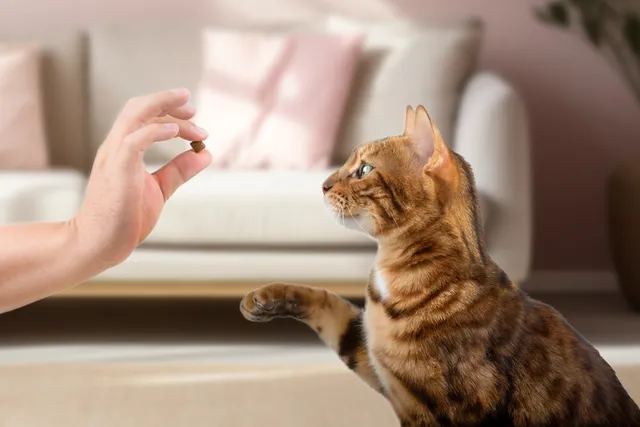
You might say your cat’s name when giving them treats, feeding them, or before a nice cuddle session. Cats will start to learn that when they hear the unique word that is their name, it’s worth responding to.
Why Don’t Cats Always Come When Called?
So, if cats can learn their names, why don’t they come when you call them? Part of this is due to the whole cats and independence thing — and the famous cattitude that they all have!
When you call your cat, they likely understand their name and know that you’re calling them, but they may not feel like responding. Your cat might be busy sleeping, lying in the sun, or chasing a bug. They’re certainly too busy to give you their all-important attention. It comes down to whether your cat will choose whatever you want them to do over what they are currently doing. Cats are nothing like dogs in this way.

How to Get Cats to Learn Their Names
If your cat doesn’t appear to react to their name, you can try saying it while doing activities that will grab your cat’s attention. For example, try speaking your cat’s name just before putting down the food bowl at mealtime. Say their name and then present a new or favorite toy, or say it before a good scratching session.
Your cat is much more likely to learn and respond to their name when positive experiences and their name are combined. It helps if you only use a soft and gentle voice when calling or speaking to your cat. This will show your cat that it’s safe to approach you.
What If Your Cat Still Isn’t Responding?
It’s likely that your cat is indeed responding to their name but in a subtle way. A dog’s moods are generally easy to read, but a cat’s body language can be more difficult to decipher unless you learn the signs. Your cat will likely respond if it’s dinnertime or when you’re holding their favorite treat, but there are other signs that you can look for.
If you call your cat and they don’t look at you, look at their ears. If the ears twitch or swivel in your direction, they are technically responding. Your cat probably knows that you want their attention, but they might not feel like responding. Once your cat is in a more receptive mood, they will come see you.
Otherwise, other reasons that your cat doesn’t respond include the following.
Hearing Loss
Don’t assume that this is the problem right away, but if you have a senior cat that suddenly stops responding to their name, they could be experiencing hearing loss. However, it isn't as likely if your cat seems to react to other noises. See your vet if you suspect that your cat is having hearing problems.

Similar-Sounding Words
Anecdotal evidence suggests that if your cat’s name rhymes or sounds similar to common items in your home or to other family members, they might just be confused. For example, if your cat’s name is Tandy and your daughter is Sandy, it might work better if you rename your cat.
Changing Your Cat’s Name
Cats learn their names primarily through association, voice recognition, and repetition. The more often you say your cat’s name in a friendly way and precede something that your cat desires (food, pets, etc.), the more they will learn their name and react to it.
You can change your cat’s name at any point, but don’t make a habit out of it, or your poor cat will start to become confused. You also shouldn’t change your cat’s name just because they aren’t responding to you. Most cats do things in their own sweet time.
Just follow the aforementioned techniques when renaming your cat. Say the new name with a gentle voice before dinner and any other positive experiences.

Conclusion
Cats learn their names primarily through association and repetition. The more often you say your cat’s name in a friendly way and preceding something that your cat desires (food, pets, etc.), the more they will learn their name and react to it.
But remember, cats won’t always respond to it. You probably love your cat for their unique and feisty personality, and you can’t expect anything different when you try to get your cat to do something, even if it’s just responding to their name.
That independence and cattitude can be equal parts frustrating and admirable, which only makes us love our cats more!
See Also:
Featured Image Credit: Jaromir Chalabala, Shutterstock
Expert cat care, straight to your inbox
News, insights, and useful advice, delivered to you.

No spam — unsubscribe anytime.
By signing up, you agree to our Terms & Conditions and Privacy & Cookies Policy.
How useful was this post?
Click a star to rate. You can leave written feedback afterwards. (We read all feedback.)
Kathryn was a librarian in a previous lifetime and is currently a pet writer. When she was a child, she hoped to work in ZOOs or with wildlife in some way, thanks to her all-consuming love for animals. Sadly, she's not strong in the sciences, so she fills her days with researching and writing about all kinds of animals and spends time playing with her adorable but very naughty tabby cat, Bella. Kathryn is hoping to add to her family in the near future – maybe another cat and a dog.