20 Long Haired Cat Breeds: Info, Pictures & Facts
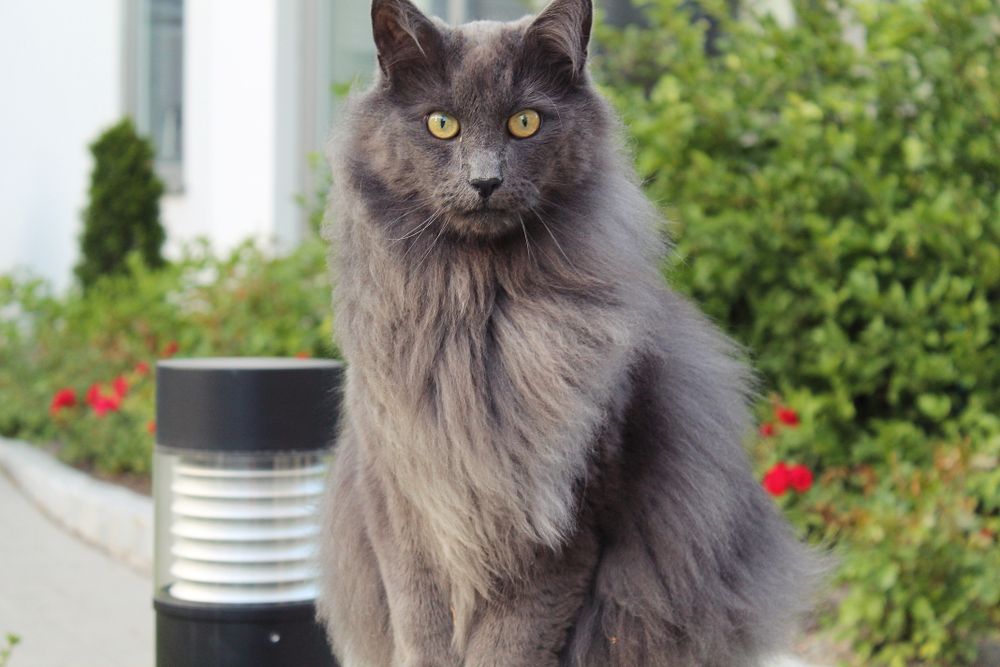
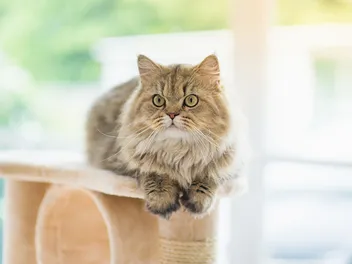
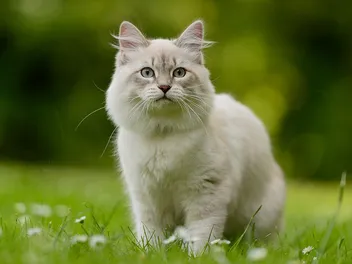
There's something so majestic about a long-haired cat. These kitties, known for their luscious, downy fur, are some of the most highly sought-after due to their gorgeous appearance. While most people think about the regal Persian or the brawny Norwegian Forest Cat, there are many other long-haired cat breeds out there.
If you have your heart set on adopting a long-haired kitty but aren't sure which breed is right for you, let us help. Read on to learn about 20 different cats with long fur to find the perfect pick for your family.

How Are Long-Haired Cats Classified?
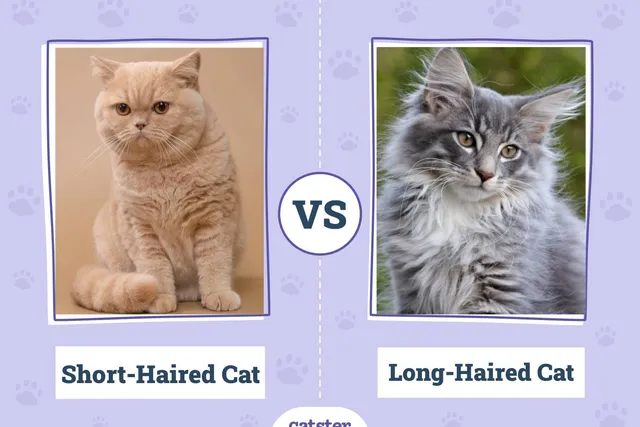
Depending on the breed, long-haired cats can have fur between 1.5 and 5 inches long. Their coats can come in numerous textures and may be plush, wavy, curly, silky, soft, or a combination of these.
Long-haired cats' coats typically tangle easily and will require some degree of upkeep to keep them looking their best. Owners should have a few different types of grooming tools on hand to ensure they have what they need when it's time to brush or comb their pets.
The 20 Long-Haired Cat Breeds
1. Persian

Breed Overview
Origin:
Lifespan:
Weight:
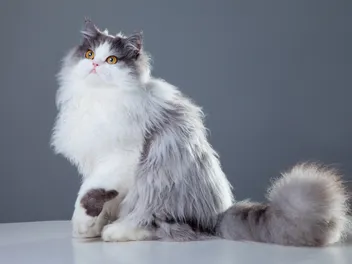
Persians are an easily recognizable breed thanks to their round faces and short muzzles. This breed has undergone much selective breeding, which has led to the development of an increasingly flat face. Unfortunately, this head structure is linked to numerous health issues, so some cat fanciers are taking strides to preserve the "older" Persian—the Traditional Persian, which has a more pronounced muzzle.
The Persian's coat consists of a wooly, dense undercoat and a long outercoat. Their voluminous coats come in many colors and patterns.
2. Maine Coon

Breed Overview
Origin:
Lifespan:
Weight:
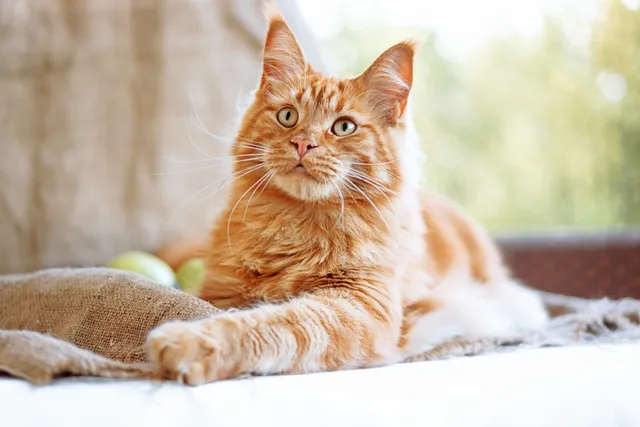
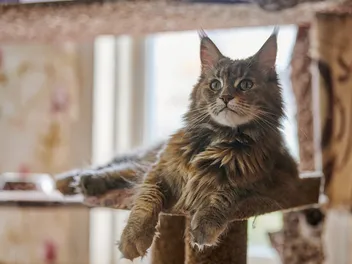
Maine Coons are one of the largest domesticated cat breeds and are the oldest natural breeds originating in North America. These large, social gentle giants are known for their sizes and dense fur. Their thick, long, and waterproof coats came in handy when dealing with the harsh climate seen in the state they originated in. Their bushy, raccoon-like tails aren't just adorable, but their size and density made it so they would not sink in the snow and could double as a cozy scarf in cold temperatures.
3. Turkish Angora

Breed Overview
Origin:
Lifespan:
Weight:
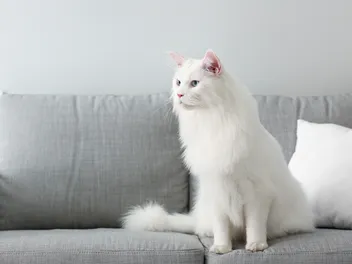
Turkish Angoras have long, silky coats that consist of just a single layer, which helps prevent mats and tangles. Unlike many of the breeds on our list, the Turkish Angora requires very little coat maintenance to keep them looking their best. This breed is most often seen with shimmery white coats, though they can also have tabby patterning and are sometimes seen in a range of smoky tones.
4. Somali

Breed Overview
Origin:
Lifespan:
Weight:
Though Somali cats are genetically similar to the Abyssinian cat, they inherited two copies of the recessive gene responsible for long hair. Instead of sporting short, silky fur like the Abyssinian, Somali cats have long, luscious coats. These sleek cats have long tails and ticked coats that can contain as many as twenty colors on each individual hair. Their coats are extremely fine, making them much softer than other cat breeds.
5. Birman

Breed Overview
Origin:
Lifespan:
Weight:
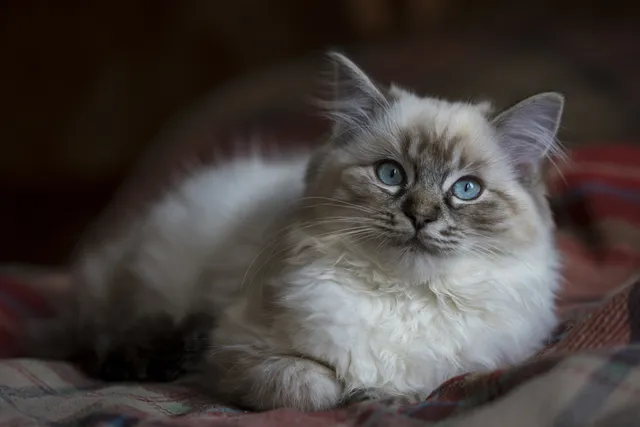
Birmans are easily distinguishable thanks to their silky and long color-pointed coats and gorgeous deep blue eyes. This breed is available in 19 different colors, but every Birman will have white paw "gloves." Unlike some of the other breeds on our list, Birmans do not have an undercoat, so they mat and tangle much less than most long-haired breeds.
6. Ragdoll

Breed Overview
Origin:
Lifespan:
Weight:
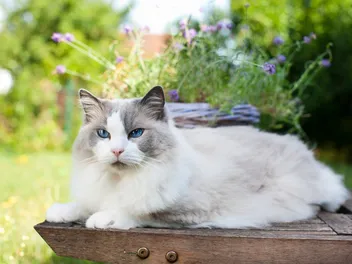
Ragdolls are a beautiful cat breed, distinguishable by their pointed coloration, big blue eyes, and soft, thick coats. Their fur is silky and dense and can vary from medium to long in length. It feels a lot like rabbit fur. Unlike many other long-haired breeds, Ragdolls have a single coat without an undercoat. They typically don't shed too much, though they may go through seasonal shedding in the spring.
7. Norwegian Forest Cat

Breed Overview
Origin:
Lifespan:
Weight:
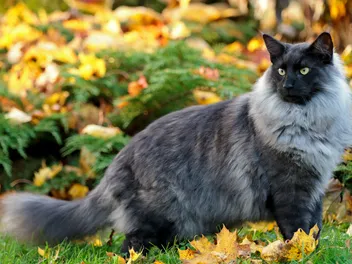
Norwegian Forest Cats are a gorgeous cat breed known for their thick double coats. These coats are designed to protect them from the nasty weather they would encounter in their home country. Not only are they dense enough to keep them warm in the cold, but they are highly water-repellent to keep them dry during wet weather, too. In the summer, their coats will adapt to warmer temperatures by thinning out a bit.
8. Siberian

Breed Overview
Origin:
Lifespan:
Weight:
Siberian cats are a centuries-old landrace with a unique triple coat consisting of guard hairs, awn hairs, and down hairs. These three layers make for a very dense and water-repellent coat to protect these cats from the harsh temperatures of their home country. Like the Norwegian Forest Cat, a Siberian's summer coat will be distinctly shorter than the one they sport in the winter. These cats will molt twice annually, which is triggered not by the changing temperatures but by the changes in day length.
9. Himalayan

Breed Overview
Origin:
Lifespan:
Weight:
Himalayan cats are very similar to Persians, with the only difference being their color. Himalayans are essentially the pointed division of Persians. As such, they have coat lengths and textures that are identical to those of their Persian counterparts. Their coats are long and thick all over, including on their tails, ears, and toe tufts. Their long and silky fur can tangle and mat easily, so daily grooming will be necessary to keep them looking their best.
10. Balinese

Breed Overview
Origin:
Lifespan:
Weight:
The Balinese is a long-haired Siamese-like cat with pointed coloration and bright blue eyes. While their coats are considered medium, there may be a considerable variance from cat to cat. Their fur is generally soft and silky, lacking the undercoat often seen in haired breeds. Balinese cats have beautiful and full tail plumes, and their single-layered coats are virtually maintenance-free.
11. Ragamuffin

Breed Overview
Origin:
Lifespan:
Weight:
The Ragamuffin is related to the Ragdoll cat, with the difference being that their medium-length coats are seen in virtually every color. Ragdolls are generally only available in three-pointed colors. The Ragamuffin coat is very soft, silky, and thick, much like rabbit's fur. It's also mat-resistant and doesn't tangle easily.
12. Nebelung

Breed Overview
Origin:
Lifespan:
Weight:
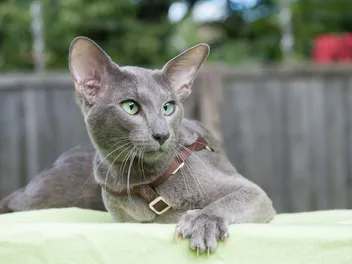
The Nebelung is a long-bodied cat related to the Russian Blue. What sets them apart is their longer, silkier, and denser fur. Their double-layered coat can consist of long or medium-length fur. It's always grayish-blue in color, with some kitties also sporting silver tips. Their long and gorgeous coats can sometimes take up to two years to develop fully.
13. British Longhair

Breed Overview
Origin:
Lifespan:
Weight:
British Longhairs have impressive double coats consisting of a soft and silky upper layer and a thick and plush undercoat. Their fur stands away from their body, making these kitties appear bigger than they actually are. They come in a variety of colors and patterns. They shed lightly in comparison to some of the other long-haired breeds on our list but will go through seasonal coat changes twice yearly.
14. Japanese Bobtail

Breed Overview
Origin:
Lifespan:
Weight:
The Japanese Bobtail can have medium or long coats, both with a soft and silky texture. They don't shed much, so they're easy to groom and maintain. Their coats can come in many colors and patterns, though the most popular look is called "Mi-ke," which translates to "three fur." As expected, the Mi-ke patterning consists of three colors – white with red and black splotching.
15. Manx

Breed Overview
Origin:
Lifespan:
Weight:
Manx cats can have long or short coats, both of which come in a variety of colors and patterns. The long-haired version of the Manx is sometimes also known as the Cymric. These cats have double coats, which can make them prone to shedding, particularly during spring and autumn. Their dense, plush double coats are silky and often contain "breeches" that give them the appearance of wearing old-fashioned baggy pants.
16. LaPerm

Breed Overview
Origin:
Lifespan:
Weight:
LaPerms are one of the most unique-looking cat breeds, sporting a gorgeous, soft, and silky curly coat. Their fur can range from short to long, but always has some curling or waving to it. Despite the upkeep curly hair is for humans, LaPerms may require much less grooming than you think. Brushing them twice a week can keep tangles away and keep their curls in good condition.
17. Pixiebob

Breed Overview
Origin:
Lifespan:
Weight:
Pixiebobs are large cats that resemble wild bobcats in many ways. They have wooly coats that stand out from their bodies, spotted patterning, and short (sometimes also nearly non-existent) tails. Some Pixiebobs have short hair, but most are long-haired. Their coats are soft, thick, and weather-resistant.
18. Scottish Fold

Breed Overview
Origin:
Lifespan:
Weight:
Scottish Folds are known for their highly dense coats, which can be either short or long. Their resilient coats come in almost every color and pattern combination except pointed colorations. Long-haired Scottish Folds will need significant grooming, up to four times weekly, to remove dead hairs and prevent matting.
19. Selkirk Rex

Breed Overview
Origin:
Lifespan:
Weight:
Similar to the LaPerm, Selkirk Rex cats are known for their curly or wavy coats, which are plusher and thicker than those seen in their LaPerm counterparts. The Selkirk Rex can have either a short or long coat, with both lengths soft to the touch, similar to a teddy bear. These cats are moderate shedders, but their coats shouldn't be brushed too often to maintain the integrity of their curls.
20. American Bobtail

Breed Overview
Origin:
Lifespan:
Weight:
The American Bobtail comes in many coat types and colors, with bobcat-like spotted patterns being the most commonly noted in the breed. They can have dense short coats or medium long-haired coats, but their most distinguishable feature is their short tail. Their tails are typically one-third to half the length of an average cat's tail. Their coats are easily maintained with a weekly brushing.
Conclusion
There's no denying how beautiful a long-haired cat can be. With so many different breeds, colors, and patterns seen in long-haired coats, choosing one that fits your lifestyle shouldn't be too much of a problem. If you're looking for an easy-maintenance kitty, the Japanese Bobtail or Birman might be a great choice. However, if you're less concerned about how much upkeep will be necessary to keep a long-haired kitty looking their best, any of the 20 on our list should fit the bill.
Featured Image Credit: Kinga P, Shutterstock
Expert cat care, straight to your inbox
News, insights, and useful advice, delivered to you.

No spam — unsubscribe anytime.
By signing up, you agree to our Terms & Conditions and Privacy & Cookies Policy.
How useful was this post?
Click a star to rate. You can leave written feedback afterwards. (We read all feedback.)

For Chantelle, writing and animals are the two driving forces in her life. Growing up on the Canadian prairies surrounded by pets, she now shares her home with five cats, two guinea pigs, and a bearded dragon. Chantelle, her husband, and their child pride themselves on being dedicated pet parent, even spending a fortune on wall-mounted cat shelves to provide their cats with an indoor jungle gym. When she's not snuggling with her cats or photographing their humorous moments, Chantelle is exploring the Rocky Mountains, rewatching her favorite Netflix series, and reading up on various random subjects.