Get

In Your Inbox

Catster is reader-supported. When you buy via links on our site, we may earn an affiliate commission at no cost to you. Learn more.

Feline Direct Registering: What It Is & Why Do Cats Do It

Scottish-Wildcat-on-a-large-tree-trunk

Cats are some of the most efficient hunters in the world who track and stalk their prey skillfully before pouncing on and killing their targets. Stealth is one of the feline set’s deadliest tools when it comes to hunting, as it gives cats the advantage of surprising their prey.

Unaware targets aren’t likely to take evasive action, such as running off, which makes it far easier for cats to nab dinner. Direct register walking allows cats to move with elegance, grace, and stealth, and it’s a vital part of what makes them such great hunters.

divider cats oct 2024

How Does It Work?

Feline direct registering is a way of walking in which a cat puts down one front paw, which is then replaced by the back paw on the same side of the body. A cat’s gait is called a pace, which essentially involves the legs on one side moving together.

Direct registering has several benefits, including staying quiet and leaving few tracks behind. It also makes it easier for cats to move efficiently through difficult landscapes with confidence. It’s particularly useful when walking through grass and snow.

Animals who direct register produce trails that appear to be single tracks. When cats hunt, they typically spend time looking for prey and stalking it before moving in for the kill. Direct register walking is quiet, and it allows cats to effectively track their prey, which gives them huge advantages when it comes to hunting.

cat hunting mouse
Image Credit: Stefan_Sutka, Shutterstock

divider cats oct 2024

How Do Cats Walk So Quietly?

From speedy Cheetahs to elegant moggies, most cats have more than mastered the art of moving with grace. Domestic cats can walk quietly in part because of their soft, pillowy paw pads, which help absorb sound and make it easy for them to slip through environments unnoticed. They also provide a bit of cushioning during high-impact activities such as jumping.

Domestic cats’ retractable claws contribute to their ability to walk quietly. Cats are technically considered digitigrade mammals, which means they walk on their toes. Their symmetric gaits also contribute to their ability to walk quietly, allowing them to keep their bodies still when moving.
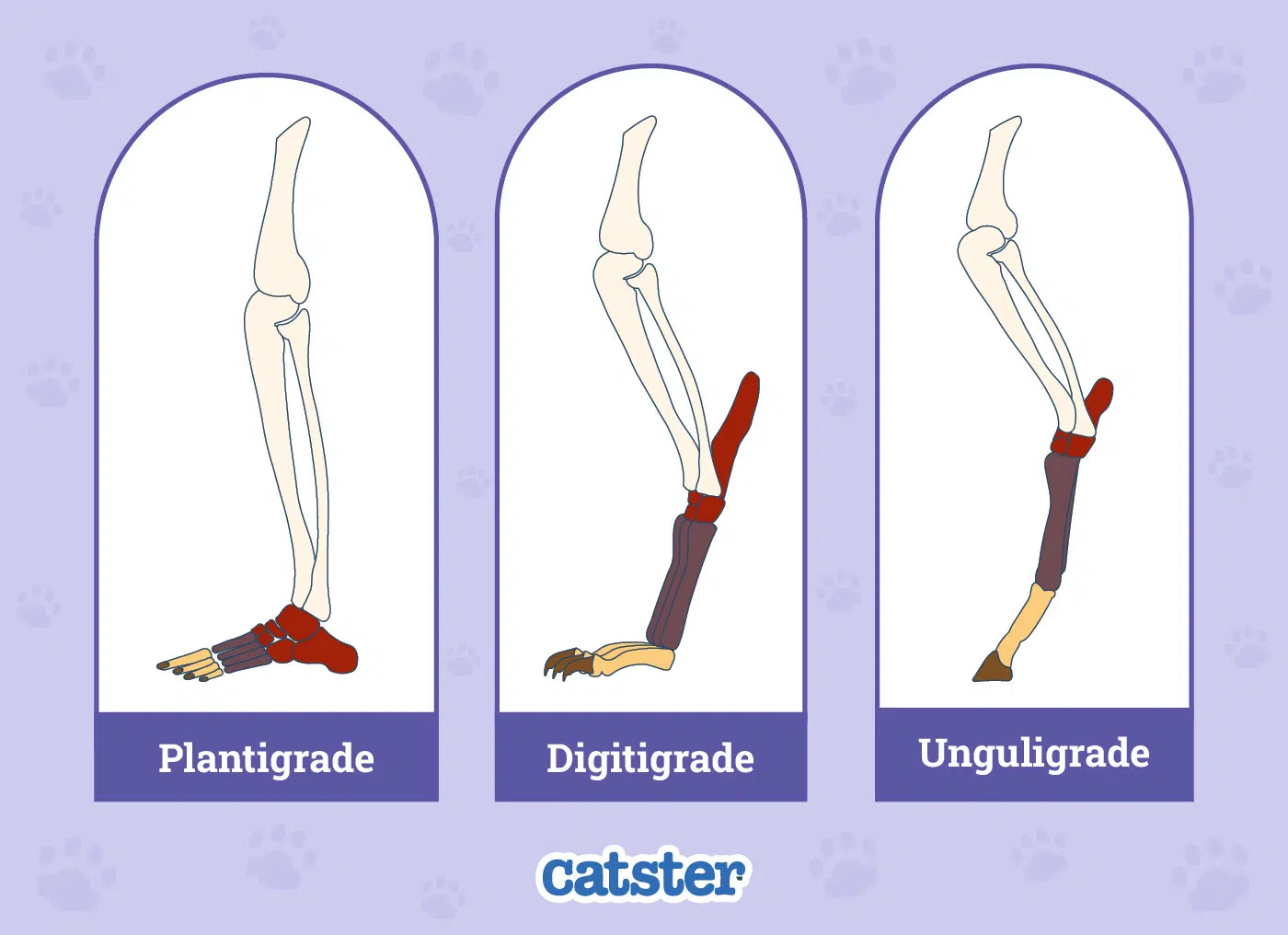
You are free to use this image but we do require you to link back to Catster.com for credit

divider cats oct 2024

Frequently Asked Questions

Are There Other Animals Who Walk Using a Direct Register Pattern?

Absolutely! In addition to most cats, wolves, and foxes also use it, and coyotes have a direct register trot to which they often resort.

How Many Toes Do Cats Usually Have?

Cats usually have 18 toes. Most kitties have five toes on their front paws and four on their back ones. However, some have more than the standard number of toes; polydactyl cats can have anywhere from one to several extra digits.

Polydactylism is an inherited trait, although veterinarians aren’t entirely sure why some cats develop one extra toe and others have more. The extra digits make it easier for cats to hunt and grip. The trait is more likely to be found in Maine Coon and Pixiebob cats than in other breeds.

cute little paws of a polydactyl cat
Image Credit: Sel_Sanders, Shutterstock

Do all cats have retractable claws?

Most cats, including big ones, have retractable claws, except Cheetahs. Cheetahs are fascinating big cats! They don’t roar and can reach up to 75 miles per hour.

divider cats oct 2024

Conclusion

Feline direct register walking is a way of moving in which cats move a front paw and then put the back paw (on the same side) in the place where their front paw was. It’s an incredibly efficient way of moving and has the benefit of being quiet, which gives cats an advantage when hunting by allowing them to move stealthily while following prey and getting ready to go in for the kill.

Almost all cats (including wild ones like Mountain Lions and Bobcats) use the pattern, as do many wolves and foxes.


Featured Image Credit: davemhuntphotography, Shutterstock

Want content like this delivered to you?

Sign Up For Our Newsletter

News, insights, expert advice, and everything cat

* By submitting, you agree to our Terms & Conditions and Privacy & Cookies Policy.


How useful was this post?

Click on a star to rate (you can leave written feedback after clicking submit)

Help us improve Catster for pet parents!

Your feedback really matters.

What did you like about this post? Also how can we improve it?

Join the conversation

Leave a Reply

You’re very welcome to leave a comment or question. Please know that all comments must meet our community guidelines, and your email address will NOT be published. Let’s have a positive and constructive conversation.


Talk With A Vet Online

Peace of mind,
anywhere, anytime

Affordable vet advice

7 Unique Spotted Cat Breeds (With Info & Pictures)

Although several big cat breeds are known for having spots, it is a trait that is far less common in domestic cats than...

We Chat With “Cat Art Show 2” Curator Susan Michals About Her Exhibition Devoted to Cats

Cats continue to creep into human culture. When I say this, I don’t just mean that humanity risks emotional obliteration in the audiovisual...

When Is Shedding Season For Cats? 6 Vet-Approved Tips to Survive It

When shedding season comes around, it can be a very taxing time for cat owners. This might be particularly true if you have...

Will My Cat Come Back If I Let Them Outside or Do They Need Training? Our Vet Answers

Being a pet owner comes with a lot of difficult decisions. You must choose the right foods, toys, and veterinarians, among other things....

More related

Why Is My Cat’s Jaw Clicking? Vet-Approved Explanation!

You have heard people claim that dogs are a man’s best friend, but what about cats? Yes, they are smaller than most dogs,...

Do Cats Pee to Mark Territory? Vet-Reviewed Cat Behavior Explanation

If you’ve ever seen your cat back up to a wall, the couch, or anywhere that is a vertical surface and spray urine,...

My Cat Is Constantly Sleeping, Should I Worry? Our Vet Explains

Cats are famous for sleeping anywhere and at any time. You may find them curled up in tight circle with their tails across...

Scottish Fold Cat Health Problems: 7 Vet-Reviewed Issues

Scottish Fold cats have found their way into many pet lovers’ hearts with their unique folded ears and sweet personalities. As with any...

Keep reading

Can Cats Eat Slugs? Vet-Reviewed Risks & Precautions

Cool, damp weather is the best time for slugs to come out of hiding. Because cats are hunters, they decide to take matters into their own hands when they notice a sluggish blob on one of your outdoor plants. Usually,...

Can Cats Eat Slugs

Siamese Cat Genetics: Does It Affect Siamese Behavior? Temperament Facts

Talkative, always wanting to be around you, and a bit needy—these are all common traits and behaviors of the Siamese cat. These behaviors don’t apply to every other cat breed, though. Have you ever wondered why cat breeds act in...

applehead siamese cat sitting

Why Is My Cat Suddenly Aggressive? Vet-Reviewed Reasons

It can be extremely disconcerting for your cat to suddenly begin to exhibit behavior that is unusual for them, especially if your once sweet kitty has suddenly become an aggressive monster. There are a few reasons that cats may suddenly...

kittens training

Why Do Cats Suck on Blankets? 5 Vet-Verified Reasons & Solutions

If you have had multiple cats throughout your life, you know that they are capable of strange behaviors, such as running around the house for no reason, meowing at birds and squirrels outside the window, and kneading on blankets. One...

grey and white cat under the blanket

Can Cats Eat Clover? Common Herbs Examined

Cats are curious creatures and love to paw and nibble at plants. Clover plants are among the many plants that are poisonous to your feline. They are sometimes called shamrock, the good luck plant, or sorrel. The bitter taste of...

Can Cats Eat Clover

Feline Hyperesthesia Syndrome: Vet-Reviewed Signs, Treatment & FAQ

Feline hyperesthesia syndrome (FHS) is a condition in which a cat’s skin becomes ultra-sensitive1. It’s also known as twitchy cat disease and most often involves the fur and skin on a cat’s back, especially close to the tail. Cats with...

a woman's hands petting a cat

Can Loud Music Harm a Cat? Vet-Reviewed Info

Ears, unfortunately, don’t have the handy ability to shut. If you enjoy listening to loud music, you’re forcing your cats to endure it, too. If you share your house with a cat, you might already be aware that loud noises...

cat lying between speakers

Can Cats and Birds Live Together? Vet Approved Facts & FAQ

Cats and birds couldn’t be more different from each other. Not only do they belong to completely different animal families, but they are physically very different from each other. Anyone who has ever had an outdoor cat has likely spotted...

Yellow and black parrots corella is sitting on a swing in the cage

Love Cats? So Do We! Join the Catster Community

Stay informed with expert pet care insights delivered straight to your inbox! Discover professional guidance on animal behavior, feeding tips, trusted product picks, and much more.


Sign up for the Catster Email Newsletter

Stay informed with expert pet care insights delivered straight to your inbox! Discover professional guidance on animal behavior, feeding tips, trusted product picks, and much more.


