What's an F6 Savannah Cat? Info, Facts, Pictures & History
In this article
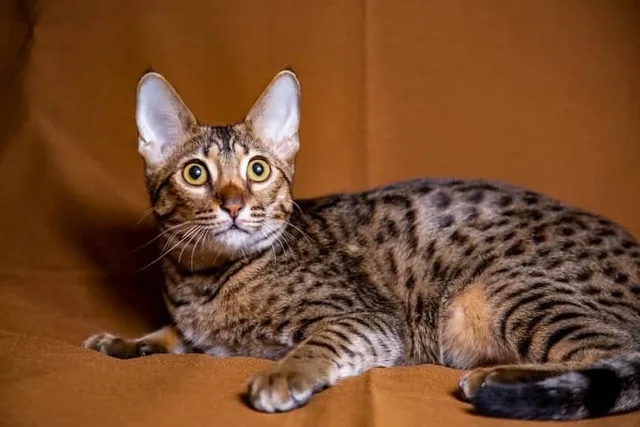
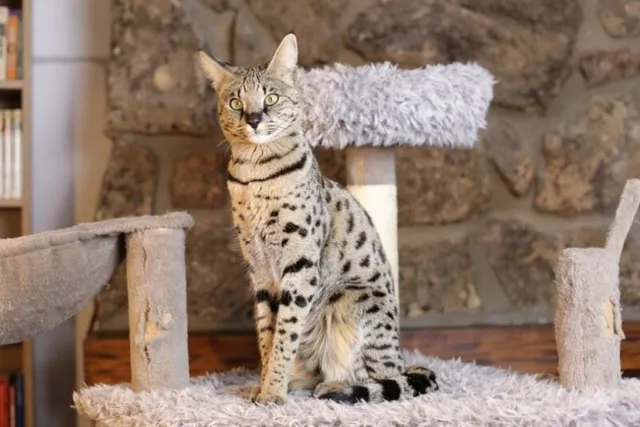
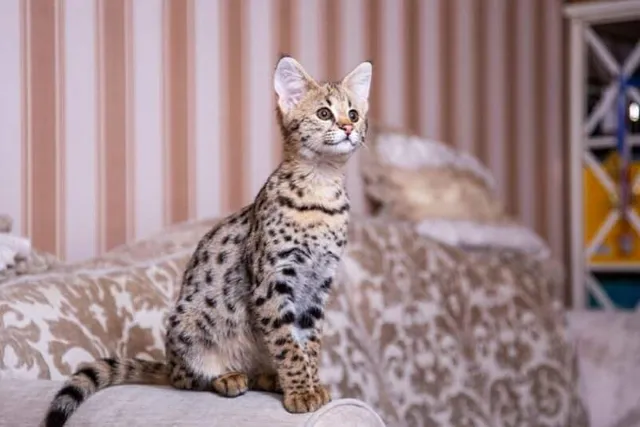
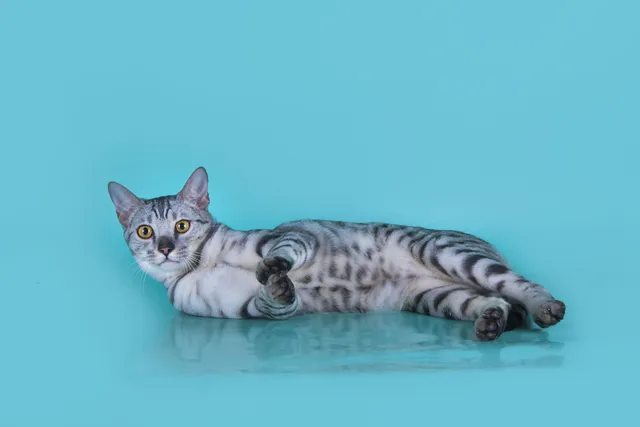
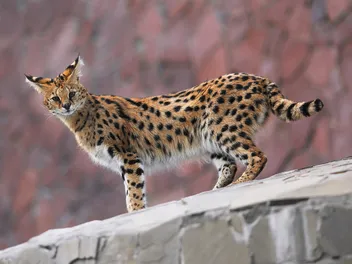
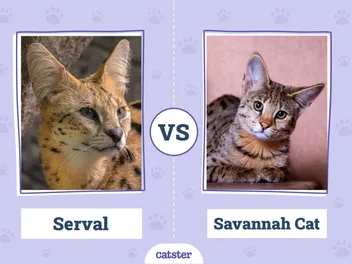
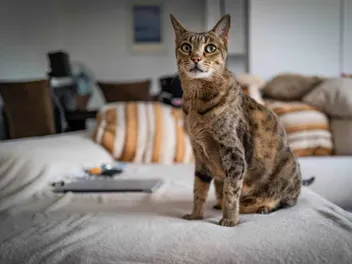
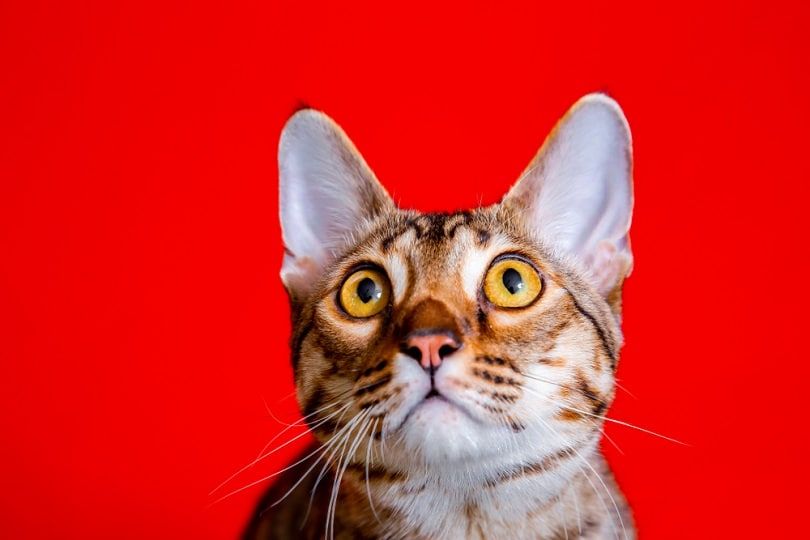
The Savannah Cat is a hybrid between a domestic cat breed and the wild African Serval cat. They are bred and kept as domestic cats and they get their breed name, Savannah, from the first kitten of their kind that was bred and named Savannah, which itself was named after the location where the Serval cat was found. The F6 represents how many generations of cats down from the Serval the cat is, so an F6 is six generations down from a wild Serval cat.
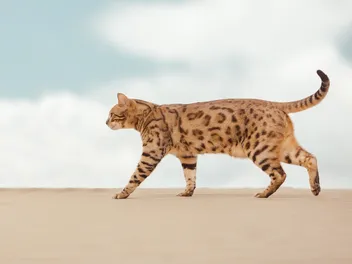
Although several generations form a wild cat, an F6 Savannah still retains some of its wild features: features like the long neck. The breed is said to be intelligent and loving, but Savannah cats are actually illegal in some states because of their wild cat ancestry, while some other states require that the breed be licensed.

The Earliest Records of Savannah Cats in History
The Savannah is a relatively new breed. Breeder Judee Frank took possession of a Serval male sometime in the 1980s. The male and Frank’s Siamese female had a kitten. The kitten was born in 1986 and named Miracle.
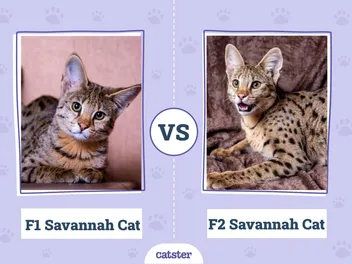
Frank was forced to hand over the kitten, which would be renamed Savannah in recognition of the Serval’s home, and 3 years later, Savannah was pregnant having bred with Turkish Angora. These kittens, having been born from an F1 Savannah, were F2 kittens.
Unfortunately, one of the kittens was stillborn, but that still left two. Breeding from the kittens continued and additional breeders were found who would help advance the breed to the extent that it is seen today.

How Savannahs Gained Popularity
Having seen pictures of Savannah in a book on Ocelots, in 1986, Patrick Kelly developed a love for the breed. After he met breeders Bill and Joyce Sroufe and some other breed ambassadors, the group established the first standards for the breed. However, it would take a decade or more for the Savannah to gain official recognition.
In 1999, a group of interested breeders set up a Yahoo group to bring together Savannah breeders. This group would become known as The Eighteen and they would work to gain recognition of the breed to advance its development.
The Savannah breed has done much to advance its own breed and recognition. It has the markings and neck of the original Serval but because it has been bred with domestic cats, it is friendly and domesticated. It is intelligent and the breed has a lot of devoted followers.
However, the Savannah is descended from wild cats, and this has meant that owners in some states require a special license to own and breed the cats, while in other states, the Savannah is illegal to own.
Formal Recognition of Savannah Cats
The breed, and its breeders, had a very difficult time getting The International Cat Association (TICA) to recognize the breed, through no fault of their own. Patrick first approached TICA to have the breed recognized as part of the group’s New Breed Program.
The board declared a 2-year moratorium on the New Breed Program, and this was extended for a further 2 years, setting the breed program back. However, in 2000, the moratorium was finally lifted and in 2001 the breed was given registration-only status. In 2001 it was granted exhibition status and a Savannah was shown at its first exhibition in 2002.
The breed was subsequently accepted by the Canadian Cat Association in 2006 and in 2012 it was granted Championship status by TICA, which means that it can compete with cats of all other breeds. However, the CFA still does not recognize the breed because it is bred from a wild cat.
Top 3 Unique Facts About F6 Savannah Cats
1. They Are Often Described as Dog-Like in Their Behavior
The F6 Savannah may be closely related to the Serval cat, but the domestic breed is anything but wild. In fact, it is often described as being doglike and owners report that their Savannahs tend to follow them from room to room and they can become very loyal. The strong bond they form with their owners means that Savannahs can be wary around strangers, but socialization from an early age will help them overcome this in later life.

2. They Are Very Energetic
Savannahs do retain the energy levels of their wild ancestors, which means that if you want a lazy cat that is happy sleeping all day, you should consider a different breed. Your Savannah will want to play, and it will enjoy time outdoors as well as time spent indoors with toys and owners. They are very athletic and can jump to high ledges, and if you don’t play with them, they can invent their own games, which might result in the destruction of or damage to items around the home.
They can even be leash trained and will enjoy going on long walks, although they would prefer to be running and darting around.
3. Savannahs Love Water
Most cat owners think of cats as being scared or at least wary of water, but this isn’t usually the case with the Savannah. Not only are they accepting of water, but some will actively search for water and willingly take a dip. They may even climb in the shower with their owners.

Does the F6 Savannah Cat Make a Good Pet?
The F6 Savannah can make an excellent pet but is best suited to owners who have plenty of time to dedicate to their cat. They have a lot of energy and are highly intelligent, so they can be mischievous if they aren’t getting the attention or the mental and physical stimulation that they require.
You should also be prepared for a cat that will follow you around the house, potentially even getting in the shower with you. If you do have the time, though, Savannahs can be trained to obey some basic commands and they will form a very close bond with their owners.

Conclusion
An F6 Savannah Cat is a Savannah that is the sixth generation down from a wild Serval cat. The breed is known to be loving and loyal to owners but does require socialization to ensure that it isn’t too wary of strangers. They also require plenty of exercise, are prone to following their owner around the house, and usually like water enough that they will try and get in the shower or may find their way into the pond.
See also:
Featured Image Credit: Kolomenskaya Kseniya, Shutterstock
Expert cat care, straight to your inbox
News, insights, and useful advice, delivered to you.

No spam — unsubscribe anytime.
By signing up, you agree to our Terms & Conditions and Privacy & Cookies Policy.
How useful was this post?
Click a star to rate. You can leave written feedback afterwards. (We read all feedback.)

Christian started writing for a local newspaper as a teenager, and he's been involved in the publishing industry for most of his adult life. Combining his love of writing with a passion for animals, he is currently the Director of Editorial at Pangolia and the Editor-in-Chief at Catster.
Christian lives in the Philippines with his wife, son, and four rescue cats: Trixie, Chloe, Sparky, and Chopper.