Grey Persian Cat Breed: Info, Pictures, Care & More

In this article
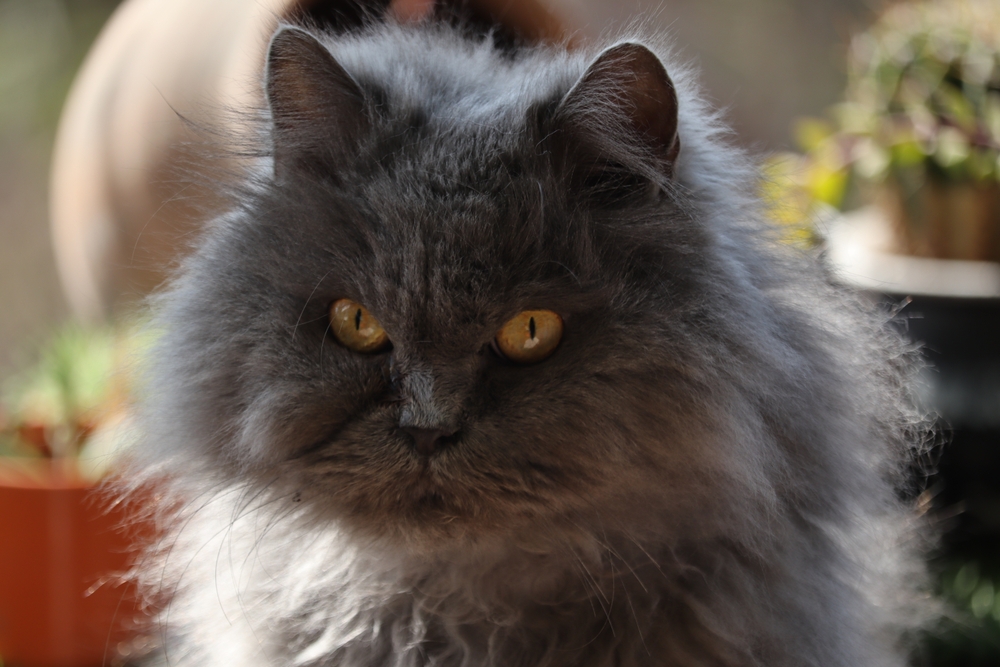
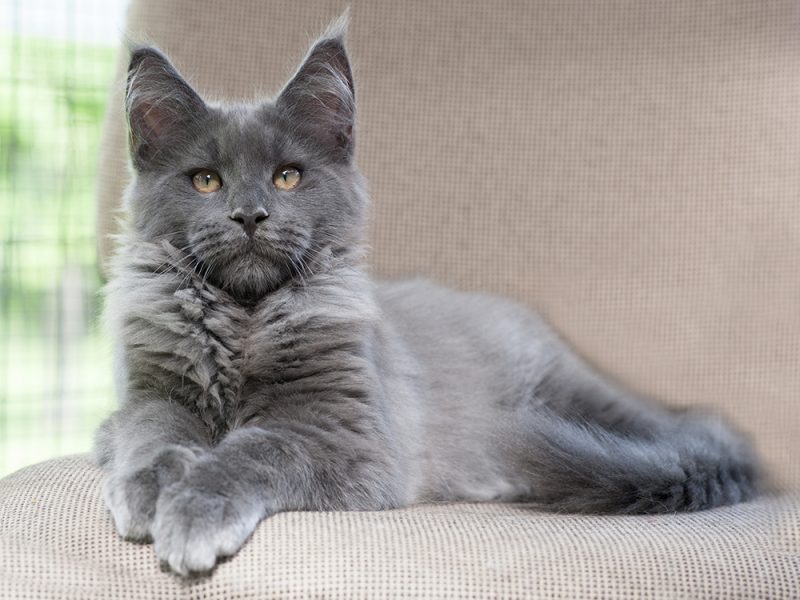
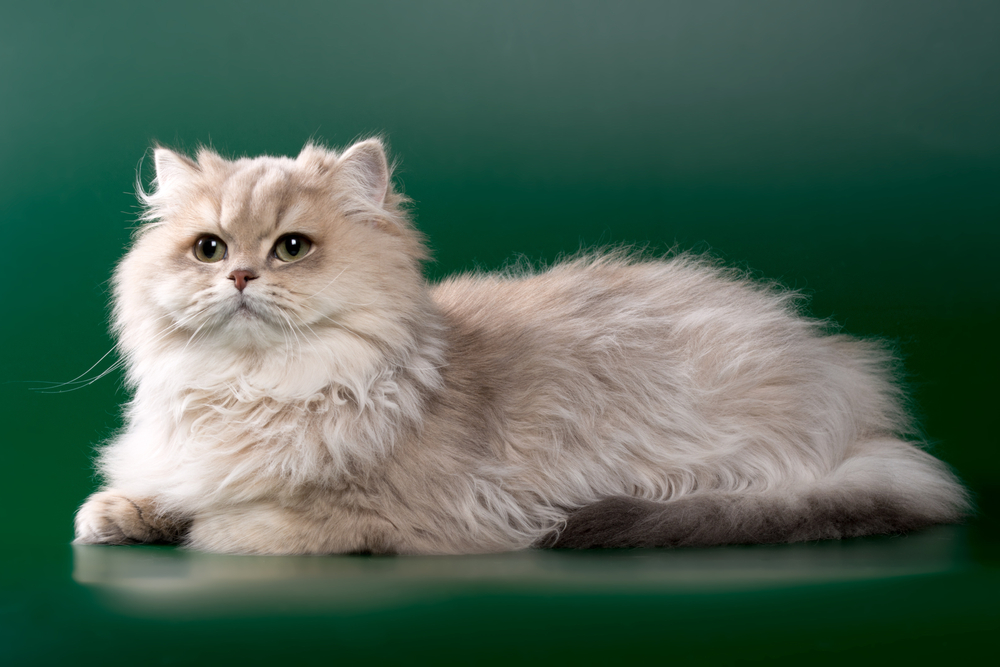
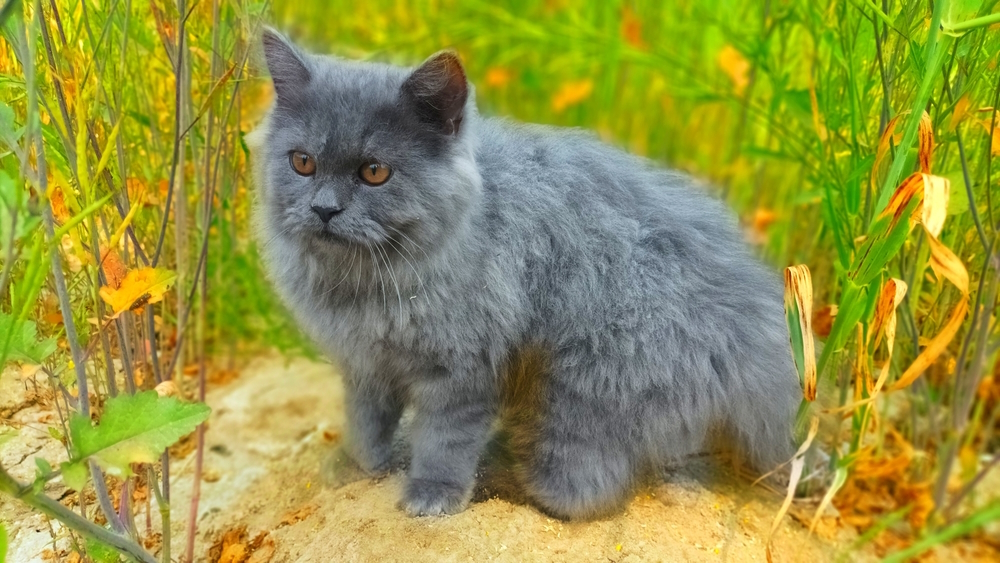
The Grey Persian is a popular color of Persian cat, officially known as a Blue Persian. The grey color can range from a very light, almost dusty color, to a much darker, slate grey. Although white and black are more common, grey is still commonly found, which means it is a relatively easy breed for potential owners to get hold of and because it is officially recognized by fancier associations, it can be shown in most exhibitions and competitions.
As well as being popular in competitions, the Grey Persian cat also makes a good choice for a family pet, although they can be shy around strangers and are sensitive to loud noises and surprises.
Breed Overview
Height:
Weight:
Lifespan:
Colors:
Suitable for:
Temperament:
The Persian is one of the most popular cat breeds in the world, known for its beautiful thick coat as well as its squashed, rounded face. They are a popular companion breed and remain popular for showing at competitions and exhibitions.
They are medium-sized cats and their coats can vary from light to dark grey. As a pet, the Grey Persian cat is a sweet and affectionate companion but can be sensitive, which means it is not the best pet for families with young children and it may not get along in homes with other animals, especially playful dogs.
Grey Persian Cat Breed Characteristics

The Earliest Records of Grey Persian Cats in History
There is some debate over the exact history of the Persian cat. There are written records dating back to the 17th Century that detail what we know today as the Persian cat breed. Theories suggest that these cats were brought to Europe by noblemen, sailors, merchants, or travelers, but it is clear that they soon became popular. However, DNA tests actually suggest they have a very similar genetic background to other breeds that originated in Western Europe.
Yet another theory suggests that ancient hieroglyphs depict cats that look very similar to the modern Persian breed, suggesting that their ancestors could have been around thousands of years ago.
Whatever the origin, the Persian became very popular in Europe and the first Persian was shipped to America in the late 19th century, where it enjoyed similar levels of popularity.
How The Grey Persian Cat Gained Popularity
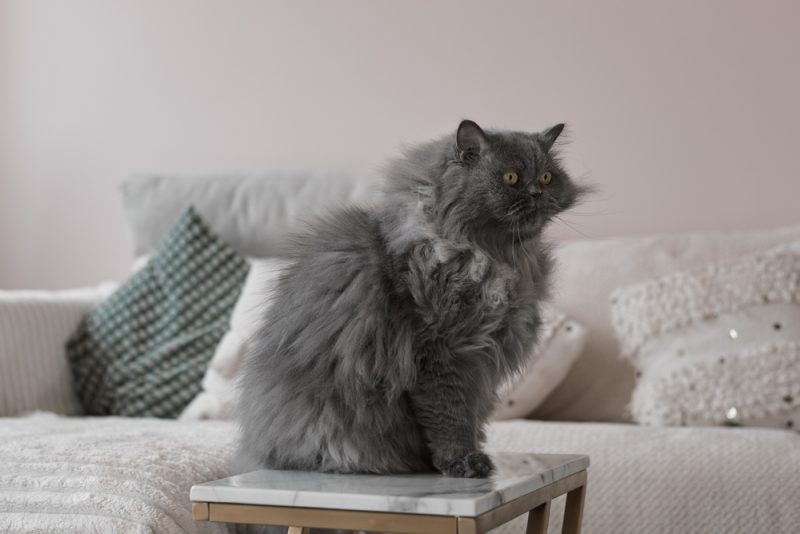
As is the case with a lot of older breeds, it was royalty and nobility that helped spread the popularity of the Persian cat breed. In particular, Queen Victoria of England was known to have kept several Persians throughout her life. Florence Nightingale also favored Persians.
Later, the breed’s appearance would see it become a regular on big and silver screens. Blofeld’s cat was a Persian in the James Bond films, and so too was Mr. Bigglesworth in Austin Powers. Mr Tinkles from the 2001 comedy film Cats & Dogs was also a Persian.
At the same time, the breed’s long coat and attractive face made it popular at cat shows and animal exhibitions, and the Persian was among the winners at the first-ever official cat show.
Formal Recognition of Grey Persian Cats
Such was the popularity of the Persian cat that having found its way to the U.S. in the late 19th century, it became one of the founding breeds of the Cat Fanciers’ Association just a few years later in 1906. It is also formally recognized by all major fancier associations and is one of the most widely shown and recognized breeds.
The first ever cat show was held in London in 1871, and Persian cats were among the prizewinners at the inaugural event, further cementing its place in the books of domesticated cat history. The Grey Persian is a naturally occurring color and one of the most common color variants of the Persian, and it is considered a standard color.
Top 4 Unique Facts About Grey Persian Cats
1. They Are Show Winners
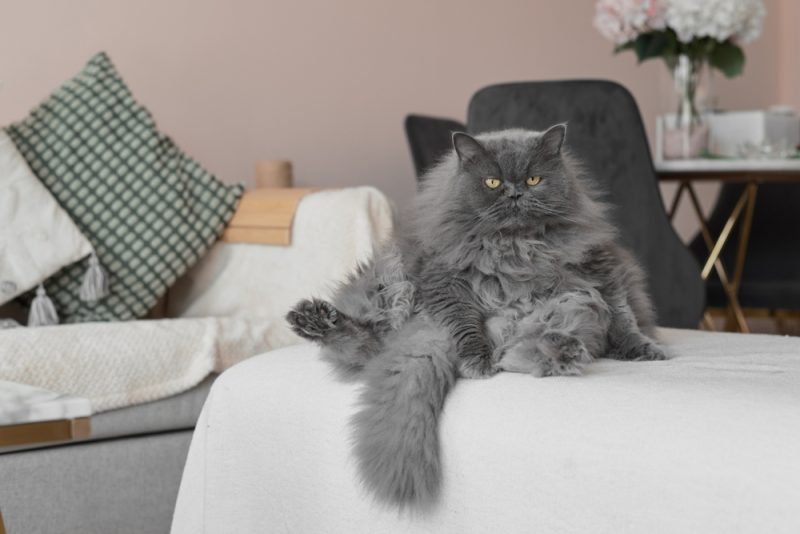
From the first cat show to some of the most recent, Persian Cats are winners. They are popular for their thick coats and attractive faces. However, potential owners need to be aware that that coat does take some management to ensure it stays in top condition.
2. Persians Can Be Expensive
The breed’s popularity at shows, combined with its popularity as a companion pet, means that the Persian can be expensive to buy. For a Persian with pedigree, you can expect to pay thousands of dollars to get your hands on one.
3. They Are Not the Most Athletic Felines
Persians are medium-sized cats, but they have stocky, quite heavy bodies. This means that the breed is not known for its athleticism, and it can struggle to jump up to high levels. They shouldn’t have any problem getting up on furniture or your lap but will struggle with anything much higher
4. They Can Be Sensitive
Persians are docile and tend to be very loving with their humans, but they are also known for being sensitive cats. Loud noises and too much activity can cause them stress, and you will need to take any introductions to other pets very slowly to avoid causing distress.

Does the Grey Persian Cat Make a Good Pet?
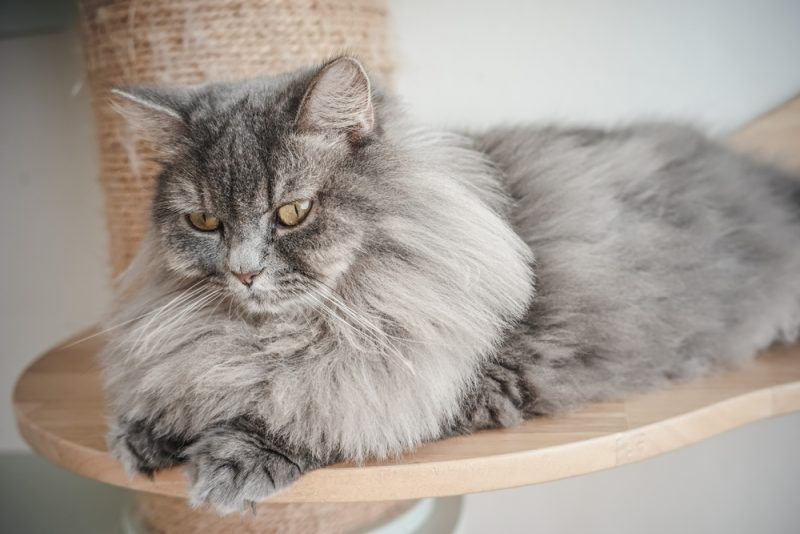
The Grey Persian cat is commonly seen at shows, but it also makes a great companion pet for the right owner. Its sensitivity means that the Persian might not be best suited to life with a young family. Small children can be too rowdy and too physical for this breed. It also takes a careful, gradual introduction, when integrating a Persian into a house with existing pets. And, that coat does need regular grooming.
However, they are worth the effort, as the Persian is a sweet and gentle-natured cat that will give lots of love and affection to its favorite humans. While the breed does enjoy and require affection, it isn’t an overly needy breed.
Conclusion
The Grey Persian cat, more commonly known as the Blue Persian cat, is a grey-colored Persian. It has a long, thick coat, and a rounded, squashed face. The breed was one of the founding breeds of the Cat Fanciers’ Association and has remained a very popular inclusion in cat shows and exhibitions ever since.
It does make a great companion but can be sensitive, so isn’t ideal for all families and homes.
Also See: Grey Cat Breeds (With Pictures)
Sources
Featured Image Credit: Abbasi7060, Shutterstock

Expert cat care, straight to your inbox
Vet-reviewed advice, behavior tips, and the best of Catster. Free, and you can unsubscribe anytime.
By signing up, you agree to our Terms & Conditions and Privacy & Cookies Policy.
Matt is a freelance writer from the UK. He lives with his partner and daughter, as well as one dog and two cats.
A data analyst by trade, Matt moved from numbers to words more than 15 years ago and has been writing content ever since. Having volunteered at a local animal sanctuary, he has a lot of experience with different breeds of cats, dogs and horses. He currently shares his home with his partner and daughter, as well as a rescue dog from Macedonia (which might be an Akita cross) and two cats. Matt has also kept bearded dragons, a variety of birds, fish, guinea pigs, hamsters, mice, and rats. His daughter has adopted the same passion for animals, keeping and breeding snakes.
A geek at heart, Matt is a member of a local board gaming group that meets weekly, and regularly forces his family to “enjoy” board games with him at home.
Join the conversation
Ask a question, share your story, or send private feedback.