Ragdoll vs Persian Cat: Principal Differences (With Pictures, Vet-Reviewed)


In this article
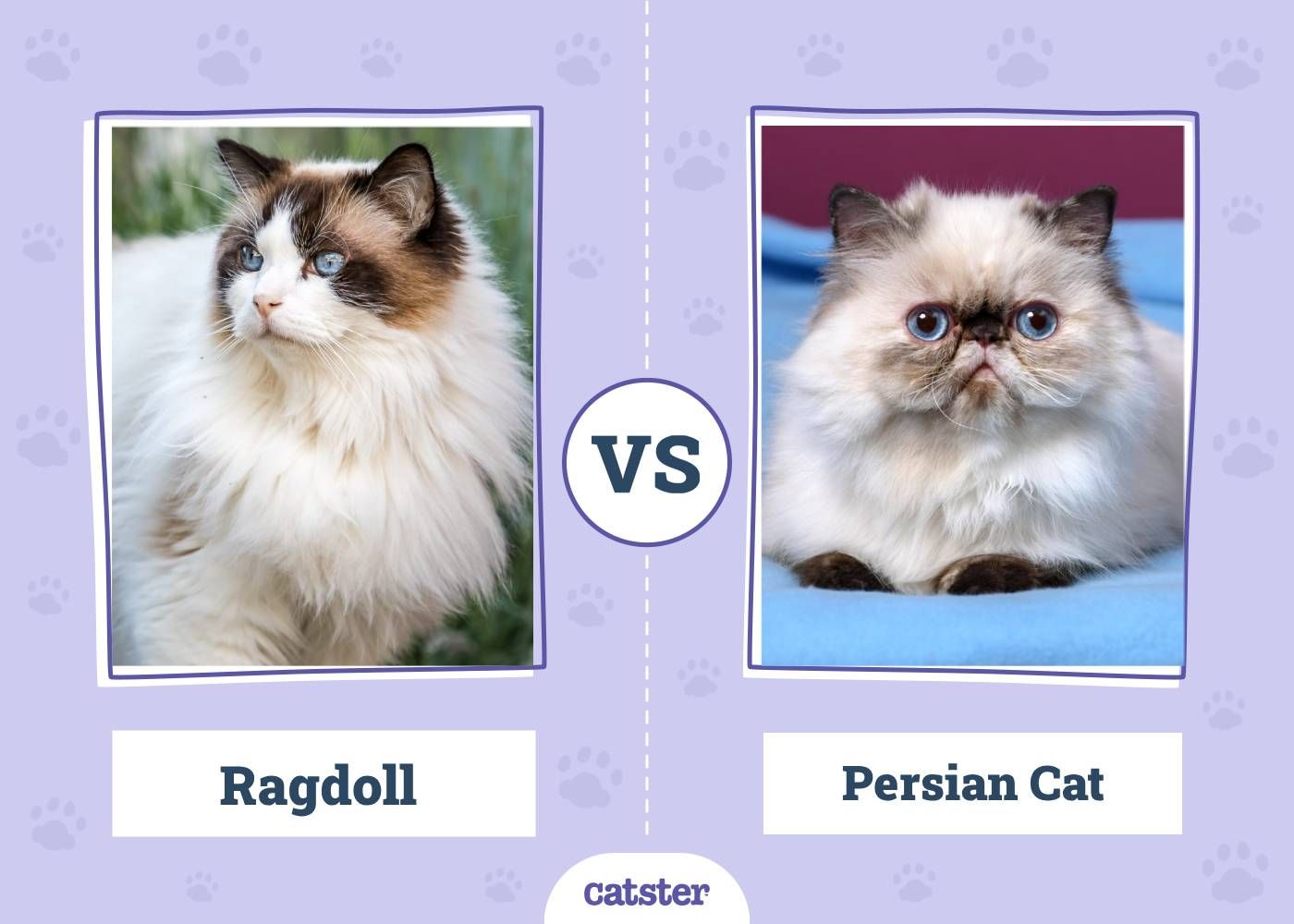
It can be easy to get certain cat breeds misconstrued, especially when they look similar to one another. When you have two gorgeous breeds like the Ragdoll and Persian, you might wonder if they are related and what similarities they possess genetically as well as physically. While these breeds may look alike at first glance, they have distinct origins, temperaments, and care requirements.
We are here to go over every aspect of personality, care, and physical traits between these two breeds so you can be an expert once all is said and done.

Visual Differences

At a Glance
Ragdoll Cat

The very first documented Ragdoll was a lovely white cat named Josephine, owned by Ann Baker. Breeders were so taken by her charming personality. While the exact genetic makeup of the Ragdoll is not fully documented, it is believed, although not confirmed, that Josephine and her offspring may have influenced long-haired domestic cats and possibly even Persian or Birman-type cats. Through selective breeding, the Ragdoll breed was eventually established and received championship status by the Cat Fanciers’ Association in 2000.
Ragdoll cats really gained in popularity due to their striking appearance and affectionate demeanor.
Personality
One fabulous thing about Ragdoll cats is that they have such a versatile character that they blend in with most lifestyles or family environments. Ragdolls tend to have very charming personalities and woo even the hardest hearts.
They are usually highly social and attached to their owners. They're even docile with newcomers and animals most of the time as well, as long as they have been properly socialised and introduced. Because of their nature, they make outstanding candidates for homes with children under supervision. They are also so relaxed and calm, and can be suitable for apartment living as long as their exercise needs have been met.
These cats really seem to enjoy physical affection and reciprocate the favor. The name “Ragdoll” comes from their tendency to go limp and relaxed when picked up. You can expect lots of bunting from this breed, constantly rubbing against your legs and hands. They might be professionals at purring, too.
Physical Characteristics
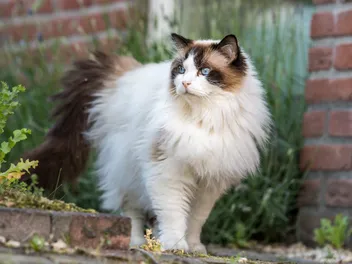
Ragdoll cats have very distinct looks, touting beautiful, long coats and lots of soft colors. The Ragdoll has classic blue eyes, adding charm and appeal. They tend to have smooth and fluffy bodies.
Because of their long coats, you might think they are difficult to groom. That's not the case, however. They require brushing several times per week to reduce the chances of mats forming in places they can't reach. However, they are very clean and tidy cats.

Ragdolls are available in the following colors:
- Seal
- Red
- Lilac
- Chocolate
- Blue
- Cream
They have the following patterns:
- Colorpoint
- Mitted
- Bicolor
- Mid-high-white bicolor
- High white van bicolor
- High mitted
Physical Activity
Ragdolls have a fairly low energy level as far as activity is concerned. That's not to say that they don't enjoy playing with toys or chasing a stuffed mouse, but they much prefer cuddles and time spent with their people.
Because Ragdolls tend to be curious cats, you might find that they enjoy looking out the window or having some visual stimulation during play.
Encouraging your Ragdoll to play despite their energy level will help them maintain a healthy body weight to prevent the potential of obesity. Your cat needs to get their heart rate up for at least 15 minutes of exercise per day, ideally several times per day, depending on their age and health.

Health
Ragdolls are generally thought to be exceptionally healthy pets. They don't have a lot of health issues to mention, but certain ones show up in the breed. A significant concern in the Ragdoll breed is called hypertrophic cardiomyopathy.
This is a heart disease found in cats that is commonly diagnosed in the Ragdoll breed when compared to some other breeds. If you suspect that your cat has any issues, always speak with your veterinarian for guidance. Proper vetting is essential to ensure that you stay ahead of any oncoming illnesses.
Other potential health problems, not necessarily only breed-related, may include:
- Obesity
- Hairballs
- Respiratory infections
- Urinary tract infections
- Gastrointestinal sensitivities
Cost
It seems the price of purebred animals just keeps increasing through the years. If you buy from a professional breeder, you can expect to pay roughly $1,000–$2,000, especially expensive because of their desirable looks and personality.
Of course, actual costs depend on the breeder, location, and health—so actual costs will vary.
Suitable For:
Ragdolls are suitable for homes with children, other pets, and older adults, as long as all pets have been socialised and properly introduced. They pair well in any-sized living situation as long as they have the exercise and mental stimulation they need, and tend to be a relaxed company.
Persian Overview

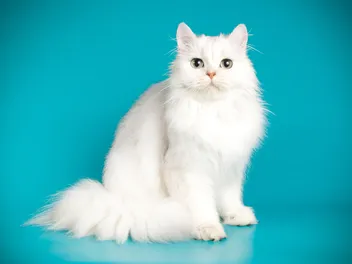
Persians are an ancient breed that humans have loved for centuries. They have classically short muzzles and round facial shapes and eyes. One of the most recognizable cat breeds, the Persian has made its mark well in the world.
Persians have such desirable genetics that they have influenced several cat breed creations, such as the Himalayan.
Personality
Persians are incredibly relaxed cats without a thing to prove to anyone. They don’t mind taking a nap in the middle of a sunspot in the afternoon. There is no shame in all-day napping.
As you might guess, these cats prefer a lifestyle of comfort and affection. Persians tend to have a very lackadaisical approach to life, not getting fussy or being particularly needy. They are also very good at self-occupying, although they do rely on companionship.
These cats would make a charming addition to practically any family life as they mesh well with people and animals when properly introduced. They are docile enough to be around babies with supervision and seniors alike. You might not get much calmer than a Persian in terms of personality.
Physical Characteristics

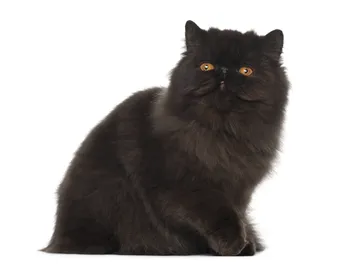
Persians are a brachycephalic breed of cat. This means that they have a short muzzle with a flat face. This can cause a varying degree of breathing and eye issues in some individuals, as with any brachycephalic animal.
Because they tend to mat, it is essential to keep up with regular brushing. If you start this process when your Persian is very young, they will likely conflate grooming with affection and very much enjoy this daily session.
Persians have the following coat colors:
- Black
- Blue
- Cream
- Cameo
- Smoke tortoiseshell
- Blue-cream smoke
They are available in the following patterns:
- Classic
- Mackerel
- Patched tabby
Energy Level
Persians have a very moderate to low activity level. They much prefer a lavish lifestyle, napping, and a nearby windowsill rather than running around needlessly. These cats work very well for people with a laid-back lifestyle.
You might have to persuade your Persian to play, especially after they have been spayed or neutered. Weight gain is common with this breed, so exercise is crucial. Like all other cats, they need several sessions of 15 minutes of exercise per day, no matter how you must convince them.
Also Read: How Long Do Persian Cats Live? Vet-Verified Lifespan & FAQ
Health
Persians are pretty healthy cats, but a fair share of health issues crop up in the breed. If you have a Persian, the best way to avoid detrimental matters is to maintain routine vet visits to ensure your cat is in prime health.

Health issues for Persians include:
Progressive retinal atrophy (rare)
Brachycephalic Obstructive Airway Syndrome
Cost
If you buy a Persian kitten from a licensed breeder, the cost can range quite a bit. Some are top-of-the-line show cats, and others are pet only, so there's lots of wiggle room depending on your needs. However, the average is between $500 and $2,000.
Suitable For:
Persians would make wonderful additions to any cat-loving home, as long as you don't mind a feline who loves naps and cuddles. These cats require committed grooming, so those with the extra time won't have an issue.

Let the Competition Begin
So, which of these cats wins your vote for the best feline for your household? If you can't figure it out yet, let's touch on some basic points that you can limit down even further. May the best man—or feline, in this case—win.
Personality & Mannerisms
- Winner: Tie
It's really hard to pick which one of these cats has a better personality. We think that the best match depends greatly on your particular lifestyle. They both are incredibly affectionate, loving cats who are extremely laid back.
While they both would fit in with just about any living situation, Ragdolls might do best in homes with children, whereas Persians might do best in homes with older adults. Persians are calm and adaptable, and can also tolerate children, though extremely active kids might overwhelm them
While Ragdolls are pretty calm as far as kitties go, they are quite playful and might be a little much to handle on their kitten ears for some older adults. Or if you're just a person who enjoys a relaxed lifestyle, without a lot of commotion at home, a Persian might be the calmer of the two.
We think any cat lover would be pleased with either personality. We're just trying to narrow down the search for you.
Grooming and Maintenance
- Winner: Ragdoll
Both Ragdolls and Persians share the characteristic of beautifully long coats. However, which one of them has a more difficult fur type than the other?
Ragdoll cats have long fur, which can mat from time to time. However, they generally don't because they don't have undercoats. Still, they require brushing from time to time.
On the other hand, Persian fur is a little bit more challenging to maintain because they have a very dense undercoat. This can make grooming time-consuming for potential owners.
So, if you're looking for a beautiful long-haired cat that is easy in the grooming department, we recommend a Ragdoll over a Persian.

Health & Longevity
- Winner: Ragdoll
Ragdolls and Persians share some physical and behavioral traits, such as long coats and a calm demeanor. While Ragdolls may appear similar to Persians, they generally encounter fewer health issues.
Reputable breeders are generally very good about weeding out genetic health issues in bloodlines.
Cost
- Winner: Persian
Both breeds can get quite pricey, especially when you're talking top-quality show cats. However, just for everyday pets, Persians tend to be less expensive more often than Ragdolls, though prices can overlap depending on the breeder and region.
Now, you might find a steal or generally pay the same in your area. It really just depends on what is available and individual breeder rates. However, we find that you might have a better shot at finding a lower-cost Persian.
However, you need to make sure it is a reputable breeder to eliminate health issues or poor breeding risks.

Which Breed Is Right for You?

Deciding what breed is right for you can be a challenge since they are both so incredible and lovely. But we're certain that one of these fabulous cats matches best with your lifestyle. Now that you know a little bit more about each of these magnificent felines, you can move forward on your kitten search.
Featured Image Credit: Left - Serita Vossen, Shutterstock | Right - Dorottya Mathe, Shutterstock
Expert cat care, straight to your inbox
News, insights, and useful advice, delivered to you.

No spam — unsubscribe anytime.
By signing up, you agree to our Terms & Conditions and Privacy & Cookies Policy.
How useful was this post?
Click a star to rate. You can leave written feedback afterwards. (We read all feedback.)
As a freelance dog writer and passionate pet enthusiast, Ashley Bates is pursuing studies in animal therapy. A mother to four human children and 23 animal companions, Ashley is dedicated to volunteering at shelters, advocating for animal rights, and rescuing animals in need. Her goal is to spread awareness, provide education, and offer entertainment about pets to reduce homelessness. Ashley's specialties include dogs and cats.