Serval vs. Savannah Cat: Vet-Reviewed Key Differences (With Pictures)


In this article
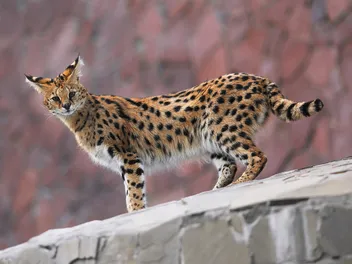
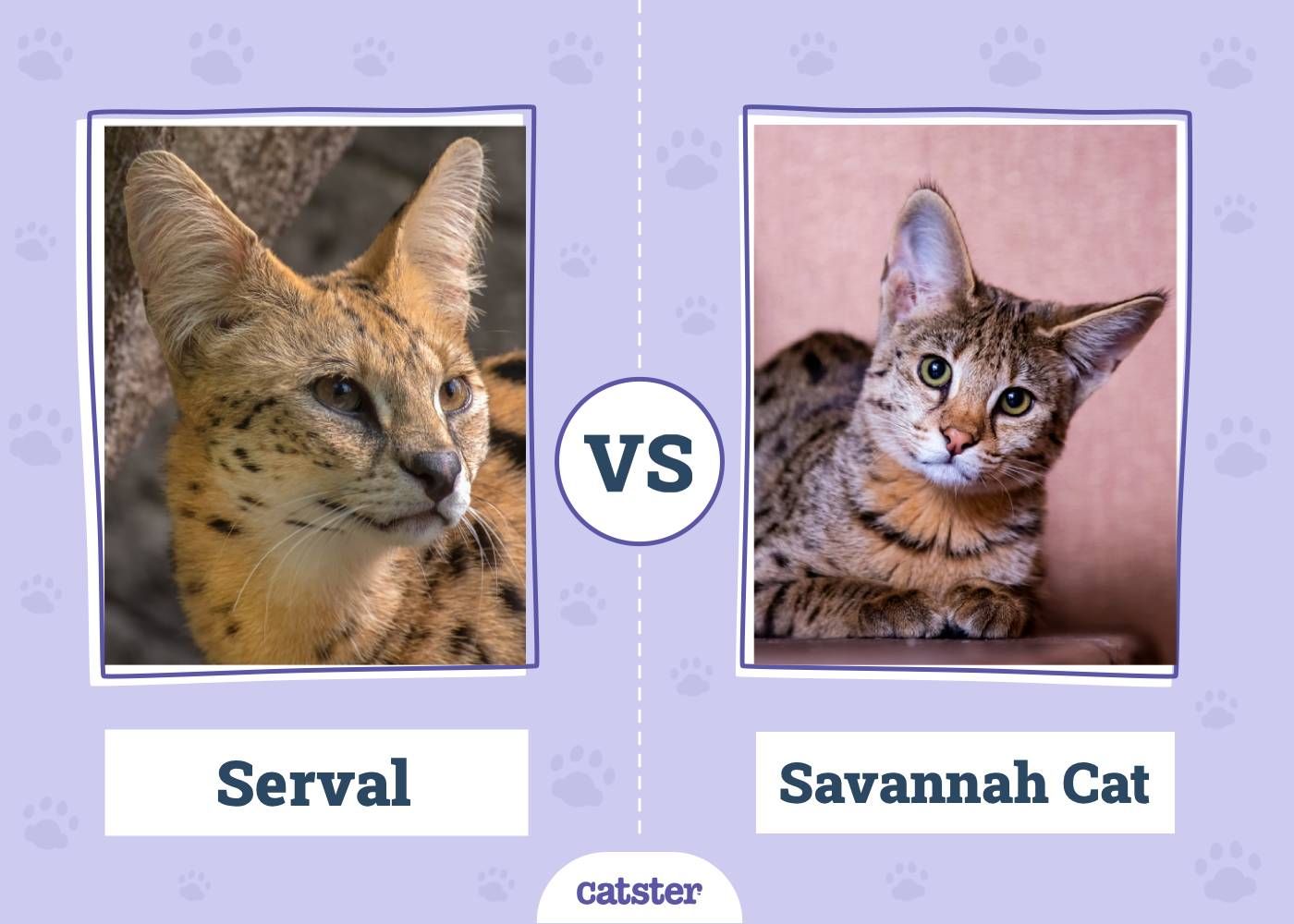
Servals are African wildcats that have begun growing in popularity as pets with people who crave a more exotic pet, although they are not easy to have as pets, especially for people who do not understand their legality, behaviors, and needs.
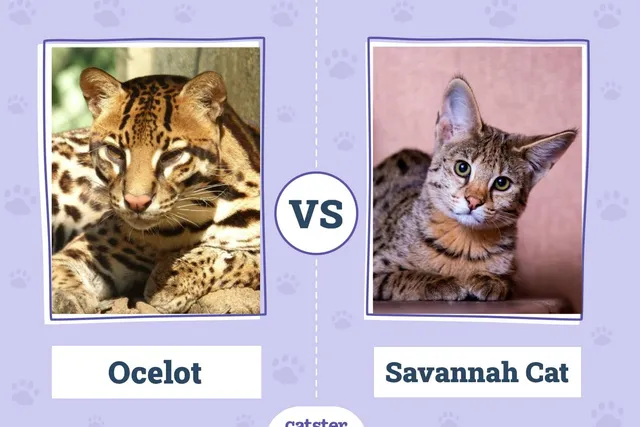
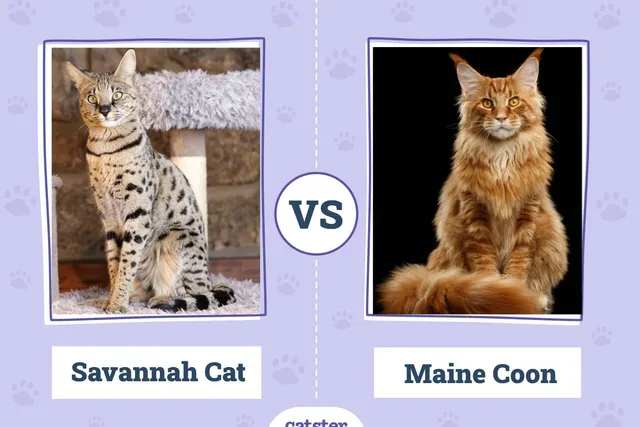
Savannah cats are a cross between Servals and domestic cats, making many people view them as “semi-wild.” However, later generations of the Savannahs are considered “domesticated” by many, as they’re much smaller than earlier generations of these cats and are considered the same as domestic cats in terms of their nutritional needs and medical care.
With the rise of multiple social media platforms, Servals and Savannah cats have rapidly grown in popularity. Unfortunately, this has also led to a rise in these cats ending up in shelters and rescues due to people being wholly unprepared for their high-maintenance needs. While they can be great companions in the right home, neither the Serval nor the Savannah cat are good pets for many people.

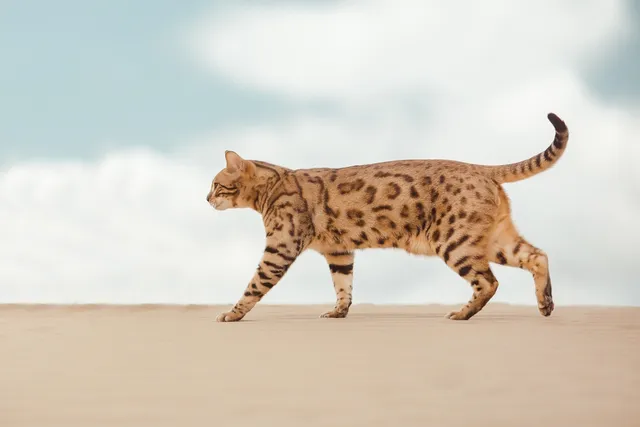
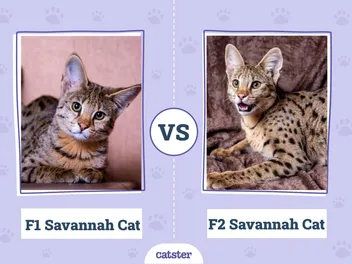
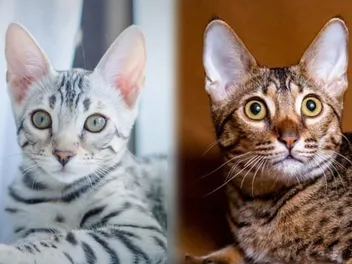
Visual Differences (Serval Cat vs. Savannah Cat)

At a Glance
Serval Cat Overview

The Serval is not a commonly kept pet, and for good reason. These are non-domesticated wild animals, making them unsuitable for a variety of home situations. On top of that, there are restrictions on owning them in many areas, which can make ownership of these beautiful cats quite difficult.
It’s very important to keep up to date with the legality of owning a serval where you reside if you wish to adopt one. In addition, please keep in mind that even if owning a serval is legal, there may be additional requirements (such as a permit) necessary to keep them where you reside.
Personality / Character
Servals are highly intelligent cats that are often described as quite affectionate toward their owners. However, anecdotal claims suggest that they are very cautious around strangers and are not friendly with other pets. In the wild, these cats live solitary lives except during breeding seasons and when mothers have kittens to care for. This solitary tendency carries over to home life for pet Servals.
They tend to be more active at night and may hide during the day, so it’s not uncommon to not see your Serval all day until they decide it’s party time at midnight. Although they can be affectionate toward people they are familiar with, they also have preferred personal boundaries, which should be respected. These are wild animals, even when they are hand-raised in captivity.

Training
Due to their intelligence, Servals are highly trainable. They require consistent training and do better with positive training methods. Negative training methods may create tension or anxiety, which can lead to aggression and other behavioral issues. With time and consistency, most Servals can be taught to walk on a harness and leash, perform tricks, play games, and understand the household rules. However, their status as a non-domesticated pet tends to show when it comes to litter box training; it can be very difficult to get them to properly use a litter box.
Health & Care
There have been limited studies on the potential health issues a serval might experience when kept as a pet. This is, in part, due to the legal issues involved with keeping a serval as a pet. However, like other large breeds of cats, it is thought that they have a higher predisposition to feline hypertrophic cardiomyopathy (a heart issue). Their exercise needs are also extremely demanding, and these cats can often easily crash onto tables, jump extremely high, and be very difficult to accommodate in an indoor setting.
The biggest difficulty in the healthcare of a Serval is finding a veterinarian who will see these animals. They require the care of an exotic vet competent in the care of wildcats. As pets, they also require typical pet care, including deworming and some vaccinations.

Suitable For:
These cats are suitable for dedicated, experienced, and resourceful people who wish to have a single-pet home with no children. They may be best kept in a home with only one or two people, as they tend to bond closely with very few people and may be stressed by others. They should not be kept by people unfamiliar with their care, behavior, and needs, as these cats can become dangerous if not cared for responsibly and properly.
Pros
- Long lifespan
- Intelligent
- Trainable but inherently wild
- General health status unknown
Cons
- Wild animals can be dangerous
- More active at night
- Not legal to own in all areas
- Require exotic veterinary care
- Not suitable for homes with children or other pets
- Require a high time, money, and energy investment
Savannah Cat Overview

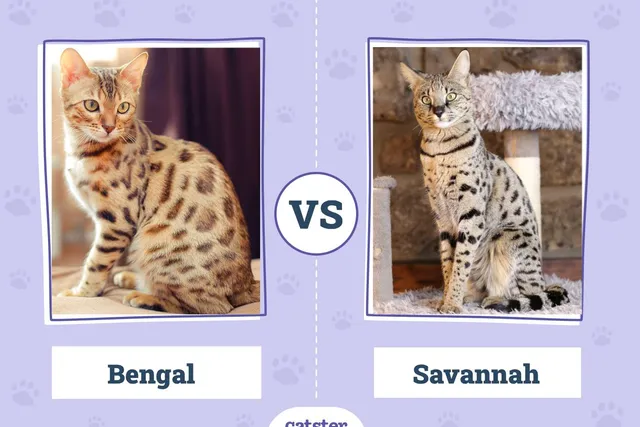
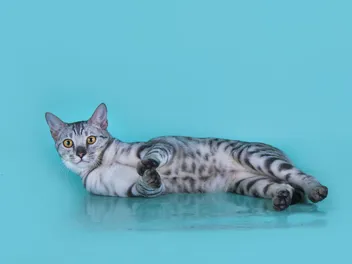
Savannah cats are the product of crossbreeding efforts of Servals and domestic cats. They are a recognized TICA, WCF, and CCA-AFC breed that can compete in cat shows, although the cat must be a specific-generation Savannah to be considered a purebred Savannah cat per different association requirements and what they consider to be the breed standard. Due to their close relation to Servals, Savannah cats are still illegal to own in some areas.
Personality / Character
While some people are drawn to Savannahs for their exotic looks, many are drawn to their dog-like personalities. Owning a Savannah cat may be similar to owning a working breed dog, which is an attractive cat temperament for many people. They tend to be gentle, curious, and playful cats that are intelligent problem solvers. Unlike the Serval, Savannah cats are anecdotally somewhat better with children and other pets, making them more suitable (in comparison to Servals) for most households.
They may be standoffish with strangers, especially at first, but given how the more current generations are less and less “wild,” they tend to be somewhat similar to most domestic cats. Anecdotal evidence suggests that they often make fast friends with visitors, which is not true of all Savannah cats. Some may be shyer, choosing to bond only with one or two people. Responsible breeders are actively breeding for outgoing, friendly personalities, though.

Exercise
Like with a working dog breed, owning a Savannah cat means you will spend a lot of time finding ways to entertain your cat. They have high exercise needs, so they should be walked or played with for at least two hours per day. Other pets, especially dogs, can help your Savannah burn excess energy and stay active.
Training
Like the Serval, Savannahs are highly intelligent cats, making them quite trainable. They are not as sensitive to training techniques as Servals are, making them (according to some) easier to train. Their curious nature often means they are happy to practice training exercises. They can be taught to walk on a harness and leash, as well as play games, perform tricks, and participate in activities like feline agility competitions. They are certainly intelligent enough to understand rules within a household.
Health & Care
Savannah cats can be seen by regular veterinarians for their care and do not require exotic vet specialists. They require standard domestic cat vaccines and treatments. They are generally healthy cats but are susceptible to some health conditions, like hypertrophic cardiomyopathy, progressive retinal atrophy, feline lower urinary tract disease, pyruvate kinase deficiency, and various other ailments that all cats are susceptible too. They may also be susceptible to food and environmental allergies.

Suitable For:
Savannah cats are suitable for active households that can provide the time and training these high-energy cats need. They are well-suited to homes with individuals or families with children, as well as homes with other pets. Without proper exercise and training, these cats can be destructive and difficult to manage, so a commitment to the level of care needed to keep a Savannah cat entertained and healthy is necessary.
Pros
- Long lifespan
- Intelligent
- Trainable
- Better suited for homes with children and other pets
- Don’t require specialized veterinary care
Cons
- Not legal to own in all areas
- Require lots of exercise and attention
- Susceptible to certain conditions (of which a few are hereditary)
Which Breed Is Right for You?

Most sanctuaries and rescues will tell you that Servals are not suitable pets, which is true for most homes. They are wild animals that require a knowledgeable owner who is committed to providing exercise, training, and an appropriate type of care specific to these cats. They are not a good fit for homes with children or other animals, and they may be most active in the middle of the night.
Savannah cats can be fantastic pets, but they require a high level of care that most people cannot commit to. They tend to be gentle and playful with children and other pets, although they have a high prey drive, making them unsuitable for homes with small animals. The time and care commitment of a Savannah cat does pay off, though, because they tend to be loving, attentive cats that show emotional intelligence and curiosity toward the actions of people.
Featured Image Credit: Left - DSlight photography, Shutterstock | Right - Kolomenskaya Kseniya, Shutterstock
Expert cat care, straight to your inbox
News, insights, and useful advice, delivered to you.

No spam — unsubscribe anytime.
By signing up, you agree to our Terms & Conditions and Privacy & Cookies Policy.
How useful was this post?
Click a star to rate. You can leave written feedback afterwards. (We read all feedback.)
Brooke Billingsley, a former veterinary assistant for nine years, became a nurse in 2013. She lives in Arkansas with her boyfriend of five years, surrounded by her beloved pets: three dogs, two cats, five fish, and two snails. Brooke has a soft spot for special needs animals, caring for a three-legged senior dog and a widely known cat with acromegaly and cerebellar hypoplasia. She has developed a keen interest in fish keeping and is always learning how to provide the best environment for her aquatic pets. In addition to her passion for animals, Brooke enjoys gardening and maintains a vegetable garden during the summer. She stays active with yoga and received her 200-hour yoga teacher certification in 2020. Brooke also hosts a podcast that delves into folklore and myth, dedicating her spare time to research and writing. She embraces the philosophy that every day is an opportunity for learning and growth, continually working to acquire new skills and knowledge.