What Do Savannah Cats Eat? Vet-Approved Nutritional Science & Information


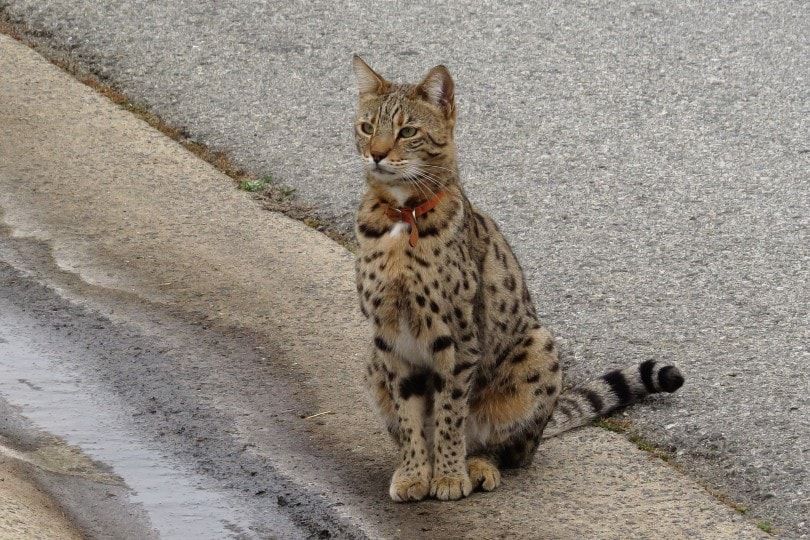
Savannah cats are hybrid cats developed by crossing African servals with domestic cats. They’re known for their long legs, big ears, and gorgeous spotted coats. These beauties tend to be on the large side, with most males reaching weights of up to 5.0 to 8.2 kilograms (11.0 to 18.1 pounds)
Savannahs often live relatively long lives, with anecdotal reports of some still zipping around in their 20s. Most have black, brown, silver, or smoke coats highlighted by black or brown spots. These cats love to chase things; they have tons of energy and extremely high prey drives. Although they have wild ancestry, most Savannahs enjoy being around people.
When it comes to diet, Savannah cats require more calories than the average housecat (due to their larger size), but they're usually fine eating a high-quality, high-protein, commercial formulation deemed nutritionally complete for cats. Some breeders recommend supplementing Savannah cats' diets with extra protein from meats such as chicken. However, there is no scientific basis for this requirement.

Do All Savannah Cats Require the Same Type of Food?
Yes. All Savannah cats are obligate carnivores, like other domesticated cats. Though Savannahs are thought to be exceptionally large, the overwhelming majority of them reach the same size as other large cat breeds, such as Maine Coons or Norwegian Forest Cats. This would make their total caloric requirement higher than cats of a smaller size. However, their nutritional composition requirements are the same as those of other cats.
Some breeders claim that the breed also does best on a non-grain diet, with claims of many having a particular sensitivity to corn. These claims are made with regards to the earlier generations (F1 and F2s); however, this claim hasn’t been definitively proven in research and seems to be advice passed around by breeders.
Feeding kittens chicken supplemented with additional vitamins and minerals appears to be common among breeders as well. Likewise, many suggest adding a bit of extra meat to your Savannah's diet to ensure your cat gets enough protein. Though the inclusion of additional meat might be beneficial in some circumstances (for example, for a sick cat recovering from an illness), it’s important to keep in mind that overdosing vitamins and minerals can have detrimental effects as well. Overnutrition may predispose a cat to unwanted health issues and ailments. Considering mentioned above, consulting your Savannah's nutrition with a veterinarian is always a good idea.
Current feeding guidelines for cats, such as those set by the American Association of Feed Control Officials (AAFCO) guidelines, recommend that healthy adult cats in maintenance require a diet consisting of at least 26% protein and 9% crude fat on a dry matter basis as a minimum. These guidelines are a minimum, though, and it doesn’t mean diets higher in animal protein and fats are detrimental to your feline. Furthermore, a cat that’s overly active may require additional nutrition to keep up with their needs.
As Savannahs tend to be on the larger size, it might be more beneficial to know their protein requirement on a calorie basis. Per 1,000 calories, a healthy adult in maintenance requires 65 grams of protein and 22.5 grams of crude fat.

What Types of Commercial Formulations Are Best for Savannah Cats?
Like all other cats, Savannahs require high-protein formulations. The source of the protein is crucial too, as plant-based proteins are often nutritionally incomplete for cats (they lack taurine).
How Often Do Savannah Cats Need to Be Fed?
As a general guideline, younger cats do best with multiple meals a day (around six to eight meals for kittens that are 2-3 months old). As they grow older, their meals can be more spaced out and the number of meals per day can be reduced. Healthy adult cats can have their daily calories split into two or three meals. Offering your adult cat several small meals that are appropriately portioned is also acceptable. However, it might not be practical for all owners.
Cats aren’t good at self-regulating their food intake, and therefore, they shouldn’t be allowed access to an unlimited amount of food all the time, as they may readily overeat and develop health problems as a result.

Can Savannah Cats Eat Raw Meat?
Yes. Savannah cats can eat raw meat, although the jury is still out on whether or not cats benefit from raw food diets. Nonetheless, there are many anecdotal benefits of a raw diet, and experiments have yielded intriguing results, which definitely warrant exploring the benefits of a raw diet more.
Commercial raw diets make it easy to feed your cat a well-rounded, nutritionally sound raw diet. Several companies have raw meal plans that meet cat feeding regulations and are considered nutritionally complete (for example, in the US, they have an AAFCO-compliance statement).
Keep in mind that raw diets are not without their risks and warrant considerable thought before being implemented for your pet. The most crucial risk with raw diets is the risk of Salmonella or E.coli contamination, and salmonellosis in particular is a considerable health risk for humans. If you are immunocompromised, have children, or elderly people who frequently interact with your cat, you should seek additional information from your veterinarian and your medical doctor before opting for a raw diet.
Many owners also opt for a fresh diet, which can be either raw or a gently cooked formulation. There are subscription options available for such diets on the market as well. These services make the task of sourcing ingredients and preparing meals exceptionally easy for owners who have time constraints or are not comfortable with preparing their cat’s meals at home.

What About Homemade Options?
While homemade raw options give you control over what your pet eats, they can be difficult to manage. Not only is there a chance your cat won't tolerate the meal but getting the ingredients right and ensuring your cat gets all the nutrients they need can be quite challenging.
If you're thinking about switching your cat to a homemade raw diet, consult with your veterinarian for guidance. They should be able to connect you with a feline nutritionist who can work with you to develop a healthy homemade option for your cat.
Keep in mind that you'll most likely need to supplement your cat's diet with several vitamins and minerals and that raw food diets are often more expensive than high-quality commercial options. Homemade diets also require much more legwork than commercial kibble and canned food, so make sure to consider the convenience factor when making your decision.
Are Savannah Cats Dangerous With Other Pets?
Savannah cats are far from dangerous; however, it’s important to remember that they are predators and will view many other animals as prey. This is an instinctive trait they possess, and therefore, they shouldn’t be housed with animals, such as mice, rats, rabbits, gerbils, guinea pigs, birds, chinchillas, and fish. However, a well-trained and socialized Savannah cat isn’t dangerous to humans.
Anecdotal evidence suggests that Savannahs aren't overly aggressive. Show cats are particularly calm and don’t mind being handled by people. They're not inclined to chase small children or fixate on visitors. They enjoy being around people even if they don't always want to be held.
However, a Savannah cat allowed unsupervised access to the outdoors is likely to prey on local birds and wildlife and may even stalk smaller neighborhood cats and dogs. The International Cat Association (TICA), the largest feline breed registry in the world, recommends that these kitties stay safely indoors unless leashed and supervised.


Conclusion
Savannah cats are hybrid felines, which makes them larger than most other cat breeds. This increases their caloric requirements but doesn’t necessarily change the nutritional composition requirements. While Savannahs can eat commercial kibble and wet foods without problems, for the most part, these active, athletic cats may do their best on a high-quality diet that can keep up with their active metabolism.
Though breeders have different opinions on their diet, current research does not seem to indicate these claims as valid. Therefore, it’s best to work with your veterinarian to formulate a meal plan that works best for you and your pet. Your veterinarian can also perform regular checks on your pet to ensure that they are not nutritionally deficient or being fed a surplus.
Featured Image Credit: glacierman, Flickr
Expert cat care, straight to your inbox
News, insights, and useful advice, delivered to you.

No spam — unsubscribe anytime.
By signing up, you agree to our Terms & Conditions and Privacy & Cookies Policy.
How useful was this post?
Click a star to rate. You can leave written feedback afterwards. (We read all feedback.)
Lorre Luther is a writer who is firmly convinced that cats are smarter than humans. She left her law career in the United States and moved to the Netherlands to follow her dream of becoming a writer. Lorre currently lives in Rotterdam, she enjoys traveling and greatly appreciates the beauty of nature. Lorre has a spot for animals and admires the intelligence of cats.