Are Savannah Cats Dangerous? Breed Facts & FAQ
In this article
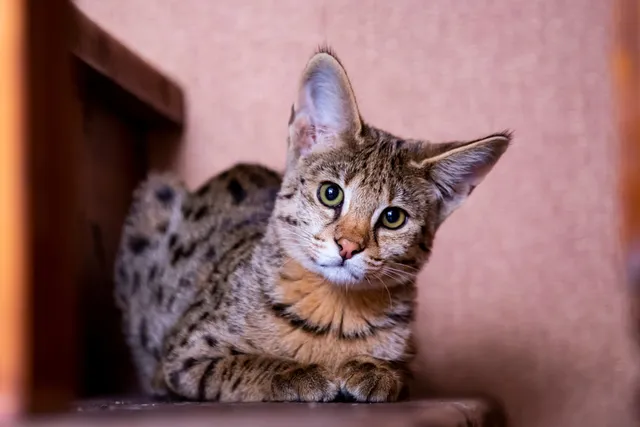
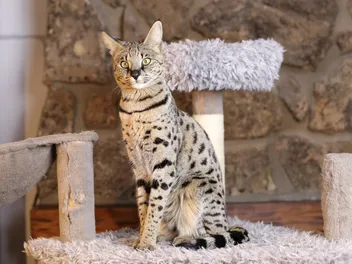
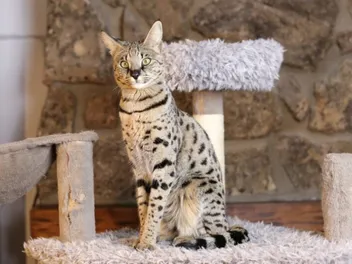
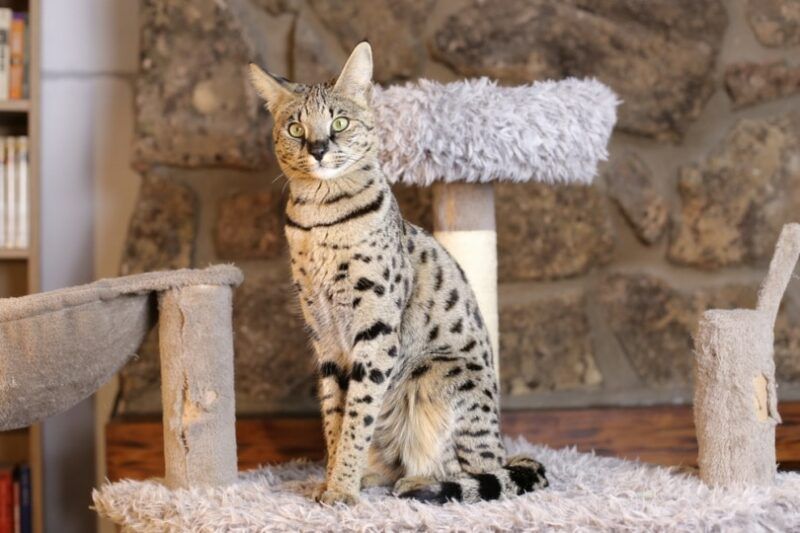
Savannah cats are a unique breed. These stunning animals captivate cat lovers with their lean, muscular builds, gorgeous spotted coats, and "dog-like" personalities. Although they have kept the majestic look of a wild feline, they have the gentle and affectionate character of a domestic cat.
Savannah cats are not dangerous, but they have retained a few of the wild instincts of their ancestors, such as a strong prey drive, unpredictable temper, and hyperactivity. If you are considering getting a Savannah cat, you should be prepared to meet their special needs and take extra precautions to ensure that your cat does not pose a risk to your other pets. Here's what you need to know before bringing a Savannah kitten or adult into your home.

What Is a Savannah Cat?
The Savannah cat is a hybrid resulting from crossing a Siamese Sealpoint with an African Serval, which is a large wild cat with long legs and a spotted coat. Although Savannahs generally have the gentle temperament of the domestic cat and similar traits, such as their ability to be litter trained, they also inherit a few characteristics from their Serval ancestors.
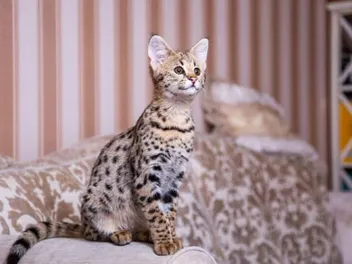
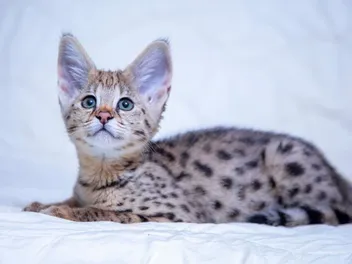
For example, Savannah cats are generally long, muscular, and agile. Their exotic and wild allure is accentuated by their slender bodies, powerful legs, and spotted coat. They have large round eyes, long ears, and small kitten-like muzzles. They can grow to over 16 inches long and weigh up to 30 pounds, although they normally hover between 10 and 20 pounds.
However, the size and weight of the Savannah cat will be greater in hybrids more closely related to the Serval, which are the first generations. The first mating between a Serval and a domestic cat is the first filial generation, called F1. Second-generation offspring are called F2, and so on.
As a result, Savannah’s wild instincts tend to fade with each generation, which means cats of the F5 generation and up will generally behave more like a typical house cat.
Are Savannah Cats Dangerous to Humans?
People often wonder if Savannah cats are dangerous to humans. In short, no. But it’s important to remember that the older the generation, the more wild instincts they will retain. This means F1 or F2 cats may need more socialization at an early age to behave positively around people and other pets. But since each cat's unique personality and temperament varies, different owners may have different experiences.
For example, some owners report that their Savannahs show signs of aggression when startled by unfamiliar sounds, smells, and sites. That said, not all Savannah owners have these experiences, especially with F4 or F5 cats, which tend to behave more like house cats.
Savannah cats can also be extremely affectionate and love spending time with their human companions. Most are good with children and can be friendly with other pets as long as they've been socialized properly.
However, it is important to keep in mind that these big kitties are adventure seekers, extremely active, and prone to destructive behaviors if not sufficiently stimulated. They need plenty of room to run freely, perches to climb on, and most importantly, attention and patience from their humans.

Are Savannah Cats Dangerous to Other Animals?
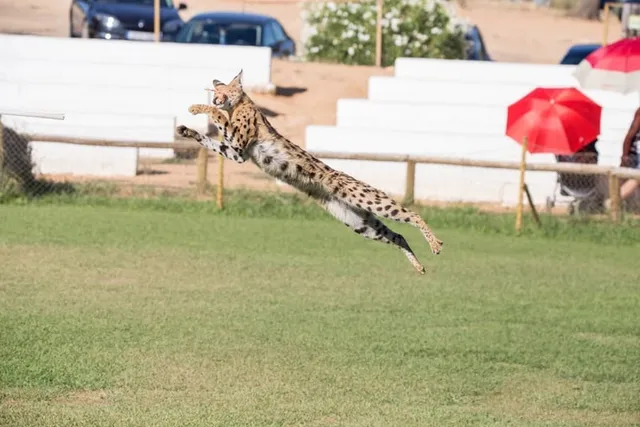
Since Savannah cats inherited predatory instincts from their Serval ancestors, they have a strong inclination for hunting. They are excellent hunters and resemble their wild forebears when they leap high in the air and pounce on their toys. That's why it's best to avoid having small pets (rodents, rabbits, hamsters, etc.) in your house if you're considering getting a Savannah. That said, they can get along wonderfully with dogs, provided that they are introduced to each other from a young age.
Are Savannah Cats Good Pets?
These exotic kitties can provide people with a great deal of affection and love. They are intelligent and often described as having dog-like characteristics in terms of their ability to learn tricks and respond well to training. They are highly active and love to play, so you need to provide them with physical and mental stimulation. Otherwise, they will get bored and can display destructive behaviors. Savannahs also need a large amount of space to roam around in, and they like to be able to explore outside.
Savannahs can be great pets for people who live alone or for families with children, as long as they have enough time, energy, and patience to meet their needs.

How to Choose a Good-Natured Savannah Cat
Although genetic factors do come into play, each Savannah cat is unique and has their own personality. Therefore, it’s hard to know exactly what temperament your kitten will have. But it's essential to do your research and choose a reputable breeder to avoid potential behavioral and health issues.
So, before you consider getting such a special feline, talk to people who own one, read and watch everything that you can about the breed, find a good breeder, and then spend time with them and their kittens before making your decision.
If you do get one, be sure to create the right environment in your home for your unique and beautiful cat to thrive and channel all their exuberant energy.
Summary
Savannah cats are striking animals, as they are the result of interbreeding between domestic cats and their wild counterparts, African Servals. These big kitties retain a few of the wild instincts of their ancestors, such as a strong prey drive, unpredictable temper, and hyperactivity.
However, these characteristics do not necessarily translate into real-world issues for all cats of this breed. Your Savannah should still be able to socialize with other pets and behave well around people. They may just need more attention and vigilance from you and your family than a typical house cat.
See Also:
Sources
Featured Image Credit: AJR_photo, Shutterstock
Expert cat care, straight to your inbox
News, insights, and useful advice, delivered to you.

No spam — unsubscribe anytime.
By signing up, you agree to our Terms & Conditions and Privacy & Cookies Policy.
How useful was this post?
Click a star to rate. You can leave written feedback afterwards. (We read all feedback.)

Genevieve is both a biologist and a science writer, driven by her deep love for capuchin monkeys, pumas, and kangaroos. Her dedication to wildlife has taken her across the globe, from Bolivia and Guatemala to Canada and Australia, working and volunteering at various rehabilitation centers. As a Canadian living in Argentina, Genevieve starts her days with horses and cows greeting her from the plains outside her home office. She is the proud parent of three rescued dogs—Lemmy, Nala, and Pochi—and an energetic kitten named Furiosa. The opportunity to share her passion and expertise in animal care brings her great satisfaction.