Black Savannah Cat: Info, Pictures, Facts & History
In this article
Many people are interested in exotic pets, but most of them also recognize that owning wild animals isn’t safe for humans or in the best interest of the animals. That's why hybrids like the Savannah cat have become quite common.
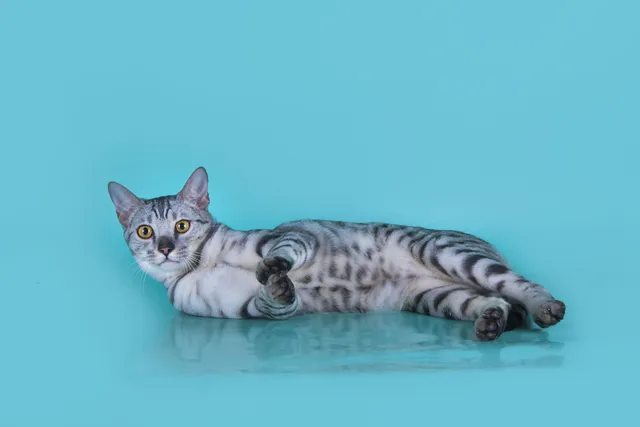
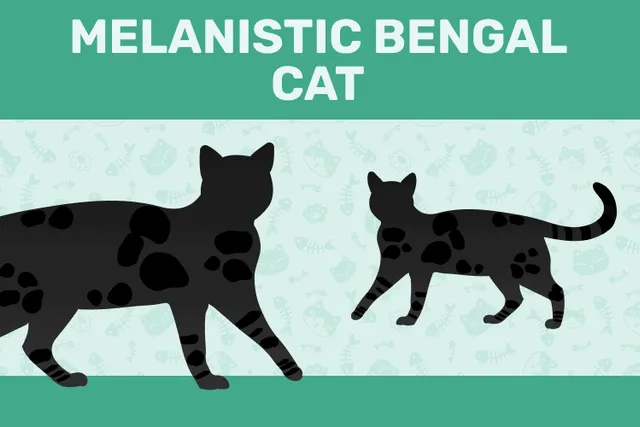
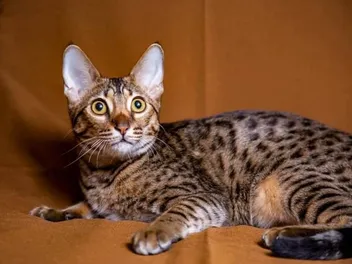
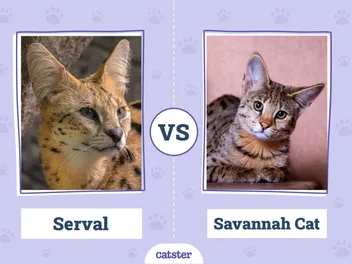
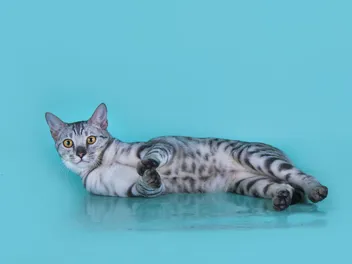
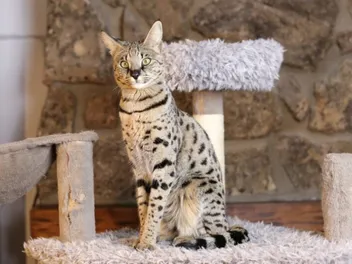
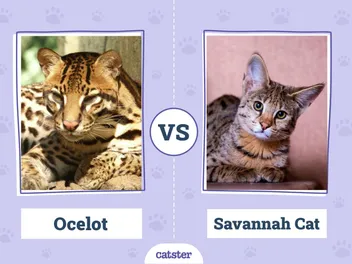
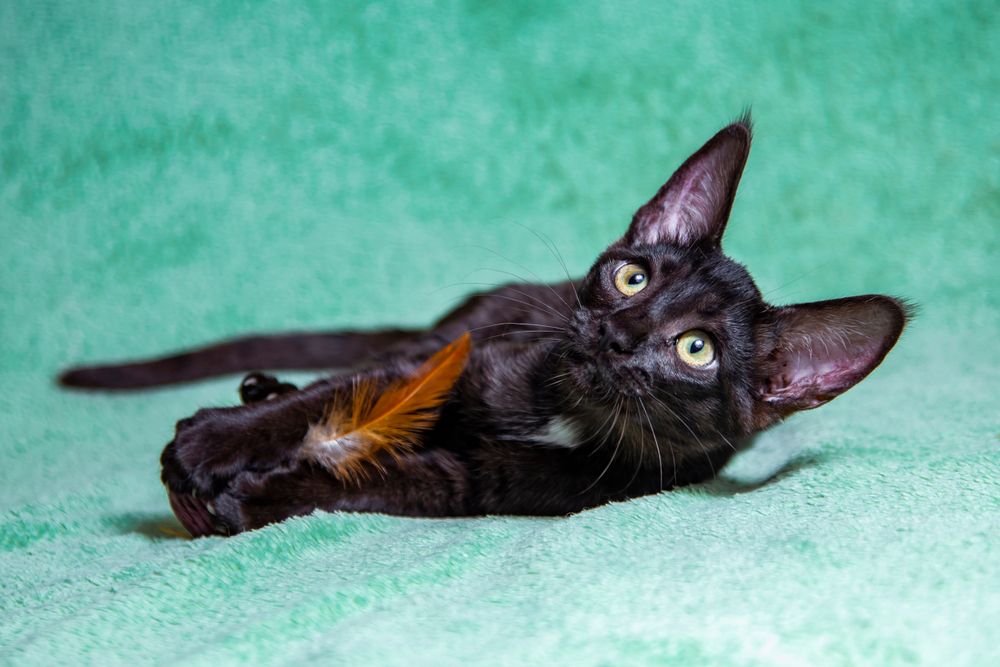
The Savannah is a hybrid of a domestic cat and an African Serval. With both sets of genes, Savannahs can be many colors, including black. Interestingly, black Savannah cats, also called melanistic Savannahs, are not solid black—they have the distinct spots that almost all Savannah cats have, which you can see in good lighting.
Black Savannah Cat Characteristics

The Earliest Records of Black Savannah Cats in History
Nobody really knows when the first black Savannah cats appeared. The first Savannah cat, a kitty by the name of Savannah, was born on April 7, 1986. She had notable traits from both of her parents. The earliest Savannah cats had a similar size and build to the Serval but the tameness of a domestic cat.
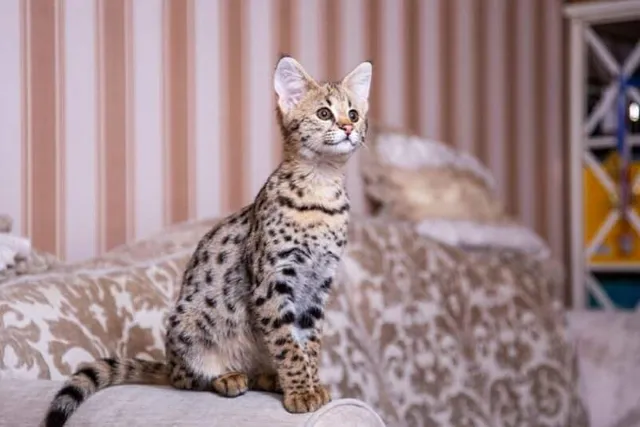
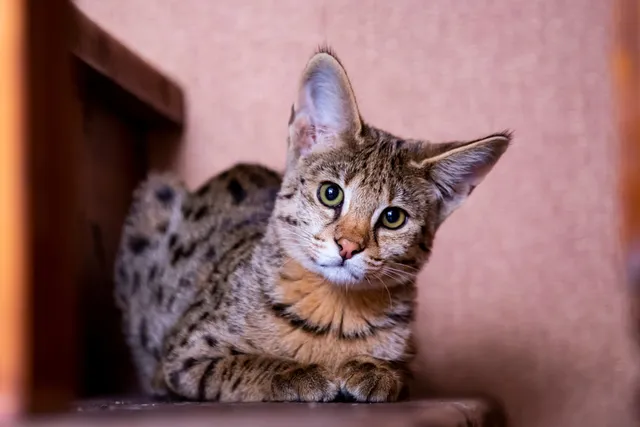
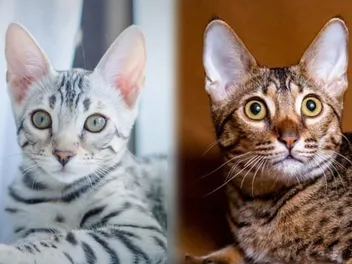
As Savannah cats continued to be bred, more colors were developed, including the black Savannah cat. They share spots with all of the other colors, including snow, silver-spotted tabby, and brown-spotted tabby, except for Savannah cats with marbled coats. Black Savannah cats are relatively uncommon, but this coat color is accepted within the breed standard.

How Black Savannah Cats Gained Popularity
Since black isn’t a common color in Savannah cats, it is sometimes considered more exotic and sought after by some. However, their uncommonness has somewhat kept them from truly gaining popularity. Black Savannah cats have beautiful, supple coats that are full of surprise markings, which increases their appeal for many people.
Savannahs have become popular with people who like large cats with an outgoing, dog-like temperament. These cats are known for things like their love of water, going for walks, and playing fetch. They are larger than most other domestic cat breeds, with the exception of the hefty Maine Coon.
People who seek out Savannahs with any coat type often are seeking a cat that will be a present companion, not one that is shy or overly independent.
Formal Recognition of the Black Savannah Cat
The black coloration in Savannah cats is a TICA-accepted color in this breed. This means that melanistic Savannahs meet the breed standard for coat color and can be shown.
In 2001, the Savannah breed was accepted by TICA as an approved breed in development. In 2012, TICA accepted the Savannah as a championship breed. Since the breed was well established by 2012, black coats were accepted as part of the original breed standard.
Top 3 Unique Facts About Black Savannah Cats
1. The black Savannah cat is not solid black
This fur is dark throughout, but in good lighting, you can see markings throughout the coat. These are primarily the leopard-like spots that Servals have, but there may also be rosettes and marbling.
2. TICA accepts smoke within the Savannah cat breed, which is a color that can be confused with black
The difference is that smoke Savannahs have black hair tips but white hair roots, while black Savannah cats have fully black and dark grey hairs.
3. They can cost a pretty penny
Thanks to their stunning looks and unique lineage, a Savannah cat can cost anywhere from $500 to $2,000.

Does the Black Savannah Cat Make a Good Pet?
Black Savannah cats aren’t prone to having a different temperament than any other Savannah cats. The temperament is often based on how closely related the cat is to a Serval, as well as their handling and socialization from a young age.
First-generation Savannah cats are extremely prone to anxiety and fear due to their high percentage of wildcat genetics. Since the Savannah breed is well developed at this point, most breedings that occur are between developed Savannah cats, not Servals and domestic cats.
In general, Savannahs are known for their loyalty, as well as their dog-like personalities. They tend to be social, and they can be suitable for homes with other pets. These cats are extremely athletic, though, and they require a lot of exercise and play to keep them entertained and healthy. Their retained wild behaviors and need for activity can make them mischievous, and it’s extremely important for these cats to be socialized and trained.
Conclusion
The black Savannah cat is a beautiful coat color within the Savannah breed. It is a TICA-accepted color, and everyone can appreciate the uniqueness of the hidden markings within the dark coats.
These cats are behaviorally not any different than any Savannah cat. This does mean that they require a specific type of home environment to thrive. The athletic and exuberant Savannah isn’t for just anyone.
See Also:
Featured Image Credit: Kolomenskaya Kseniya, Shutterstock
Expert cat care, straight to your inbox
News, insights, and useful advice, delivered to you.

No spam — unsubscribe anytime.
By signing up, you agree to our Terms & Conditions and Privacy & Cookies Policy.
How useful was this post?
Click a star to rate. You can leave written feedback afterwards. (We read all feedback.)

Brooke Billingsley, a former veterinary assistant for nine years, became a nurse in 2013. She lives in Arkansas with her boyfriend of five years, surrounded by her beloved pets: three dogs, two cats, five fish, and two snails. Brooke has a soft spot for special needs animals, caring for a three-legged senior dog and a widely known cat with acromegaly and cerebellar hypoplasia. She has developed a keen interest in fish keeping and is always learning how to provide the best environment for her aquatic pets. In addition to her passion for animals, Brooke enjoys gardening and maintains a vegetable garden during the summer. She stays active with yoga and received her 200-hour yoga teacher certification in 2020. Brooke also hosts a podcast that delves into folklore and myth, dedicating her spare time to research and writing. She embraces the philosophy that every day is an opportunity for learning and growth, continually working to acquire new skills and knowledge.