Get

In Your Inbox

Catster is reader-supported. When you buy via links on our site, we may earn an affiliate commission at no cost to you. Learn more.

Are Marigolds Poisonous to Cats? Vet-Reviewed Houseplants Examined

Share

Catster_Are Marigolds Poisonous to Cats

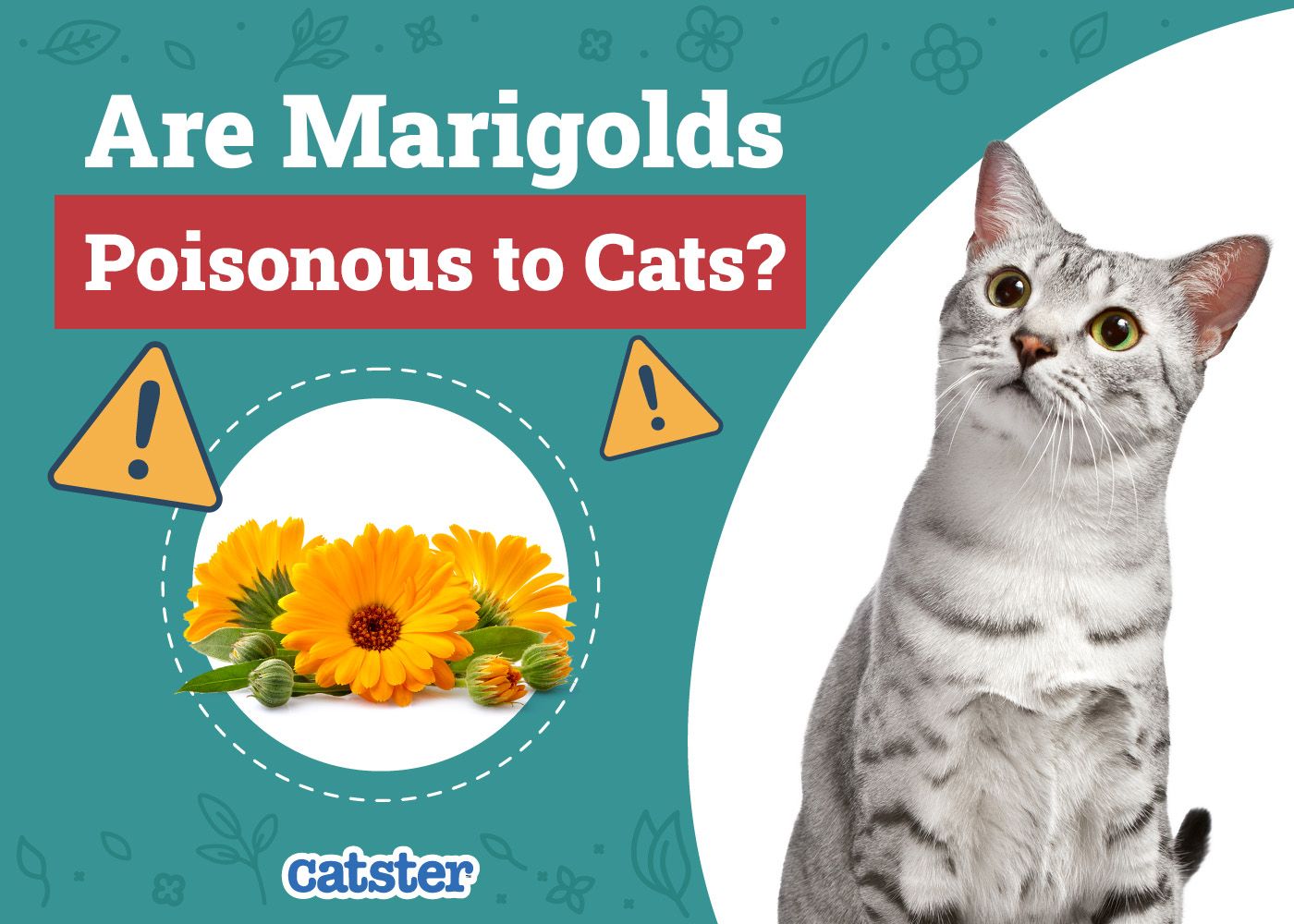
If you are looking to grow this beautiful plant in your house with your feline companion or your kitty has taken a nibble of this flowering plant, you might be wondering if marigolds have any toxic or poisonous properties that would harm your cat. Fortunately, if a cat were to ingest a small amount of the pot marigold plant, it would not be harmful.

However, cats that consume large quantities of French marigold plants may face digestive issues. In this article, we explain what makes the marigold plant generally safe for cats and whether this plant can be grown in the same house as your feline friend.

divider 2 cats

Are the Marigold Plants Poisonous to Cats?

There are two classifications of the marigold plant, the Calendula officinalis (pot marigold) and the Tagetes patula (French marigold). Pot marigolds are generally considered to be harmless and non-toxic to cats, according to the ASPCA website, but French marigolds are mildly toxic to cats if ingested in large quantities.

Marigolds are popular plants usually put in pots or flower beds in a garden where they grow to medium size, with large, brightly colored flowers that attract insects and in some cases, cats.

Since cats are curious animals, they use their sense of taste and smell to explore their environment and see what tastes good and what doesn’t. Most cats will not like the taste of plants because they are strictly carnivores and should eat an animal-based and protein-rich diet rather than vegetation.

Although the common pot marigold is non-toxic to cats and not poisonous if they have a nibble on it, the French marigold is known to be toxic and can cause gastric upset in cats.

marigold flower
Photo Credit: MabelAmber, Pixabay

Can You Grow Marigolds With Cats?

You can safely grow pot marigolds with your cat, but you should avoid growing the toxic variety (French or Tagetes marigolds) in the same environment as your cat. It is best to grow safe plants if you have a cat and not risk growing potentially toxic plants because it is difficult to determine if your cat will take a nibble of the plant or not.

It is also important to verify that the marigold plant you have purchased is free from harmful pesticides, herbicides, or hormones that are used to benefit the plant’s growth and beauty but can be harmful if ingested by your cat. Also, check if it is the non-toxic or toxic variety of the marigold plant.

divider 2 cats

How Can You Tell If Your Cat Has Eaten Too Much of a Marigold Plant?

If you suspect that your cat has eaten a French or Tagetes marigold plant, it is important to take them to a veterinarian. A cat that is reacting to eating this plant may experience the following signs:

  • Excessive drooling and salivation
  • Abdominal pain
  • Red skin or rashes
  • Diarrhea
  • Vomiting
  • Irritation of the mucous membranes
  • Runny nose
  • Inflammation on your cat’s mouth, nose, and around the eyes

These signs are most common if your cat has ingested the toxic variety of the marigold plant, but signs such as gastric upset can also occur in cats that have eaten too much of the pot marigold plant. A veterinarian will be able to give your cat the right medications and treatment to help them feel better quickly. Since excessive drooling and diarrhea are the most serious signs of marigold poisoning, it can quickly cause a cat to become dehydrated, and they will need IV fluids from a veterinarian.

If you need to speak with a vet but can't get to one, head over to PangoVet. It's an online service where you can talk to a vet online and get the advice you need for your pet — all at an affordable price!

PangoVet_Mention-in-Content for PangoVet2 save money

divider 2 cats

Conclusion

If you share a love for both the attractive flowering pot marigolds and cats, you can grow this plant in your house with your cat because it is a non-toxic member of the marigold plant family. However, you should take caution and consult with someone experienced in identifying the different plant species so you can ensure that you are growing the right type of marigold to avoid any accidental poisoning of your cat.


Featured Image Credit By: Pikist

Want content like this delivered to you?

Sign Up For Our Newsletter

News, insights, expert advice, and everything cat

* By submitting, you agree to our Terms & Conditions and Privacy & Cookies Policy.


How useful was this post?

Click on a star to rate (you can leave written feedback after clicking submit)

Help us improve Catster for pet parents!

Your feedback really matters.

What did you like about this post? Also how can we improve it?

Join the conversation

Leave a Reply

You’re very welcome to leave a comment or question. Please know that all comments must meet our community guidelines, and your email address will NOT be published. Let’s have a positive and constructive conversation.


Talk With A Vet Online

Peace of mind,
anywhere, anytime

Affordable vet advice

Welcome to Coastal Cats & Critters

As much as we all love cats, we also know that in many parts of the country (and the world), the problem of...

Ask Dr. Paola – Help! My Cat Suddenly Has Dandruff! (March 30, 2026)

Welcome to our “Ask Dr. Paola” series, where every Monday we bring expert advice straight from Dr. Paola Cuevas (MVZ) to help our...

Your Cat Keeps Vomiting After Eating: Here’s What’s Going On

Cats vomit. It’s one of the less glamorous facts of life with a feline, and most cat owners have cleaned up more than...

Ask Dr. Paola – Help! My Cat Gets Diarrhea from Wet Food! (March 23, 2026)

Welcome to our “Ask Dr. Paola” series, where every Monday we bring expert advice straight from Dr. Paola Cuevas (MVZ) to help our...

More related

Can Cats Eat Diatomaceous Earth? Vet-Verified Safety Tips & Warnings

Nowadays, we seem to be moving toward natural, organic, and integrative ways to combat disease—not only in humans but also in our kitties....

Catster Photo Contest: Cats of the Week Winners (January 22, 2026)

Every week our team gets the privilege of sorting through our readers photos to choose what cats will win this weeks contest! See...

We Chat with the Author of “The Itty Bitty Kitty Committee”

Laurie Cinotto spends her days surrounded by tiny kittens. Based in Seattle, she runs a foster home that’s repetitive-rhymingly titled the Itty Bitty...

Veterinary Telehealth for Cats: Vet Reviewed Pros, Cons & Best Options

There are few things as stressful as having a sick cat. Your mind can race to horrible conclusions instantly, especially when you don’t...

Keep reading

How to Keep Your Cat’s Eyes Healthy: Vet-Approved Guide

A cat’s eyes are among the most beautiful features that they display, and they also happen to be among the most important. They are extremely helpful when it comes to communicating with other creatures (including humans). A cat’s eyes also...

cat with blue eyes tilts its head

10 Best Stainless Steel Cat Water Fountains in 2026 – Reviews & Top Picks

Cats are picky when it comes to drinking. They’ll drink from the puddle in your backyard but turn their noses up at your indoor water sources if it doesn’t pass their inspections. Most veterinarians recommend water fountains as they provide...

grey cat drinking water from bowl

Can Cats Sense the Death of Another Cat? Feline Truth Unveiled

Cats have many strange behaviors and are associated with many myths and legends. People often even attribute magical properties to them. However, one power that might have some truth is that cats can sense the death of another cat. Keep...

Cats Cudduling in a couch

Simply Nourish Cat Food Review of 2026: Recalls, Pros & Cons

Review Summary Simply Nourish is a PetSmart brand, sold exclusively at PetSmart, at least officially. It’s a healthier alternative to commercial pet foods that are made with fillers and non-natural ingredients. Likewise, it’s marketed as the more affordable alternative to...

Simply Nourish Cat Food Review

Can Cats Eat Cheese Puffs or Balls? Vet Reviewed Risks & Health Facts

As a responsible and caring cat owner, you may sometimes find it hard to resist those pleading eyes when you’re enjoying a delicious snack. With their crispy texture and savory flavor, cheese puffs or cheese balls are a popular favorite...

Can Cats Eat Cheese Puffs or Balls

Are My Cats Playing or Fighting? 6 Vet-Reviewed Ways to Tell the Difference

Cats love to wrestle and play, but they also fight. Even if you have two litter siblings that have lived together their whole lives without any problems, there is a chance that something can change. One might get carried away,...

cats in grass

Can Cats Eat Cilantro? Vet-Reviewed Nutritional Facts & FAQ

Cilantro is a popular herb used in cooking all around the world, but can cats eat cilantro? The bottom line is that cats can eat cilantro without a problem, but they do not need cilantro in their diets to maintain...

Can Cats Eat Cilantro

Has Your Cat Food Gone Bad? 8 Vet Reviewed Signs to Look For

Cat food manufacturers follow strict guidelines to produce safe products, but after they leave the factory, they can become damaged or improperly handled during shipping. The last thing you want is to feed your cat spoiled food, but you don’t...

owner feeding his cat

Love Cats? So Do We! Join the Catster Community

Stay informed with expert pet care insights delivered straight to your inbox! Discover professional guidance on animal behavior, feeding tips, trusted product picks, and much more.


Sign up for the Catster Email Newsletter

Stay informed with expert pet care insights delivered straight to your inbox! Discover professional guidance on animal behavior, feeding tips, trusted product picks, and much more.