Can Cats Be Vegan? Vet-Reviewed Facts


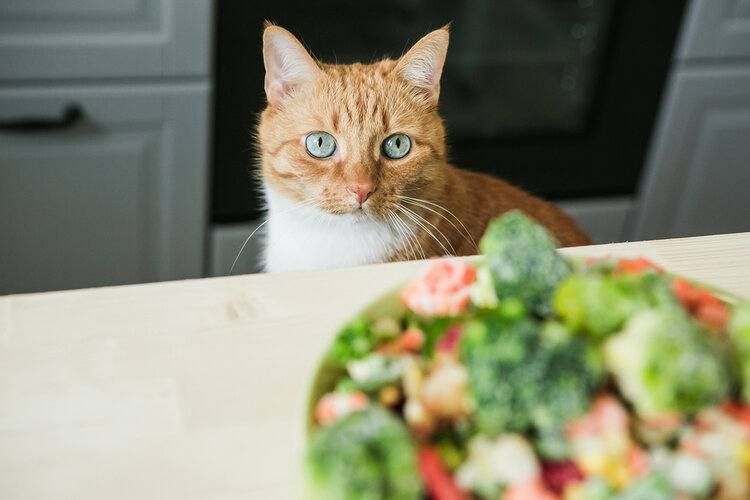
People choose to be vegan for various reasons, including a desire to reduce their carbon footprint, a need to improve their health, and everything in between. As an autonomous person, you can choose to do anything that you wish regarding your health, dietary intake, beliefs, and actions. But your cat doesn’t have such choices. Instead, they must depend solely on you to make all the decisions about their life.
Many vegans find themselves in a moral conundrum when their beliefs are challenged by their pet cats, as their diets consist of animal-based foods, which are strictly against the vegan code. So, what are you to do? Should you feed your cat a vegan diet?
This is a hot topic, and while some vegan groups claim that you can do it healthily if you pay careful attention and work diligently at it, veterinary experts disagree. The ASPCA even goes so far as to say, “a vegan diet is not appropriate for cats at all.”

What’s Unhealthy About a Vegan Diet for Cats?
Cats are obligate carnivores. This means that they must eat the flesh of other animals in order to be healthy and thrive. Certain nutrients that exist only in meat are necessary for a cat’s health, including the following nutrients. Without sufficient amounts of each, a cat cannot achieve peak health. It is always the best idea to ask a veterinarian about the best diet for your cat.
Protein
Animals contain very few carbohydrates; they’re mostly protein and some fat. In the wild, this is what a cat’s diet would consist of entirely. Because of this, feline bodies have adapted to using protein for energy, powering most of a cat’s bodily processes.
Plants simply don’t contain enough protein to fulfill a feline’s needs. Even if you manage to source enough plant-based protein to meet a cat’s overall protein needs, not all proteins are equal. Each is made up of specific chains of amino acids, and your cat needs specific amino acids that simply aren’t found in plants. This is why they’re obligate carnivores; eating meat is an obligation.
Carbohydrates
Cats are not good at digesting carbohydrates because the animals that they prey on don’t contain many carbohydrates. A cat’s body doesn’t use carbohydrates for energy the way a person’s or a dog’s body does.
Taurine
Taurine is a very specific amino acid that’s only found in animal sources. No plants create or contain this amino acid. While humans and canines can synthesize this amino acid in our bodies, cats cannot. If they don’t consume enough taurine because of their vegan diet, a cat will develop a deficiency.
A deficiency of taurine doesn’t sound so bad until you know what it causes. It can easily become dilated cardiomyopathy (DCM). DCM is a heart condition that causes the muscles of the heart to become thin and weak, so it can’t supply enough blood and oxygen to the body. It’s fatal if not treated in the early stages.
Slightly less severe is the chance of eye problems. Cats that are deficient in taurine commonly develop an eye condition known as feline central retinal degeneration.
Arachidonic Acid
Arachidonic acid must be provided in your cat’s diet, as they cannot manufacture it themselves. It’s an essential fatty acid that’s necessary for your cat’s inflammatory response. Additionally, it aids in blood clotting and skin growth, and it’s needed for proper reproductive function. Arachidonic acid is almost solely available from animal sources.
Vitamin A
Vitamin A is another essential nutrient that your cat must consume, or they may face a litany of health concerns. For a cat to eat a vegan diet, vitamin A would have to be supplemented, but you’ll have to be very careful to monitor the intake because vitamin A toxicity is also a problem.
If your cat is deficient in vitamin A, they could experience:
Should you overdo the vitamin A supplementation and cause vitamin A toxicity, the results could be sudden if a cat ingests too much vitamin A at once or delayed when the cat is over supplemented and accumulates vitamin A over time.
Signs of sudden vitamin A poisoning
Signs of vitamin A toxicity
If Dogs Can Do It, Why Not Cats?
It’s true that dogs can survive on a vegan diet. However, this takes very close monitoring by the person administering said diet, including supplementation and careful sourcing of specific foods. Even still, it’s not recommended for dogs either.
But dogs can survive on such a diet because they’re omnivores like us. Omnivores can get their nutrient needs through a combination of both plant-based and animal-based foods. Even for omnivores, though, it’s difficult to fully meet their nutritional needs without meat. Humans also have to take care to supplement and eat special foods designed to make up for what their diet lacks, and many are still deficient.
Cats are obligate carnivores, which is quite different from being an omnivore. They absolutely require animal-based foods in their diet to meet their nutritional needs. It’s an obligation for them.
Conclusion
Cats must eat animal-based foods because they’re obligate carnivores, unlike people and dogs that are omnivores. Still, you can do your part to help reduce your cat’s carbon footprint by purchasing your cat food from eco-friendly companies that ethically source their ingredients. This enables you to stay true to your vegan ideals without putting your cat at risk, which, ironically, would be against those ideals, anyway.
Featured Image By: Scharfsinn, Shutterstock
Expert cat care, straight to your inbox
News, insights, and useful advice, delivered to you.

No spam — unsubscribe anytime.
By signing up, you agree to our Terms & Conditions and Privacy & Cookies Policy.
How useful was this post?
Click a star to rate. You can leave written feedback afterwards. (We read all feedback.)
A true Renaissance man, Dean Eby has worked a variety of hands-on careers, including home building and remodeling, personal training, and now shares his experiences and understanding as a writer. An avid outdoorsman, Dean spends much of his time adventuring through the diverse terrain of the southwest United States with his closest companion, his dog, Gohan.
For Dean, few passions lie closer to his heart than learning. An apt researcher and reader, he loves to investigate interesting topics such as history, economics, relationships, pets, politics, and more.