How to Tell Whether a Male Cat Is Fixed: Vet-Verified Facts & Neuter Info



In this article
There is no centralized organization maintaining an accurate headcount of cats in shelters, so the best numbers we have for the total shelter cat population in the United States are estimates. According to the president and CEO of the Humane Society of the United States, between 6 million and 8 million dogs and cats enter U.S. shelters every year. Since 2010, yearly reports have been fairly consistent, and of the total, about half (around 3.5 million shelter animals) are cats. Thankfully, the number of euthanized dogs and cats has declined to just under 100,000 due to an increase in adoptions and of pets successfully being returned to their owners. Overall, that is a shocking amount of needless and preventable death.

Spay or Neuter Your Cats
None of these numbers so far has touched on the population of feral or homeless cats, of which there might be as many as 30 million to 40 million. Fewer than 2% of these cats have been neutered or spayed. Beyond all doubt, spaying your female cats and neutering your male cats are two of the most important and responsible things you can do as cat owners. Not only does getting your cats fixed contribute to minimizing shelter populations, but it can also prevent behavioral and medical problems.
It's Difficult to Tell Whether a Strange Cat is Neutered
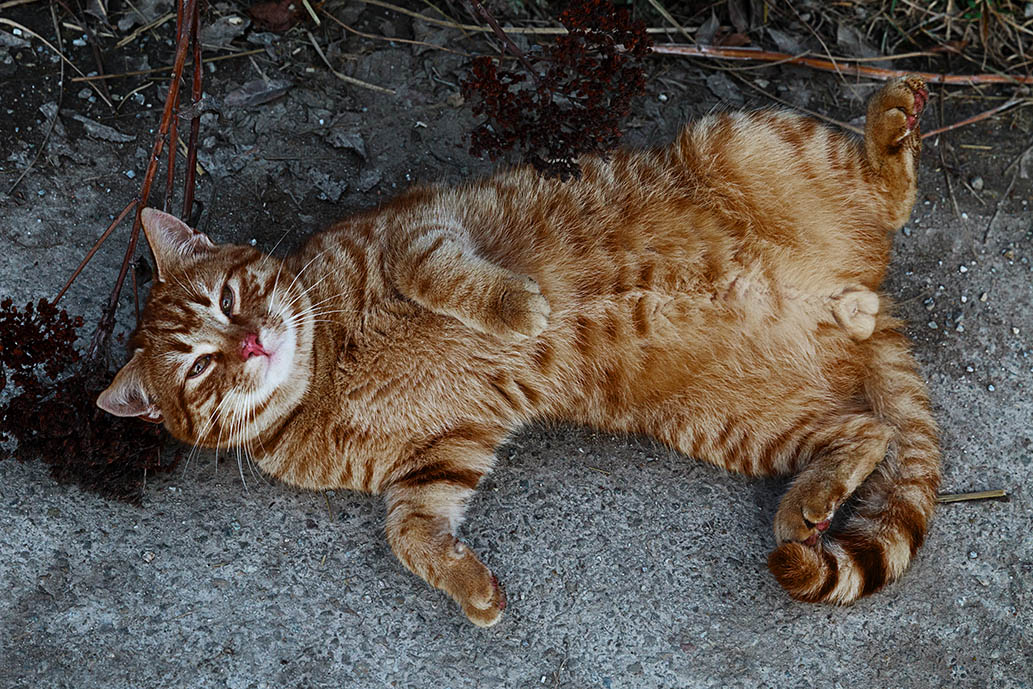
You might be asking, "Why are we spending all this time talking about spaying, neutering, and shelter population statistics?" Because when you look out the window, you see a male cat lurking outside. Maybe you detect the acrid ammonia stench of that same male cat's urine. He's been spraying around your house, apartment complex, or in your neighborhood, and you're concerned he might attempt sexual congress with your intact female cat.
The fact is, determining whether that stray tom has been fixed can be difficult, but not impossible. We'll relate all the ways available to you that we have found, but most depend on close inspection of what could be a quarrelsome and unpredictable stray cat. Sometimes it can take a veterinary examination to know for certain. This is why we're putting so much emphasis on making sure your own cats, male and female, are spayed and neutered.

How to Tell Whether a Male Cat is Fixed
If you've taken a stray male cat into your home or recently adopted a male cat, the first thing you should do is arrange a veterinary appointment to make sure he gets a proper checkup and receives all necessary vaccinations and parasite control measures. Some clinics will not schedule a neutering operation without knowing the cat is vaccinated, or at least current on his rabies vaccine. Before you take the cat in, there are a few cursory investigations you can make to see whether he is already fixed.
- At a distance The sniff test: If the male cat is seeking females, he will spray in the vicinity. Cat urine serves a number of functions beyond simple bladder evacuation, including marking territorial boundaries. The pungency of the ammonia-like smell might fade, but even the length of time urine lingers communicates essential information to other cats. Of course, another reason male cats spray is to signal sexual availability to potential mates.
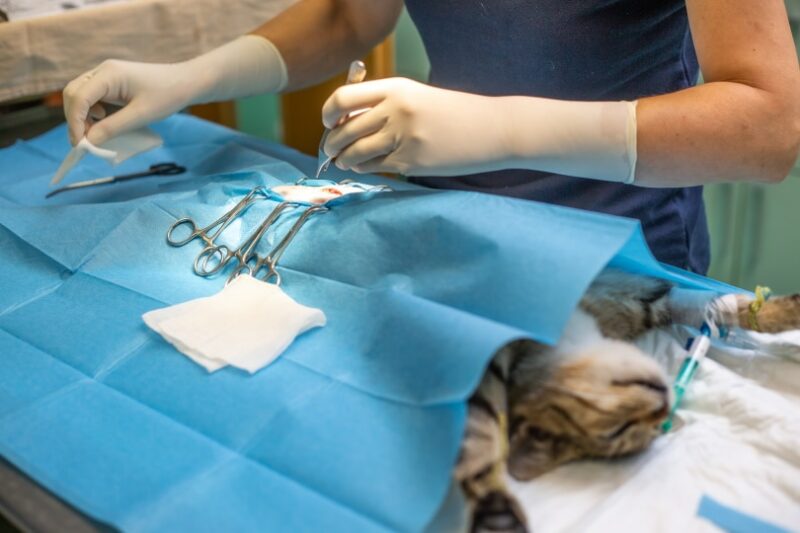
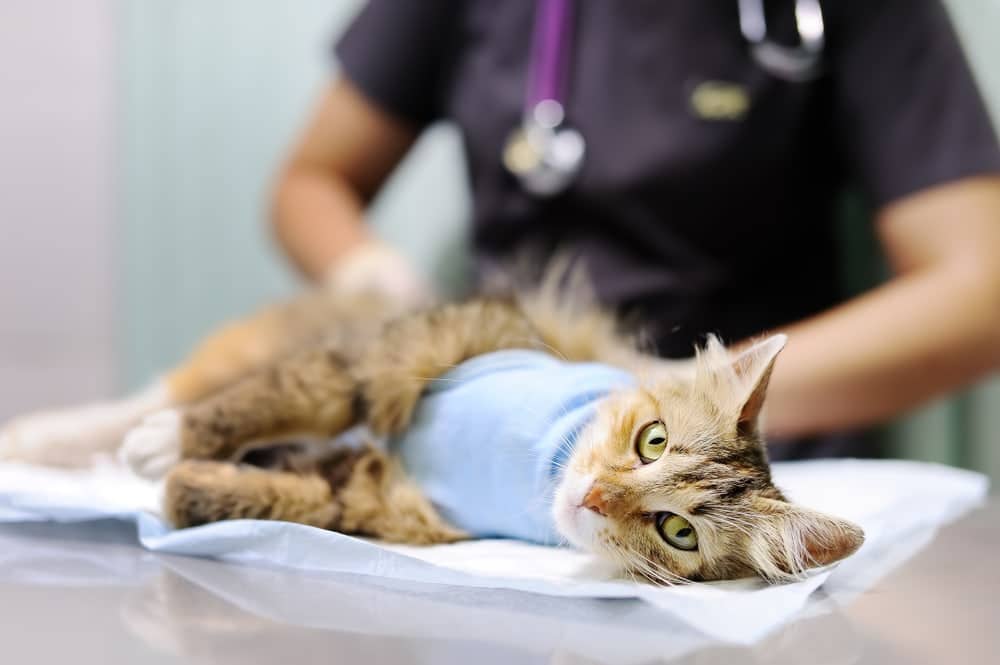
- At close range Genital exam: This is not as tricky as it seems. The neutering procedure involves a small incision in the scrotum, through which the testicles are removed. A male cat that has not been neutered and is not cryptorchid (has a retained testicle), will have two testicles between the penis and the anus, just beneath the tail. These can be seen as two small, round, and slightly pendulous structures. Ear tattoo, tipping, or notching: Some cats have their ears marked when they are fixed. The cat's ear might have a tattoo clearly visible or the vet may have performed ear tipping or notching to indicate that they have been sterilized. Broader head and jawline: An intact male cat develops a wider, fleshier head, which offers useful defensive padding in fights with other male cats for mates. Shaved abdomen: Abdominal fur must be removed for the surgery in female cats, so a cat that has very recently undergone spaying will have a noticeably bald lower or side of the abdomen. It takes a while for a cat to regrow the fur on a shaved area, but it will return in time.
- Behavioral tells: Aggressive behaviors become pronounced -- especially around other cats of the same sex -- when a male cat reaches sexual maturity; this includes loud vocalizations and increased efforts to escape the confines of the home. As mentioned above, check vertical surfaces for strong-smelling urine, which male cats use to announce their readiness for sexual activity.
All these methods can be unreliable to the unpracticed amateur. A tattoo or tipped ear might be your clearest and most obvious indicator that the male cat prowling about your residence cannot get your intact female cat pregnant. As for the genital exam, many intact male cats might have undescended testicles, so even a direct and close-up genital examination can foster a false sense of security. The third approach, looking for a broader head, is the least effective because it might only be obvious to an experienced observer.
If you have any concerns or curiosities about your cat or their health, we recommend you contact a vet directly.
Conclusion
For owned cats, neutering is typically performed between 4–6 months of age, as most cats do not reach sexual maturity before this time. However, early neutering, which can be done as early as eight weeks of age, is often reserved for feral or shelter cats due to the need to prevent early reproduction and manage populations. Regardless of the timing, ensuring that your male cat is neutered not only helps control the feline population but also contributes to his overall health and behavior. If you’re unsure whether a male cat has been fixed, a visit to the veterinarian can provide clarity and guide you toward the best next steps for his care.
Featured Image Credit: ANURAK PONGPATIMET, Shutterstock

Expert cat care, straight to your inbox
Vet-reviewed advice, behavior tips, and the best of Catster. Free, and you can unsubscribe anytime.
By signing up, you agree to our Terms & Conditions and Privacy & Cookies Policy.
Melvin is a writer, editor, and artist who has published pieces of art, poetry about goats, and literary criticism. He spent over a decade in the bonkers echo-chamber of academia as a scholar and teacher of composition and literature. Now, he’s more than happy to be writing about cats and dogs, hiking and kayaking in North Carolina, going to concerts, and giving it everything he’s got on stage at karaoke.
Join the conversation
Ask a question, share your story, or send private feedback.