Can Cats Sense the Death of Another Cat? Feline Truth Unveiled


In this article
Cats have many strange behaviors and are associated with many myths and legends. People often even attribute magical properties to them. However, one power that might have some truth is that cats can sense the death of another cat. Keep reading as we look into the different signs and potential ways cats may perceive when another cat is dying.

Cat Behaviors Towards Death
Unfortunately, at this time, we don’t have a way to determine definitively whether cats can sense another cat’s death. While some cats seem indifferent, others can behave strangely before and after another pet dies.
Changes in Behavior
Some cat owners have reported noticeable changes in their cat’s behavior leading up to a companion’s death. These changes may include increased vigilance, restlessness, or even a reluctance to leave the side of the ailing cat.
Physical Proximity
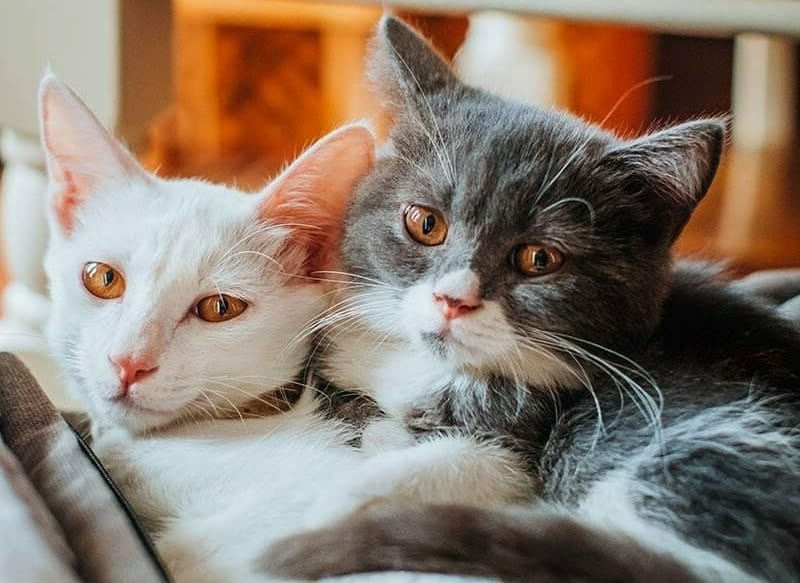
Cats with a strong bond with each other often stay close. When one cat is unwell, others in the group may gather around the ailing cat, showing signs of empathy and concern.

Increased Vocalization
Cats may exhibit increased vocalization when they sense that a companion is unwell. This vocalization might be their way of telling you that another cat requires attention.
Preference for Company
Ailing cats may receive more attention and affection from their healthy companions. Cats often seek comfort from each other when they are in distress, indicating their awareness of a companion’s condition.
Post-Death Behavior
After the death of a fellow cat, surviving cats may exhibit signs of grief or mourning, such as decreased appetite, increased vocalization, or searching for their lost companion, showing that the cats had a deep connection with each other.

Roadblocks to Research
Subjectivity of Behavior
One of the most significant challenges is the subjective nature of cat behavior. While cat owners may report changes in their pet’s behavior when another cat is unwell or approaching death, these observations are often anecdotal and difficult to put into a study. Various factors influence behavior and interpreting these changes can be subjective.
Lack of Controlled Experiments
Conducting controlled experiments to study whether cats can sense death is challenging. It is not ethical or practical to manipulate the health or life of an animal solely for research purposes. Unlike laboratory experiments, where variables are controlled, studying a cat’s reaction to another cat’s impending death is often observational when the event occurs.
Limited Communication
Cats cannot communicate like humans, making understanding their awareness or intentions difficult. While cats may exhibit changes in behavior, vocalization, or physical proximity when another cat is unwell, interpreting these signs as evidence of sensing death is open to debate.

Varied Reactions
Cats have diverse personalities and behaviors. What one cat may do in response to another’s condition, another cat may not. This individual variability can complicate the study of their reactions to illness or death.
Ethical Considerations
Conducting experiments that involve putting a cat through stress or harm to study their reactions to another cat’s death would be unethical, and it would require the death of a cat. Ethical guidelines and animal welfare concerns limit the type of research that scientists can conduct.
Difficulty in Generalization
Research on animal behavior, including cats, often faces challenges when trying to generalize findings to all individuals of a species. The behavior of cats in multi-cat households may differ from that of solitary cats, and it can be challenging to make broad conclusions.
Interference from Other Factors
Cats live in complex environments, with many differences from one household to the next. Other factors, such as changes in routines, the introduction of new pets, or environmental stressors, can influence their behavior. Distinguishing these factors from a cat’s ability to sense death can be difficult.
Limited Funding and Research
Animal behavior and cognition research often face limited funding and resources compared to other scientific studies, hindering comprehensive studies on this topic.
Signs That a Cat Is Sick or Dying

- A loss of appetite or a significant decrease in food consumption
- Sudden changes in food preferences or an aversion to certain foods
- Noticeable weight loss that is not due to a change in diet or increased physical activity
- Increased lethargy or a significant decrease in activity and playfulness
- Decreased grooming and a poorly kept coat
- Changes in coat condition, such as matting or a lack of shine
- Unusual or aggressive behavior, which may be a sign of discomfort or pain
- Hiding or isolation from usual social interactions
- Difficulty urinating or defecating
- Blood in the urine or stool
- Frequent vomiting or diarrhea
- Increased sleep or difficulty in getting comfortable for rest
- Increased vocalization or unusual sounds that may indicate pain or discomfort
- Loss of control over bladder or bowels
If you are concerned about the health and well-being of your pet, seek veterinary advice for the best course of action.
Summary
While many cat owners will tell you that their pets were able to detect the upcoming death of another cat, displaying changes in behavior that can include refusing to leave the other cat’s side and showing signs of empathy for their ailing friend, there is no real scientific evidence to back up the claims, and therefore, no definitive answer to whether cats can sense the death of another cat.
If you have an ailing cat and notice signs like a loss of appetite, changes in coat color, or loss of control over their bladder, it's best to schedule an appointment with a vet.
Featured Image Credit: WKanadpon, Shutterstock

Expert cat care, straight to your inbox
Vet-reviewed advice, behavior tips, and the best of Catster. Free, and you can unsubscribe anytime.
By signing up, you agree to our Terms & Conditions and Privacy & Cookies Policy.
Ed Malaker is a veteran writer who has contributed to a wide range of blogs that cover tools, pets, guitars, fitness, and computer programming. When he’s not writing, Ed is usually performing DIY projects around the house or working in the garden. He’s also a musician and spends a lot of time helping people fix their guitars and composing music for independent films.
Join the conversation
Ask a question, share your story, or send private feedback.