How to Train Your Cat: Vet-Approved Cat Training Guide


In this article
Cats have reputations that precede them. Even cats that are incredibly affectionate and what some owners might call “dog-like” can be incredibly headstrong. Cats simply don’t enjoy doing something that isn’t on their agenda.
Because of their strong characters, there is often a misconception that cats are less intelligent or somehow inferior to dogs. That couldn’t be further from the truth. Cats are absolutely capable of behavioral training. You just have to do it in a way that reaps the best results. So, let’s discuss different training strategies to help!

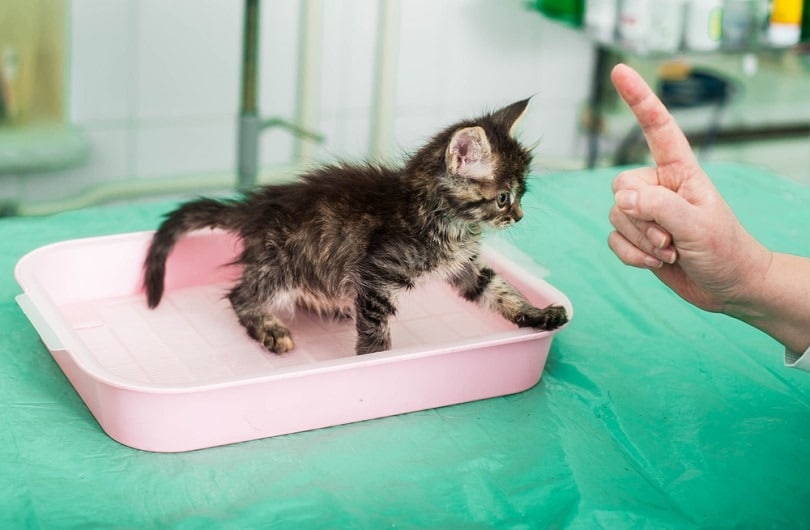
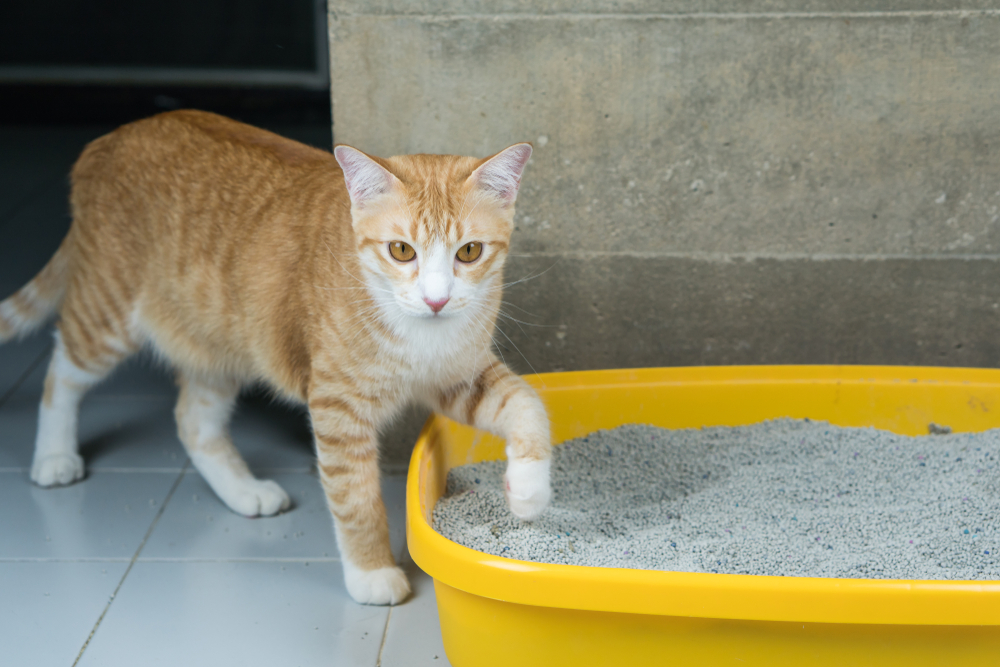
Litter Training
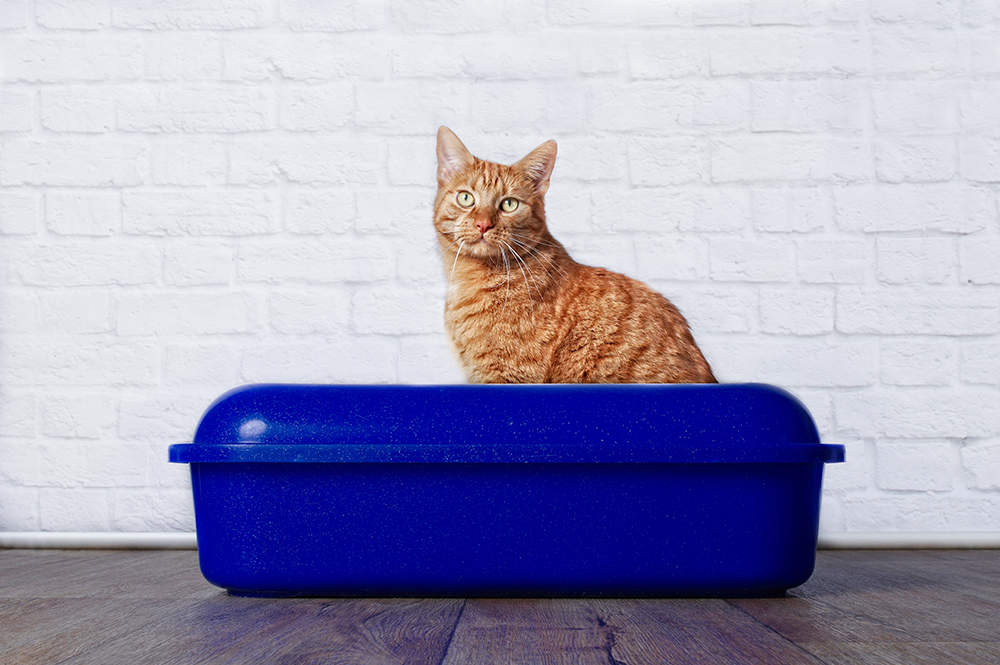
You can begin training kittens to use the litter box at only 3 weeks old. When it’s time to go to their forever homes at 8 weeks, most kittens will have the concept down. It’s instinctual for cats to cover their poop and pee.
But if you’re having a few issues with a learning kitten, try these steps:
This process usually only takes a few weeks to complete. After the first use, some kittens will catch on since they have a built-in desire to cover their waste.

Unwanted Behavior Training
Let's face it: There are lots of things our cats do that we might disapprove of—and that's okay! There are ways to curb the behavior; it just might take patience on your part.
Since cats are so drastically different from dogs in the way they respond, you have to remember that they are entirely different species that require specific methods over others.
Other Undesirable Behaviors & Solutions:
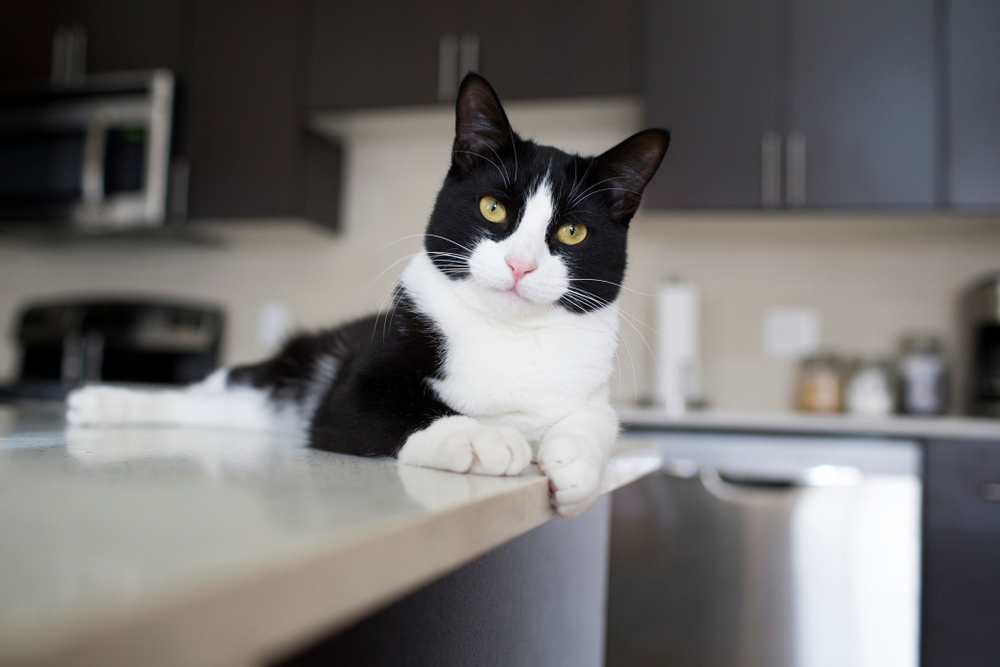
1. Jumping on counters or tables.
Your cat traipses around in their litter box, so it's only natural to want them off of places where you prepare food.
Solution: Take time to redirect your cat to another area using positive reinforcement. You could even get them a high-platform cat bed or various perches around the house.

2. Destroying personal belongings.
Cats that have a high energy level might be more prone to destroying belongings. This usually results in not having enough stimulation to keep their brains busy.
Solution: Make sure your cat has a wide variety of toys that offer interesting textures and provide entertainment. Play with your cat to ensure they are getting at least 15 minutes of strenuous exercise per day.
3. Tearing or scratching furniture.
Claw sharpening is a natural behavior, so instead of discouraging it, you just have to teach them to channel it correctly.
Solution: Give your cat several scratch posts that have different textures. It’s a way to keep your cat busy and interested. You can also try out plastic nail caps and regular nail clippings to keep destruction levels low.
One of our preferred scratchers, the Hepper Hi-Lo Modern Cat Scratcher, is a surefire way to keep your kitty out of trouble (or at least away from scratching the things they should not!). It's not only stylish, but it's functional as well. It's made of sturdy cardboard with a durable plywood and metal frame and can be set up in three different ways – high, low, or lower. The different positions encourage maximum engagement, exercise and stretching, and of course, intense scratching (they can throw their whole body into it).

- Premium Materials - Hepper's cardboard scratcher is made with dense, B-flute cardboard, and a metal core. Encased in a 1/2" plywood frame with gloss coating. Stable and beautiful, use after use
- High, Low and Lower - A single cat scratch pad won't keep your cat engaged. 3 unique positions keeps them coming back, and back, and back again. Finally, something to get them away from the couch!
- Activates Muscles - The Hi Lo isn't just a cat nail file to stop the chief cat couch scratcher. The deep cat scratcher wave encourages maximum musculoskeletal activation for a healthier workout
With the Hepper Hi-Lo, your cat gets to have a blast scratching like a maniac, and you don't have to worry about them causing so much chaos or scratching your stuff. There are even replacement cardboard pieces available, so you really can let your cat go to town on this, and know that it will be long lasting. Click here to learn more about this awesome scratcher.
At Catster, we’ve admired Hepper for many years, and decided to take a controlling ownership interest, so that we could benefit from the outstanding designs of this cool cat company!

4. Eating houseplants.
Some houseplants are highly toxic to cats, so it's best not to let this happen in the first place. It can be hard to keep them away, though, especially if your cat is determined.
Solution: Put your houseplants in hanging baskets, separate rooms, or out of reach from your cat. Please ensure that you don’t keep any plant that is toxic to cats.
5. Over-aggression with other pets.
Some felines just don’t like being bothered. But because of that, some might develop responses that are a bit overkill. It may stem from an underlying anxiety issue or another health problem.
Solution: For aggression, get your cat to the vet to rule out any serious health concerns. Once your cat has a clean bill of health, try other solutions like calming bites, diffusers, or sprays. You could also try behavior modification techniques recommended by your vet.

Should You Use a Spray Bottle?
A lot of cat owners picked up the concept of using a spray bottle to deter bad behavior. A cat hops on the counter and—squirt! Sure, cats absolutely hate it and probably will learn not to do the bad behavior, but is it the right teaching method?
There are some contradictory reports on this. Behaviorists explain that it's unlikely cats will associate the spray bottle with their bad behavior, making it nearly ineffective. So, what does it teach instead?
They will start to associate the spray bottle with you. If they don’t know why you’re spraying them, it might lead to them fearing you instead of stopping the unwanted action.
However, a motion-detection canister that sprays the cat without your presence offers an alternative behavioral modification technique in which the cat gets the consequence directly from the environment. This method also does not hurt the cat.
Importance of Positive Reinforcement Training
In case you haven’t already picked up on it, cats don’t really handle "harsh" discipline well. It might cause your cat to develop even worse behaviors as a result. So, you never want to handle your furry friend in a way that could lead to a bigger problem.
Often, cats don’t associate their bad behavior with punishment. Hitting, yelling, and other aggressive ways of handling your cat are more likely to make them feel differently about you and nothing more.
Positive reinforcement training enables you to reward good behavior by using their favorite thing: a treat. Each time your cat repeats a positive action, you should reward them with a delicious morsel. They are highly food-motivated, so they will learn to associate good behavior with tasty rewards.

Clicker Training Your Cat
Clicker training is useful because it establishes a clear way of communicating with your cat. A clicker is a positive reinforcement training tool that’s used to pinpoint the exact moment that your cat performs a behavior that you desire from them. Its sound is used as a bridge to join the exact behavior and the delivery of reinforcement.
Of course, the sound of the clicker does not mean anything to a cat the first time that they hear it, but the idea is to offer them a treat immediately after the sound. A cat will quickly learn to associate the specific sound with a positive experience. Once they understand that the clicker sound means something good, you can start to use it as a training tool.
A clicker can be quite valuable for pinpointing exact behavioral moments when training for tricks and other actions—for example, the highest point in a vertical jump or crossing under a fence. In this way, the cat can understand exactly what you are aiming for.
Final Thoughts
Training your cat is a fabulous idea, as it creates a well-balanced companionship where each of you benefits. Even though cats aren't as dependent on your support and approval as dogs, they are still quite capable of learning concepts.
Remember that patience is the most important attribute you can offer. Your cat relies on you for understanding and overall care. Trust the process and keep to the training routine until it sticks.
Featured Image Credit: Soloveva Kseniia, Shutterstock

Expert cat care, straight to your inbox
Vet-reviewed advice, behavior tips, and the best of Catster. Free, and you can unsubscribe anytime.
By signing up, you agree to our Terms & Conditions and Privacy & Cookies Policy.
Christian started writing for a local newspaper as a teenager, and he's been involved in the publishing industry for most of his adult life. Combining his love of writing with a passion for animals, he is currently the Director of Editorial at Pangolia and the Editor-in-Chief at Catster.
Christian lives in the Philippines with his wife, son, and four rescue cats: Trixie, Chloe, Sparky, and Chopper.
Join the conversation
Ask a question, share your story, or send private feedback.