How Do Cats Jump So High? Vet-Approved Facts & FAQ



In this article
Cats have a remarkable ability to jump high, often making it look like they’re almost flying. But how do cats jump so well? It turns out it’s a combination of physical characteristics and behavior, which allow them to make leaps that seem almost superhuman. Let’s find out more in this article.

Anatomy and Physics of a Cat's Jump
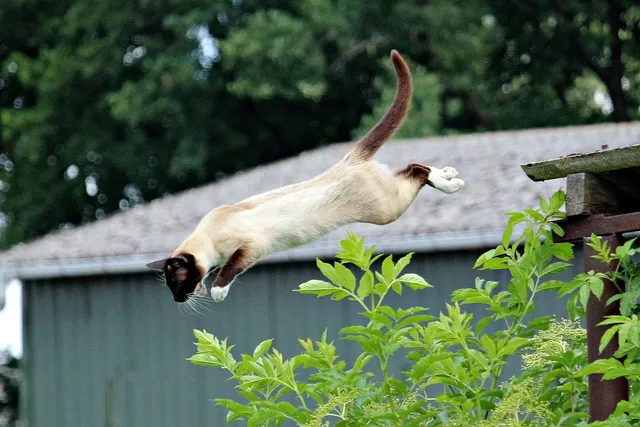
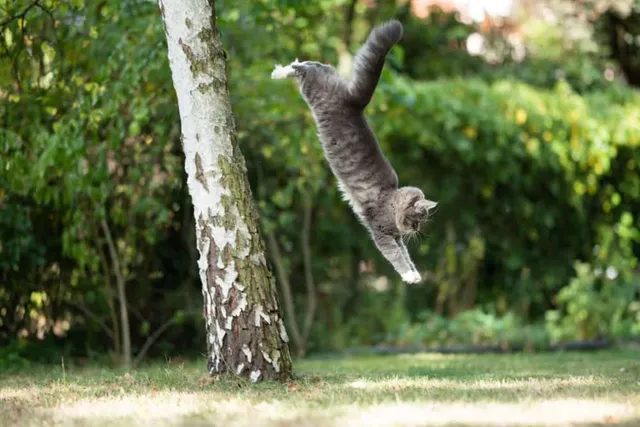
Cats have many unique physical characteristics that enable them to jump higher than most other animals. To start, cats have incredibly strong and flexible muscles in their hindlimbs that allow them to quickly launch themselves off the ground. This gives them an extra boost of height and distance when they jump. Cats also have sharp claws which act like tiny grappling hooks enabling them to grip onto surfaces with ease. Additionally, cats can spread their legs and make a parachute-like effect that helps them control their landing.

Agility and Balance
Cats are also incredibly agile, which gives them an advantage for jumping. They have the ability to quickly change direction in mid-air, making it easier for them to avoid obstacles or land safely in tight spaces. It's also important to note that cats have a keen sense of balance and can adjust their body position in the air to land in a safe spot.
Why Do Cats Need the Ability to Jump High?
Cats have evolved to jump so high for many reasons. It allows them to escape predators, reach food or shelter that would be inaccessible otherwise, and gives them the ability to move quickly around their environment.

Ways to Satisfy Your Cat's Urge to Jump and Climb
If you have an indoor cat, there are many ways to satisfy your pet's urge to jump and climb. Investing in a sturdy cat tree for them to climb is a great way for cats to get exercise and explore their environment. A scratching post can also give them something to climb on and help keep their claws in good condition.
You can also provide toys that encourage jumping, such as a laser pointer or feather wand. Some homeowners have even installed special shelves, bridges, and hammocks on their walls to provide even more places to explore, jump, and climb.

Cat Jumping FAQs
How high can cats jump?
On average, cats can jump up to five times their own height. However, some breeds of cats, especially large cats, may be able to jump higher depending on their size and agility.
Do cats need to run before they jump?
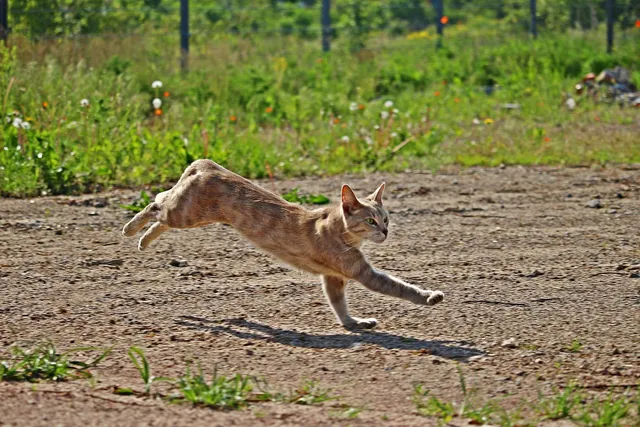
Not necessarily, but running beforehand helps cats build up momentum and gives them an extra boost when they jump.
What do cats use their claws for when jumping?
Cats use their sharp claws to grip onto surfaces and give themselves an extra push when they jump.

How can I make sure my cat lands safely after a jump?
To make sure your cat lands safely, provide them with a soft surface to land on, such as a bed or cushion. Also, ensure that they have plenty of space to jump away from any obstacles or dangerous surfaces.
Are cats acrobats?
Not exactly, but cats can become quite acrobatic when they jump and climb.
What is the highest recorded cat jump?
The highest recorded cat jump was 13 feet, achieved by a Siamese cat named Tigger in 2004.
Is it safe for cats to jump from high places?
Jumping from high places can be risky for cats, especially if they land on a hard surface. If your cat is determined to jump from a higher place, try to provide them with something soft like a bed or cushion to land on.
Can jumping help cats get exercise?
Yes! Jumping and climbing are excellent ways for cats to get physical exercise.
Are there any special techniques that cats use when jumping?
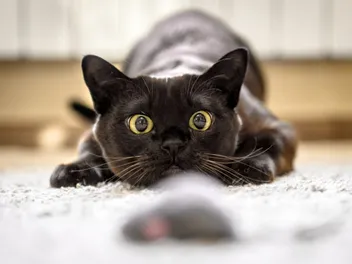
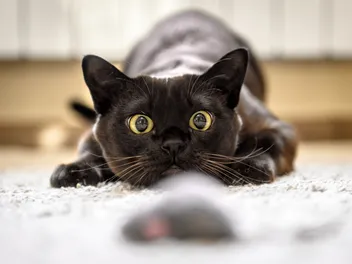
Yes, cats have a few tricks up their sleeve when it comes to leaping and bounding. They often crouch down low before they jump to build momentum and use their claws to grip onto surfaces while they launch themselves.

Are cats afraid of heights?
While cats can be scared of heights, they are more likely to take risks when it comes to jumping and leaping. It’s important to provide cats with a soft surface to land on if they are jumping from high places.
Does my cat need a special diet or supplements to increase its jumping ability?
No, cats don’t require any special diets or supplements to jump higher. Keeping a healthy diet and providing plenty of physical exercise will help your cat stay fit and agile.
Are there any breeds of cats that are better at jumping than others?
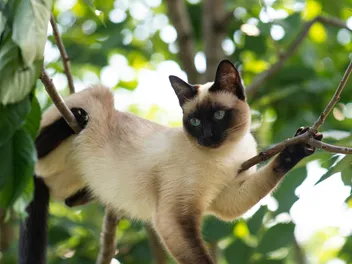
Yes, some breeds of cats, such as the Siamese and Bengal, have longer legs and more agile bodies that make them particularly adept at leaping.

What do cats use their tails for when they jump?
Cats use their tails to help them maintain balance and stability when they jump and climb. They also use it to slow themselves down as they land from a jump or drop from a high place.
Do cats always land on their feet when they jump?
Cats usually land on their feet when they jump, but that's not always the case. If cats are jumping from heights or surfaces that are too high or slippery, they may lose their balance and miss the mark.
First Aid for Jumping Injuries in Cats
If your cat experiences an injury while jumping, it’s important to take the proper steps to help them recover. Here are a few tips for providing first aid for cats that have been injured from jumping:
- Try to keep your cat as still and calm as possible. If necessary, use a blanket or towel to gently wrap them and help stabilize them.
- Try to identify the source of the injury and stop any bleeding if possible.
- Watch your cat walk, run, jump, and other daily activities to check for signs of injury. Look for limping, leg dragging, holding one leg up, only walking on three legs, or wincing when stepping down.
- Take your cat to the veterinarian or an animal hospital immediately if the injury is causing significant pain or difficulty walking. If your cat doesn't seem distressed, they may just have a light sprain that will recover with a few quiet, restful days. If the injury lasts for more than a couple of days, be sure to check in with your vet for further medical treatment.
It’s always important to be aware of your cat's safety when they are jumping and climbing around your home. By taking the proper precautions and providing first aid if necessary, you can help ensure that your pet stays safe and healthy!
Are There Any Competitions or Professions for Cats to Jump?
Yes! Many cats love to show off their jumping and acrobatic skills, and there are even competitions in which they can compete. Cat agility is becoming increasingly popular, featuring obstacles like jumps and tunnels that cats must navigate through. Similarly, some owners have even taken up cat shows where the highest jumpers win a prize.
But cats don’t have to be a high-flying star in order to pursue a career. There are plenty of professions that cats can take up, such as mousers, drug detection animals, or therapy pets. These jobs provide cats with an opportunity to use their natural skills and agility and help out in the community!

Conclusion
In conclusion, cats are able to jump incredibly high thanks to their powerful hindlimbs and agile nature. They have sharp claws that help them grip surfaces and a pouch of skin that serves as a parachute for landing safely. Different breeds of cats may have different levels of jumping ability and encouraging your cat to jump with toys can help keep them physically active. Remember to always provide your cat with a soft place to land in case they miss their mark!
You might want to check this out: What Are the Acro-Cats? Facts, History & FAQ
Featured Image Credit: Nils Jacobi, Shutterstock
Expert cat care, straight to your inbox
News, insights, and useful advice, delivered to you.

No spam — unsubscribe anytime.
By signing up, you agree to our Terms & Conditions and Privacy & Cookies Policy.
How useful was this post?
Click a star to rate. You can leave written feedback afterwards. (We read all feedback.)
Christian started writing for a local newspaper as a teenager, and he's been involved in the publishing industry for most of his adult life. Combining his love of writing with a passion for animals, he is currently the Director of Editorial at Pangolia and the Editor-in-Chief at Catster.
Christian lives in the Philippines with his wife, son, and four rescue cats: Trixie, Chloe, Sparky, and Chopper.