Why Is My Cat Always Hungry? 10 Vet-Verified Reasons for Excessive Eating


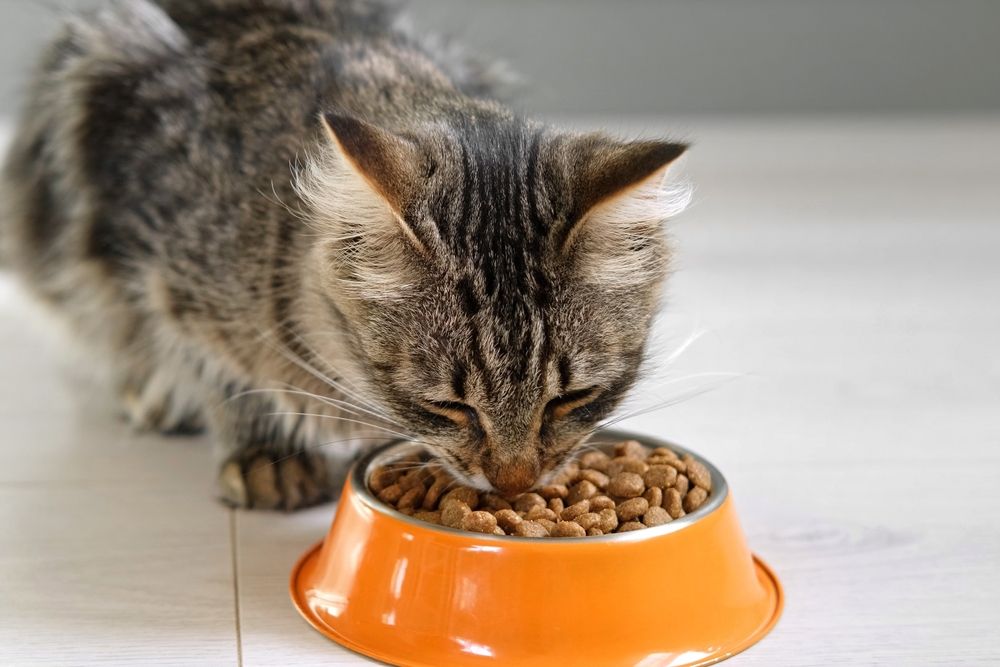
There are many different reasons why a cat may seem excessively hungry. At times, the reasons might be normal—an overly active cat that receives plenty of exercise will probably be hungrier than a cat that is sedentary. At other times, they may have an underlying condition causing the excess hunger.
In this article, we’ll look at some of the reasons it may seem like your cat won’t stop eating and is always hungry.

The 10 Possible Reasons Your Cat Is Always Hungry
1. Pregnancy
The age-old saying “When you’re pregnant, you’re eating for two” is true for cats as well with the additional fine print of cats rarely having just one kitten. Pregnant queens tend to have an increased appetite, which is considered normal. The metabolic stress of growing fetuses means that a pregnant cat needs additional calories to ensure their continued development. Feral and wild cats spend more time hunting while pregnant, however, your pet cat will likely substitute this behavior by asking for more morsels.
Most veterinarians recommend feeding pregnant cats kitten food because it is more calorie-dense than adult cat food. In the simplest terms, kitten food offers more nutrition when compared to adult cat food. It is best to feed them several small meals of kitten food throughout the day rather than large meals. The discomfort of pregnancy sometimes doesn’t mesh well with large meals, and some pregnant queens may vomit if they eat too large a meal in a single sitting.
Though pregnant cats do eat more and seem bigger, it is important to note that they almost always lose body weight throughout their pregnancy—the visual weight gain is from the fetuses. Therefore, it is important to not re-breed a queen shortly after she’s given birth to her litter, as she has to endure both lactation and needs time to recover.

2. Lactation
Like pregnancy, lactation is also demanding for a female cat’s body, and therefore, a lactating or nursing queen will eat more than usual. Again, this is normal, as milk production requires a high amount of nutrition and can be quite draining for a cat’s body, especially if she’s raising a very large litter of kittens. Your lactating queen should be offered kitten food and plenty of water to ensure that she can keep up with her kittens’ demands.
3. Exercise & Growth
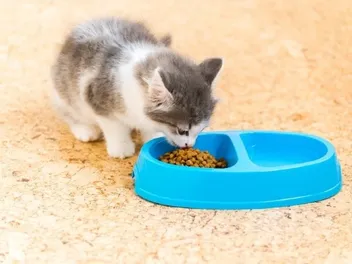
Kittens that are recently weaned, young kittens still growing (from the ages of 2 months till about a year or so), and cats that are frequently exercising have a higher metabolic rate than their non-exercising adult counterparts. Therefore, they usually crave more nutrition. As a result, they may seem hungry all the time.
It might be difficult to assess if your cat is just begging for food or if they need it due to hunger. Therefore, it is best to consult with a veterinarian to ensure that they aren’t overweight and are free of any underlying health issue that might be causing their excessive hunger.
4. Parasites
If your cat is infected by intestinal parasites, they will likely need to eat more. This is because the parasites will consume some of the nutrients your cat takes in. Therefore, they’ll have to make up for this by eating more.
Usually, cats with a mild parasite burden don't eat so much more than pet owners notice. They only need an insignificant increase in calories. However, cats with very heavy parasite burdens may eat significantly more, yet simultaneously seem very emaciated and weak.
This condition will require veterinary treatment, but it usually isn’t difficult to treat. Most cats can be treated easily with medication. Parasites are most serious in kittens as their metabolic needs are higher. Blood-sucking parasites are also more dangerous for kittens (because of the inherently lower amount of blood they have).
5. Boredom
Just like people, some cats may eat because they are bored—not necessarily because they are hungry. If this is the case with your cat, it is often best to only provide them with a limited amount of food. Otherwise, they may overeat and become obese. Adding extra stimulation inside your home is also strongly advised.
Many cats will enjoy extra toys and climbing equipment. You may want to consider purchasing a variety of toys and switching them out regularly so that your cat does not get bored.
Of course, you should rule out other health problems before you assume that your feline is simply bored. While this may very well be the case, you don’t want to assume your cat doesn’t have an underlying health problem when they do.
6. Incorrect Food
Cats that are fed an incorrect diet may be unable to meet all their nutritional needs. Therefore, they may eat extra food to help compensate. This is often the case with low-quality foods. Just because your cat is eating a lot of food doesn’t mean that they love it. Instead, they could simply need to eat more because it isn’t very calorically dense.
If you switch your cat’s food and they suddenly start eating more, two things might be going on. The food may actually be tastier, which will make your cat eat more of it. Just like people, cats are more likely to overeat something that tastes yummy.
On the other hand, the food could be less calorie-dense, which may also cause your cat to eat more of it. One of the best ways to tell the difference is to check the new food’s ingredient list. If it has fewer calories listed, that is probably the issue. The same is likely true if the ingredients are of lower quality. They may not have the same level of nutrients as the old food, so your cat may have to eat more for the same level of nutrition.

7. Diabetes
Cats with diabetes have a relative or absolute insufficiency of the hormone insulin, which is required for proper nutrient metabolism. This can cause them to become constantly hungry.
Cats with diabetes do not produce enough insulin, or their cells may resist the insulin. Insulin tells your feline’s cells to use the sugar in their bloodstream (in the form of glucose). These sugars are your cat’s main source of fast-acting energy. If your cat’s cells don’t utilize glucose due to a lack of insulin (or insulin resistance), then your feline won’t be utilizing all the energy from their food.
While they are technically eating enough calories, they may feel like they are far hungrier than they need to be. This can happen suddenly or slowly, depending on the exact kind of diabetes your cat has. Diabetes requires a special diet in most cases, which your vet can discuss with you. Your vet will also assess your cat for other health issues and prescribe any medication as deemed necessary.
8. Hyperthyroidism
Your cat’s thyroid produces hormones that affect your cat’s appetite and weight. Hyperthyroidism occurs when the thyroid makes too many thyroid hormones.
With too many of the thyroid hormones circulating in their body, your cat’s appetite will be overactive. They will eat more—even though they don’t need to. They will also likely lose weight, as the thyroid hormones will cause their body to use energy too quickly. Other signs include increased restlessness, increased aggression, increased water consumption, increased urination, and an unkempt coat. Cats usually aren’t in pain; they’ll just act a bit weird. For this reason, we highly recommend taking your cat to the vet at the first sign of a problem.
This condition has no cure but can be managed by daily medication. Surgery may be used to remove the extra thyroid gland. Radioactive iodine therapy can also be used, as it will cause the thyroid gland to shrink. Cats are assessed for possible treatment options on a case-by-case basis.
9. Schedules
Some cats may cry for food at mealtimes simply because they think it is mealtime. If you’ve recently changed your cat’s schedule, it is likely that they simply haven’t gotten used to the new feeding timeline.
For instance, let’s say you usually feed your cat in the morning. However, you’ve recently switched their feeding time to the evening. They may still cry for food in the morning, even though they just ate the night before.
The only thing that will correct this behavior is time. Don’t give in to your cat’s demand for food and stick to the new schedule. Eventually, your cat will figure out what is going on and stop asking for food at inappropriate times.

10. Anxious Eating
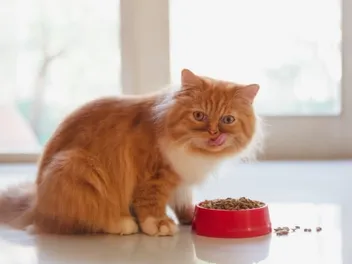
Occasionally, cats with anxiety or cats that feel like they have competition for resources will eat too quickly, and readily overeat whenever they have the opportunity. Such cats may excessively beg for food. If your cat gobbles down their food in only a few moments, we typically don’t recommend adding more food.
Usually, cats that once experienced food insecurity will eat faster than those that haven’t. However, this isn’t always the case. Some past strays will eat at a completely normal speed. Some housecats will gobble down their food as quickly as possible—even though they’ve always had enough food.
There are many ways you can slow down your cat’s eating speed, luckily. One of the easiest ways is to invest in a slow feeder. These are special food bowls that make the kibble a bit harder to get than a regular food bowl. Your cat won’t eat it as quickly since they’ll need to spend some time maneuvering it out of the bowl.
If you think your cat is threatened by other cats in their house, they may feel more relaxed if you feed them in their room. The absence of a competitor might help them slow down the rate at which they eat.
Final Thoughts
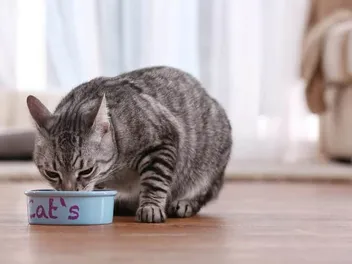
Cats may act excessively hungry for a multitude of reasons. Some cats simply act hungrier because of a natural physiological process, like pregnancy, growth, or exercise. Others may have an underlying health condition that is affecting the way their food is digested. If your cat suddenly starts eating more than normal, we recommend taking them to see a vet. Your vet can eliminate the possibility of any underlying health conditions. You should not just assume that it is something else until your vet rules out potential health problems.
If your cat is not sick, then you can begin looking at their lifestyle. Perhaps they spend most of their time lying around, which could be a sign of boredom. If your cat doesn’t have many toys or climbing structures to play on, you should consider purchasing some. Cats that eat too fast can be given a slow feeder, which should help them slow down. You typically can’t just convince a cat that they need to slow down.
In general, before you pour a bit more food into your cat’s bowl, check for any signs that may explain their extra hunger.
Related Reads:
Featured Image Credit: Marina Demidiuk, Shutterstock
Expert cat care, straight to your inbox
News, insights, and useful advice, delivered to you.

No spam — unsubscribe anytime.
By signing up, you agree to our Terms & Conditions and Privacy & Cookies Policy.
How useful was this post?
Click a star to rate. You can leave written feedback afterwards. (We read all feedback.)
Kristin is passionate about helping pet parents create a fulfilling life with their pets by informing them on the latest scientific research and helping them choose the best products for their pets. She currently resides in Tennessee with four dogs, three cats, two fish, and a lizard, though she has dreams of owning chickens one-day!