Get

In Your Inbox

Catster is reader-supported. When you buy via links on our site, we may earn an affiliate commission at no cost to you. Learn more.

10 Ways to Train Your Kitten: Vet-Approved Tips

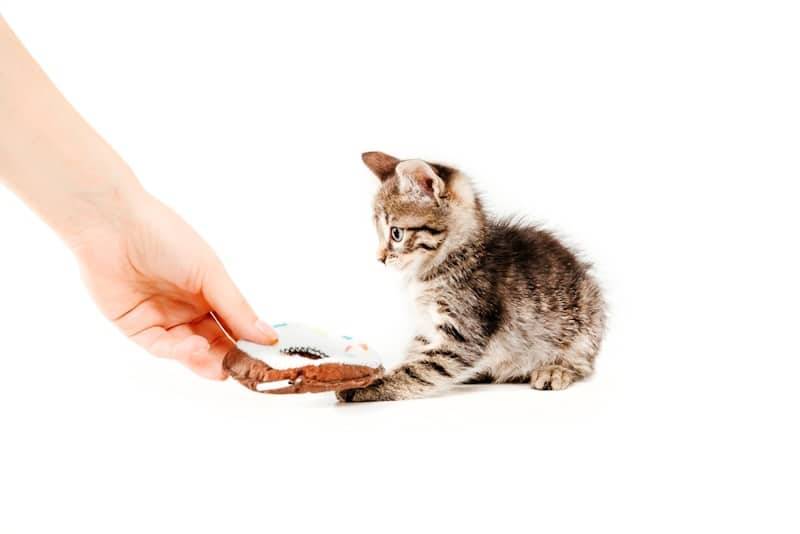
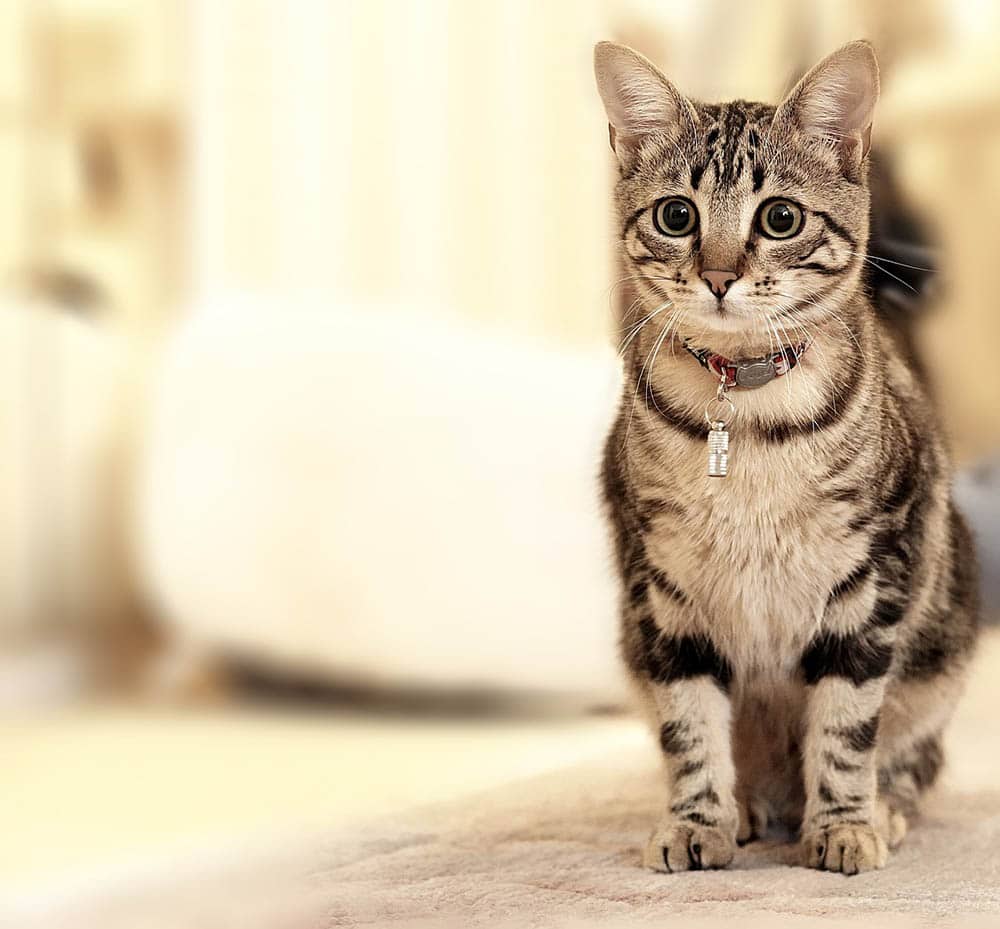
Tabby cat on white background

Cats might like us to think that they’re untrainable, but the truth is that most cats enjoy short training sessions! The best time for them to learn is when they are still young, so beginning when your pet is a kitten is a great idea.

Whether you’re hoping to persuade your kitten to stay off the kitchen counters or to teach them fun tricks to impress your friends,  check out this list of the top 10 ways to train a kitten.

divider cats oct 2024

The 10 Ways You Can Learn How to Train a Kitten

1. Stock Up on Treats

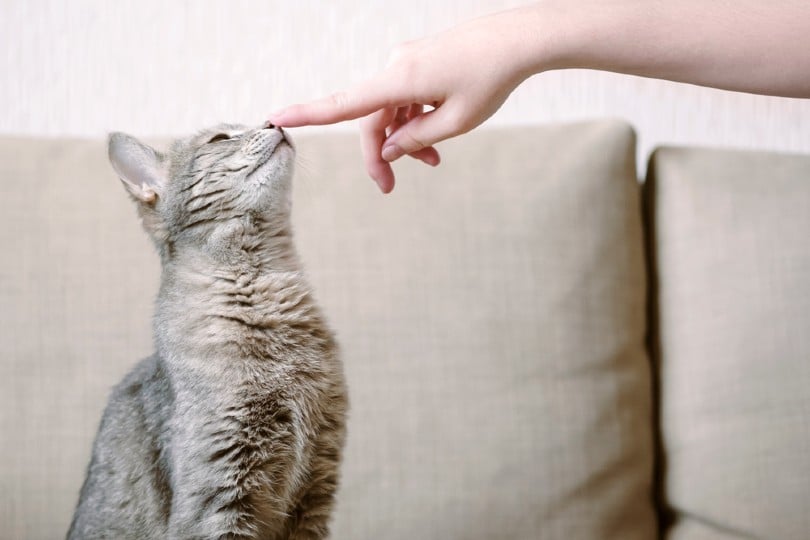
Kitten being given a treat
Image Credit: Vershinin89, Shutterstock

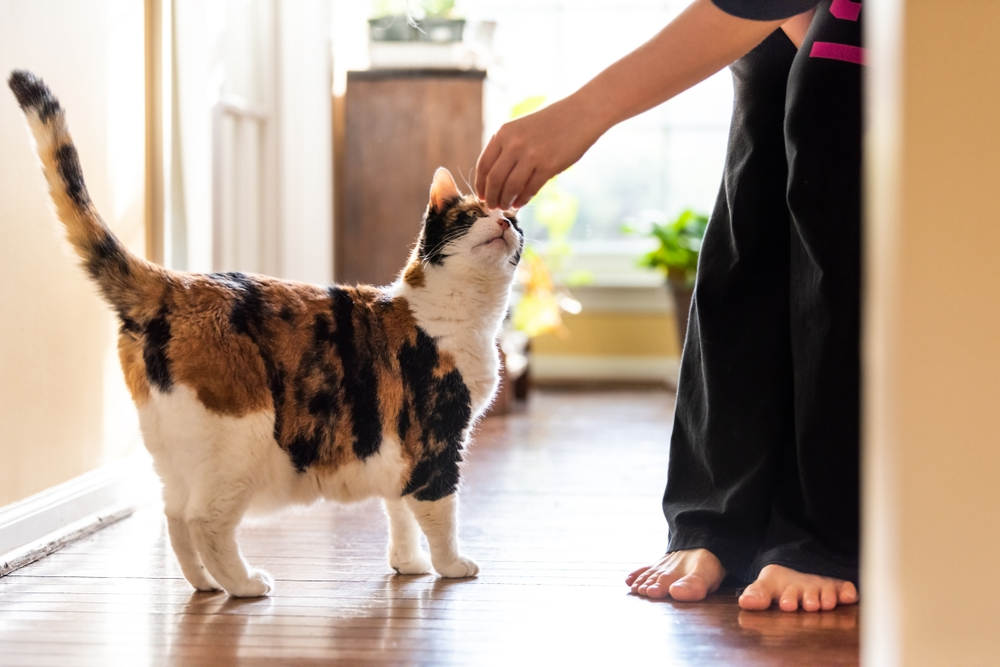
Kittens are often food-motivated, so using treats as a reward for positive behavior is an excellent way to capture your kitten’s attention. Make sure you always have plenty of treats at hand, and use verbal praise when your kitty gets something right.


2. Use Clicker Training

clicker_bmf-foto.de_Shutterstock
Image Credit: bmf-foto.de, Shutterstock

Positive reinforcement using praise and treats when your kitten gets something right is one of the most effective training methods. You can combine these treats with a clicker box, which makes a noise when you press it. This acts as a “bridge,” connecting the moment that your kitten does something right and the knowledge that they’re about to get a treat. The more you reinforce the good behavior by clicking and treating it, the quicker your kitten will learn what you’re asking them to do.


3. Keep Sessions Short

Kittens have a short attention span, so don’t expect them to be able to concentrate on a long training session without losing focus. Little and often is the best way to train your kitten, so try to keep your training sessions around 5 minutes long for the maximum effect.

If your kitten gets bored, they’re far more likely to wander off and give up on what you’re trying to train them. Kittens also need plenty of sleep, so they may be getting tired!


4. Remove Distractions

2 Grey Striped Kittens Playing on a Blanket with Toy
Image Credit: Pixabay

Don’t expect your kitten to concentrate on a training session if there are too many distractions around them. Other pets, the noise from the TV, or too many toys around for them to play with can all cause your kitten to lose focus.

Find a quiet place to train your kitten to help them succeed. Choose a room where you won’t be disturbed, or wait until the house is empty and free from distractions before starting a training session.


5. Train Before Mealtimes

kitten not eating_Happy monkey, Shutterstock
Image Credit: Happy Monkey, Shutterstock

If you’re using treats and positive reinforcement to train, your sessions will be most effective if you schedule them just before your kitten’s mealtime. Never let your kitten go hungry, but working in a short training session just as your kitten is starting to think about food means they will be focused on their treats and receptive to your training commands.


6. Consistency Is Key

Kittens will learn fastest and most effectively if you keep your training commands consistent. Switching between methods is likely to confuse them, and then it’s much easier for you both to get frustrated if they’re not picking something up as quickly as you might like. Using the same cues and signals during each training helps your kitten to know what to expect. It also makes it easier for you to build on commands—for instance, turning a “lie down” command into a “roll over.”

The one thing that you don’t need to be so consistent with is treats! Switching the type of treats that you use as rewards is a great way to maintain your kitten’s motivation and concentration. You can use a lower-value treat for easy commands and switch to a higher-value and tasty treat for new or more complex commands. You’ll soon figure out what treats your kitten will do anything for! However, remember that your kitty should only get about 10% of their daily calorie allowance in treats, so choose wisely, and look for low-calorie treats that can be offered in smaller pieces. A veterinarian can help you make the right choice.

Need veterinary advice but can't get to the clinic? Catster recommends PangoVet, our online veterinary service. Talk to a vet online and get the answers and advice you need for your cat without having to leave your living room — all at an affordable price!

PangoVet_Mention-in-Content for PangoVet2 save money


7. Focus on One Skill Only per Training Session

Kittens have short attention spans, so don’t expect them to easily be able to switch between different commands and skills. Overloading them mentally by asking them to learn different skills during one training session may make them feel stressed.

If you are keen to teach them multiple commands at the same time, use multiple short training sessions within the same day, and dedicate each training session to practicing that particular command.


8. Don’t Punish Your Kitten

sad cat in cage
Image Credit: Mimzy, Pixabay

Never punish your kitten using verbal or physical methods. This isn’t an effective way to teach them not to do something and may negatively impact your bond with your kitten. Instead of punishing negative behavior, keep an eye out for positive behavior, and actively reward that instead. If you’re trying to teach your kitten not to jump on the kitchen counter, look out for opportunities to reward them when they’re playing nicely on the floor instead of shouting when they’re on the counter.


9. Repeat, Repeat, Repeat

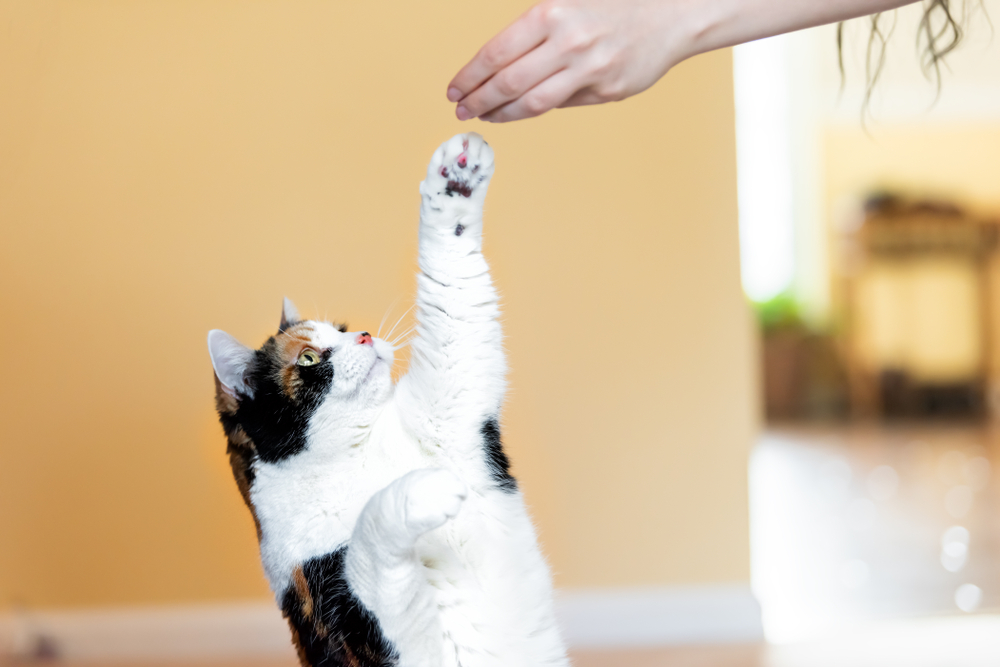
The more often that you ask your kitten for a particular behavior and then reward them when they get it right, the more capable they’ll become at performing that particular trick. As you’re starting to teach a new behavior, make sure your kitten gets plenty of treats, and praise whenever they do what you’ve asked. As they become more skilled at each behavior, you don’t necessarily have to give them a treat each and every time, but you can switch to verbal praise or a quick tickle on their favorite spot instead.


10. Train in Different Places

Gray tabby kitten in the grass
Image Credit: Maria Moroz, Shutterstock

As your kitten becomes more skilled at performing certain commands, start to challenge them by asking them to perform these in different environments and circumstances. When first starting training for a new command, using a quiet room free from distractions is vital. Once you’re confident your kitten has mastered a new skill, ask them to perform the same command in a noisy room, outside, or with additional distractions, like other cats or people.

divider cats oct 2024

Conclusion

Training your kitty has its challenges, but it’s easier than you might think. Also, the sessions can help with bonding, thus making your relationship stronger. After you bring home your new kitten, use these tips to start a daily training regimen.


Featured Image Credit: OlgaOvcharenko, Shutterstock

Want content like this delivered to you?

Sign Up For Our Newsletter

News, insights, expert advice, and everything cat

* By submitting, you agree to our Terms & Conditions and Privacy & Cookies Policy.


How useful was this post?

Click on a star to rate (you can leave written feedback after clicking submit)

Help us improve Catster for pet parents!

Your feedback really matters.

What did you like about this post? Also how can we improve it?

Join the conversation

4 Responses

    1. Hi Lyn,
      Thank you for your question. Cats don’t experience relationships with their mothers the way humans do. As more independent animals, the bond between a mother cat and her kittens is quite different from a human parent-child connection.

      Cats rely heavily on scent to identify one another. If a mother and her kittens are never separated, they may continue to recognize each other through smell. However, this doesn’t necessarily mean they will display affectionate behavior toward each other. By the time kittens are around 10 to 12 weeks old, the mother usually starts treating them like any other cat.

      For more details, you might find this article helpful:
      – https://www.catster.com/lifestyle/do-cats-remember-who-their-mother-is/

      Please feel free to reach out if you have any more questions. We’re happy to help!

  1. I have two 12 week old kittens. They were using the litter tray very well, then all of a sudden they are refusing to use it at all, I haven't changed anything at all, same litter, same trays, same place. I can't understand what has happened. How can I get them to use the trays again?

    1. Dear Lyn,

      Thank you for your question and sorry for a bit of a late answer. As kittens grow older, they become more independent and territorial. Cats usually don't like to share their litter box, and the rule of thumb is to have one per cat plus an extra one. Getting another litter tray could be a good way to start. If this won't help, try some of the tips and tricks mentioned in our other articles on this topic:

      – Is Your Cat Not Using the Litter Box? 6 Vet-Approved Causes – https://www.catster.com/cat-health-care/cat-not-using-the-litter-box/
      – Why is My Cat Peeing Everywhere All of a Sudden? 7 Vet-Reviewed Reasons – https://www.catster.com/cat-behavior/why-is-cat-peeing-everywhere-suddenly/
      – 8 Common Litter Box Issues & How to Fix Them – https://www.catster.com/cat-health-care/cat-litter-box-issues/
      – Cat Peeing in Front of the Litter Box? 14 Vet-Reviewed Solutions to Try – https://www.catster.com/cat-behavior/cat-peeing-in-front-of-the-litter-box/
      Just copy and paste the desired URL into your browser.

      If nothing mentioned works, we would recommend you schedule an appointment with one of our vets at www.PangoVet.com for personalized advice.

Leave a Reply

You’re very welcome to leave a comment or question. Please know that all comments must meet our community guidelines, and your email address will NOT be published. Let’s have a positive and constructive conversation.


Talk With A Vet Online

Peace of mind,
anywhere, anytime

Affordable vet advice

10 Vet-Verified Cat-Safe Christmas Tree Alternatives (With Pictures)

Cats and Christmas trees do not mix. Whether they’re knocking baubles on the floor or scaling the branches, cats seem to love the...

How Many Kittens Can a Cat Have? Vet Verified Facts & FAQ

Kittens can be a ton of fun, but they’re also a lot of work. There are health risks to your cat during and...

Do Cats Go Grey as They Age? Vet-Approved Facts & FAQ

If you’re curious about the aging process in cats, or you already have a senior cat and are wondering if they will go...

10 Flea and Tick Diseases in Cats: Vet-Verified Facts & FAQ

Living with cats means you will, at some point, have to deal with fleas and potentially ticks. Although we often talk about them...

More related

10 New Year’s Resolutions Cats Make: Fun Feline Aspirations

While human New Year’s resolutions often involve exercising more and making healthy eating choices, cats would probably have different goals. The concept of...

Do Cats Age Like Dogs? What Science Tells Us

Both cats and dogs age faster than humans. When a cat or dog has only been alive for a few years, they are...

What Is Cat “Rust”? Causes & What to Look Out For (Vet-Verified Info)

Black cats have long been associated with bad luck, but their luck has changed significantly in the last few decades. With the rise...

How to Stop Cats From Getting Pregnant Naturally: Vet Approved Advice

Preventing a cat from getting pregnant is most commonly accomplished through spaying and neutering. But there might be times when a cat owner...

Keep reading

9 Best Limited Ingredient Cat Treats in 2026 – Reviews & Top Picks

This article has been reviewed for factual accuracy by a qualified veterinarian. It should not however, replace advice tailored to your pet by your veterinarian. Cat owners are urged to consult with their veterinarian when making dietary decisions for their...

himalayan cat eating treat

Why Has My Cat Stopped Eating Dry Food But Still Eats Treats? 6 Reasons

Dry food is one of the most common foods for cats. It’s quick, easy, and affordable — depending on the brand that you choose. Once you find a flavor that your cat loves, they’re often happy enough to devour it...

grey vat near food bowl

How Often Do Cats Pee? Vet-Verified Facts & When to Worry

Just like people, how often cats pee each day can vary. It depends mostly on how much water they consume, their age, diet, and the environmental temperature. Cats that eat wet food may pee more than cats that eat kibble,...

cat-peeing-on-the-floor

Do All Cats Scratch Furniture? Reasons & Prevention Tips

Sometimes, cats display behaviors that our owners are not fond of. For example, we have all heard horror stories about cats ruining a couch or shredding up a new lounge chair. So, do all cats scratch furniture? The truth is...

male domesetic cat scratching furniture with front claws

Why Is My Cat Sneezing? 8 Vet-Approved Reasons Behind the Behavior

Cats do all sorts of weird things. They’ll run around the house at 2 a.m., chasing nothing in particular. They’ll stop right in the middle of licking themselves, leaving that one leg stuck straight in the air. Sometimes they’ll sneeze—frequently....

Cat sneezes

How To Tell Which Cat is Dominant? 5 Vet Approved Signs To Look For

Contrary to the aloof and standoffish stereotype that’s been given to cats, cats have a wide range of personalities and temperaments. Some may have the independent personality that they’re known for, but many domesticated cats are very social and love...

two cats playing on a hammock at home

How to Get Your Cat to Stop Meowing: 4 Vet-Approved Methods

If any animal embodies the phrase “moving in silence like the G in lasagna,” it must be a cat. Unlike canines, felines are not perceived as overly vocal since being silent allows them to stalk their prey and pounce like...

Cat-meowing

13 Vet-Verified Signs You Need to Take Your Cat to the Vet Right Away

Cats are experts at hiding illnesses, a trait they’ve inherited from their wild ancestors because an unwell wild cat would often become a quick and easy target for predators. Your cat may not have to worry about predators picking them...

vet giving medicine to a cat