How Far Will a Female Cat in Heat Travel? Vet-Reviewed Info



In this article
If you have a female cat in heat, it’s common to worry that she might wander too far and lose her way home. Fortunately, female cats usually don’t travel that far in search of a mate. Keep reading while we compare the distance traveled between males and females, and share some other interesting facts to help you understand your pet better.

How Far Do Female Cats Travel in Heat?
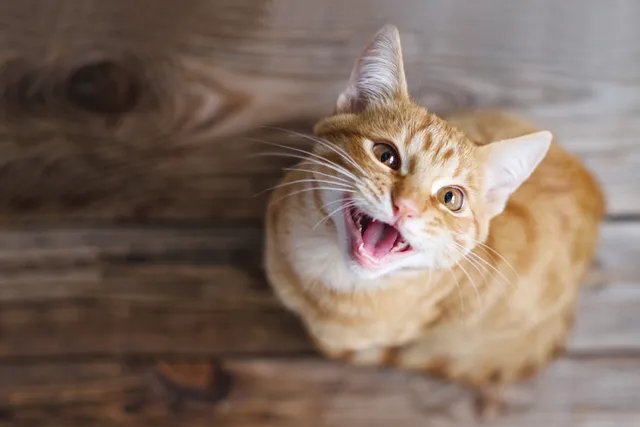
Fortunately for the female cat, she won’t need to travel far in heat. Instead, she usually stays close to her home and lures the male cats to her location. She does this by sound (incessant yowling) and scent (spraying on surfaces) in the hopes that a male will be able to sense both her presence and the fact that she’s receptive to mating.
Still, her impulse to mate is hormone-driven, and if given the opportunity, she may bolt out the door. Research indicates that indoor-only cats that escape are often found within 500 meters (0.3 miles) of their home 1. Conversely, cats used to venturing outdoors often venture further away.
How Far Do Male Cats Travel in Search for a Female in Heat?
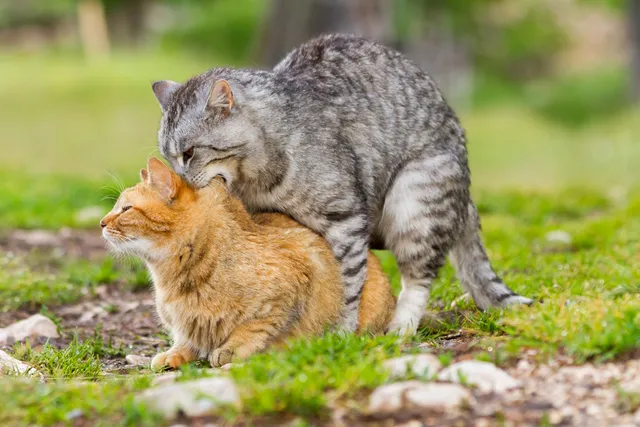
Intact male cats who are entirely outdoor cats or allowed outdoors often travel further than females. Their goal is to acquire as much territory as possible in order to mate with the females in their territory. As such, they often travel much greater distances.
A male cat may be overcome with a hormnal urge to mate if he senses a female in heat and, as such, may endanger himself by running into traffic or fighting with other males to get to the female first.
An indoor-only male cat who escapes to mate with a female is at greatest risk of ending up injured, displaced, or killed, as they’re often unaware of the dangers that traffic can pose to them. Cats instinctively don’t know about the danger associated with cars, bikes, and other motor vehicles.
How Can I Keep Track of My Cat if They Go Outdoors?
The only reliable way to track the location of a cat who ventures outdoors routinely is by using a GPS device that works with your smartphone. There are several brands available, and most are affordable and work well. Choose a waterproof tracker with an unlimited range for the best results.
When Do Cats Go Into the Heat Cycle?

Your female cat can start experiencing the heat cycle as young as 4 or 5 months. It can last from a few days to about 2 weeks, with the average cycle lasting 6 days. The cycle will then repeat every 2–3 weeks throughout much of the year (until they are pregnant or until other circumstances prevent a heat cycle).
Cats are seasonally polyestrous and tend to only go into anestrus (a period of reproductive quiescence) in geographical regions with winter and a reduction in the amount of sunlight they’re exposed to. However, even in such regions, exposure to artificial light can lead to year-round heat cycles.
How Many Litters Do Cats Have Each Year?
Cats are incredibly promiscuous. A female cat has the potential to have up to four litters in a year, with each litter comprising an average of 4–6 kittens. Given that a female cat can reach sexual maturity and breed with her male siblings indiscriminately when she is as young as 5 months old, having a single female cat can potentially lead to several dozen cats running around your house in just under 12 months!

Can I Limit How Often My Cat Goes Into Heat?
The only way to prevent your cat from going into heat is to get her spayed. As the reproductive drive and behavior changes are all hormone-mediated in cats, other home remedies aimed at attempting to “calm” a cat in heat do not work.
What Are the Benefits of Getting My Cat Spayed?
The most significant benefit of getting your female cat spayed is that she will no longer go into heat and continuously try to leave the house looking for a mate. Spayed cats won’t need a place to give birth, face the health risks of delivering their kittens, or have the expenses associated with raising kittens.
There is evidence that spaying cats before the first heat cycle substantially reduces the risk of mammary cancer. This is important because most cat mammary tumors are malignant cancers that are rarely curable by surgery.
Conclusion
A female cat in heat will usually stay near the house and try to lure males to her location. If she does escape, the distance she travels will likely be influenced by her previous experience with the outdoors. Cats that routinely venture outdoors are more likely to travel further away from their homes.
The best way to prevent unwanted behaviors associated with a cat’s heat is to get her spayed. Spaying not only helps financially but also offers health benefits to cats. For more information, discuss spaying your cat with your veterinarian.
Featured Image Credit: rihaij, Pixabay
Expert cat care, straight to your inbox
News, insights, and useful advice, delivered to you.

No spam — unsubscribe anytime.
By signing up, you agree to our Terms & Conditions and Privacy & Cookies Policy.
How useful was this post?
Click a star to rate. You can leave written feedback afterwards. (We read all feedback.)
Ed Malaker is a veteran writer who has contributed to a wide range of blogs that cover tools, pets, guitars, fitness, and computer programming. When he’s not writing, Ed is usually performing DIY projects around the house or working in the garden. He’s also a musician and spends a lot of time helping people fix their guitars and composing music for independent films.