Get

In Your Inbox

Catster is reader-supported. When you buy via links on our site, we may earn an affiliate commission at no cost to you. Learn more.

How Long Does It Take to Spay a Cat? Surgery Details Revealed

Share

cat neutered

Millions of people take their cats to the vet each year to have the vet spay them. It’s a routine surgery, in general veterinarians can spend between 15 to 20 minutes on the procedure.

That’s why we came up with this guide to highlight everything that you need to know. From the minimum age to spay your cat to the health benefits associated with it, we answered many of the questions that you might have about this surgery!

divider cats oct 2024

How Long Does It Take to Spay a Cat?

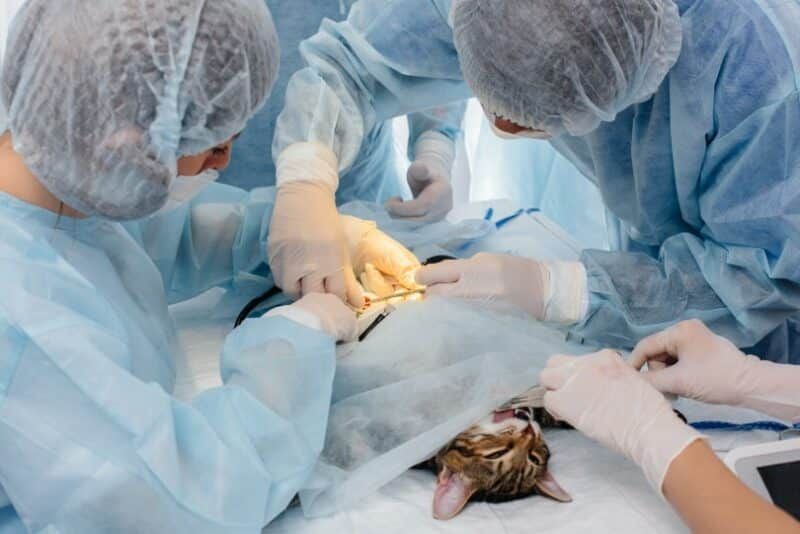
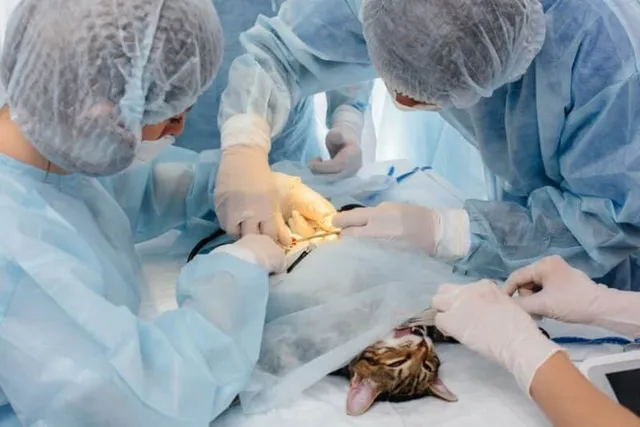
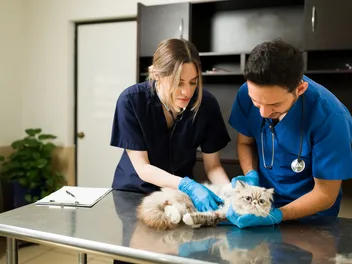
While spaying a cat is a serious surgery, it’s a relatively quick operation. Most vets can complete the procedure in just 15 to 20 minutes. So, you don’t need to worry about your cat staying under for an extended period.

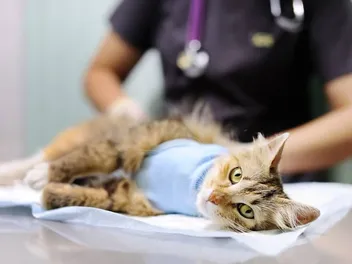
cat examined by Vets
Image Credit: Kzenon, Shutterstock

How Old Until You Can Spay a Cat?

While it’s technically possible to spay a cat as early as 8 weeks, places like the Nashville Cat Clinic recommend bringing your cat in after they’re about 6 months old. This ensures that they’re old enough to handle the rigors of surgery but not so old that recovery is more challenging.

This is also around the first time that most cats enter heat for the first time, so if you do have an unneutered male cat in the house or if you have an outdoor cat, you might want to move up the spaying by a month or two to ensure that you don’t have any kittens!

Finally, you don’t want to go any longer than 6 months if you can help it. While there’s no maximum age to spay your cat and there are benefits no matter when you do it, the ASPCA states that to reduce the risk of tumors developing along your cat’s reproductive tract, it’s best to spay them before their first heat cycle.

Domestic cat lying on owner's lap
Image Credit: evrymmnt, Shutterstock

divider cats oct 2024

How Long Does It Take for a Cat to Heal After Spaying?

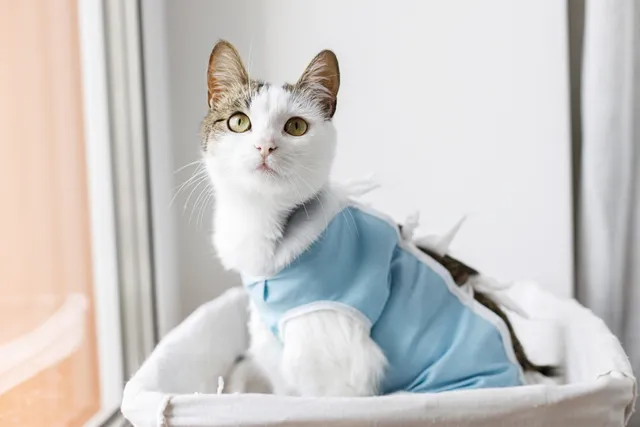
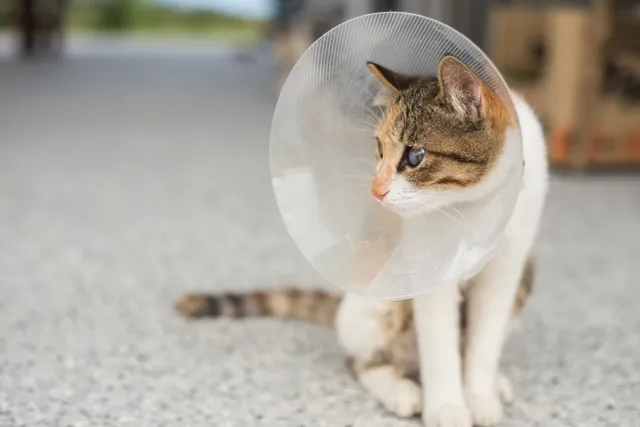
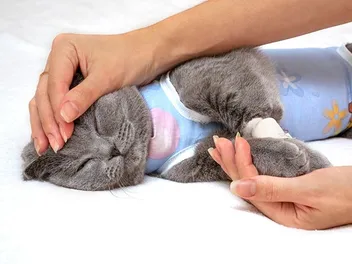
The average time it takes for cats to heal from spaying is between 10 to 14 days. You’ll need to do your best to limit their movement during this time. Excessive movement can lead to further injuries and even death if there’s no prompt treatment after a complication. The good news is that once those 2 weeks are over, you and your cat can go back to your normal routine!

Is Spaying a Cat Painful?

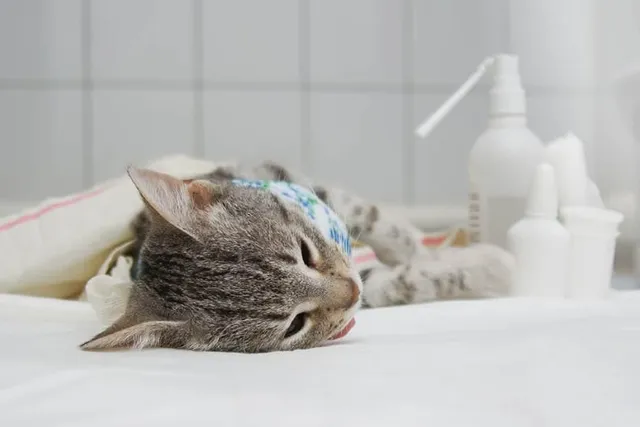
Spaying is a surgery, so when your cat wakes up, there’s bound to be a bit of discomfort.

This is why it’s essential to take your cat to a high-quality vet to complete the surgery and to give them pain medication before and afterward. Just keep in mind to never give your cat anything—medicine, food, etc.—before a surgery without explicit approval from your vet. The last thing that you want is to complicate the surgery in some way!

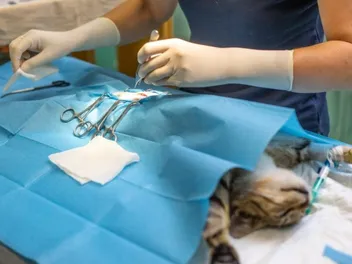
neutering cat
Image Credit: Simon Kadula, Shutterstock

Should You Spay Your Cat?

While it might be an uncomfortable procedure for your cat, you should absolutely spay them. Not only does this prevent unwanted kittens, but there are also many health benefits.

According to the ASPCA, unspayed cats are more susceptible to breast cancer and infections of the uterus. In fact, for cats, spaying reduces the likelihood of them having to deal with either of those problems by 90%! You also won’t have to experience your cat going into heat every year.

What Are the Risks of Spaying Your Cat?

The vast majority of the risks associated with spaying your cat are from rare complications, and the overall benefits outweigh those risks. Common complications include inflammation around the surgery site, the incision opening up due to excessive activity, infections, and swelling under the skin at the incision.

If any of these things occur, you must seek medical attention for your cat right away. Keep in mind that complications are more likely to occur in older cats, so the sooner you can spay your cat, the better.

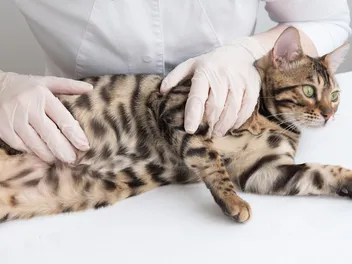
cat and owner and vet
Image Credit: Stock-Asso, Shutterstock

divider cats oct 2024

Final Thoughts

There are so many health benefits that come with spaying your cat, so do yourself and your cat a favor and get the surgery done. It’s a quick surgery with a 2-week recovery time, and it can extend their life by years.

If you have any questions about the benefits, risks, and costs of spaying your cat, we highly recommend reaching out to a veterinary office for more information tailored explicitly to your cat!


Featured Image Credit: Andrii Medvednikov, Shutterstock

Want content like this delivered to you?

Sign Up For Our Newsletter

News, insights, expert advice, and everything cat

* By submitting, you agree to our Terms & Conditions and Privacy & Cookies Policy.


How useful was this post?

Click on a star to rate (you can leave written feedback after clicking submit)

Help us improve Catster for pet parents!

Your feedback really matters.

What did you like about this post? Also how can we improve it?

Join the conversation

Leave a Reply

You’re very welcome to leave a comment or question. Please know that all comments must meet our community guidelines, and your email address will NOT be published. Let’s have a positive and constructive conversation.


Catster's Digital Magazine is Back!

Vet-approved health & behavior advice

Real cat stories & community features

Chatting With Dr. Matt McGlasson About Special Needs Kitties, Social Media Fame, and Rating Cat Toe Beans | Chatty Cattys, Episode 32

In this episode of Catster’s Chatty Cattys podcast, Dr. Karyn and Nicole sit down with a very special guest: veterinarian and social media...

Does Your Cat Need A Friend? How to Tell If Your Cat Is Lonely

Cats have a reputation for being perfectly happy on their own – independent, self-sufficient, and solitary. But, like many stereotypes, this one does...

Proof That Moving Cats Indoors Is Easier Than You Think

We know that indoor cats live longer and have significantly lower rates of illness and injury than those that spend part or all...

Why Cats Love To Get High

If you’re trying to find a cat in any home, the search almost always ends by looking up. They’ll be on top of...

More related

How Much Does a US Pet Passport Cost? (2026 Update)

Many pet owners view their pets as family members, and more pets accompany their families on their travels than ever before. Obtaining a...

What Happens If You Neuter a Cat Too Early? Vet-Reviewed Facts & Advice

There are over 60 million homeless cats across the United States.1 For some, living outdoors is all that they’ve known, having been born...

Can Cats Eat Chia Seeds? Vet-Approved Nutrition Facts & FAQ

Chia seeds are most associated with those tasty chia puddings that you see all over social media. Maybe you haven’t thought about giving...

There’s a Bump on My Cats Nose Bridge, Do I Worry? (Vet Answer)

Noses are funny things. In cats, we love to look at them, take photos of them, and, most of all, boop them! Cat...

Keep reading

Will a Cat Overeat If They Get Excess Food? Vet-Approved Facts & Feeding Tips

Cat owners who spend time away from their pets often worry about their pets going hungry. To ensure that their pet is never too far from a meal, they often leave food out for them to freely snack on during...

brown white cat eating from feeding table

My Cat Won’t Eat: Causes, Feeding Recomendations & When To Worry (Vet-Verified)

Cats are pretty good at hiding it when they aren’t feeling well, and a sudden lack of interest in eating is a cause for concern. Cats can go off their food for many reasons, from stress to dental pain and...

Tabby cat eating food from white bowl

Can Cats Kill Weasels? Our Vet Explains

The domestic cat is the most popular pet animal in the world today. Domesticated thousands of years ago, cats have followed humans all over the world throughout history. As a result, they’re considered invasive in many parts of the world,...

Siberian Weasel

Is Incense Safe for Cats? What You Should Know!

Incense can improve focus and relaxation while reducing tension, anxiety, and insomnia. It is often used in meditation and yoga, but what effect does it have on our cats? Is it even safe for them? Unfortunately, incense is not safe...

Catster_Is Incense Safe for Cats

Is Anthurium Toxic to Cats? Vet Approved Facts & FAQ

It’s important to know what kinds of plants pose a toxic threat to our pets. Cats in particular are known for messing around with plants, which can be very dangerous if they were to chew and ingest a toxic variety....

Catster_Is Anthurium Toxic to Cats

Cat Airplane Ears: 4 Vet-Verified Reasons Why Cats Do This, Facts & FAQ

Cats are known for their quirky behaviors, but one that continues to baffle pet owners is when they have “airplane ears.” This seemingly strange behavior does have a purpose, and it’s not necessarily a good thing when your cat has...

Cat laying on the grass with airplane ears

How to Stop a Cat From Scratching Themself: Vet-Approved Causes & Solutions

All cats scratch themselves at one time or another throughout their lives, and scratching is a natural response to irritants. Scratching should not be a regular or consistent occurrence, but occasional scratching is typically nothing to worry about. Excessive scratching,...

cat scratching behind head

Pure Vita Cat Food Review of 2026: Recalls, Pros & Cons

Review Summary Pure Vita Cat Food includes wet and dry food, but the wet food has higher-quality ingredients than the dry food. The dry food lacks some essential vitamins and minerals, while the wet food range is nutritionally well-balanced and...

Pure Vita Review

Love Cats? So Do We! Join the Catster Community

Stay informed with expert pet care insights delivered straight to your inbox! Discover professional guidance on animal behavior, feeding tips, trusted product picks, and much more.


Sign up for the Catster Email Newsletter

Stay informed with expert pet care insights delivered straight to your inbox! Discover professional guidance on animal behavior, feeding tips, trusted product picks, and much more.