How to Care for Your Cat After Spaying or Neutering: 12 Vet-Approved Tips


In this article
If you’re bringing home a kitten, spaying or neutering is probably on your to-do list. Spaying is a procedure that prevents female cats from becoming pregnant, while neutering removes a male cat’s testes. Both spaying and neutering have many benefits—they prevent certain health issues, reduce behavior problems, and prevent unwanted kittens. But spaying and neutering are major surgeries, each with unique recovery periods. Here’s a quick guide on what to expect when your cat comes home from the vet.

When to Spay or Neuter
Spaying and neutering can be done at a variety of ages. The most common times to spay or neuter are at 8–12 weeks or at 5–6 months. Some breeders prefer to spay or neuter at 8–12 weeks before they adopt out their kittens. This makes it less likely that cats will miss out on being spayed or neutered entirely. On the other hand, surgery around 5–6 months is sometimes preferred because that is just before the onset of puberty, and allows more kitten development to occur, while still having positive effects such as reducing the risk of mammary cancer in female cats.
If your cat is older than 6 months, it isn’t too late to spay or neuter it. Cats that are spayed or neutered later in life still receive many of the same benefits, but certain behaviors that the surgery prevents, like spraying to mark territory, may not change. Speak with a vet to decide the best time to spay or neuter, but as a rule of thumb, prior to 6 months of age is best.
The 4 First Steps for Your Cat’s First Day
1. Pick Your Cat Up Post-Op
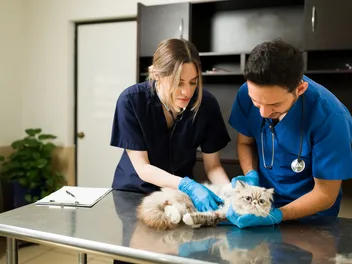
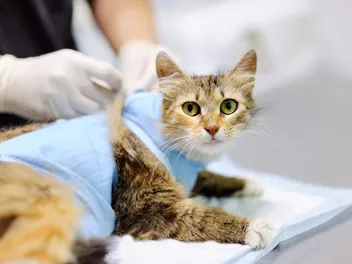
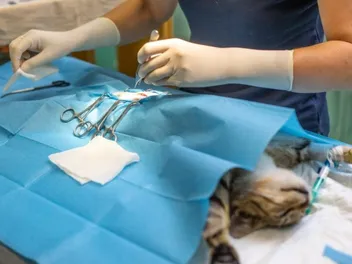
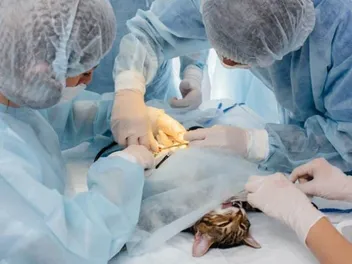
Spaying and neutering surgery requires your cat to be put under general anesthesia. Depending on the type of surgery needed and the vet’s policies, your cat might be at the vet’s for anywhere from a few hours to overnight. When you pick up your cat, ask the vet what kind of aftercare they expect and what to watch out for. Make sure you have an after-hours phone number in case of complications.
2. Be Ready for Recovery Time

Every cat is different, and recovery times vary depending on the age, gender, and type of surgery. Male cats with descended testes generally have a recovery time of around 7–10 days. Female cats and males that need abdominal surgery will have a longer recovery time of around 10–14 days. You should generally expect to keep your cat confined completely for the first few days after surgery.
3. Have a Recovery Space Prepped
Most cat owners find it easiest to give their cats a safe recovery space after surgery. This helps your cat be comfortable and cared for without needing a lot of activity. A small room, walk-in closet, or comfortable bathroom might make a good recovery space. Include a cat bed or blankets, access to water, litter (more on food in a minute), and anything else that your cat might be comforted by. Leave out cat trees that would encourage jumping or climbing and toys that encourage aggressive play.
4. Offer a Reduced Meal

Your cat should have constant access to water after the surgery. However, if your cat isn’t kept at the animal hospital overnight, you might not want to feed it a full meal on the first night. Instead, start by feeding around a quarter to a third of their usual meal that night, and don’t worry if your cat isn’t interested in eating yet. If they do eat, however, you can parse out their remaining meal in small portions, to prevent stomach upset.
The 4 Rules to Follow Post-Op
1. Medicate following Vet’s Directions
The vet might give you a prescription for pain medication to help your cat during the first days of recovery. You should always follow the vet’s medication schedule, even if your cat seems like it isn’t in pain. Many cats will try to hide their pain from you. On the other hand, you should never give your cat over-the-counter medication or human prescriptions. These can be dangerous and even fatal to your cat. If you think the medication the vet’s given you isn’t enough, contact the vet to adjust it.
2. Discourage Activity

Your cat shouldn’t be running, jumping, playing aggressively, or stretching for several days following the surgery. While your cat is recovering, you can help discourage activity. Make sure that your cat can get everything it needs without climbing stairs or jumping. Remove access to scratching posts, cat trees, and toys. When you spend time with your cat, don’t roughhouse.
3. Follow the E-Collar Rules
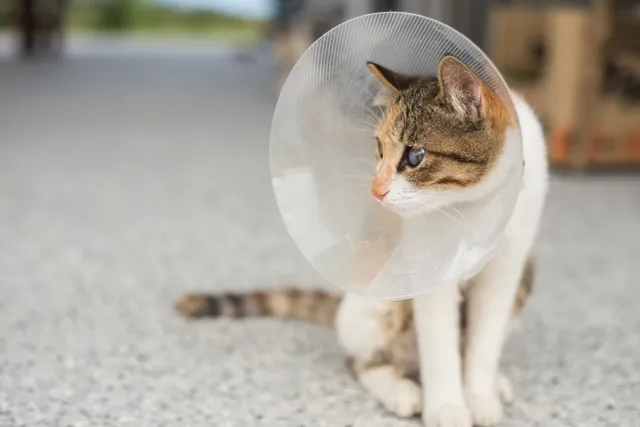
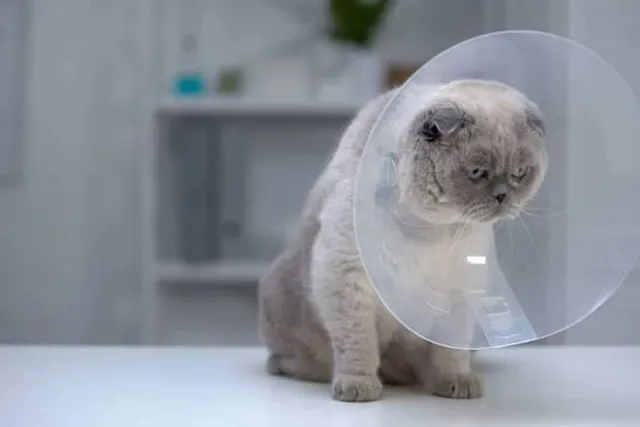
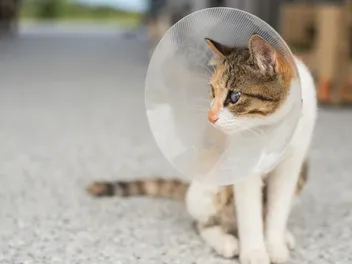
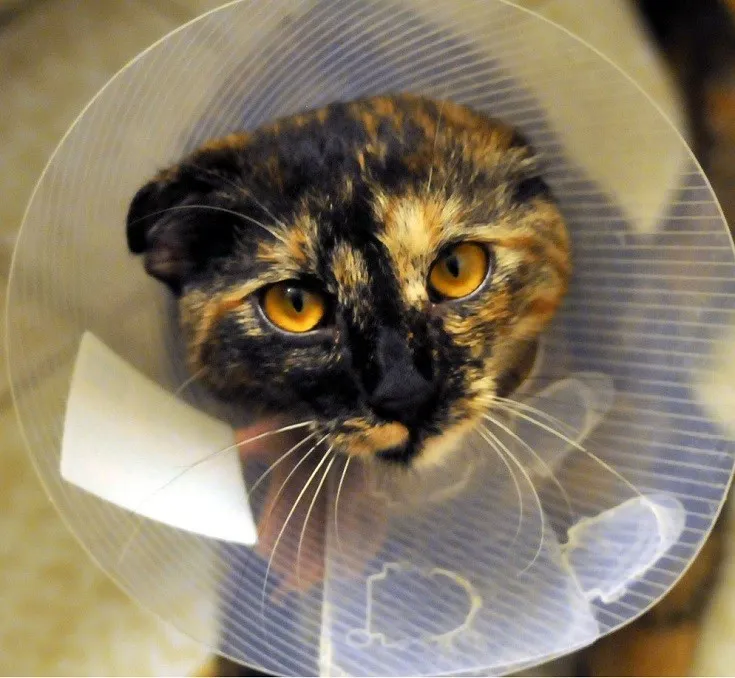
Your cat may want to lick its surgical wound, which can spread germs or reopen the stitches. Sometimes, your cat will receive a cone, also called an Elizabethan Collar or E-Collar. Your cat might look sad or silly, but taking the collar off too soon can lead to big complications down the road.
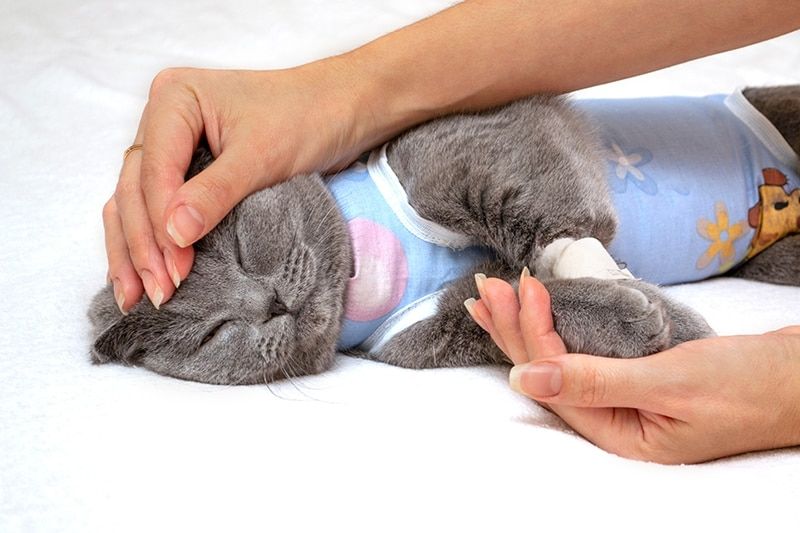
4. Give Gentle Love

While your cat is healing, it will appreciate some extra time with you. Cats often love to have cuddles and gentle pets in the days following surgery. You can also generally give your cat any special occasion treats to help show your love.
The 4 Ways to Track Healing
1. Monitor Food Intake
Your cat may not eat a full meal the first night, but its appetite should return quickly. If your cat still hasn’t eaten, or is vomiting, in the day after surgery, contact a vet.
2. Check the Litter Box

It’s very important that cats urinate within 24 hours of having surgery. If your cat isn’t urinating normally, that can be a sign of serious complications and you should contact a veterinarian.
Depending on your cat’s reaction to the surgery, diarrhea may occur. However, this should resolve within 24–48 hours after surgery.
3. Watch the Incision
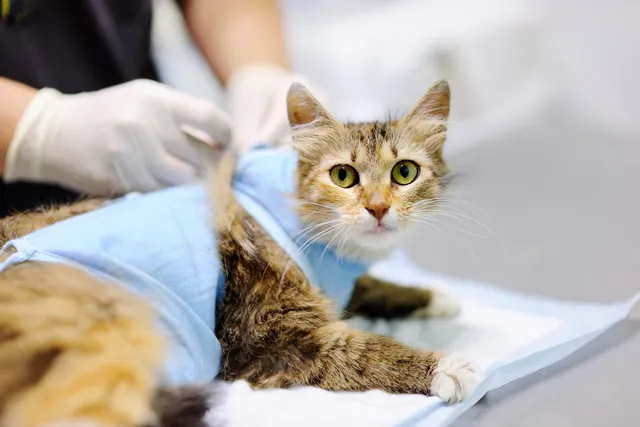
Your cat’s incision wound can reopen or become infected post-surgery, leading to complications. Check the incision regularly, especially in the first few days after surgery, to make sure that it is healing well. Signs of complications include:
- Redness
- Swelling
- Bruising
- Discharge
- Bleeding from incision
- Reopening of incision
- Bad smell
In some types of spaying or neutering, a small amount of bleeding or redness is normal for the first 24 hours after surgery. Ask a vet what to look out for.
4. Look for Other Complications
Your cat can also have complications that aren’t obvious from looking at the surgery site. Sometimes these are caused by a reaction to anesthesia or pain medication. Here are some signs of other serious complications:
- Sluggishness or lethargy
- Refusing to eat for over 12 hours post-surgery
- Vomiting or diarrhea more than 24 hours post-surgery
- Constipation more than 48 hours post-surgery
- Not urinating in the first 24 hours after surgery
- High or low breathing rate
- A swollen abdomen
- White-colored gums
If you see these signs, contact a vet for help.
Conclusion
Your cat’s spaying or neutering recovery can be a pain, but luckily, it only lasts a short time. While they’re recovering, you’ll want to do all you can to make sure they are healthy and happy. Prepping for your cat’s recovery, following the vet’s rules, and watching for signs of complications will help the process go as smoothly as possible.
Sources
https://www.petmd.com/cat/care/what-age-should-you-spay-or-neuter-your-cat
https://www.petmd.com/cat/general-health/cat-spay-procedure-and-aftercare
https://www.petmd.com/cat/general-health/cat-neutering-aftercare-everything-you-need-know
https://ottawahumane.ca/services/mobile-spayneuter-services/caring-for-your-cat-after-surgery-male/
Featured Image Credit: Kachailo, Shutterstock
Expert cat care, straight to your inbox
News, insights, and useful advice, delivered to you.

No spam — unsubscribe anytime.
By signing up, you agree to our Terms & Conditions and Privacy & Cookies Policy.
How useful was this post?
Click a star to rate. You can leave written feedback afterwards. (We read all feedback.)
Chelsea Flake Mortensen is a writer with a passion for cats. Growing up, she spent quite a bit of time around cats, along with a variety of other interesting pets. Chelsea holds a BA in English and Creative Writing from Brigham Young University.