Why Do Cats Fall Over in a Harness? Our Vet Explains

In this article
Trigger Warning: The study described below includes harm done to cats in a laboratory setting and may be upsetting to some readers. Please proceed with caution.
Keeping a cat indoors is proven to increase their lifespan and reduce the risks of becoming injured or sick. However, it does limit their ability to exercise and explore the world. Fortunately, there are several ways that we can help bring the great outdoors to them, with window boxes, cat enclosures, and external walkways allowing them to engage in some wildlife watching without having a negative impact on the ecosystem.
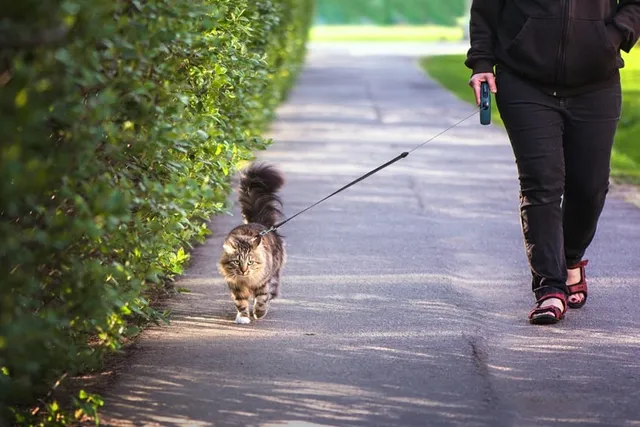
Some cat parents want to give their cats a little more freedom by walking them on a leash, but it’s not necessarily as straightforward as it sounds.
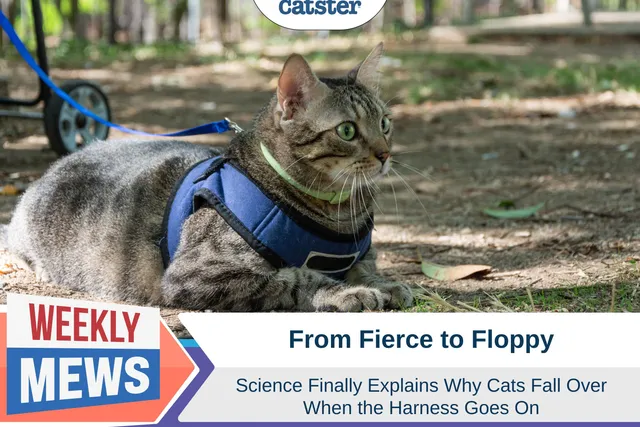
If you’ve ever tried to put a harness on a cat, you will know that they are not always very happy about it. Some cats will grumble, some freeze or hug the walls, and many cats will fall onto their side when the harness goes on. This might seem a bit worrying at first, especially when some cats refuse to move, acting as though they are paralyzed. It can also be hard to resist having a giggle at the poor cat’s expense.
Some cats find harnesses particularly stressful, and we should never force them to wear one, but in most cases, cats will get used to this new accessory if given time, and you will be able to teach them to walk on a leash.
Although there are different theories, it all comes down to the feline somatosensory feedback system that acts like a 6th sense. When we put a harness on a cat, we are blocking their feline somatosensory feedback system.

Why Do Cats Fall Over When They Have a Harness On?
Various theories have been proposed to explain this quirky behavior, including:
1. Fight, Flight, or Freeze
When an animal is threatened, the sympathetic nervous system triggers a flood of adrenalin, preparing the body to fight, flee, or freeze. One theory is that cats falling over in a harness is part of the ‘freeze’ response to an unknown ‘threat.’
2. Pressure Points
This theory suggests that the pressure of the cat harness triggers the reflex experienced as kittens when picked up by their mother. Others have suggested that the pressure of the harness may cause a cat to ‘play dead’ as though they have been picked up by a predator.

3. Poorly Fitting Harness
A harness that is too tight or the wrong size can restrict movement, resulting in a floppy feline.
These theories aren’t necessarily wrong, but we believe we have found the real reason why cats fall over when wearing a harness.
Important note:
What Does The Science Say?
We have discovered a scientific explanation for this seemingly comical reaction to a harness, and it also explains why cats will eventually adjust to wearing one.
A 2012 experimental study looking at unconscious control of locomotion showed that cats were able to walk, maintaining balance and positioning, when the nerves controlling locomotion were electronically stimulated after their higher brain function had been surgically blocked. This rather unpleasant study demonstrated that in addition to conscious control of the body’s movements based on sight, hearing, vestibular system (part of the inner ear that controls balance), and sensation, feline balance, and coordination are significantly influenced, and even controlled, by unconscious somatosensory feedback from touch, vibration, temperature, air movement, etc.
It showed that the feline body can use the input from their surroundings to orient posture and gait without needing to process this information consciously. This also helps to explain the speed with which cats can react and move, their ability to balance on impossibly narrow surfaces, and how cats ‘always land on their feet.’ Most animals need to think before they leap, but the cat’s body can start to react without the delay of thinking. This also helps to explain why cats can easily adjust to a loss of vision and are able to walk, even jump, with confidence, like Svetlana, the blind cat.
Essentially, cats can walk in a straight line without higher brain function.
What Is the Effect of the Harness?
In a way, the feline somatosensory feedback system acts like a 6th sense—no, not the ability to see ghosts. So when we put a harness onto an unsuspecting cat, we are obscuring that sense, almost like putting a blindfold on, affecting their sense of balance and spatial awareness.
But, just like a blind cat gradually adjusting to their lack of visual input, your cat will adjust to how a harness affects their somatosensory input. Cats are very adaptable!

How to Get Your Cat Used to Wearing a Harness
Like with most things, harness training a cat is easiest when started at a young age, but that doesn’t mean adults, or even elderly cats, can’t be taught to wear a harness. Just follow these simple steps.
1. Create a Positive Association
Place the harness beside your cat as you give them treats or catnip. You can even rub catnip, calming pheromones, or calming scents into the harness to make it more appealing (N.B., only ~60% of cats react to catnip).
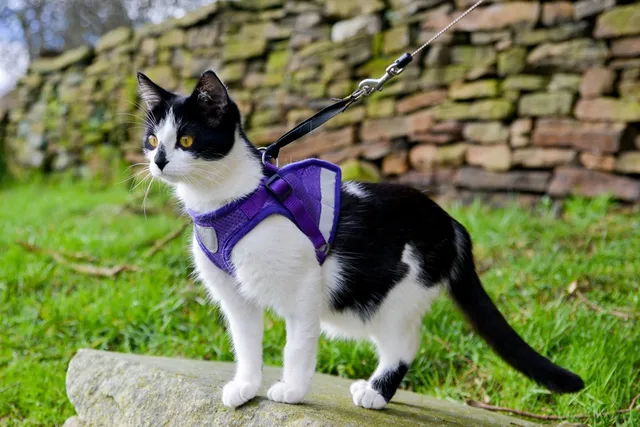
Are you looking for the perfect cat harness? We suggest Hepper's Cat Harness & Leash Set, which includes a nicely designed, machine-washable harness made from soft, sturdy velvet and mesh.
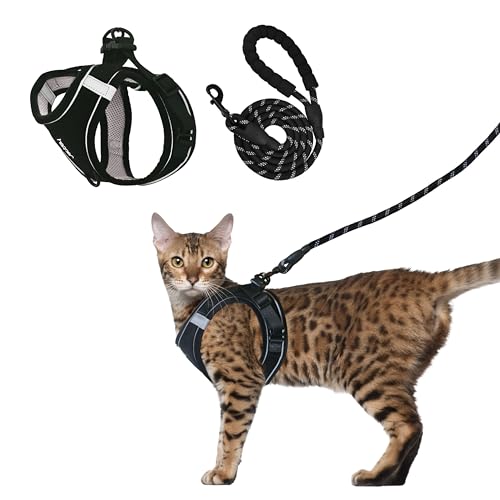
- Escape Proof - Cat leashes and harnesses for walking aren't all equally secure. Our double aluminium D-rings ensure strength when outside, as does the reinforced stitching on this step in vest.
- Superior Comfort - Our cat harnesses are lightweight, made with premium velvet fabric, breathable mesh, with soft edging and resilient cushioning. Also, it is machine washable. Looks and feels great!
- Free Extra Strength Leash - You don't need to worry about your cat escaping this harness. This cat leash is made of thick nylon climbing rope with rotating clamp to keep the strongest kitties at bay.
This harness is easy to put on and take off and features reinforced stitching, reflective stripes, and quick-release buckles. This set also includes a great leash made from durable nylon climbing rope.
At Catster, we’ve admired Hepper for many years and decided to take a controlling ownership interest so that we could benefit from the outstanding designs of this cool cat company!
2. Be Confident
Make sure you’re familiar with the design of the harness before attempting to put it on your cat. If you start fumbling with the clasps or are nervous, your cat will lose confidence and be more inclined to get away.
3. Leave the Harness on for 5 Minutes and Ignore Your Cat (Sort Of!)
Some cats will take to wearing a harness like a duck to water, but others may roll, run, or of course, fall over. Leave the harness on for around 5 minutes, keeping an eye on them, but otherwise allowing them to work things out on their own. If your cat is getting stressed, you may need to remove the harness and try again another time, but don’t force them to wear one if they show no signs of accepting it.

4. DON’T LAUGH!
Cats are proud and sensitive creatures who do not take kindly to being laughed at, so keep your giggles to yourself, no matter how hard it may be.
5. Reward Your Cat and Remove the Harness
After 5 minutes (longer if your cat is tolerating the harness well) give your cat a treat or a fuss and remove the harness.
6. Next Time, Leave It on for 10 Minutes
Don’t leave too long an interval between sessions, and you can do more than one in a day, provided your cat isn’t getting stressed.

7. Increase by 5 Minutes Each Time Until They Are Comfortable
Make sure they are walking confidently and without hesitation before stopping training. For older cats, this may take numerous sessions, but most cats will be getting the hang of things by the third or fourth time.
8. Leave the Harness on for Extended Periods but Only Under Supervision
Allow them to explore, eat, and sleep with the harness on so they are comfortable doing everything they would normally do while wearing it. But make sure you are watching them to ensure they don’t get into trouble.
9. Attach a Short Leash and Let Them Get Used to the Added Weight
Roll up the leash so it is attached to the harness but not dragging along the floor. I do not recommend retractable leads for cats as they are more likely to get these tangled, particularly if they panic.

10. Make Sure Your Cat Is Comfortable and Confident Walking in Their Harness
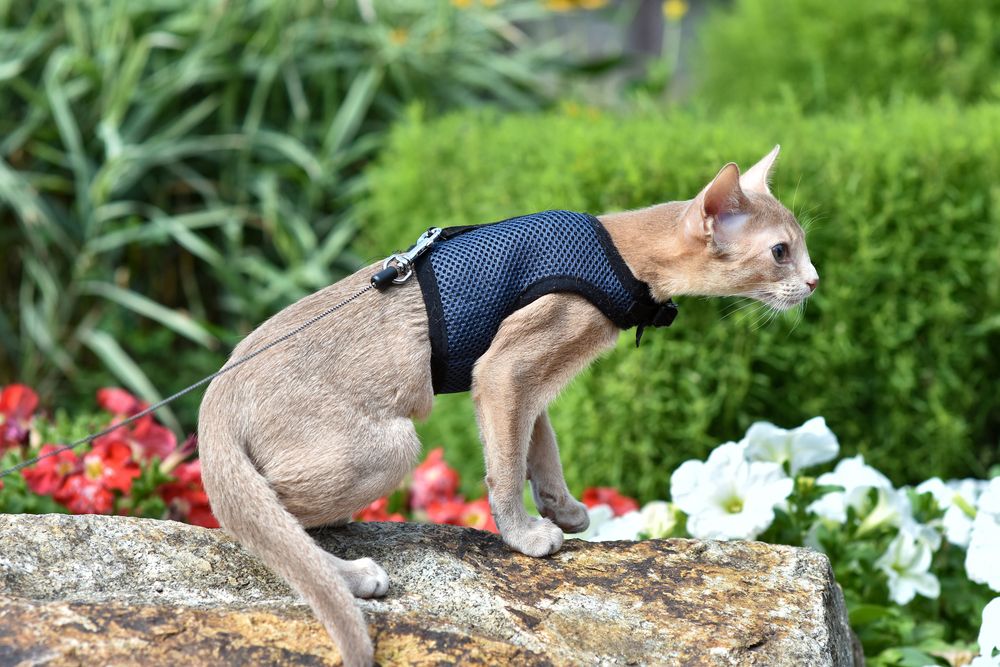
By now, your cat should be ready to be walked on the leash. Do this indoors until you are happy that they aren’t able to escape before venturing out into the world. Some cats are super confident explorers, while others will be safer staying close to home.
Hot Tips & Important Bits
- Cat harnesses are not the same as dog harnesses and need to fit well. Cats are master escape artists, so loose fit or thin straps will be no obstacle to a determined kitty. The ideal harness should be like a jacket or vest that is difficult to wriggle out of. I’m a huge fan of this one from Hepper because it comes in lots of different sizes. But it’s also hard to go past this sailor suit harness!
- Most cats won’t walk on a leash like a dog, and more often than not, you will end up standing around at the end of the leash like a gooseberry while your cat explores. Don’t be tempted to get out your phone and start scrolling – distraction can lead to disaster.
- Cats may panic and try to flee if they feel threatened, and a terrified cat can be difficult, even dangerous to hold. It’s a great idea to bring a cat carrier along with you in case you need to get your cat to safety.
- A hungry cat is a food-motivated one; aim to do any training before a meal, not after.
- Check that your cat’s microchip details are up to date in case of escape.
- Stay away from trees! Your cat will no doubt love to explore new heights, but once that leash is wrapped around a branch, you’re in trouble.
Final Thoughts
If you’d like to help your indoor kitty explore the world safely, a harness and leash are a great option. Not all cats will be keen on this method, but many will start to look forward to their outdoor adventures.
A common phenomenon we see when first putting a harness on our cats is that they may freeze or fall over. This may seem a bit worrying at first, if not a little bit comical, but it is quite common.
Research into the feline somatosensory system has shown that their coordination, locomotion, and balance rely not just on information processed by the brain, but on feedback the body receives from the environment, enabling the body to move and orient itself without conscious control. When we place a harness on a cat, this feedback system is compromised, leaving cats feeling disoriented and off balance. In most cases, cats adjust to this change the longer they wear the harness, but it should not be forced upon cats that are becoming distressed.
By taking time to slowly introduce your cat to their harness, as well as making sure you have a great style and fit, you can have your feline friend safely exploring the world outside.
Sources
Featured Image Credit: Akifyeva S, Shutterstock
Expert cat care, straight to your inbox
News, insights, and useful advice, delivered to you.

No spam — unsubscribe anytime.
By signing up, you agree to our Terms & Conditions and Privacy & Cookies Policy.
How useful was this post?
Click a star to rate. You can leave written feedback afterwards. (We read all feedback.)
Dr. Karyn Kanowski BVSc MRCVS (Veterinarian)
Dr. Karyn comes from Queensland, Australia, and has lived in the UK for the past 10 years. In 2010, she graduated from The University of Queensland School of Veterinary Science and also has a Bachelor’s degree in Zoology. She is passionate about using evidence, experience, and owner collaboration to provide the best solutions for pets, and believes in making reliable information about animal health accessible to all. Dr. Karyn shares her home with five cats, four dogs, and one husband. When she is not in the scrubs, she spends her time writing, gardening, and cleaning up pet hair!